


question about "taking the lane"
 08-04-11 | 12:18 PM
#26

Senior Member
Joined: Mar 2010
Posts: 23,208
Likes: 10,653
From: Seattle, WA
What if you get taken out because they thought there was enough room to pass you at 45 mph, but they were mistaken? The question isn't why they hit you, it's whether they did.
 08-04-11 | 01:12 PM
#27
Senior Member


Joined: Jul 2005
Posts: 6,924
Likes: 1,266
I ride the fog strip on roads like that. I would take the lane just as the rider in the picture did, to get around the horses and return the fog strip after doing so. Same procedure whenever I pass a parked car. I don't waste my time determining if someone is in it or not, I take the lane. When the fog strip goes away (Around intersections) I take the lane. On roads with no fog strips I take the lane. I avoid roads with no fog strips but can handle myself when I do ride them.
All that said, I commute from one suburb to another with virtually zero urban riding so I do not have the same experiences that a lot of other regular commuters here on the BF do.
All that said, I commute from one suburb to another with virtually zero urban riding so I do not have the same experiences that a lot of other regular commuters here on the BF do.
H
 08-04-11 | 01:17 PM
#28

You gonna eat that?
Joined: Sep 2008
Posts: 14,917
Likes: 543
From: Fort Worth, Texas Church of Hopeful Uncertainty
Bikes: 1966 Raleigh DL-1 Tourist, 1973 Schwinn Varsity, 1983 Raleigh Marathon, 1994 Nishiki Sport XRS
I ride the fog strip on roads like that. I would take the lane just as the rider in the picture did, to get around the horses and return the fog strip after doing so. Same procedure whenever I pass a parked car. I don't waste my time determining if someone is in it or not, I take the lane. When the fog strip goes away (Around intersections) I take the lane. On roads with no fog strips I take the lane. I avoid roads with no fog strips but can handle myself when I do ride them.
All that said, I commute from one suburb to another with virtually zero urban riding so I do not have the same experiences that a lot of other regular commuters here on the BF do.
All that said, I commute from one suburb to another with virtually zero urban riding so I do not have the same experiences that a lot of other regular commuters here on the BF do.
__________________
I stop for people / whose right of way I honor / but not for no one.
 Originally Posted by bragi
  "However, it's never a good idea to overgeneralize."
I stop for people / whose right of way I honor / but not for no one.
Originally Posted by bragi "However, it's never a good idea to overgeneralize."
08-04-11 | 01:30 PM
#29
Senior Member
Joined: Jul 2005
Posts: 6,924
Likes: 1,266
H
08-04-11 | 03:25 PM
#30

a.k.a., Point Five Dude
Joined: Apr 2011
Posts: 794
Likes: 0
From: Twin Cites, MN USA
Bikes: 1987 Trek Elance 400 T
To further clarify my intersection behavior, if I intend to go straight I do not occupy the right turn lane - I get in with crossing traffic.
Good discussion guys, I don't disagree with much of anything that has been said, just sharing my MO!

Last edited by Surrealdeal; 08-04-11 at 03:25 PM. Reason: Spelling
08-04-11 | 03:26 PM
#31
Senior Member
Joined: Sep 2003
Posts: 2,084
Likes: 4
From: Leeds UK
I stay in the right tire path most of the time, but not so close to the edge that I am riding in the debris line that collects on the side of the road. According to NC state law, cyclists are supposed to ride as far to the right as reasonably possible. That is the law, and I assume that a cyclist could be ticketed for blocking an entire lane -- plus, I think it needlessly ticks off motorists and slows traffic. I will take more of the lane when prudent for safety reasons, such as passing parked cars (where someone might door me) or riding through intersections (so someone won't right-hook me).
• Passing another vehicle moving in the same direction [§20-146(a)(1)]
• Avoiding a dangerous obstruction [§20-146(a)(2)]
• Riding on a one-way street [§20-146(a)(4)]
• Preparing for a left turn. [§20-146(e)]
Bicyclists are not required to ride on adjacent bicycle paths
There is a considerable difference between the meaning of the words "possible" and "practicable"
Much of the reason for taking the lane is to increase visibility. This can be accomplished better by other means -- wearing bright jerseys, using bright tail-lights all the time.
Taking the lane, as others have said, can also be used to prevent a driver going past you when there is oncoming traffic, or other vehicles coming past in the next lane.
You will undoubtedly annoy drivers who may be briefly held up because here isn't room to overtake, but many of them will be irritated simply because you're cycling on "their road".
08-04-11 | 04:22 PM
#32
Senior Member
Joined: Jul 2005
Posts: 6,924
Likes: 1,266
It will have the effect of increasing your visibility, simply by reason of being directly in the driver's eyeline. But its main purpose is to oblige the driver to move well out to overtake you. Most will, if required to pull out, move well out, whereas, even if you're wearing hi-viz clothing and bright tail lights but are riding well to the right. many will barely flick the wheel to go round you.
Taking the lane, as others have said, can also be used to prevent a driver going past you when there is oncoming traffic, or other vehicles coming past in the next lane.".
Taking the lane, as others have said, can also be used to prevent a driver going past you when there is oncoming traffic, or other vehicles coming past in the next lane.".
H
BTW - AFAIK the Fog Strip is the white line itself. The area to the right of the fog strip is called the shoulder and it may be wide or narrow or non-existent. Fog strips themselves may be wide or narrow but are usually 3" to 5" wide and take somef concentration to ride on. But IMO a road cyclist is not complete without the ability to hold a steady line for hundreds of feet at a time. Best practice is to look well down the road, not at your front wheel and relax.
08-04-11 | 04:25 PM
#33

"Taking the lane" is when you leave no doubt that you cannot be passed within the lane. So the above description is of a lane not taken.
08-04-11 | 04:31 PM
#34
Senior Member
Joined: Mar 2010
Posts: 23,208
Likes: 10,653
From: Seattle, WA
There just isn't a large body of evidence showing that this is in fact how any cyclists are killed or injured. Just about all of you drive. How many times have you tried to pass something when "there wasn't enough room"? What you really mean to say is: "What if you get taken out because there was room enough to pass when they started to overtake but you choked and left your line and got whacked with a rear-view mirror."
 08-04-11 | 04:56 PM
#35
Senior Member
Joined: Jun 2009
Posts: 1,664
Likes: 0
From: North County San Diego
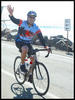
This is a section of road I ride for @ half a mile on my way home. It's a rural area but this particular road is pretty busy during the rush-hour evening time. If I rode the far right line, quite often cars would try to pass me while other oncoming vehicles were approaching at the same time on the other side. It was all just way too close for comfort and the dirt area has tons of glass. It's about the only place I "take the lane" on my commute, as fortunately the rest of the ride has very good bike lanes.

08-04-11 | 05:39 PM
#36

xtrajack
Joined: Aug 2008
Posts: 2,058
Likes: 0
From: Maine
Bikes: Kona fire mountain/xtracycle,Univega landrover fs,Nishiki custom sport Ross professional super gran tour Schwinn Mesa (future Xtracycle donor bike)
I ride as far to the right as practicable, which I define as being as far to the left as necessary for my safety. That particular point varies depending on road conditions.
On the part of my commute where there is a wide shoulder, to the right of the fog line, that is where I am. On the part of my commute where the shoulder is non-existent (on a portion of my commute there is no shoulder, just 2 travel lanes and a 6 inch high curb) I ride in the right lane, right wheel track. When I need to turn left, as I approach the intersection, I check traffic, signal if necessary, then get in to the left lane, right tire track.
On the two lane (rural) portion of my commute, my road position varies depending on the surface conditions, pot holes, cracked asphalt, glass etc. There is a portion of my commute where I am almost on the yellow line because of road surface conditions. I also tend to ride a little more to the left on the fast downhill sections of my commute.
When making a left on a rural road, as I approach the intersection, I go from the right wheel track to the left tire track.
I believe that taking the lane makes me more visible, and also signals that the driver needs to execute a proper pass as opposed to trying to squeeze by me in the same lane.
I would recommend the LAB Traffic 101 class for the OP.
On the part of my commute where there is a wide shoulder, to the right of the fog line, that is where I am. On the part of my commute where the shoulder is non-existent (on a portion of my commute there is no shoulder, just 2 travel lanes and a 6 inch high curb) I ride in the right lane, right wheel track. When I need to turn left, as I approach the intersection, I check traffic, signal if necessary, then get in to the left lane, right tire track.
On the two lane (rural) portion of my commute, my road position varies depending on the surface conditions, pot holes, cracked asphalt, glass etc. There is a portion of my commute where I am almost on the yellow line because of road surface conditions. I also tend to ride a little more to the left on the fast downhill sections of my commute.
When making a left on a rural road, as I approach the intersection, I go from the right wheel track to the left tire track.
I believe that taking the lane makes me more visible, and also signals that the driver needs to execute a proper pass as opposed to trying to squeeze by me in the same lane.
I would recommend the LAB Traffic 101 class for the OP.
08-04-11 | 10:33 PM
#37

Tortoise Wins by a Hare!
Joined: Feb 2006
Posts: 7,393
Likes: 945
From: Looney Tunes, IL
Bikes: Wabi Special FG, Raleigh Roper, Nashbar AL-1, Miyata One Hundred, '70 Schwinn Lemonator and More!!
Up until this point most of the discussion has focused on motorists overtaking cyclists. But using the full lane offers several other benefits to cyclist safety. Sight lines are much improved when you ride in the lane. You will often be able to see drivers sooner (and they you) than you would when you hide yourself away in the gutter. (think intersections and driveways, but it doesn't end there)
Dangerous infringements on your right of way (like left crosses or pull outs) are also less likely when you are positioned where traffic normally drives, instead of off to the side where people normally wait for right of way.
+1 on taking the LAB traffic 101 course. Pedal On!

Last edited by AlmostTrick; 08-04-11 at 10:38 PM.
08-04-11 | 10:57 PM
#38

Senior Member

Joined: Jun 2007
Posts: 1,590
Likes: 100
From: Walyalup, Australia
Bikes: Surly Long Haul Trucker, Salsa Mukluk, Riese & Muller Supercharger GT Rohloff (Forthcoming)
08-05-11 | 07:50 AM
#39
a.k.a., Point Five Dude
Joined: Apr 2011
Posts: 794
Likes: 0
From: Twin Cites, MN USA
Bikes: 1987 Trek Elance 400 T
BTW - AFAIK the Fog Strip is the white line itself. The area to the right of the fog strip is called the shoulder and it may be wide or narrow or non-existent. Fog strips themselves may be wide or narrow but are usually 3" to 5" wide and take somef concentration to ride on.
08-05-11 | 08:00 AM
#40

Senior Member
Joined: Oct 2004
Posts: 3,077
Likes: 4
From: Cary, NC
Bikes: 1983 Trek 500, 2002 Lemond Zurich, 2023 Litespeed Watia
https://humantransport.org/bicycledri...e_critique.pdf
Fortunately, NCDOT is no longer printing it, and did re-release their StreetWise Cycling manual, which describes taking control of the lane to discourage unsafe close passing if the lane is narrow.
There have been multiple threads about NC cyclists' right to use a full marked lane, versus the requirement to ride AFRAP when no lanes are marked, so I will reference one of them rather than repeat the discussion here.
https://www.bikeforums.net/showthread...two-lane-roads
Here is what the NCDOT Driver Handbook, page 95, says:
Bicycle riding is an important means of
transportation, particularly for traveling to and
from work and school. Because bicycles are
vehicles, bicyclists must obey the same
traffic laws as other drivers.
Bicyclists usually ride on the right side of the
lane, but are entitled to use the full lane.
Pass with Care
A bicyclist staying to the right in their lane is
accommodating following drivers by making it
easier to see when it is safe to pass, and easier to
execute the pass. Drivers wishing to pass a
bicyclist may do so only when there is
abundant clearance and no oncoming traffic
is in the opposing lane. When passing a
bicyclist, always remember the bicyclist
is entitled to use of the full lane.
transportation, particularly for traveling to and
from work and school. Because bicycles are
vehicles, bicyclists must obey the same
traffic laws as other drivers.
Bicyclists usually ride on the right side of the
lane, but are entitled to use the full lane.
Pass with Care
A bicyclist staying to the right in their lane is
accommodating following drivers by making it
easier to see when it is safe to pass, and easier to
execute the pass. Drivers wishing to pass a
bicyclist may do so only when there is
abundant clearance and no oncoming traffic
is in the opposing lane. When passing a
bicyclist, always remember the bicyclist
is entitled to use of the full lane.
08-05-11 | 09:08 AM
#41
Senior Member
Joined: Dec 2010
Posts: 9,685
Likes: 2,603
From: northern Deep South
Bikes: Fuji Touring, Novara Randonee
The lane offers no promises to be better and (here in MN at least) the lane is often in worse condition than the fog line. Also in a 3' wide fog line it's pretty easy to dodge a pothole or small debris.
Your way works too. Personally I feel safer in the fog line unless there is a large object like a parked car or a horseback rider to avoid.
For the rest of the streets and roads, someone noted that passing cars and trucks seemed to give as much room on the left of a cyclist as the cyclist takes from the right. If you ride 6" from the edge of the road, traffic seems to give you 6". (Unnerving.) If you ride 18" out from parked cars, they'll pass 18" from you. Take 3 feet, they'll give you 3 feet. It has worked that way for me with very few exceptions.
08-05-11 | 09:12 AM
#42

Infamous Member
Joined: Sep 2005
Posts: 24,360
Likes: 6
From: Ohio
Bikes: Surly Big Dummy, Fuji World, 80ish Bianchi
This is a section of road I ride for @ half a mile on my way home. It's a rural area but this particular road is pretty busy during the rush-hour evening time. If I rode the far right line, quite often cars would try to pass me while other oncoming vehicles were approaching at the same time on the other side. It was all just way too close for comfort and the dirt area has tons of glass. It's about the only place I "take the lane" on my commute, as fortunately the rest of the ride has very good bike lanes.
__________________
"Let us hope our weapons are never needed --but do not forget what the common people knew when they demanded the Bill of Rights: An armed citizenry is the first defense, the best defense, and the final defense against tyranny. If guns are outlawed, only the government will have guns. Only the police, the secret police, the military, the hired servants of our rulers. Only the government -- and a few outlaws. I intend to be among the outlaws" - Edward Abbey
"Let us hope our weapons are never needed --but do not forget what the common people knew when they demanded the Bill of Rights: An armed citizenry is the first defense, the best defense, and the final defense against tyranny. If guns are outlawed, only the government will have guns. Only the police, the secret police, the military, the hired servants of our rulers. Only the government -- and a few outlaws. I intend to be among the outlaws" - Edward Abbey

Thread
Thread Starter
Forum
Replies
Last Post
northernease
Advocacy & Safety
37
10-20-11 11:49 AM
