

Watching and waiting.
+1 on the need for a torque wrench when working with CF. It's takeup is a lot more gradual than Al or steel. It has a spongy feel when tightening screws.

Senior Member
Quote:
+1 on this. I find that cornering tells me quicker than anything else if the bike will handle well. It's even better if I can do it downhill. Little things tend to show up that are very hard to feel any other way. For example, is the back end skitterish...does it want to jump around and/or slide out? Does the front end fight the turn...does it chatter at all... is there excessive vibration at speed? If you can find a place to push a bike and ride different bikes (all fitted correctly) you'll see and feel differences... regardless of the material, I might add. Originally Posted by AzTallRider
It's a combination of the CF 'fabric', which ranges from 'cheap' to military grade (we make our stealth warplanes and some boats out of this stuff), and also the layup. The strength is specific to the orientation of the threads. The stiffness is in the longitudinal axis of the threads. In a perfect layup, each thread would be individually positioned. That isn't feasible, so the CF comes in sheets of 'fabric' that are 'layed' into a mold. Hence the term 'layup'. So both the materials and layup are vital. Of course, just as important is the design of the bike. It's geometry, and how the various parts come together. All the things that affect performance and handling. IMO, the only reasonable way to approach it is ride different bikes from the most respected manufacturers, and, as people have said, pick the one that fires you up. When you test ride, make sure they really fit the bike to you as well as possible for the ride, and ride it a good long time. Standup and crank it, ride in the drops a bit, find a place to corner as fast as you are comfortable doing, and find a hill you can climb out of the saddle.
I think these kinds of road tests are extremely important. Keep in mind it's almost impossible to create a single CF layup that will work for all riders. A layup that is perfect for a 5'10" 145 lb rider could be a disaster for a 6'2" 220 lb rider. Even body shape can make a difference. Someone with a very long upper torso will not have his or her weight distributed on the bike the same way someone with a very short torso will. So, despite what sales people will say, or the literature from the companies, pushing a bike will tell you how it will really work for you.

Hermes
Version 7.0
close


05-01-26
- Join DateOct 2006
- LocationSoCa
- Posts:13,844
-
iTrader Positive Feedback0
-
iTrader Feedback Score(0)
-
Likes:4,989
-
Liked:3,858 Times in 1,982 Posts
We are all easily swayed by marketing. That is what it is designed to do and many times older people are easily manipulated by scams and to good to be true offers. This is especially true for financial products that offer high yields but also very high risks.
Fortunately, major bicycle companies provide credible information on their web sites and many shops offer test rides. I find that selection gets down to budget and price. And CF is not always the most expensive as can be seen in Ti bikes from Seven and steel bikes from Serotta.
Cevelo has some very good technical information on its web site showing the effect of weight and aerodynamics on frame design. And HED has excellent tools on its web site to compare and contrast wheels. Consumers have a lot of tools on the web to compare different value propositions to match against the needs.
I have a new 2012 Cervelo R5 that has the CF technology from the California Project. The frame is 880 gm for a 58 cm frame and extremely stiff which yielded a sub 15 pound bike. In general, I would only recommend this bike for advanced riders. At slow speeds it produces a harsher ride. But at higher speeds it is very stable and handles rough pavement well. I love the fact that the frame does not deflect on the first pedal stroke of an acceleration which is one of the most important pedal strokes when one is trying to create a gap from the rider behind. So not all stiff frames light weight bikes are good for all conditions. That is why we have N and it is large.
If anyone questions CF strength, then do not fly on airplanes - especially, modern later model commercial airliners.
Fortunately, major bicycle companies provide credible information on their web sites and many shops offer test rides. I find that selection gets down to budget and price. And CF is not always the most expensive as can be seen in Ti bikes from Seven and steel bikes from Serotta.
Cevelo has some very good technical information on its web site showing the effect of weight and aerodynamics on frame design. And HED has excellent tools on its web site to compare and contrast wheels. Consumers have a lot of tools on the web to compare different value propositions to match against the needs.
I have a new 2012 Cervelo R5 that has the CF technology from the California Project. The frame is 880 gm for a 58 cm frame and extremely stiff which yielded a sub 15 pound bike. In general, I would only recommend this bike for advanced riders. At slow speeds it produces a harsher ride. But at higher speeds it is very stable and handles rough pavement well. I love the fact that the frame does not deflect on the first pedal stroke of an acceleration which is one of the most important pedal strokes when one is trying to create a gap from the rider behind. So not all stiff frames light weight bikes are good for all conditions. That is why we have N and it is large.
If anyone questions CF strength, then do not fly on airplanes - especially, modern later model commercial airliners.

DiabloScott
It's MY mountain
close
05-03-26
- Join DateSep 2006
- LocationMt.Diablo
- Posts:10,168
-
iTrader Positive Feedback0
-
iTrader Feedback Score(0)
-
Likes:319
-
Liked:4,204 Times in 2,225 Posts
Quote:
It's no more wrong to call it "plastic" than it is "carbon fiber". If you want to be specific you call it CFRP composite.Originally Posted by TomD77
Plastic is a homogeneous material whereas the product known as carbon fiber is a composite. The epoxy resin in which the layered sheets of carbon fiber are embedded could be described as plastic but even that is a stretch. So, factually, to refer to carbon fiber as plastic is absolutely incorrect. The manufacturing techniques are totally different too, most plastic parts are injection molded.
Carbon fiber reinforced plastic, is "plastic" in the same sense that steel rebar reinforced concrete is "concrete".
But yes, people who refer to CFRP as "plastic" are generally not fans of the material.

Senior Member
The thing is the OPs origional question could be asked by any newer rider after getting into cycling depending on what frame material they happen to be riding. When I walked back into a LBS after a 20 year break from cycling two things struck me first off. Bikes were a lot more expensive and there were very few steel road bikes. If I were new I might assume that steel was obsolete. I could have posted a question about why would people still ride steel. Imagine the debate that would come from that post?
In the end it comes to personal preference. Still people have their fears about different material. In these forums we hear people are worried bout Cf cracking, Aluminum failing and steel flexing. But to the people riding them the problems seem to be worth it no matter what others are worried about.
In the end it comes to personal preference. Still people have their fears about different material. In these forums we hear people are worried bout Cf cracking, Aluminum failing and steel flexing. But to the people riding them the problems seem to be worth it no matter what others are worried about.


Quote:
Sure, the Pro's ride them, but if your a recreational rider, even a serious one, I still don't understand the rational for buying a carbon bike.
I've read comments and threads on carbon bikes, seen the pictures of cracked frames, and understand the idea of lighter, faster and ride comfort, except steel and Ti can achieve similar performance, carbon bikes just don't add up.
I could go on, but I'll wait to read what others think.........
First off why the condescending description of a high tech material like carbon fiber tubing as plastic?Originally Posted by GFish
Please help me understand, why buy a carbon bike? Sure, the Pro's ride them, but if your a recreational rider, even a serious one, I still don't understand the rational for buying a carbon bike.
I've read comments and threads on carbon bikes, seen the pictures of cracked frames, and understand the idea of lighter, faster and ride comfort, except steel and Ti can achieve similar performance, carbon bikes just don't add up.
I could go on, but I'll wait to read what others think.........
Next have you ridden one? I have for almost 15 years and love the ride. In addition to the carbon frame road bike I enjoy an aluminum frame hybrid. There is no perfect frame material because they all have shortcoming and benefits. Steel is heavy and rusts. The choice of material really depends on what you the rider want from the bike.

BlazingPedals
Senior Member
close

05-02-26
- Join DateDec 2004
- LocationMiddle of da Mitten
- Posts:12,546
-
iTrader Positive Feedback0
-
iTrader Feedback Score(0)
-
Likes:148
-
Liked:797 Times in 481 Posts
Quote:
The bike in my avatar is carbon and came to me with a big crack in it, just in front of the seat pan. It had broken on my buddy and when he got a warranty replacement frame, the mfg didn't want the old frame, so I got it. It was repaired and I rode it about a year before it developed a second crack, under the headrest. I repaired that, too. It has been good since then. Carbon is absolutely repairable, and without fancy tools - as long as you don't mind the repair showing when you're done. To make the repair so it's not obvious - that takes some skill but can still be done. Originally Posted by WC89
... I just can't see the average amateur racer buying an expensive CF frame, racing every weekend, only to break it sooner or later, and then it cannot even be repaired.
I was happy to patch the frame up. The bike cost me a grand to put on the road, instead of the retail $10k USD.

Banned.
Quote:
Next have you ridden one? I have for almost 15 years and love the ride. In addition to the carbon frame road bike I enjoy an aluminum frame hybrid. There is no perfect frame material because they all have shortcoming and benefits. Steel is heavy and rusts. The choice of material really depends on what you the rider want from the bike.
It would be beneficial for you to read the entire thread before responding. The OP has fully explained his inadvertent use of the word "plastic" but you missed that.Originally Posted by Delmarva
First off why the condescending description of a high tech material like carbon fiber tubing as plastic?Next have you ridden one? I have for almost 15 years and love the ride. In addition to the carbon frame road bike I enjoy an aluminum frame hybrid. There is no perfect frame material because they all have shortcoming and benefits. Steel is heavy and rusts. The choice of material really depends on what you the rider want from the bike.
wreckrider
there are some very informative posts already on this thread but my own trajectory from steel to cf may help a little. i renewed my cycling 7 yrs ago when due to bad knees i hauled out my old mothballed (entry level) steel Jamis Citizen hybrid & fell in love with cycling. I realized that at 52 cycling was the perfect sport for an old dog. as i got better at it & time went by small injuries began plaguing me. achilles, knees, elbows, etc, etc. i loved my steel bike but i noticed that people riding alum & cf seemed to have an easier time of it. i realized that if i wanted to keep cycling as i got older i needed to look into more comfortable bikes despite the cost. so i purchased an alum Specialized secteur elite. it fit me perfectly and alot of the minor physical problems got better. the drop bars & drop in weight allowed me to ride longer, out of the wind with less vibration. it improved the ride considerably but after a year i thought i'd try the carbon & see if it could be even more comfortable. the difference was amazing. riding the cf bike 60 miles for example felt like 40 on my secteur. climbing was alot easier, sprints were faster, even headwinds felt easier, etc, etc. The only negative that i did notice was that the cf bikes seemed less stable on descents. Also the cheaper cf bikes did not seem very durable as u mentioned above. i do, however, agree w the post that durability is not an issue with the major manufacturers. i have friends that still prefer high end steel & titanium bikes but they're younger. i still use the steel Jamis for trail riding & the Sectuer as a rain bike but my carbon bike is my go to ride. the idea is to keep riding.

Quote:
Next have you ridden one? I have for almost 15 years and love the ride. In addition to the carbon frame road bike I enjoy an aluminum frame hybrid. There is no perfect frame material because they all have shortcoming and benefits. Steel is heavy and rusts. The choice of material really depends on what you the rider want from the bike.
I'm also against eagle rights! It makes no sense! Eagles don't read the papers, and how are they supposed to stay informed enough to vote? And when they get into the voting booth, their wings get all tangled up in the curtains and.....say what?.....oh, equal rights.....never mind.Originally Posted by Delmarva
First off why the condescending description of a high tech material like carbon fiber tubing as plastic?Next have you ridden one? I have for almost 15 years and love the ride. In addition to the carbon frame road bike I enjoy an aluminum frame hybrid. There is no perfect frame material because they all have shortcoming and benefits. Steel is heavy and rusts. The choice of material really depends on what you the rider want from the bike.

I'm just surprised that many of you don't ride bikes carved from stone.

Senior Member
Quote:
They would need the materials, there are two ways to work with it, tubed and as a single piece or a monocoque type frame. With tubed, you need the same pieces as a metal frame, just you glue them together using the CF resins rather then brazing or welding. There is a company in Europe that makes what are effectively lugged CF frames. For a single piece frame, you would take pieces of the cloth soaked in resin and lay them together the right way to build up the frame, this would be horribly expensive though.Originally Posted by DnvrFox
Are the custom bike builders able to use CF to build a custom bike? Or, is CF likely to reduce their business?

Climbing Above It All
It seems all people want these days is CF. I have a Ti bike I can't hardly give away. Well, it is worth more to me than what people want to offer I guess. But it tells me that Ti isn't really all that desirable anymore, which in my mind puts steel even further down the list. I can say my Tarmac SL4 is pretty amazing. The Ti bike is fine too just different, not as stiff, heavier and more deliberate in handling.
StanSeven
Administrator
close
05-03-26
- Join DateFeb 2005
- LocationDelaware shore
- Posts:13,651
-
iTrader Positive Feedback0
-
iTrader Feedback Score(0)
-
Likes:1,485
-
Liked:2,694 Times in 1,809 Posts
Quote:
Good question. Most of the traditional custom builders use Ti or steel. I don't see them doing anything other than steel. A few like IF and Seven now do CF as well. Then a handful like Calfee and Parlee that started with CF will continue with custom as they alway have done.Originally Posted by DnvrFox
Are the custom bike builders able to use CF to build a custom bike? Or, is CF likely to reduce their business?
The problem is high CF volume at reasonable proces means molds and that implies non-custom.

Icantre Member
Carbon fiber reinforced polymer is plastic. It's CFRP... what's wrong with that? Surfboards, missiles, jets, etc. are made out of the same material.

just keep riding
Quote:
Not all custom bike builders have the equipment or experience to make custom CF frames, but several do.Originally Posted by DnvrFox
Are the custom bike builders able to use CF to build a custom bike? Or, is CF likely to reduce their business?
https://www.calfeedesign.com/
https://www.crumptoncycles.com/
https://www.applemanbicycles.com/
https://www.kirkleebicycles.com/
https://www.ifbikes.com/OurBikes/Road/Corvid/
https://www.parleecycles.com/
https://www.serotta.com/serotta-techn...roduction.html
https://www.serenitybikes.com/
https://kanebikes.com/
Hermes
Version 7.0
close
05-01-26
- Join DateOct 2006
- LocationSoCa
- Posts:13,844
-
iTrader Positive Feedback0
-
iTrader Feedback Score(0)
-
Likes:4,989
-
Liked:3,858 Times in 1,982 Posts
Quote:
Interesting perspective... OP, here is where the action is. BWNC's Tarmac SL4 is pretty amazing. I can say the same thing about my Cervelo R5. It is amazing and a work of art. I love to look at it, ride it and talk about it. Owning and riding a great bicycle is one of life's pleasures. Choose wisely!Originally Posted by BikeWNC
It seems all people want these days is CF. I have a Ti bike I can't hardly give away. Well, it is worth more to me than what people want to offer I guess. But it tells me that Ti isn't really all that desirable anymore, which in my mind puts steel even further down the list. I can say my Tarmac SL4 is pretty amazing. The Ti bike is fine too just different, not as stiff, heavier and more deliberate in handling.

Spin Meister
"i loved my steel bike but i noticed that people riding alum & cf seemed to have an easier time of it."
Are you sure you just didn't want a new bike?
Until now, my CF bike has been the most comfortable bike I've ridden. I just purchased a steel "fixie" with road bike geometry that feels different from my CF bike, yet is just as comfortable to ride.
Are you sure you just didn't want a new bike?
Until now, my CF bike has been the most comfortable bike I've ridden. I just purchased a steel "fixie" with road bike geometry that feels different from my CF bike, yet is just as comfortable to ride.

Senior Member
The people I know and ride with, either have titanium bikes, aluminum or steel. These are the people I trust, people who've helped me choose a steel bike. I wanted Ti, but as a new rider, couldn't justify the expense not knowing if road biking would end as a short term fascination. Fast forward to present day, I'm convinced that road biking is here for the duration, now I just want to get stronger, ride farther and faster. But on what?
Thought that would be titanium, but after reading the thoughtful replies, I'll need to seriously consider carbon fiber. I still don't know anyone who owns or rides carbon fiber, but my circle of cycling friends is pretty small. I've enjoyed all the input, thanks again!!
Thought that would be titanium, but after reading the thoughtful replies, I'll need to seriously consider carbon fiber. I still don't know anyone who owns or rides carbon fiber, but my circle of cycling friends is pretty small. I've enjoyed all the input, thanks again!!

Senior Member
Quote:
Oh noes! My 2011 R5 is now obsolete!! What will I do???Originally Posted by Hermes
I have a new 2012 Cervelo R5 that has the CF technology from the California Project.

SPlKE
Schuylkill Trail Bum
close
05-03-26
- Join DateSep 2007
- LocationConshohocken, PA
- Posts:934
-
iTrader Positive Feedback0
-
iTrader Feedback Score(0)
-
Likes:5,519
-
Liked:195 Times in 73 Posts
Quote:
Not to worry. Your R5 will be disintegrating (or exploding) shortly.Originally Posted by JimF22003
Oh noes! My 2011 R5 is now obsolete!! What will I do???

Lotta roadies in here. I mainly commute and tour, not 'race' so any benefits of CF would be lost on me. I paid 875.00 for my Giant FCR2, a sweet, sweet bike (CF forks). A CF bike where I live would be more than double that, out of my price range.
Quote:
My apologies to the OP...I missed that. I do hope he tries all frames within his bike budget though. I think he will be pleasantly surprised at the ride of carbon. Regarding frame failure I think that all materials in use will fail under certain conditions. I am not aware of any rider study or industry report that shows aluminum, titanium, steel or carbon has a measurably higher rate of failure in the field than the others.Originally Posted by DnvrFox
It would be beneficial for you to read the entire thread before responding. The OP has fully explained his inadvertent use of the word "plastic" but you missed that.

Dharma Dog
Quote:
I think that the most noticeable effect on handling of a lighter bicycle is in the way it handles on corners, especially bumpy ones. In auto racing, you want to reduce what's called "unsprung weight." This is the weight of anything between the suspension system and the ground. Which is why race cars use alloy wheels; less unsprung weight means less mass to move, so the tires tend to stick to the ground better. On a bicycle with no suspension, YOU are the suspension system, so the entire bicycle becomes "unsprung weight." The reason you unweight your saddle and weight the outside pedal on a hard corner is NOT to lower your center of gravity (this is really a laughable presumption if you think about it), it is to reduce unsprung weight to just the bike. If you keep your weight on the saddle, the whole bike/rider system is unsprung, and you feel the jarring of the road as you go around the turn, and you're more likely to lose control. Unweight the saddle, weight the outside pedal, and now the bike will absorb the undulations while you enjoy a smooth, well-controlled corner.Originally Posted by donheff
I don't understand the weight issue. Theoretically, a couple of pounds on a bike should make no more difference than a couple of pounds on a rider. I have a good cyclocross bike (Specialized Tricross Comp - aluminum, carbon forks) and like how it rides. But I have rented light weight CF road bikes on trips and was surprised at how quick and responsive some of them felt, particularly on hills. Does the reduction in weight on the bike itself somehow count more than the overall weight of rider and bike?
As for "plastic" bikes (yes, we know it's an incorrect term, but it makes for good shorthand*), I don't think you'll get any good answers as everyone has so much invested in their choice of frame material. Anyone with a bamboo bike will extol its virtues whether or not their assertions contain any substance. So the question of frame material is largely rhetorical or rife with anecdotal claims.
Luis
* I can understand the resentment those with carbon fiber frames would harbor against those referring to them as "plastic." I feel the same way regarding tandem riders calling single bikes "half bikes," and I drive a tandem 2-3,000 km per year. People just think they're being clever.

Senior Member
Quote:
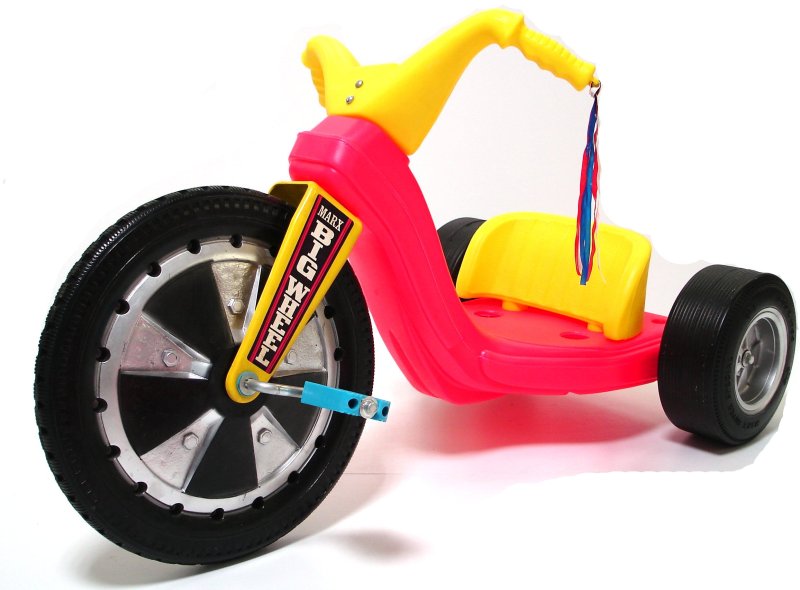
Originally Posted by BigAura
They are fun to ride.
Wait, Big Wheels are made by communists?
