


Saddle height query
 08-09-24 | 07:13 AM
#1
Thread Starter
Campagnolo expert
Joined: Mar 2024
Posts: 47
Likes: 12
Saddle height query
Looking for some advice on saddle height.
I'm riding a 56cm road frame with SPD (NOT SPD-SL) pedals. I have been trying for the last 6 months or so to get my saddle height in a better place. I thought it was more or less there, until yesterday, when a friend took some photos of me riding. As they were on an iPhone, they are Live photos and I've managed to string the ones that were taken in quick successions together to create two videos.
I would really appreciate it if someone could have a look below and tell me what they think?
Many thanks in advance.
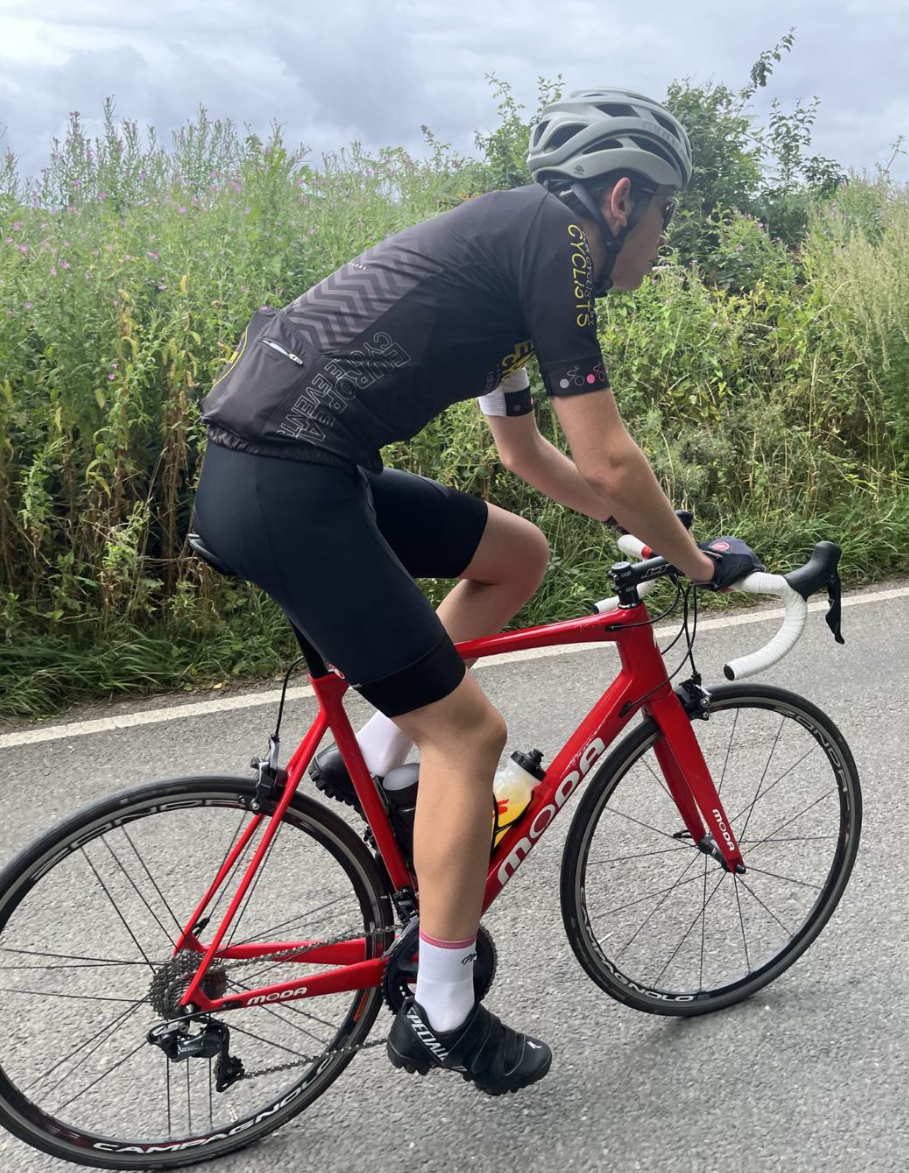
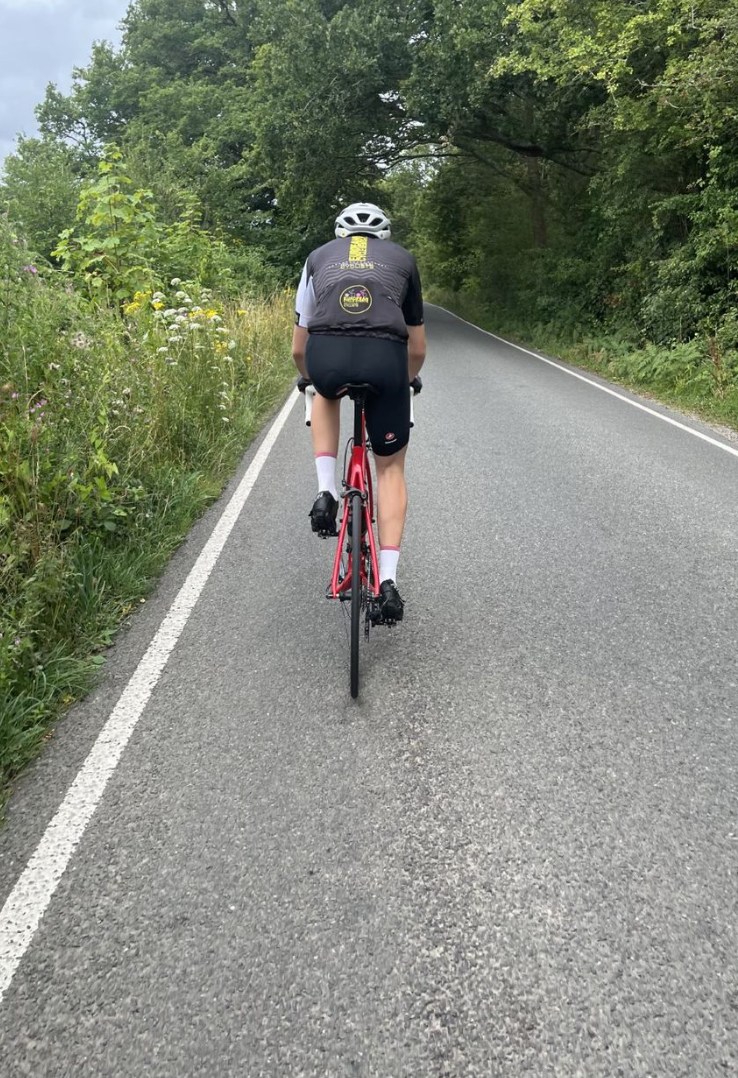
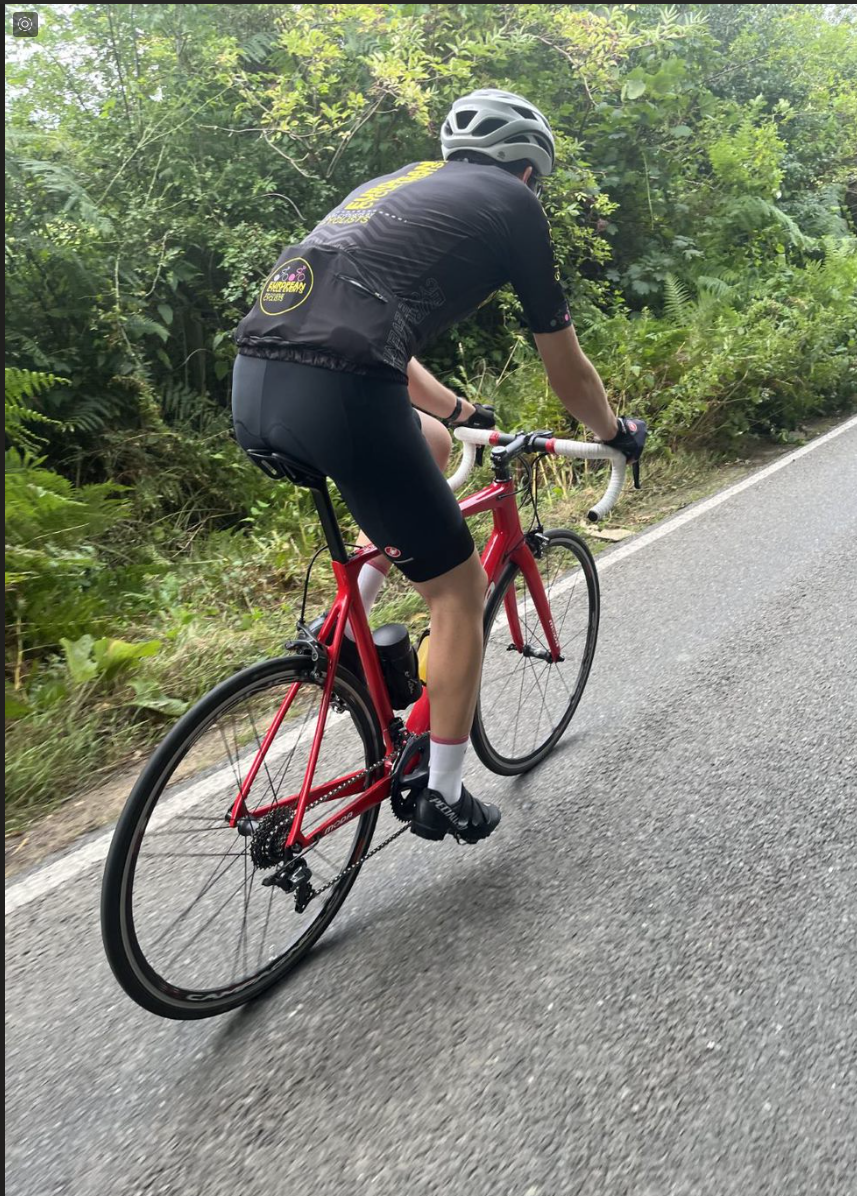
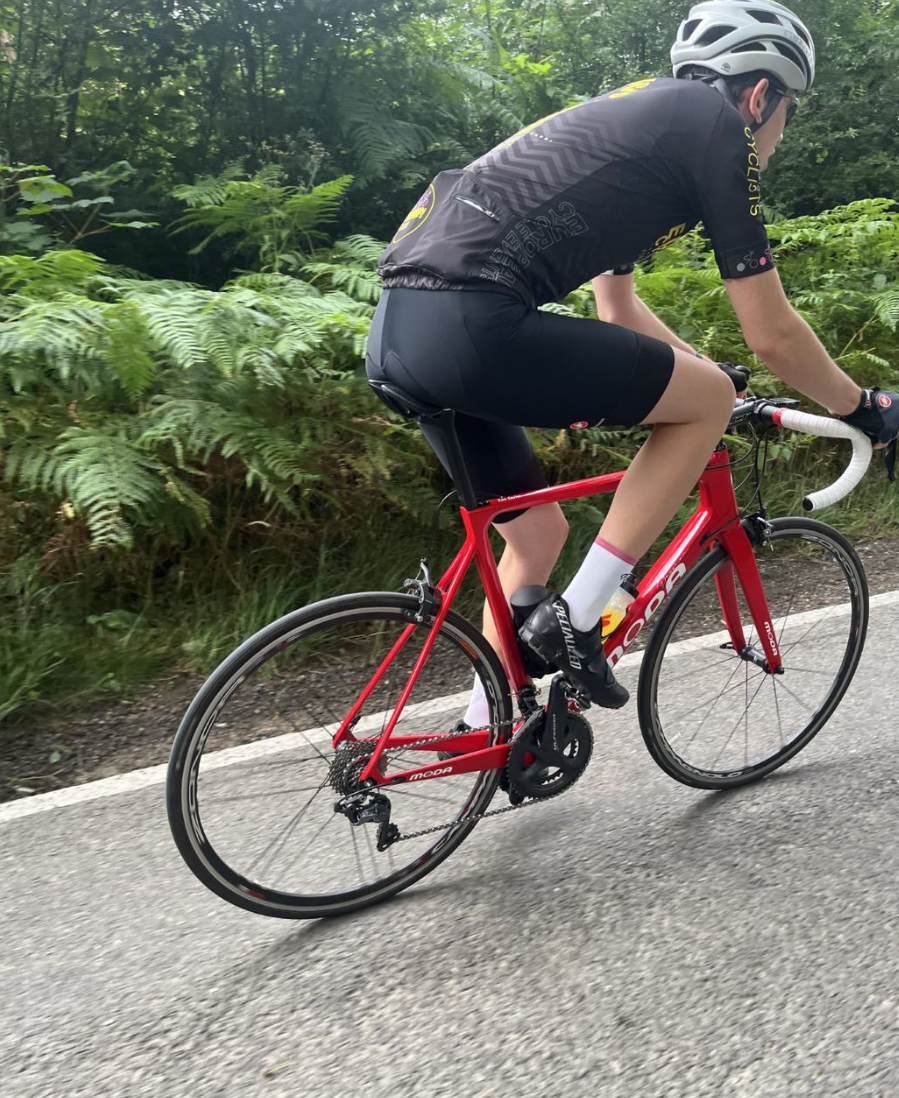
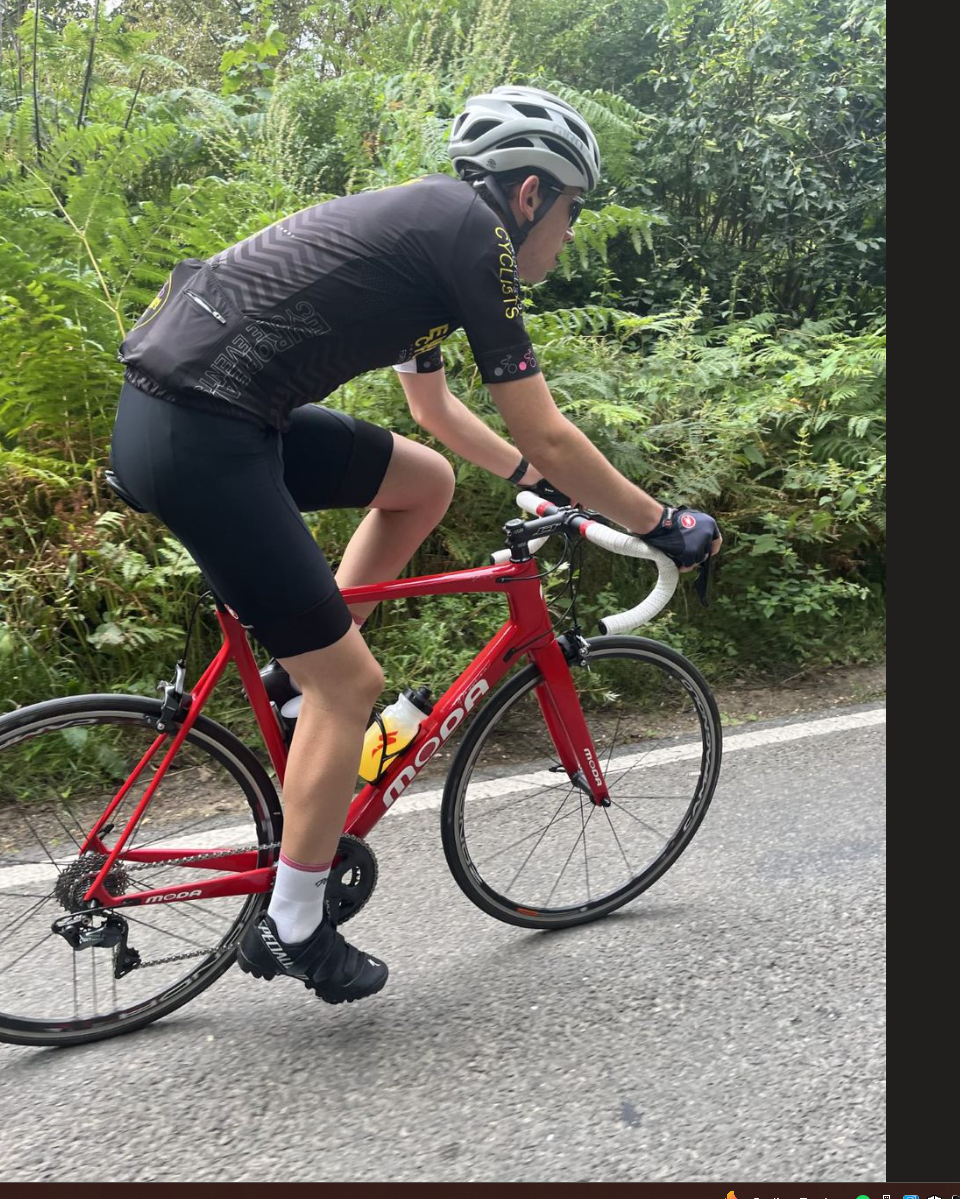
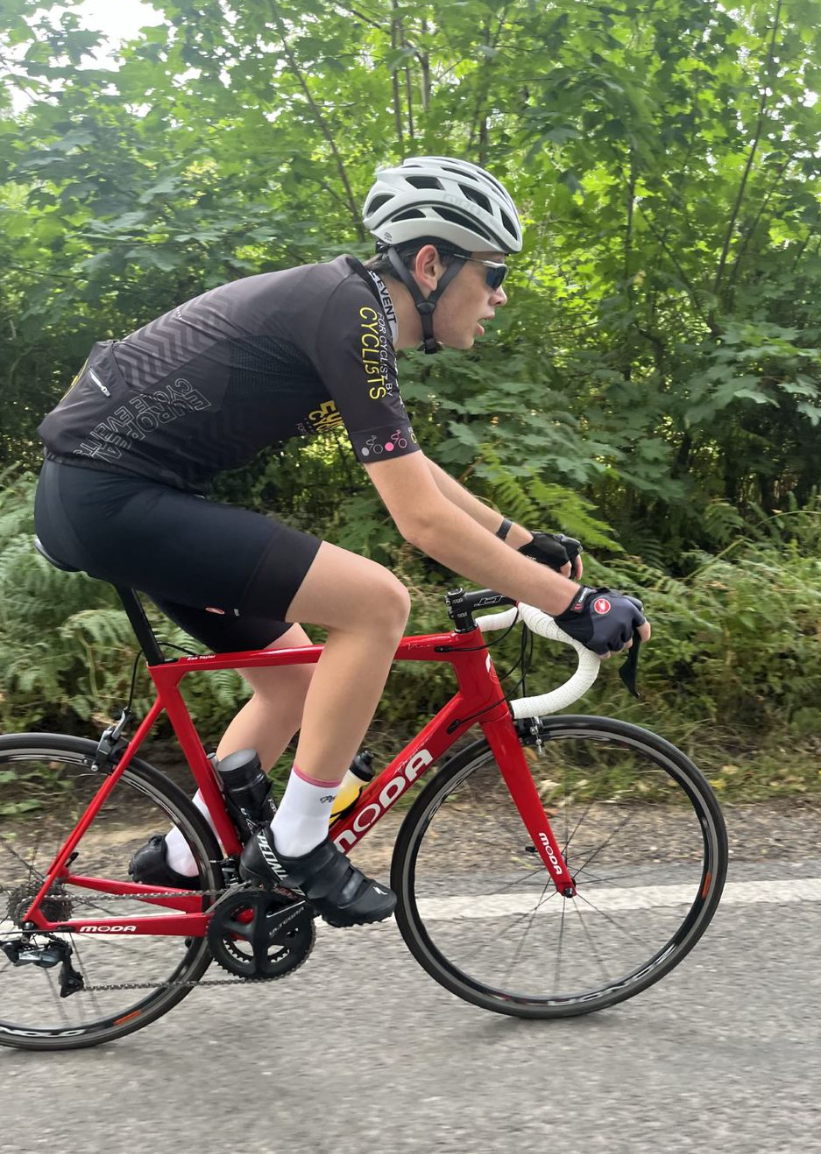
I'm riding a 56cm road frame with SPD (NOT SPD-SL) pedals. I have been trying for the last 6 months or so to get my saddle height in a better place. I thought it was more or less there, until yesterday, when a friend took some photos of me riding. As they were on an iPhone, they are Live photos and I've managed to string the ones that were taken in quick successions together to create two videos.
I would really appreciate it if someone could have a look below and tell me what they think?
Many thanks in advance.
 08-09-24 | 09:03 AM
#2

ignominious poltroon
Joined: Jan 2022
Posts: 6,027
Likes: 5,377
There are folks here who know a lot about bike fit. I am not one of them.
However, these are my quick observations:
The photos are not at an ideal angle, but what I am measuring is 135° for the extended position, and 93° for the (approximately) minimum position.
In general, > 140° or so would indicate the saddle is too high.
If I am guessing the position of your femur's greater trochanter correctly, then your saddle might be a bit too far forward. (Have someone competent check that.)
However, these are my quick observations:
The photos are not at an ideal angle, but what I am measuring is 135° for the extended position, and 93° for the (approximately) minimum position.
In general, > 140° or so would indicate the saddle is too high.
If I am guessing the position of your femur's greater trochanter correctly, then your saddle might be a bit too far forward. (Have someone competent check that.)
08-09-24 | 09:50 AM
#3

Just Pedaling
Joined: Oct 2021
Posts: 1,474
Likes: 1,102
There are folks here who know a lot about bike fit. I am not one of them.
However, these are my quick observations:
The photos are not at an ideal angle, but what I am measuring is 135° for the extended position, and 93° for the (approximately) minimum position.
In general, > 140° or so would indicate the saddle is too high.
If I am guessing the position of your femur's greater trochanter correctly, then your saddle might be a bit too far forward. (Have someone competent check that.)
However, these are my quick observations:
The photos are not at an ideal angle, but what I am measuring is 135° for the extended position, and 93° for the (approximately) minimum position.
In general, > 140° or so would indicate the saddle is too high.
If I am guessing the position of your femur's greater trochanter correctly, then your saddle might be a bit too far forward. (Have someone competent check that.)
 08-09-24 | 10:24 AM
#4

Facts just confuse people


Joined: Jul 2017
Posts: 19,317
Likes: 7,049
From: Mississippi
Bikes: Tarmac Disc Comp Di2 - 2020
What is your body telling you? You don't mention any gripes. Maybe you just don't like seeing yourself in pictures! <grin>
A lot of people want their saddle further back. I don't. You need to determine if you do or don't. But don't just move it because someone told you to. Do it because you are trying to solve some real issue you are having.
Possibly you have room to go up with your saddle height. (which will also move your saddle back) But if you aren't having issues and don't need to solve a lack of performance, I wouldn't worry about it.
A lot of people want their saddle further back. I don't. You need to determine if you do or don't. But don't just move it because someone told you to. Do it because you are trying to solve some real issue you are having.
Possibly you have room to go up with your saddle height. (which will also move your saddle back) But if you aren't having issues and don't need to solve a lack of performance, I wouldn't worry about it.
08-09-24 | 12:40 PM
#5
Thread Starter
Campagnolo expert
Joined: Mar 2024
Posts: 47
Likes: 12
Thanks for all the responses. I should have been clearer why I was posting. I had the saddle too low for a long time and fixed it at the beginning of this year. I wasn't in any real discomfort before but the new position feels a lot better. I used the LeMond, but this came out too low - not sure what's going on there. I then used the 'other' method (which I cannot remember the name of) which measures from the pedal axle instead of the b/b to take into account the length of the cranks. This was better but still off. What I have ended up with is the LeMond method + some. Odd. It feels fine to ride but I sometimes feel like I could be extending just a bit more. Then I just think that's me thinking about it too much.
The photos are not at an ideal angle, but what I am measuring is 135° for the extended position, and 93° for the (approximately) minimum position.
In general, > 140° or so would indicate the saddle is too high.
If I am guessing the position of your femur's greater trochanter correctly, then your saddle might be a bit too far forward. (Have someone competent check that.)
Would you say that the saddle should maybe come up then?
As for the fore/aft, yes, the saddle is far forward. It is almost at the 'max' on the rails. This was because I was sitting on the nose beforehand. The only explanation I can think of for that is that the stem is too long for me, but I had a 100mm on originally and the problem existed then too. I have a 110mm on now and prefer that. Is it simply a matter of 'training' myself to sit correctly on the saddle when it is further back?
This is very true. My original reason for posting was because I feel like it could maybe come up a tiny bit. I have a very experience family member who I tend to go for for advice. He seemed to think it was an alright height, but when I watch him pedal he has more leg extension than me.
Also, another question, if I was to slide the saddle back, would that mean I would need to increase/decrease saddle height at all? Trying to work out in my brain how they would affect each other.
Thanks!
The photos are not at an ideal angle, but what I am measuring is 135° for the extended position, and 93° for the (approximately) minimum position.
In general, > 140° or so would indicate the saddle is too high.
If I am guessing the position of your femur's greater trochanter correctly, then your saddle might be a bit too far forward. (Have someone competent check that.)
What is your body telling you? You don't mention any gripes. Maybe you just don't like seeing yourself in pictures! <grin>
A lot of people want their saddle further back. I don't. You need to determine if you do or don't. But don't just move it because someone told you to. Do it because you are trying to solve some real issue you are having.
Possibly you have room to go up with your saddle height. (which will also move your saddle back) But if you aren't having issues and don't need to solve a lack of performance, I wouldn't worry about it.
A lot of people want their saddle further back. I don't. You need to determine if you do or don't. But don't just move it because someone told you to. Do it because you are trying to solve some real issue you are having.
Possibly you have room to go up with your saddle height. (which will also move your saddle back) But if you aren't having issues and don't need to solve a lack of performance, I wouldn't worry about it.
Also, another question, if I was to slide the saddle back, would that mean I would need to increase/decrease saddle height at all? Trying to work out in my brain how they would affect each other.
Thanks!
08-09-24 | 12:56 PM
#6
ignominious poltroon
Joined: Jan 2022
Posts: 6,027
Likes: 5,377
Thanks for all the responses. I should have been clearer why I was posting. I had the saddle too low for a long time and fixed it at the beginning of this year. I wasn't in any real discomfort before but the new position feels a lot better. I used the LeMond, but this came out too low - not sure what's going on there. I then used the 'other' method (which I cannot remember the name of) which measures from the pedal axle instead of the b/b to take into account the length of the cranks. This was better but still off. What I have ended up with is the LeMond method + some. Odd. It feels fine to ride but I sometimes feel like I could be extending just a bit more. Then I just think that's me thinking about it too much.
Would you say that the saddle should maybe come up then?
Would you say that the saddle should maybe come up then?
Mark where it is (height, fore-aft) and then (if you are experiencing any balance issues, or hand/wrist numbness), maybe move your saddle back 5mm.
(If you do move it back on the rails, it will slightly lengthen the reach to the pedals, so increases the effective saddle height very slightly.)
Balance is often best achieved if you can draw a straight line from the center of your bottom bracket, through the seat tube and post, and intersecting with your femur's greater trochanter.
As mentioned by others, this is well into the realm of personal preference. I see nothing obviously wrong about your fit.
What issues do you hope to address?
Here is a website (which sells a $5 PDF that has more details) that might be of help: https://bikedynamics.co.uk
The idea is that instead of using arbitrary ad hoc formulae for things like saddle height, it is better to put the rider on a trainer and then take some stills from movies and measure distances and angles that way.
People tend to want to put the saddle a bit higher than what is ideal. Tour de France riders are famous for lowering their saddles by the third day or so.
Last edited by Polaris OBark; 08-09-24 at 01:25 PM.
08-09-24 | 01:16 PM
#7
ignominious poltroon
Joined: Jan 2022
Posts: 6,027
Likes: 5,377
As for the fore/aft, yes, the saddle is far forward. It is almost at the 'max' on the rails. This was because I was sitting on the nose beforehand. The only explanation I can think of for that is that the stem is too long for me, but I had a 100mm on originally and the problem existed then too. I have a 110mm on now and prefer that. Is it simply a matter of 'training' myself to sit correctly on the saddle when it is further back?
In general, what you want to do is get the saddle height and fore/aft position correct, and then worry about the handlebars. Ideally, you want to be balanced on the saddle in such a way that you put almost no weight on your wrists and hands. Then pick a stem that gives you enough extension so that you feel comfortable and can maintain the balance, and if you are interested in being aero (I am not), you want the bars as low as you can go (within reason). It seems a bit counter-intuitive, but the higher the bars, the more weight you are going to be putting on them. You want your arms to be about 90° from a line whose endpoints are defined by your spine, and the elbows at least slightly bent. Yours are quite bent, so you can probably move the saddle back if you need to without having to replace your stem.
The main point is you want to avoid correcting for a stem (or top tube) that is too long by shoving your saddle too far forward (unless you really do prefer to ride like that).
08-09-24 | 03:52 PM
#8

Full Member
Joined: Jul 2023
Posts: 456
Likes: 271
From: Montréal
Bikes: Hardrock touring bike
Something I've noticed is that saddle height, or more accurately saddle to pedal spindle (or bottom bracket) distance, varies depending on your usual cadence, and what you do with your feet. The faster you spin, the closer you have to be to the pedals. On the other hand, if you pedal slower with long powerful strokes, you need more leg extension.
So it's not just a matter of how you fit into the geometry at rest, you have to be moving in a usual way and make adjustments with respect to that.
So it's not just a matter of how you fit into the geometry at rest, you have to be moving in a usual way and make adjustments with respect to that.
 08-10-24 | 08:47 AM
#9
Full Member

Joined: Nov 2012
Posts: 243
Likes: 17
To me, is seems you may be pedaling a bit too "toes down." If that's the way you "naturally" want to pedal, it may be OK. But, that could explain why you found the .883 and 1.09 (pedal to saddle) formulas to be too low. For me, those put me 1-2cm too high, because I prefer to pedal more "heels down" (due to all the walking I do delivering mail). Did you try the "heel on pedal" method?
 08-11-24 | 06:05 AM
#10
Thread Starter
Campagnolo expert
Joined: Mar 2024
Posts: 47
Likes: 12
To me, is seems you may be pedaling a bit too "toes down." If that's the way you "naturally" want to pedal, it may be OK. But, that could explain why you found the .883 and 1.09 (pedal to saddle) formulas to be too low. For me, those put me 1-2cm too high, because I prefer to pedal more "heels down" (due to all the walking I do delivering mail). Did you try the "heel on pedal" method?
Something I've noticed is that saddle height, or more accurately saddle to pedal spindle (or bottom bracket) distance, varies depending on your usual cadence, and what you do with your feet. The faster you spin, the closer you have to be to the pedals. On the other hand, if you pedal slower with long powerful strokes, you need more leg extension.
So it's not just a matter of how you fit into the geometry at rest, you have to be moving in a usual way and make adjustments with respect to that.
So it's not just a matter of how you fit into the geometry at rest, you have to be moving in a usual way and make adjustments with respect to that.
It's an interesting point which I hadn't thought of before so thank you!
This wasn't directed at me, but is related to what I was saying.
In general, what you want to do is get the saddle height and fore/aft position correct, and then worry about the handlebars. Ideally, you want to be balanced on the saddle in such a way that you put almost no weight on your wrists and hands. Then pick a stem that gives you enough extension so that you feel comfortable and can maintain the balance, and if you are interested in being aero (I am not), you want the bars as low as you can go (within reason). It seems a bit counter-intuitive, but the higher the bars, the more weight you are going to be putting on them. You want your arms to be about 90° from a line whose endpoints are defined by your spine, and the elbows at least slightly bent. Yours are quite bent, so you can probably move the saddle back if you need to without having to replace your stem.
The main point is you want to avoid correcting for a stem (or top tube) that is too long by shoving your saddle too far forward (unless you really do prefer to ride like that).
In general, what you want to do is get the saddle height and fore/aft position correct, and then worry about the handlebars. Ideally, you want to be balanced on the saddle in such a way that you put almost no weight on your wrists and hands. Then pick a stem that gives you enough extension so that you feel comfortable and can maintain the balance, and if you are interested in being aero (I am not), you want the bars as low as you can go (within reason). It seems a bit counter-intuitive, but the higher the bars, the more weight you are going to be putting on them. You want your arms to be about 90° from a line whose endpoints are defined by your spine, and the elbows at least slightly bent. Yours are quite bent, so you can probably move the saddle back if you need to without having to replace your stem.
The main point is you want to avoid correcting for a stem (or top tube) that is too long by shoving your saddle too far forward (unless you really do prefer to ride like that).
I'll have a play and see what I think!
I will have a play around (having first marked where everything is currently) to see if I can get anything better. Thanks.
08-16-24 | 01:11 PM
#11
Senior Member
Joined: Feb 2011
Posts: 1,123
Likes: 49
Bikes: 29er commuter/tourer, 26er commuter/tourer, folding mixed-mode commuter
Your legs look like they are still quite bent at the bottom of your stroke. They should be straight, or very nearly so.
To quote Sheldon Brown on the topic:
To quote Sheldon Brown on the topic:
I like to think that William Blake summed it up nicely 200 years ago when he said:
"You never know what is enough
until you know what is too much."
I suggest gradually raising your saddle, perhaps half an inch (1 cm) at a time. Each time you raise it, ride the bike. If it doesn't feel noticeably worse to ride, ride it for at least a couple of miles/km. If it had been too low before, your bike will feel lighter and faster with the new riding position. If raising the saddle improved things, raise it again, and ride some more. Keep doing this until the saddle is finally too high, then lower it just a bit.
When the saddle is too high, you'll have to rock your hips to pedal, and you'll probably feel as if you need to stretch your legs to reach the bottom part of the pedal.
"You never know what is enough
until you know what is too much."
I suggest gradually raising your saddle, perhaps half an inch (1 cm) at a time. Each time you raise it, ride the bike. If it doesn't feel noticeably worse to ride, ride it for at least a couple of miles/km. If it had been too low before, your bike will feel lighter and faster with the new riding position. If raising the saddle improved things, raise it again, and ride some more. Keep doing this until the saddle is finally too high, then lower it just a bit.
When the saddle is too high, you'll have to rock your hips to pedal, and you'll probably feel as if you need to stretch your legs to reach the bottom part of the pedal.
