


Question about position setback / straight seatpost
 03-11-25 | 10:08 PM
#1
Thread Starter
Junior Member

Joined: Jan 2017
Posts: 151
Likes: 24
Bikes: Scott Addict Rc 20/Giant SCR / Felt FR5 / Trek Emonda ALR 6 / Trek Domane AL2
Question about position setback / straight seatpost
Hi! Question about position when using a seat post with 20 mm setback compared to a straight seat post if I use the same saddle and maintain the previous seat position forward/backward and height from the bottom bracket or pedals. I myself don't think there will be any change but I'm not a bicycle geometry specialist or bicycle fitter, so I'll take the liberty of asking on the forum as I know there are many here with great knowledge of bicycle geometry.
Thanks & Regards
hsea17
Thanks & Regards
hsea17
 03-12-25 | 07:24 AM
#2

Senior Member


Joined: Apr 2011
Posts: 12,647
Likes: 4,791
A setback seatpost of 20mm will need to clamp the rails of the saddle 20mm further to the rear of the saddle than the zero post to achieve an identical seat position. Sometimes, that is not possible because the rails don't go back that far.
Zero setback posts were created for MTBs, and are often misused on road bikes that are designed to be paired with setback posts. Make sure you have appropriate setback to your position.
Zero setback posts were created for MTBs, and are often misused on road bikes that are designed to be paired with setback posts. Make sure you have appropriate setback to your position.
03-12-25 | 08:26 AM
#3

Senior Member

Joined: Oct 2014
Posts: 14,159
Likes: 5,284
From: Portland, OR
Bikes: (2) ti TiCycles, 2007 w/ triple and 2011 fixed, 1979 Peter Mooney, ~1983 Trek 420 now fixed and ~1973 Raleigh Carlton Competition gravel grinder
To add to Kontact's post - position rules. If the post you have allows setting your seat in that position, it works. (Well, if you have the seat completely slammed and the rails are titanium or perhaps CF and the start of the bend is in the clamp and that clamp has sharp edges, the rails may break.)
That said, I try hard to get seatposts where the clamp sits roughly centered on the rails. Best for rail long life though that usually doesn't matter, probably best for suspension and shock absorption for your butt and my real reason - it allows any and all tweaking to the most critical fit adjustment on the bike. People pay hundreds for their bike fitting sessions. A very expensive seatpost of that centered setback might cost a single hundred dollars and be a continuing fit blessing the next decade or two.
That said, I paid far more for two custom made seatpost of 160mm setback for my two titanium customs - because I had those bikes made with 74 and 75 degree seatposts - to allow very short chainstays, decently large tires and fender. (My butt wants a normal 20mm setback post on a 72.5 tube.) Posts were made by Ti Cycles with Thompson clamps and titanium tubes. Thompson so a joy to work with. Total keepers and that clamp allows me probably 2 cm adjust in each direction. (But if I were smart, I would have asked about bending the seat tube and using a normal post! Next life!)
I've known about the short chainstay, steep seat tube and therefore big setback needed for my best fit since I raced nearly 50 years ago. Slammed seats were my norm. Broke my first ti railed seat. (I'm light. My butt really likes ti rails on those steep angled bikes.) Rode the compromise of not enough slam for fit to keep the rails intact on several bikes. Then started paying for good big setback posts. Yeah!! (Customs, the lugged steel Nitto and the SR 100 something adjustable MTB posts. Those SRs will be old but probably not expensive. Max setback is huge. The steel Nitto has a lot of setback, is beautiful, really nice to work with and much lighter than it looks. Visually an upgrade to any bike you put it on.)
That said, I try hard to get seatposts where the clamp sits roughly centered on the rails. Best for rail long life though that usually doesn't matter, probably best for suspension and shock absorption for your butt and my real reason - it allows any and all tweaking to the most critical fit adjustment on the bike. People pay hundreds for their bike fitting sessions. A very expensive seatpost of that centered setback might cost a single hundred dollars and be a continuing fit blessing the next decade or two.
That said, I paid far more for two custom made seatpost of 160mm setback for my two titanium customs - because I had those bikes made with 74 and 75 degree seatposts - to allow very short chainstays, decently large tires and fender. (My butt wants a normal 20mm setback post on a 72.5 tube.) Posts were made by Ti Cycles with Thompson clamps and titanium tubes. Thompson so a joy to work with. Total keepers and that clamp allows me probably 2 cm adjust in each direction. (But if I were smart, I would have asked about bending the seat tube and using a normal post! Next life!)
I've known about the short chainstay, steep seat tube and therefore big setback needed for my best fit since I raced nearly 50 years ago. Slammed seats were my norm. Broke my first ti railed seat. (I'm light. My butt really likes ti rails on those steep angled bikes.) Rode the compromise of not enough slam for fit to keep the rails intact on several bikes. Then started paying for good big setback posts. Yeah!! (Customs, the lugged steel Nitto and the SR 100 something adjustable MTB posts. Those SRs will be old but probably not expensive. Max setback is huge. The steel Nitto has a lot of setback, is beautiful, really nice to work with and much lighter than it looks. Visually an upgrade to any bike you put it on.)
Last edited by 79pmooney; 03-12-25 at 08:31 AM.
03-14-25 | 04:21 AM
#4
Thread Starter
Junior Member
Joined: Jan 2017
Posts: 151
Likes: 24
Bikes: Scott Addict Rc 20/Giant SCR / Felt FR5 / Trek Emonda ALR 6 / Trek Domane AL2
A setback seatpost of 20mm will need to clamp the rails of the saddle 20mm further to the rear of the saddle than the zero post to achieve an identical seat position. Sometimes, that is not possible because the rails don't go back that far.
Zero setback posts were created for MTBs, and are often misused on road bikes that are designed to be paired with setback posts. Make sure you have appropriate setback to your position.
Zero setback posts were created for MTBs, and are often misused on road bikes that are designed to be paired with setback posts. Make sure you have appropriate setback to your position.
So, what you say is that even if i place the saddle in identical position and that exactly from bottom bracket and stem to saddle nose I will have to push it backwards on the straight seat post to get similar position as with the 20mm setback seat post?
hsea17
03-14-25 | 07:09 AM
#5
Senior Member
Joined: Apr 2011
Posts: 12,647
Likes: 4,791
Thanks for replying.
So, what you say is that even if i place the saddle in identical position and that exactly from bottom bracket and stem to saddle nose I will have to push it backwards on the straight seat post to get similar position as with the 20mm setback seat post?
hsea17
So, what you say is that even if i place the saddle in identical position and that exactly from bottom bracket and stem to saddle nose I will have to push it backwards on the straight seat post to get similar position as with the 20mm setback seat post?
hsea17
Sometimes, a particular saddle position won't work with both types. My saddles, because I have mostly bikes with steep 74 degree seat tube angles, need to be clamped toward the front of the saddle rails to get into correct position. That is on setback type seatposts. If I tried to do that with a zero setback post, I would have to mount the saddle about 20mm too far forward to get the rails to the post clamp.
This is a rather extreme example, but if this is your position, how could you possibly use a seatpost where the clamp is even further forward?
 03-14-25 | 10:14 PM
#6
Thread Starter
Junior Member
Joined: Jan 2017
Posts: 151
Likes: 24
Bikes: Scott Addict Rc 20/Giant SCR / Felt FR5 / Trek Emonda ALR 6 / Trek Domane AL2
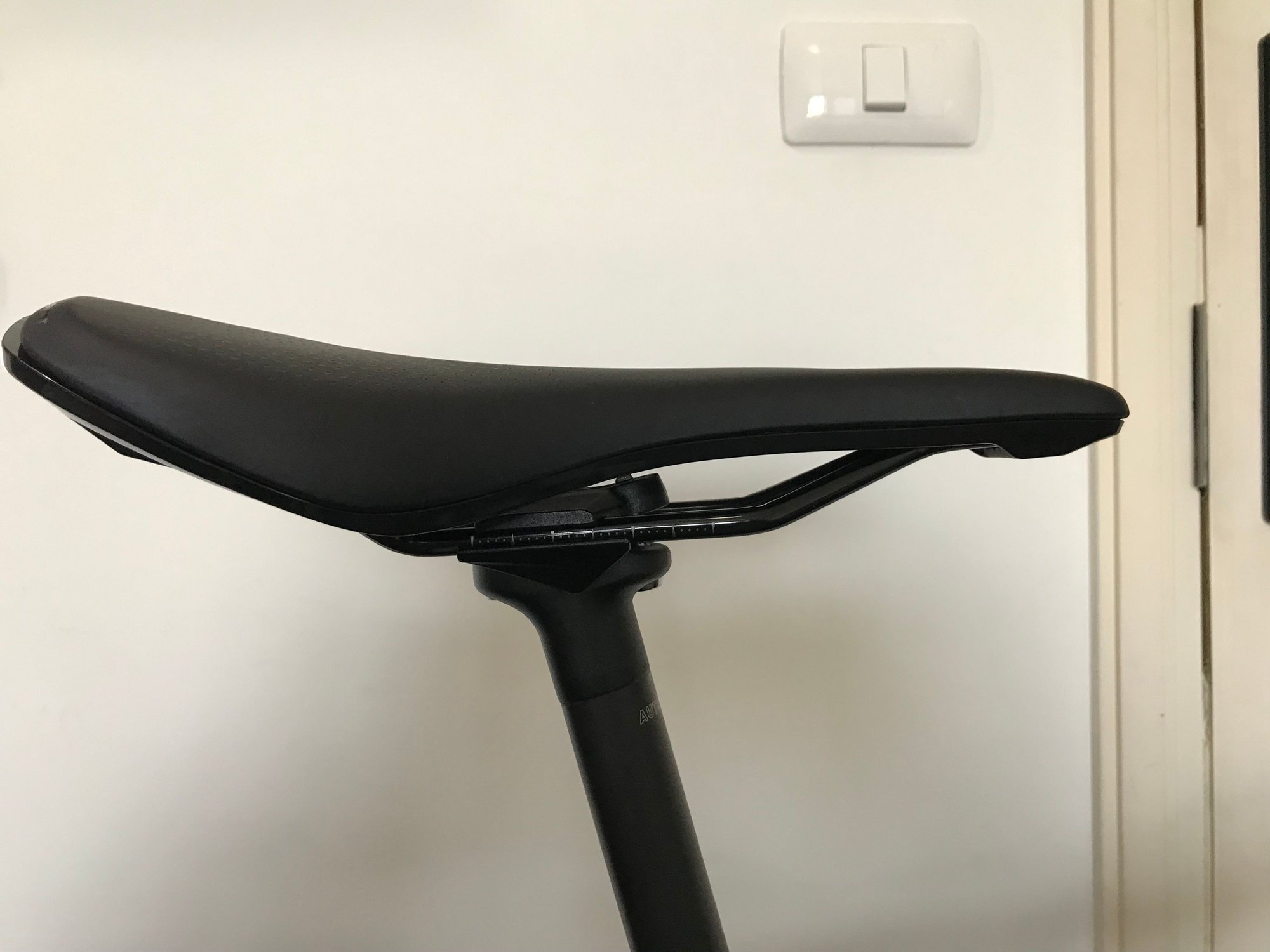
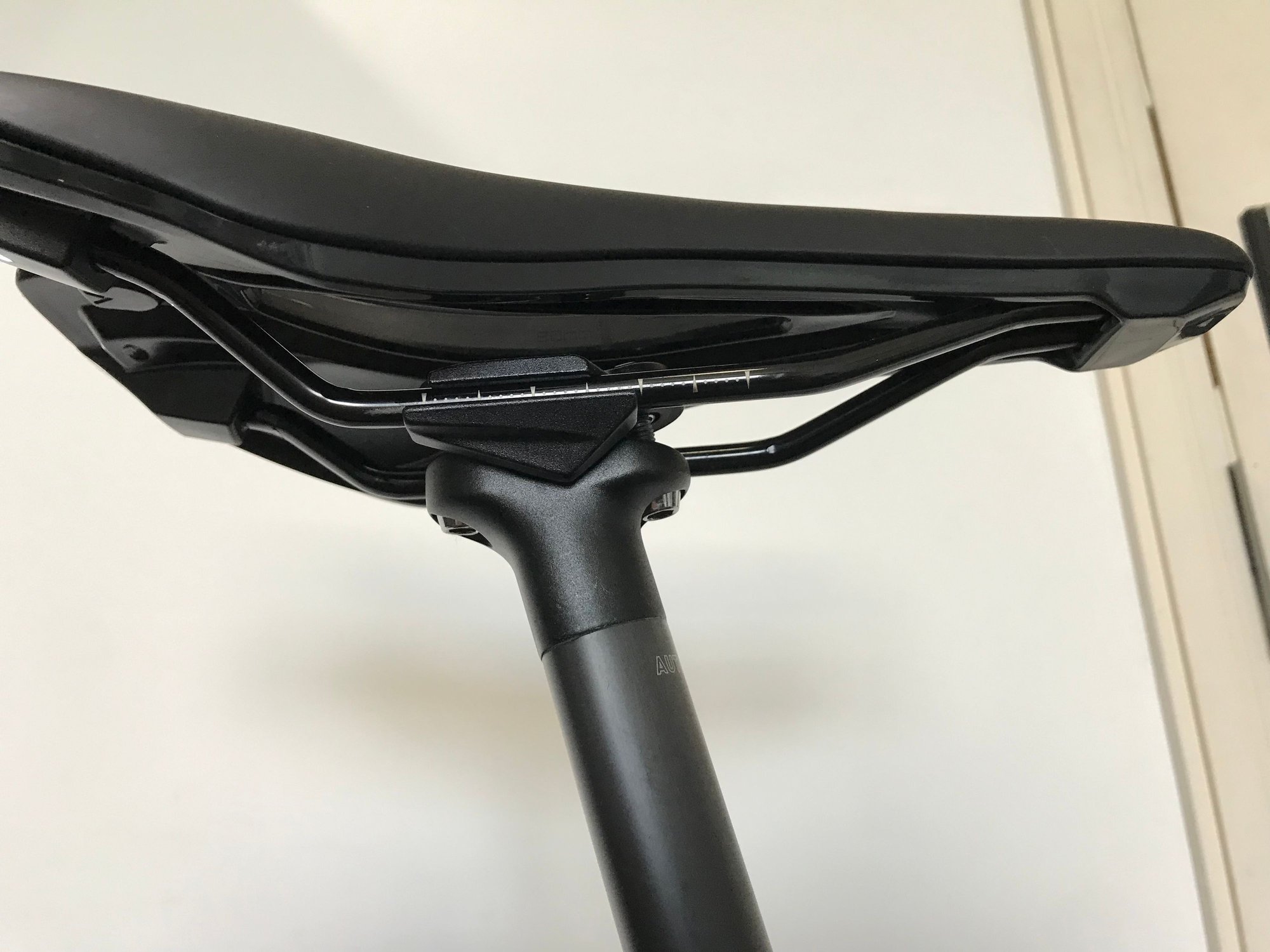
I'm opposite, this picture is with the straight seat post and it's still possible to move it a bit more forward and back plenty of saddle rail. With the setback seat post then saddle is pushed to the limit forward inside my standard measure saddle height and saddle nose distance from mid intersection stem / handlebar.
hsea17
hsea17
03-15-25 | 05:18 AM
#8
Thread Starter
Junior Member
Joined: Jan 2017
Posts: 151
Likes: 24
Bikes: Scott Addict Rc 20/Giant SCR / Felt FR5 / Trek Emonda ALR 6 / Trek Domane AL2
Back to my question, does setback or straight seat post make any difference in overall geometry for me personally when I maintain the measurements I've used for at least the last 12-15 years?
hsea17
03-15-25 | 09:14 AM
#9
Senior Member
Joined: Apr 2011
Posts: 12,647
Likes: 4,791
Yes its a road bike. It may not be exactly Greg Lemonde's bike position, but then again, I competed in a fair number of triathlons at a younger age, so maybe I've adopted some bad/good habits from that time! But if I use the now "dead KOPS" and measure from the tibial tuberosity I'm not far off.
Back to my question, does setback or straight seat post make any difference in overall geometry for me personally when I maintain the measurements I've used for at least the last 12-15 years?
hsea17
Back to my question, does setback or straight seat post make any difference in overall geometry for me personally when I maintain the measurements I've used for at least the last 12-15 years?
hsea17
But they exist entirely to create setback - nothing else. Is that why you're asking?
03-15-25 | 11:52 AM
#10

Facts just confuse people

Joined: Jul 2017
Posts: 19,317
Likes: 7,049
From: Mississippi
Bikes: Tarmac Disc Comp Di2 - 2020
How much set back a seat post gives just changes how far back or forward from the bars or how for behind the BB your saddle can go. If your saddle can't be moved to the position you wish it to be in, then you get a seat post with the appropriate amount of set back to put its rail clamp where you can adjust it to the position you want.
It's your body proportions and your preferences that determine where your saddle should be.
It's your body proportions and your preferences that determine where your saddle should be.
03-15-25 | 08:54 PM
#11
Thread Starter
Junior Member
Joined: Jan 2017
Posts: 151
Likes: 24
Bikes: Scott Addict Rc 20/Giant SCR / Felt FR5 / Trek Emonda ALR 6 / Trek Domane AL2
Thanks to both Kontact and Iride01 for the answers. Iride's answer / conclusion below is well in a way what I was looking for and even if it's not a usual road bike position it has functioned for my body proportions. I was a little unsure if the straight seat post would change my position even with the same distances to the seat/handlebar etc. It's your body proportions and your preferences that determine where your saddle should be.
hsea17

hsea17
03-15-25 | 10:21 PM
#12
Senior Member
Joined: Apr 2011
Posts: 12,647
Likes: 4,791
Thanks to both Kontact and Iride01 for the answers. Iride's answer / conclusion below is well in a way what I was looking for and even if it's not a usual road bike position it has functioned for my body proportions. I was a little unsure if the straight seat post would change my position even with the same distances to the seat/handlebar etc. It's your body proportions and your preferences that determine where your saddle should be.
hsea17
hsea17
03-16-25 | 09:49 AM
#13
Senior Member
Joined: Jul 2009
Posts: 8,145
Likes: 11,080
Bikes: Colnago, Van Dessel, Factor, Cervelo, Ritchey
How much set back a seat post gives just changes how far back or forward from the bars or how for behind the BB your saddle can go. If your saddle can't be moved to the position you wish it to be in, then you get a seat post with the appropriate amount of set back to put its rail clamp where you can adjust it to the position you want.
It's your body proportions and your preferences that determine where your saddle should be.
It's your body proportions and your preferences that determine where your saddle should be.
03-16-25 | 10:08 AM
#14
Junior Member
Joined: Apr 2019
Posts: 142
Likes: 24
I'd say you are over generalizing. Straight seatposts have their application on road bikes too. Everyone's body is different. Nearly every bike has different geometry.
03-16-25 | 10:18 AM
#15
Senior Member
Joined: Apr 2011
Posts: 12,647
Likes: 4,791
KOPS was never a fitting goal - it was a datum that seemed to put many people in about the right set back. Good set back is really just an angle - a line from the BB to the hip bone that isn't so steep that you aren't rotating your pelvis forward to reach the pedalling orbit. Just because you have short femurs or long feet it doesn't mean that you are better off sitting at a steep angle over where you pedal, even if KOPS suggests that is where you should be. KOPS doesn't work on everyone.
03-16-25 | 07:23 PM
#16
Thread Starter
Junior Member
Joined: Jan 2017
Posts: 151
Likes: 24
Bikes: Scott Addict Rc 20/Giant SCR / Felt FR5 / Trek Emonda ALR 6 / Trek Domane AL2
hsea17
03-17-25 | 08:32 AM
#17
Facts just confuse people
Joined: Jul 2017
Posts: 19,317
Likes: 7,049
From: Mississippi
Bikes: Tarmac Disc Comp Di2 - 2020
If you aren't having any issues from riding, then don't imagine that your fit to the bike needs anything. Possibly if you change your riding habits, then issues might show. Especially if you have been doing fairly short rides of around a hours time and then start doing longer rides of 2 to 3 hours or more. Those will show you that things you thought were not much bother, really are a bother.
