
Newbie
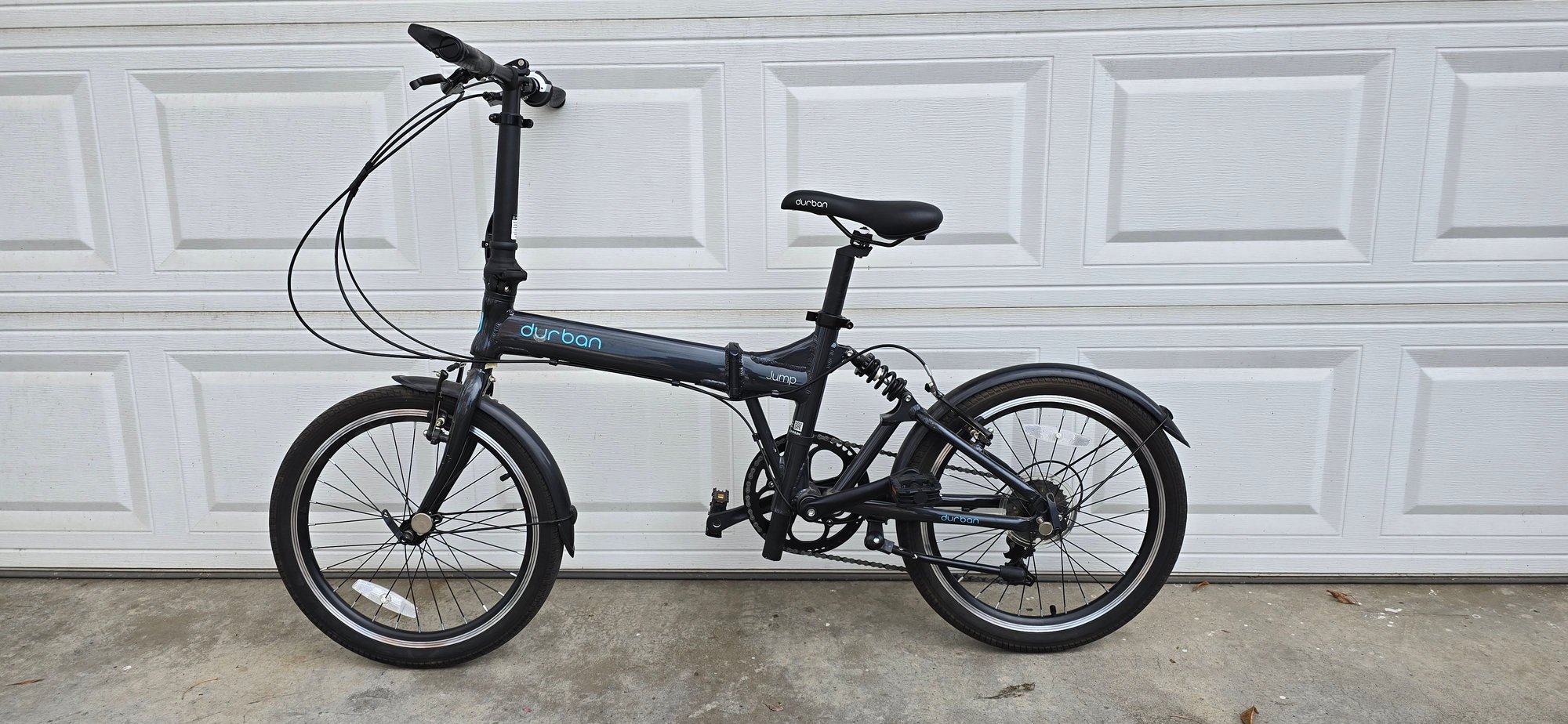
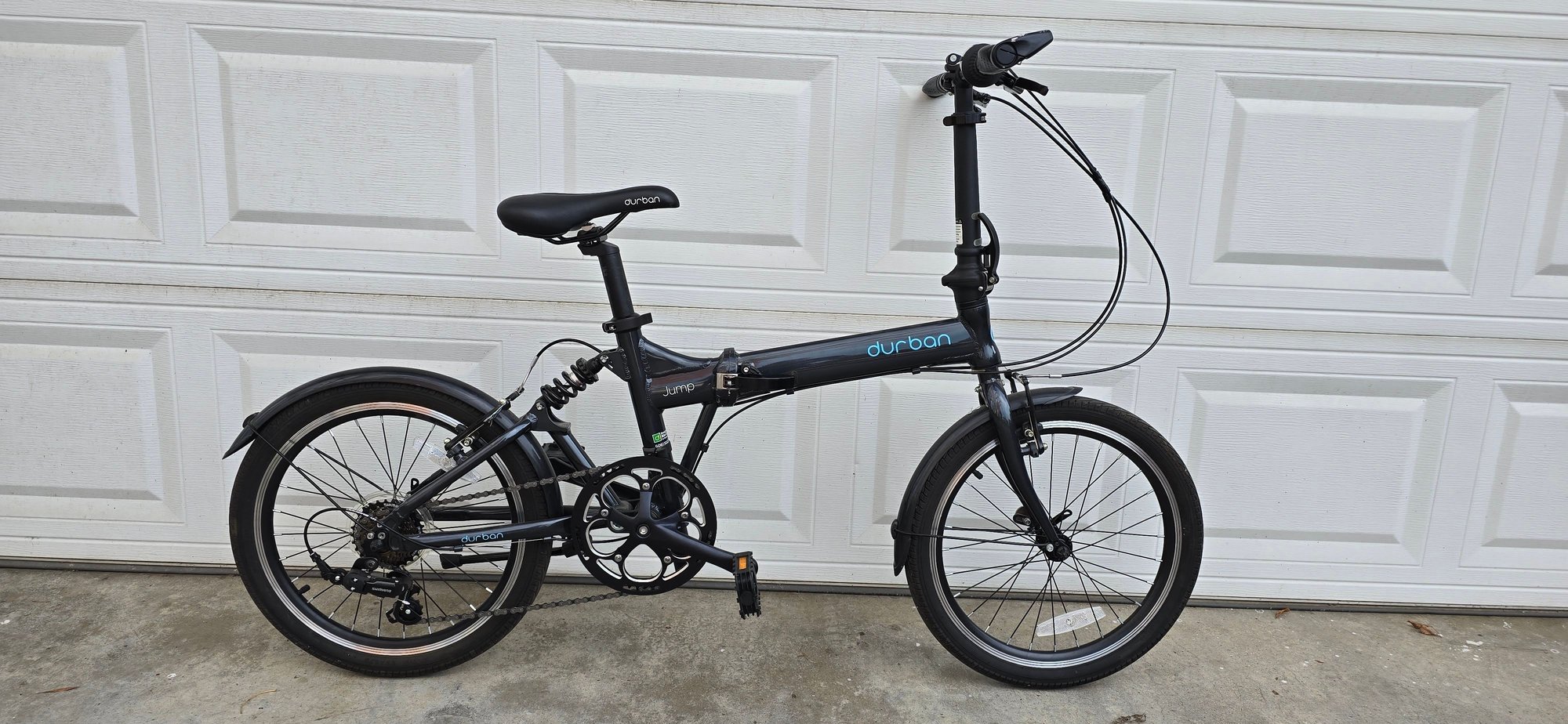
My neighbor gave me this bike a couple weeks ago. It is a Durban Jump. I haven't found much information on it. I want to replace the v brakes with different ones; the ones on it have the small adjustment screws broken. Will any v brake work or do I need ones for 20 inch wheels?

Newbie
Quote:
Any V brake should work. Originally Posted by Fastech370
My neighbor gave me this bike a couple weeks ago. It is a Durban Jump. I haven't found much information on it. I want to replace the v brakes with different ones; the ones on it have the small adjustment screws broken. Will any v brake work or do I need ones for 20 inch wheels?
Duragrouch
Highly Enriched Driftium
close


04-30-26
- Join DateApr 2017
- Posts:6,653
-
iTrader Positive Feedback0
-
iTrader Feedback Score(0)
-
Likes:263
-
Liked:2,148 Times in 1,650 Posts
I agree, any V-brake should work. The main difference I have found in them is, one uses a small coil spring at the pivot to adjust centering, and one uses a much thicker wire spring that extends up the sides of the arms. That's why you sometimes see V-brakes with a protrusion on the arm meant for the thicker wire, but seemingly no purpose, because it has the smaller wire coils. The arm forgings are universal to both, at least at that time.
V-brakes typically have a bracket on the fork or frame with 3 positions for the adjustment spring. Usually from the factory the bike uses the middle position. I always change that to the position of least tension; I ride only pavement and don't ever have mud packed around the brakes, where I'd need a stronger return spring, so I set it to least tension so easier brake squeeze. However, some combinations of adjusters/rims/pads, the lowest spring setting will have "slack", you need the next setting.
V-brakes typically have a bracket on the fork or frame with 3 positions for the adjustment spring. Usually from the factory the bike uses the middle position. I always change that to the position of least tension; I ride only pavement and don't ever have mud packed around the brakes, where I'd need a stronger return spring, so I set it to least tension so easier brake squeeze. However, some combinations of adjusters/rims/pads, the lowest spring setting will have "slack", you need the next setting.
Tourist in MSN
Senior Member
close


05-01-26
- Join DateAug 2010
- LocationMadison, WI
- Posts:12,717
-
iTrader Positive Feedback0
-
iTrader Feedback Score(0)
-
Likes:176
-
Liked:2,104 Times in 1,609 Posts
There is a wide range of arm lengths for V brakes. On one of my bikes I am near the short extreme of about 85mm, two of my bikes have the 110mm length. Longer gives you more leverage, and more tire clearance.
From the photo, yours look pretty long. And with fenders you need pretty long ones.
I assume you mean the adjustment screws that adjust spring tension to try to make both brakes go in and out together are broken. That is unusual for those to break. Can you remove the broken part of the adjustment screws to replace them? If they are a standard thread, like 4 mm, you may be able to get new stainless screws at a hardware store.
Tektro makes good V brakes that are quite affordable.
From the photo, yours look pretty long. And with fenders you need pretty long ones.
I assume you mean the adjustment screws that adjust spring tension to try to make both brakes go in and out together are broken. That is unusual for those to break. Can you remove the broken part of the adjustment screws to replace them? If they are a standard thread, like 4 mm, you may be able to get new stainless screws at a hardware store.
Tektro makes good V brakes that are quite affordable.

Ron Damon
Senior Member
close
05-01-26
- Join DateJun 2022
- LocationThe Ring of Fire, the Global South, Asia-Pacific, the Tropics...
- Posts:2,303
-
iTrader Positive Feedback0
-
iTrader Feedback Score(0)
-
Likes:340
-
Liked:1,239 Times in 801 Posts
On mainstream folding bikes, short-reach v-brakes go with ETRTO406 (and ETRTO305) wheels while long-reach ones are for ETRTO349 and ETRTO451 wheels to provide additional reach for the brake pads to contact the rim brake track. With the latter wheel sizes, though, most people will install road caliper or u-brakes instead so you won't see v-brakes very often on those wheel sizes.* But your own wheels look ETRTO406, so my money is on short (standard).
You don't need long-reach v-brakes to attach fenders on 406 size wheel bikes. Here's an example of short with a front fender on a 406 wheel. The same idea would apply in the rear. The fender slots in fine below the cable bridge.

* A notable exception is the FnHon Gust 16" frame where the chain will hit the rear u-brake caliper on the tallest, innermost cog with a chainring smaller than 56T. As this may be too tall for some folks wishing a smaller chainring, they will often install a long-reach, rear v-brake instead. Now, this fixes one problem but potentially creates a new one...
You don't need long-reach v-brakes to attach fenders on 406 size wheel bikes. Here's an example of short with a front fender on a 406 wheel. The same idea would apply in the rear. The fender slots in fine below the cable bridge.
* A notable exception is the FnHon Gust 16" frame where the chain will hit the rear u-brake caliper on the tallest, innermost cog with a chainring smaller than 56T. As this may be too tall for some folks wishing a smaller chainring, they will often install a long-reach, rear v-brake instead. Now, this fixes one problem but potentially creates a new one...
Tourist in MSN
Senior Member
close
05-01-26
- Join DateAug 2010
- LocationMadison, WI
- Posts:12,717
-
iTrader Positive Feedback0
-
iTrader Feedback Score(0)
-
Likes:176
-
Liked:2,104 Times in 1,609 Posts
Quote:
... You don't need long-reach v-brakes to attach fenders on 406 size wheel bikes. Here's an example of short with a front fender on a 406 wheel. The same idea would apply in the rear. The fender slots in fine below the cable bridge.
..
That arm length looks pretty long to me.Originally Posted by Ron Damon
...... You don't need long-reach v-brakes to attach fenders on 406 size wheel bikes. Here's an example of short with a front fender on a 406 wheel. The same idea would apply in the rear. The fender slots in fine below the cable bridge.
..

What is the length of that?
Ron Damon
Senior Member
close
05-01-26
- Join DateJun 2022
- LocationThe Ring of Fire, the Global South, Asia-Pacific, the Tropics...
- Posts:2,303
-
iTrader Positive Feedback0
-
iTrader Feedback Score(0)
-
Likes:340
-
Liked:1,239 Times in 801 Posts
You and I are talking about two different metrics. To me, long/short reach is about the distance between the mounting bolt and the rim brake track or brake pad bolt. You, it seems, are talking about the bolt-to-bridge distance or arm length which is 10cm for the pictured Avid Single Digit 7 brakes on my FSIR Spin 5.
Duragrouch
Highly Enriched Driftium
close
04-30-26
- Join DateApr 2017
- Posts:6,653
-
iTrader Positive Feedback0
-
iTrader Feedback Score(0)
-
Likes:263
-
Liked:2,148 Times in 1,650 Posts
Quote:
What is the length of that?
I hadn't known there were different lengths other than short and long, and I thought I had longs. Nope.Originally Posted by Tourist in MSN
That arm length looks pretty long to me.What is the length of that?
Yeah that looks quite similar to mine. I have a Dahon Speed with direct-pull/v-brake arms that are just about exactly 4" from pivot post center to cable center, so my guess is 100mm. Looking online, hard to find exact lengths listed; One order form says: Short (80-90mm), Medium (90-110mm), Long (110-130mm). So I must have mediums.
Tourist in MSN
Senior Member
close
05-01-26
- Join DateAug 2010
- LocationMadison, WI
- Posts:12,717
-
iTrader Positive Feedback0
-
iTrader Feedback Score(0)
-
Likes:176
-
Liked:2,104 Times in 1,609 Posts
Quote:
Got it.Originally Posted by Ron Damon
You and I are talking about two different metrics. To me, long/short reach is about the distance between the mounting bolt and the rim brake track or brake pad bolt. You, it seems, are talking about the bolt-to-bridge distance or arm length which is 10cm for the pictured Avid Single Digit 7 brakes on my FSIR Spin 5.
Unfortunately there is not a good table of different lengths of arms for different brake models. Up until a few years ago, there was a good table on the internet, but that has disappeared, likely due in part to the switch to discs.
I have 85mm V brakes on my Airnimal. Tires are at most 40mm wide, no fenders. These are commonly referred to as mini-V brakes. Similar to these:
https://www.tektro.com/en/product/59
I have 110mm V brakes on my heavy duty touring bike, a Thorn Nomad Mk II. Tires are 57mm wide, and fenders. And the brake cable just barely rubs on the fender. Similar to these:
https://www.tektro.com/en/product/51
I wanted to make sure that the OP got ones that would work on his bike with fenders.
Some (including me) will run road (short cable pull) brake levers with mini-V brakes, but not the longer arm V brakes which require longer cable pull brake levers.
Perhaps the size on the above links of 20.5 to 36.5mm for each of those is the size you refer to when you say long or short? But it appears that this measurement is the same on each of the Tektro brake models that I looked at.
Ron Damon
Senior Member
close
05-01-26
- Join DateJun 2022
- LocationThe Ring of Fire, the Global South, Asia-Pacific, the Tropics...
- Posts:2,303
-
iTrader Positive Feedback0
-
iTrader Feedback Score(0)
-
Likes:340
-
Liked:1,239 Times in 801 Posts
We can burn through lots of server CPU time on this fine discussion, but for the purpose of the OP, I think he needs what I have on my own bike in the image provided. Compare that with his own image and they seem identical down to the fender. Functionally equivalent to my own brakes, these Shimano jobs cost under $20/pair in my parish. That's Ron's recommendation.

Ron Damon
Senior Member
close
05-01-26
- Join DateJun 2022
- LocationThe Ring of Fire, the Global South, Asia-Pacific, the Tropics...
- Posts:2,303
-
iTrader Positive Feedback0
-
iTrader Feedback Score(0)
-
Likes:340
-
Liked:1,239 Times in 801 Posts
Wrenching my latest build reminded me of this discussion. Here we see the normal reach brakes used with a brake pad reach extender so that they reach the brake surface track of a ETRTO349 16" wheel.

Litepro brake extender block, $4/pair
Based on actual riding experience with this precise setup, I have no hesitation in recommending it. Braking power and modulation remain excellent, non-issues with my 71kg carcass.
Litepro brake extender block, $4/pair
Based on actual riding experience with this precise setup, I have no hesitation in recommending it. Braking power and modulation remain excellent, non-issues with my 71kg carcass.
Its physics: a longer lever for the brake pads decreases the pressure of the brake pads on the rim vs. the brake pads pressure with the original shorter lever.
Now, is the remaining brake pad pressure enough or not is another issue.
Now, is the remaining brake pad pressure enough or not is another issue.

sweeks
Senior Member
close

05-01-26
- Join DateSep 2004
- LocationChicago area
- Posts:3,276
-
iTrader Positive Feedback0
-
iTrader Feedback Score(0)
-
Likes:3,647
-
Liked:1,027 Times in 688 Posts
Quote:
I think this is reversed. Assuming that the position of the pad relative to the pivot is the same, longer extension of the arm yields *greater* mechanical advantage for the pad's contact on the rim. However, this requires a corresponding increase in cable travel which may not be available depending on the brake levers.Originally Posted by Jipe
Its physics: a longer lever for the brake pads decreases the pressure of the brake pads on the rim vs. the brake pads pressure with the original shorter lever.
The reach extenders in Ron's post (#12) effectively shorten the arm from the pad to the cable attachment, which *reduces* the mechanical advantage over the original pad position.
As you say, it's whether the brake works well enough that is the important thing.
Quote:
The reach extenders in Ron's post (#12) effectively shorten the arm from the pad to the cable attachment, which *reduces* the mechanical advantage over the original pad position.
As you say, it's whether the brake works well enough that is the important thing.
The cable arm length remain the same while the brake pad arm length is increased, so for the same cable pull, the brake pad has a greater travel but a lower pressure.Originally Posted by sweeks
I think this is reversed. Assuming that the position of the pad relative to the pivot is the same, longer extension of the arm yields *greater* mechanical advantage for the pad's contact on the rim. However, this requires a corresponding increase in cable travel which may not be available depending on the brake levers.The reach extenders in Ron's post (#12) effectively shorten the arm from the pad to the cable attachment, which *reduces* the mechanical advantage over the original pad position.
As you say, it's whether the brake works well enough that is the important thing.