


Who Is Using Internal Hubs
 05-16-08 | 07:43 AM
#1

Who Is Using Internal Hubs
I was wondering who is using internal hubs on their folders and why??
Let me know what type, how long, why are you using over derailleurs, happy you made the switch?
Also anyone tried internal gearing and didn't like it?
Any feedback welcomed
Let me know what type, how long, why are you using over derailleurs, happy you made the switch?
Also anyone tried internal gearing and didn't like it?
Any feedback welcomed

 05-16-08 | 09:58 AM
#4
BF Risk Manager
Joined: Mar 2006
Posts: 906
Likes: 3
From: Snohomish County, Washington USA
Bikes: Road, mountain and folding
One of the reasons I bought my 2007 Dahon Mu XL was to try out the Nexus redline internal hub. My other four bicycles have a conventional drive system. I like the Nexus. It seems pretty durable to date and shifts very smoothly. The top gear is a little slow for me, but the bottom two gears are excellent for climbing the many hills in the Seattle area.
05-16-08 | 10:35 AM
#5
Bicycling Gnome
Joined: Apr 2006
Posts: 1,877
Likes: 1
From: 55.0N 1.59W
I have a really cheap Sturmey Archer SRF3 hub.
I have done 3000 miles on it and I'm very pleased with it. The gear range is quite narrow at 177%, but it suits the purpose of the bike which is commuting. I'm retired now and I ride it around town, typically doing 7 - 10 miles a day on it in summer, but it is ridden all year round and it never causes me a problem unless I've had the rear wheel off and misadjusted it.
As supplied the hub is greased and requires only very rare attention - maybe every couple of years or at maybe 2000 miles. However, keen to mess about with things and being fond of old fashioned ways and oil cans, I have drilled the hub casing and fixed up an oil port like they used to have on these hubs before about 1990. I just put a couple of squirts of oil in it now and again.
This hub is quiet and changes are slick. It is very easy to live with.
I have done 3000 miles on it and I'm very pleased with it. The gear range is quite narrow at 177%, but it suits the purpose of the bike which is commuting. I'm retired now and I ride it around town, typically doing 7 - 10 miles a day on it in summer, but it is ridden all year round and it never causes me a problem unless I've had the rear wheel off and misadjusted it.
As supplied the hub is greased and requires only very rare attention - maybe every couple of years or at maybe 2000 miles. However, keen to mess about with things and being fond of old fashioned ways and oil cans, I have drilled the hub casing and fixed up an oil port like they used to have on these hubs before about 1990. I just put a couple of squirts of oil in it now and again.
This hub is quiet and changes are slick. It is very easy to live with.
05-16-08 | 10:46 AM
#6

Senior Member
Joined: Jan 2008
Posts: 2,709
Likes: 22
From: Raleigh, NC
Bikes: Downtube 8H, Surly Troll
The real reason I'm using an internal hub on my bike is that that's how it came. But there's a few things I like about it over a derailleur. Since the idea is to have a portable bike, it's nice to to have the derailleur sticking out to catch on things. Also, given some of the peculiarities of my bike, the shifter is on the seat tube. That works fine since the SA hub works best when I stop pedalling, but I think it would be more awkward with a derailleur where I would have to keep the chain moving. I would probably have to move the shifter to the handlebars, which would have it's own set of problems. To me it's a cleaner look, too, and a stronger wheel, which is important when you're a little on the heavy side. My full-sized bike has a derailleur, and I like it fine, but I also really enjoy the IGH on the little bike.
05-16-08 | 11:33 AM
#7

Senior Member
Joined: Feb 2007
Posts: 167
Likes: 1
From: MT, USA
Bikes: Dahon Speed Pro
My thoughts.
They work well for 16" wheeled bikes. I have a SA 5 speed and a dualdrive (best and worst of both worlds, I guess).
I've found if you ride in the rain and dirty wet roads, they do get gritty, the seals aren't the best.
If you ride agressively they need more attention.
I've put over 1500 mi on my SA5 since July 07, and thousands on my Dualdrive.
Due to the road grit, I decided to take the SA5 apart, clean it out and regrease it. I've only ever flushed and relubed the dualdrive and it seems to be going stong, I should have stuck with this for the SA5.
This is where the hub totally sucks, It is very tricky to service, and requires very precise adjusments to the cones to get it shifting properly. I'd bet you'd have a hard time finding someone close by that could do it right. I'd hate to even imagine servicing an 8 or 9 speed hub.
They are very hard to find parts for which can leave you stranded. Everything is special order, stock up on axle nuts.
They are heavy and don't offer as good a gear range as a freehub cassette. Slightly less efficient.
If you are a leasurely rider that doesn't put a lot of miles on a bike in a year you will probably never notice the difference.
Personally, I like the cassette gears. I can see what is going on with them, they are easy to repair and adjust. I can clean them more frequently and more easily. No fiddling with stinking chain tension, and you can use quick release hubs. You don't need to readjust the gears everytime you remove the wheel or completely disconnect the shifting system.
I believe for some things internal gears are needed. They are probably the best choice for very small wheeled bikes. If you need a high gear range, something like the dualdrive is a must.
I just don't think they are God's gift to bicycles.
It's give and take either way, there is no perfect solution.
They work well for 16" wheeled bikes. I have a SA 5 speed and a dualdrive (best and worst of both worlds, I guess).
I've found if you ride in the rain and dirty wet roads, they do get gritty, the seals aren't the best.
If you ride agressively they need more attention.
I've put over 1500 mi on my SA5 since July 07, and thousands on my Dualdrive.
Due to the road grit, I decided to take the SA5 apart, clean it out and regrease it. I've only ever flushed and relubed the dualdrive and it seems to be going stong, I should have stuck with this for the SA5.
This is where the hub totally sucks, It is very tricky to service, and requires very precise adjusments to the cones to get it shifting properly. I'd bet you'd have a hard time finding someone close by that could do it right. I'd hate to even imagine servicing an 8 or 9 speed hub.
They are very hard to find parts for which can leave you stranded. Everything is special order, stock up on axle nuts.
They are heavy and don't offer as good a gear range as a freehub cassette. Slightly less efficient.
If you are a leasurely rider that doesn't put a lot of miles on a bike in a year you will probably never notice the difference.
Personally, I like the cassette gears. I can see what is going on with them, they are easy to repair and adjust. I can clean them more frequently and more easily. No fiddling with stinking chain tension, and you can use quick release hubs. You don't need to readjust the gears everytime you remove the wheel or completely disconnect the shifting system.
I believe for some things internal gears are needed. They are probably the best choice for very small wheeled bikes. If you need a high gear range, something like the dualdrive is a must.
I just don't think they are God's gift to bicycles.
It's give and take either way, there is no perfect solution.
Last edited by Loch; 05-16-08 at 11:36 AM. Reason: typo
05-16-08 | 11:51 AM
#8

multimodal commuter
Joined: Nov 2006
Posts: 19,810
Likes: 597
From: NJ, NYC, LI
Bikes: 1940s Fothergill, 1959 Allegro Special, 1963? Claud Butler Olympic Sprint, Lambert 'Clubman', 1974 Fuji "the Ace", 1976 Holdsworth 650b conversion rando bike, 1983 Trek 720 tourer, 1984 Counterpoint Opus II, 1993 Basso Gap, 2010 Downtube 8h, and...
That's basically it. For a derailleur to work well with 16" wheels, you'd need a much bigger chainring than is commonly available.
Also, I think internally geared hubs are better suited to the abuse of the bike being folded and stuck in out-of-the-way places.
Also, I think internally geared hubs are better suited to the abuse of the bike being folded and stuck in out-of-the-way places.
05-16-08 | 12:00 PM
#9

Banned.
Joined: May 2005
Posts: 3,078
Likes: 3
From: Anti Social Media-Land
My thoughts.
They work well for 16" wheeled bikes. I have a SA 5 speed and a dualdrive (best and worst of both worlds, I guess).
I've found if you ride in the rain and dirty wet roads, they do get gritty, the seals aren't the best.
If you ride agressively they need more attention.
I've put over 1500 mi on my SA5 since July 07, and thousands on my Dualdrive......This is where the hub totally sucks, It is very tricky to service, and requires very precise adjusments to the cones to get it shifting properly. I'd bet you'd have a hard time finding someone close by that could do it right. I'd hate to even imagine servicing an 8 or 9 speed hub......They are very hard to find parts for which can leave you stranded. Everything is special order, stock up on axle nuts.....They are heavy and don't offer as good a gear range as a freehub cassette. Slightly less efficient.,,,If you are a leasurely rider that doesn't put a lot of miles on a bike in a year you will probably never notice the difference.
....cassette gears......they are easy to repair and adjust. I can clean them more frequently and more easily. No fiddling with stinking chain tension, and you can use quick release hubs. You don't need to readjust the gears everytime you remove the wheel or completely disconnect the shifting system....internal gears....They are probably the best choice for very small wheeled bikes. If you need a high gear range, something like the dualdrive is a must....I just don't think they are God's gift to bicycles....It's give and take either way, there is no perfect solution.
They work well for 16" wheeled bikes. I have a SA 5 speed and a dualdrive (best and worst of both worlds, I guess).
I've found if you ride in the rain and dirty wet roads, they do get gritty, the seals aren't the best.
If you ride agressively they need more attention.
I've put over 1500 mi on my SA5 since July 07, and thousands on my Dualdrive......This is where the hub totally sucks, It is very tricky to service, and requires very precise adjusments to the cones to get it shifting properly. I'd bet you'd have a hard time finding someone close by that could do it right. I'd hate to even imagine servicing an 8 or 9 speed hub......They are very hard to find parts for which can leave you stranded. Everything is special order, stock up on axle nuts.....They are heavy and don't offer as good a gear range as a freehub cassette. Slightly less efficient.,,,If you are a leasurely rider that doesn't put a lot of miles on a bike in a year you will probably never notice the difference.
....cassette gears......they are easy to repair and adjust. I can clean them more frequently and more easily. No fiddling with stinking chain tension, and you can use quick release hubs. You don't need to readjust the gears everytime you remove the wheel or completely disconnect the shifting system....internal gears....They are probably the best choice for very small wheeled bikes. If you need a high gear range, something like the dualdrive is a must....I just don't think they are God's gift to bicycles....It's give and take either way, there is no perfect solution.
05-16-08 | 06:21 PM
#10

Part-time epistemologist
Joined: Jun 2005
Posts: 5,870
Likes: 3
From: Washington, DC
Bikes: Jamis Nova, Bike Friday triplet, Bike Friday NWT, STRIDA, Austro Daimler Vent Noir, Hollands Tourer
I use an internal hub on the Downtube Mini. Works well with the tiny wheels and frequent multi-mode travel. I am happy with the performance.
__________________
A narrative on bicycle driving.
A narrative on bicycle driving.
05-16-08 | 10:59 PM
#11

Explorer


Joined: Jul 2005
Posts: 279
Likes: 0
From: Los Angeles
Bikes: Dahon Jetstream XP, Merlin Road Ti, Fisher Mt. Tam
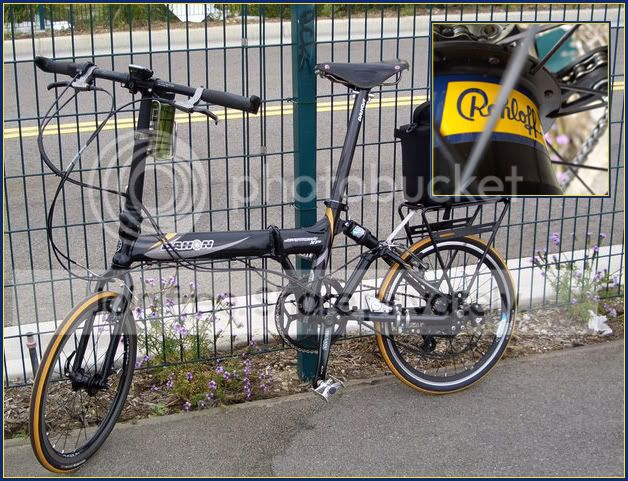
Pros:
Ridden 2.5 years with no issues.
- 14 evenly spaced gears (no overlap)
- Huge gear range, even with only one chainring
- Shift while stopped
- Shift while pedaling forward
- Shift while pedaling backward
- Reliable
- Easy to maintain
- No vulnerable derailleur
- Stronger rear wheel (no dish)
- Straight chainline
- Heavier
- More expensive
__________________
I came to say I must be folding . . .
Dahon Jetstream XP
Dahon Helios SL
Strida 5.0
Twenty project
— or not . . .
Fisher Mt. Tam (c.1988)
Merlin Road flat bar project
Schwinn Twinn Deluxe
I came to say I must be folding . . .
Dahon Jetstream XP
Dahon Helios SL
Strida 5.0
Twenty project
— or not . . .
Fisher Mt. Tam (c.1988)
Merlin Road flat bar project
Schwinn Twinn Deluxe
05-16-08 | 11:09 PM
#12
Senior Member
Joined: May 2005
Posts: 7,393
Likes: 10
From: Albany, WA
I have the SA 8sp on 2 of my bikes. In one, an internal gear broke, somewhere close to 10,000km. If it wasn't for me making a repair, it would have been a write-off/replacement. Since then I have had trouble keeping it lubricated especially in wet weather. Mere mortals can't get hold of the original lube.
Both internal gears and derailer gears have their place.
Both internal gears and derailer gears have their place.
05-17-08 | 03:27 AM
#13
Bicycling Gnome
Joined: Apr 2006
Posts: 1,877
Likes: 1
From: 55.0N 1.59W
I have the SA 8sp on 2 of my bikes. In one, an internal gear broke, somewhere close to 10,000km. If it wasn't for me making a repair, it would have been a write-off/replacement. Since then I have had trouble keeping it lubricated especially in wet weather. Mere mortals can't get hold of the original lube.
Both internal gears and derailer gears have their place.
Both internal gears and derailer gears have their place.
05-17-08 | 03:48 AM
#14
Senior Member
Joined: May 2005
Posts: 7,393
Likes: 10
From: Albany, WA
05-17-08 | 07:44 AM
#15
Senior Member
Joined: Sep 2004
Posts: 244
Likes: 0
I also own two Rohloff hubs, one on a custom light touring bike and one that is going on our tandem. That hub's only real downside is cost. You can buy a very nice derailleur drivetrain for well under half the cost of a Rohloff.
For folders, especially 16" ones, internal hubs make tons of sense. Rear derailleurs tend to put the chain near the ground where they pick up snow, dirt, mud, and other stuff that you don't want in your drivetrain. An internal hub keeps everything cleaner and more reliable.
05-17-08 | 11:21 AM
#16
40 yrs bike touring
Joined: Jun 2005
Posts: 1,022
Likes: 6
From: Santa Barbara,CA.
Bikes: Bruce Gordon Ti Rock N Road [1989], Fat Chance Mountain Tandem [1988], Velo Orange Neutrino (2020)
I use a Fichtel & Sachs Torpedo Duomatic Two Speed Kick Back Hub with a Coaster Brake on my 1965 Moulton Stowaway-separable not folding. A 36% jump between gears on 16 inch wheels.
An excellent durable and efficient design unfortunately it is no longer made.
An excellent durable and efficient design unfortunately it is no longer made.
05-17-08 | 07:28 PM
#17
Senior Member
Joined: Dec 2001
Posts: 7,141
Likes: 12
From: New Jersey
I think it's time Sram expand the Dual Drive beyone the 3 speed hub. Could you image if they made a 9 speed dual drive out of the I9 hub ? That would be 81 gears!

 05-18-08 | 07:27 PM
#19

Senior Member
Joined: Mar 2008
Posts: 1,133
Likes: 4
From: Naptown
Bikes: NWT 24sp DD; Brompton M6R
I have a DualDrive on my Bike Friday and I feel like I have the best of both worlds - the wide range of a derailleur plus the ability to shift (the IGH) while stopped. Not having a front derailleur simplifies things somewhat, too.
Many people are happy with 7 and 8 speed IGHs. However, one of my friends experienced premature failure on both a Shimano nexus 7 and later 8 speed hub. (On a trek navigator). The failure may have been related to the fact that he road in dusty conditions, or that his bike was pretty heavily loaded, or to some other unusual reason...but it has made me a little leery of conventional 7-8-9 speed hubs. (Although not the rohloff; I think you could use that to drive a car).
05-19-08 | 01:37 AM
#20
Bicycling Gnome
Joined: Apr 2006
Posts: 1,877
Likes: 1
From: 55.0N 1.59W
However, one of my friends experienced premature failure on both a Shimano nexus 7 and later 8 speed hub. (On a trek navigator). The failure may have been related to the fact that he road in dusty conditions, or that his bike was pretty heavily loaded, or to some other unusual reason...but it has made me a little leery of conventional 7-8-9 speed hubs. (Although not the rohloff; I think you could use that to drive a car).
Jur's remarks about the small size of the planet gears in the SA 8 speed are worth noting. In the failure he documented, one of the gears actually broke. I have never heard of any such failure in the three speed gear systems, probably because the gears are bigger, but maybe there are other issues relating to low gear ratios creating much increased torque inside the hub. I don't feel certain about the ground here, but I'd really like to know a lot more about these kinds of problems. It would be great to get some really good engineer's report into the capabilities of different hubs regarding longevity, lubrication, power transmission capabilities and general durability.
Last edited by EvilV; 05-19-08 at 01:44 AM.
05-19-08 | 08:42 AM
#21
Senior Member
Joined: Sep 2004
Posts: 244
Likes: 0
Many people are happy with 7 and 8 speed IGHs. However, one of my friends experienced premature failure on both a Shimano nexus 7 and later 8 speed hub. (On a trek navigator). The failure may have been related to the fact that he road in dusty conditions, or that his bike was pretty heavily loaded, or to some other unusual reason...
I'm curious to see how the new SRAM i9 holds up in use. The design isn't as simple as the S7. It looks like I've sold my Tikit with the S7, so I'll be putting an i9 on the Tikit that I'm keeping.
alex
05-19-08 | 04:07 PM
#22

The Legitimiser
Joined: Jul 2005
Posts: 4,849
Likes: 6
From: Southampton, UK
Bikes: Gazelle Trim Trophy, EG Bates Track Bike, HR Bates Cantiflex bike, Nigel Dean fixed gear conversion, Raleigh Royal, Falcon Westminster.
What I wonder is whether the newer hubs are put together to the same quality standards as the older ones. Sizes of pinions aside, we know that an AW 3 speed hub is MUCH better sealed than any modern hub (Rohloff possibly excepted). To prove this, try filling your new Nexus or other hub with oil. If the old hubs keep oil in that much better, they keep crap out that much better.
If we expect modern multispeed hubs to continue chugging along for 50+ years of ridiculous mileages, the way the AW does, then we're probably kidding ourselves. If, however, we compare them with the wear cycles and associated costs of running an 8+ speed derailleur in all weathers, they probably still win, and certainly win on convenience (I know which I'd rather clean after a wet run on salty roads)
If we expect modern multispeed hubs to continue chugging along for 50+ years of ridiculous mileages, the way the AW does, then we're probably kidding ourselves. If, however, we compare them with the wear cycles and associated costs of running an 8+ speed derailleur in all weathers, they probably still win, and certainly win on convenience (I know which I'd rather clean after a wet run on salty roads)
05-19-08 | 04:58 PM
#23
Senior Member
Joined: Mar 2008
Posts: 1,133
Likes: 4
From: Naptown
Bikes: NWT 24sp DD; Brompton M6R
It is the load, not the dust. The Nexus 7sp and 8sp hubs aren't really designed to handle high loads. The SRAM S7 seems to handle them better, although friends have still damaged them with very high torques (using them in combination with a Stokemonkey electric motor). The Rohloff is the only internal hub that I'm aware of which is designed for tandem and cargo loads besides the SRAM 5sp Cargo hub. I do know a number of people who run SRAM S7 hubs on cargo bikes without problems.
I'm curious to see how the new SRAM i9 holds up in use. The design isn't as simple as the S7. It looks like I've sold my Tikit with the S7, so I'll be putting an i9 on the Tikit that I'm keeping.
alex
I'm curious to see how the new SRAM i9 holds up in use. The design isn't as simple as the S7. It looks like I've sold my Tikit with the S7, so I'll be putting an i9 on the Tikit that I'm keeping.
alex
05-19-08 | 05:55 PM
#24
Senior Member
Joined: May 2005
Posts: 7,393
Likes: 10
From: Albany, WA
It's not the mass load per se, but the torque that counts, this is what Alex means. A SA 8sp hub on a 700c wheel requires a very low chain gearing to make the highest gear useful; this translates into huge torque exerted on the hub gears. With smaller wheels this problem is reduced due to smaller wheel diameter. So 16" wheels is really the best application for this kind of hub.
05-19-08 | 08:09 PM
#25

Senior Member
Joined: Mar 2005
Posts: 863
Likes: 0
From: Portugal-Israel
What I wonder is whether the newer hubs are put together to the same quality standards as the older ones. Sizes of pinions aside, we know that an AW 3 speed hub is MUCH better sealed than any modern hub (Rohloff possibly excepted). To prove this, try filling your new Nexus or other hub with oil. If the old hubs keep oil in that much better, they keep crap out that much better.
If we expect modern multispeed hubs to continue chugging along for 50+ years of ridiculous mileages, the way the AW does, then we're probably kidding ourselves. If, however, we compare them with the wear cycles and associated costs of running an 8+ speed derailleur in all weathers, they probably still win, and certainly win on convenience (I know which I'd rather clean after a wet run on salty roads)
If we expect modern multispeed hubs to continue chugging along for 50+ years of ridiculous mileages, the way the AW does, then we're probably kidding ourselves. If, however, we compare them with the wear cycles and associated costs of running an 8+ speed derailleur in all weathers, they probably still win, and certainly win on convenience (I know which I'd rather clean after a wet run on salty roads)