


Removing braze-ons - tips?
 02-14-17 | 12:59 PM
#1

Thread Starter
Senior Member

Joined: Feb 2014
Posts: 2,750
Likes: 149
From: SD
Bikes: Handsome Fredward, Trek 1.1
Removing braze-ons - tips?
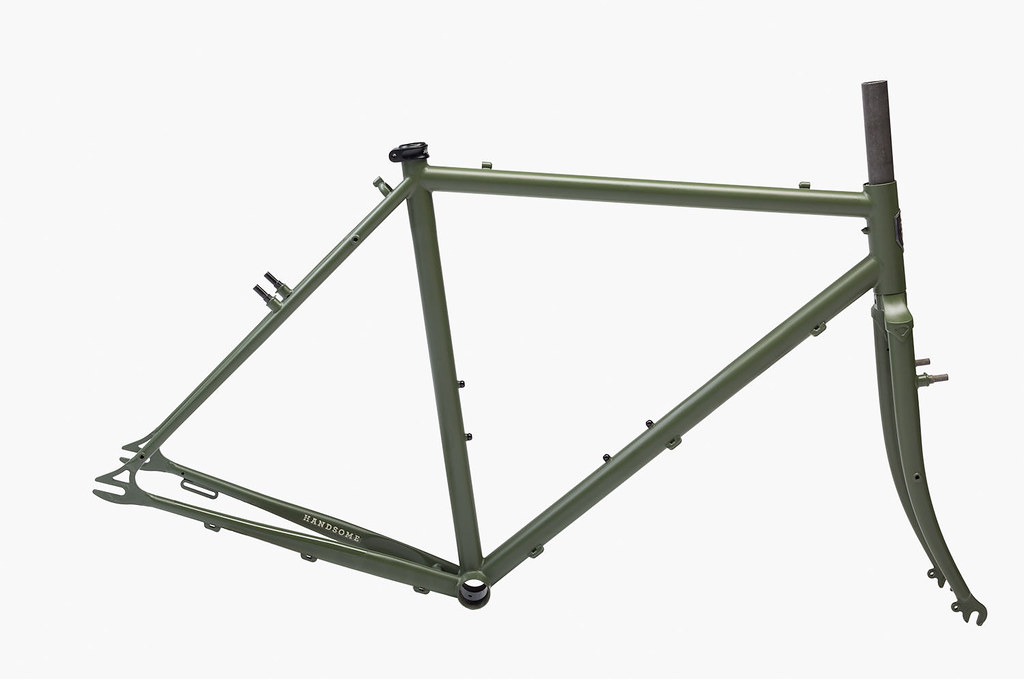
I'm considering buying a used frame that has numerous braze-ons that I have no use for and since I hate the color, I'd be repainting it anyway. Is there anything I should know before putting a torch to the frame?
Last edited by 50voltphantom; 02-14-17 at 03:11 PM.
 02-14-17 | 02:55 PM
#2
Senior Member
Joined: Dec 2012
Posts: 148
Likes: 10
From: Puyallup, WA
Bikes: Many... Up to 9 in the stable now
I would consider grinding and filing (very carefully) rather than putting the tubes through another heat cycle. Especially if they're adhered with brass instead of silver.
02-14-17 | 03:10 PM
#3
Thread Starter
Senior Member
Joined: Feb 2014
Posts: 2,750
Likes: 149
From: SD
Bikes: Handsome Fredward, Trek 1.1
 02-14-17 | 03:16 PM
#4
Senior Member
Joined: Dec 2012
Posts: 148
Likes: 10
From: Puyallup, WA
Bikes: Many... Up to 9 in the stable now
Take the paint off first and see if you can tell whether it's brass or silver. If it's silver, you might be able to do it without much damage. Use some vise-grips to hang some weight on the piece, then carefully and evenly heat it up until it drops off. Use a soft flame and don't let it get to red. You'll still have some residual silver to sand down, but a lot less than grinding and filing the whole thing.
02-14-17 | 11:17 PM
#6
Randomhead
Joined: Aug 2008
Posts: 25,930
Likes: 4,825
From: Happy Valley, Pennsylvania
depends on how good you are with a die grinder. I use a hacksaw and then a file. Depending on the braze on, of course. If the braze on doesn't have a lot of contact area with the tube, you can concentrate the heat on the braze on and not put much heat at all into the tube. But it looks like most of the ones on that bike are going to be hard to get off that way. And it's possible they are welded, in which case you will destroy the frame using heat to remove them.
02-15-17 | 09:17 AM
#7

Senior Member

Joined: Feb 2012
Posts: 19,352
Likes: 5,469
From: Rochester, NY
Bikes: Stewart S&S coupled sport tourer, Stewart Sunday light, Stewart Commuting, Stewart Touring, Co Motion Tandem, Stewart 3-Spd, Stewart Track, Fuji Finest, Mongoose Tomac ATB, GT Bravado ATB, JCP Folder, Stewart 650B ATB
My first thoughts were to reconsider if removing the braze ons is really in your best long term interest. We get a new toy and have all kinds of new dreams about how we're going to use it. Then time, changes in our lives and the very real possibility of another new toy entering our stable (and juggling the bike's marching orders) happens. I don't know how many times I've wished I either had left on or had added to begin with braze ons after the frame was painted, often a bike later .
.
If one must remove braze ons I strongly agree with Eric. A hack saw and file. will do FAR less damage then a die grinder. If one has to ask about this one doesn't have the experience to handle said grinder in a manor that prevents damage possibility. I resort to heat rarely but do use it sometimes. No matter what I use I will have to file and sand the, now, razed spot. Often there will remain a visual evidence of where the bit had been located, a slight depression (especially if brass was used) and or ripple to reflections. Of course if powder coating is to be done this will help hide that. Rarely I have had to drop a spot of silver onto where the braze on had been to fill what was the resulting surface after removal.
Here's a shot of a drop out being pulled with a vice grip as the weight. Note the tether to control where the hot drop out falls to (as in away from my OA hoses).
Also here's a link to a Flicker album with my tandem having many braze ons removed and installed with some text for each shot. https://www.flickr.com/photos/731955...57676883117315 Andy.
. If one must remove braze ons I strongly agree with Eric. A hack saw and file. will do FAR less damage then a die grinder. If one has to ask about this one doesn't have the experience to handle said grinder in a manor that prevents damage possibility. I resort to heat rarely but do use it sometimes. No matter what I use I will have to file and sand the, now, razed spot. Often there will remain a visual evidence of where the bit had been located, a slight depression (especially if brass was used) and or ripple to reflections. Of course if powder coating is to be done this will help hide that. Rarely I have had to drop a spot of silver onto where the braze on had been to fill what was the resulting surface after removal.
Here's a shot of a drop out being pulled with a vice grip as the weight. Note the tether to control where the hot drop out falls to (as in away from my OA hoses).
Also here's a link to a Flicker album with my tandem having many braze ons removed and installed with some text for each shot. https://www.flickr.com/photos/731955...57676883117315 Andy.
02-15-17 | 09:23 AM
#8

Senior Member


Joined: Jun 2008
Posts: 13,765
Likes: 3,937
From: Louisville, KY
Also here's a link to a Flicker album with my tandem having many braze ons removed and installed with some text for each shot. https://www.flickr.com/photos/731955...57676883117315 Andy.
02-15-17 | 09:43 AM
#9
Senior Member
Joined: Feb 2012
Posts: 19,352
Likes: 5,469
From: Rochester, NY
Bikes: Stewart S&S coupled sport tourer, Stewart Sunday light, Stewart Commuting, Stewart Touring, Co Motion Tandem, Stewart 3-Spd, Stewart Track, Fuji Finest, Mongoose Tomac ATB, GT Bravado ATB, JCP Folder, Stewart 650B ATB
I consider doing frame repair much like roofing repair work. The newbie sees a small hole through the shingles and makes all kinds of plans/assumptions with this view. Then the shingles are removed at the hole, then the underlying sheathing is found to be bad so more shingles come off. Then the sheathing is removed and one finds the rafters are rotted. by the time all is done and over the little 4" hole has become a 10' area of new shingles and all.
The current frame repair i'm doing, posted on C&V ( https://www.bikeforums.net/classic-vi...h-score-3.html starting at post 64) is such an example. Andy.
The current frame repair i'm doing, posted on C&V ( https://www.bikeforums.net/classic-vi...h-score-3.html starting at post 64) is such an example. Andy.
02-15-17 | 12:34 PM
#10
Thread Starter
Senior Member
Joined: Feb 2014
Posts: 2,750
Likes: 149
From: SD
Bikes: Handsome Fredward, Trek 1.1
depends on how good you are with a die grinder. I use a hacksaw and then a file. Depending on the braze on, of course. If the braze on doesn't have a lot of contact area with the tube, you can concentrate the heat on the braze on and not put much heat at all into the tube. But it looks like most of the ones on that bike are going to be hard to get off that way. And it's possible they are welded, in which case you will destroy the frame using heat to remove them.
My first thoughts were to reconsider if removing the braze ons is really in your best long term interest. We get a new toy and have all kinds of new dreams about how we're going to use it. Then time, changes in our lives and the very real possibility of another new toy entering our stable (and juggling the bike's marching orders) happens. I don't know how many times I've wished I either had left on or had added to begin with braze ons after the frame was painted, often a bike later.
If one must remove braze ons I strongly agree with Eric. A hack saw and file. will do FAR less damage then a die grinder. If one has to ask about this one doesn't have the experience to handle said grinder in a manor that prevents damage possibility. I resort to heat rarely but do use it sometimes. No matter what I use I will have to file and sand the, now, razed spot. Often there will remain a visual evidence of where the bit had been located, a slight depression (especially if brass was used) and or ripple to reflections. Of course if powder coating is to be done this will help hide that. Rarely I have had to drop a spot of silver onto where the braze on had been to fill what was the resulting surface after removal.
Here's a shot of a drop out being pulled with a vice grip as the weight. Note the tether to control where the hot drop out falls to (as in away from my OA hoses).
Also here's a link to a Flicker album with my tandem having many braze ons removed and installed with some text for each shot. Andy.
. If one must remove braze ons I strongly agree with Eric. A hack saw and file. will do FAR less damage then a die grinder. If one has to ask about this one doesn't have the experience to handle said grinder in a manor that prevents damage possibility. I resort to heat rarely but do use it sometimes. No matter what I use I will have to file and sand the, now, razed spot. Often there will remain a visual evidence of where the bit had been located, a slight depression (especially if brass was used) and or ripple to reflections. Of course if powder coating is to be done this will help hide that. Rarely I have had to drop a spot of silver onto where the braze on had been to fill what was the resulting surface after removal.
Here's a shot of a drop out being pulled with a vice grip as the weight. Note the tether to control where the hot drop out falls to (as in away from my OA hoses).
Also here's a link to a Flicker album with my tandem having many braze ons removed and installed with some text for each shot. Andy.
 02-15-17 | 03:40 PM
#11

Old fart

Joined: Nov 2004
Posts: 26,347
Likes: 5,252
From: Appleton WI
Bikes: Several, mostly not name brands.
Use a soft flame and don't let it get to red.
You'll still have some residual silver to sand down, but a lot less than grinding and filing the whole thing.
02-15-17 | 04:42 PM
#13
Senior Member
Joined: Feb 2012
Posts: 19,352
Likes: 5,469
From: Rochester, NY
Bikes: Stewart S&S coupled sport tourer, Stewart Sunday light, Stewart Commuting, Stewart Touring, Co Motion Tandem, Stewart 3-Spd, Stewart Track, Fuji Finest, Mongoose Tomac ATB, GT Bravado ATB, JCP Folder, Stewart 650B ATB
Torch isn't the first choice. But can be a good one depending on the situation. Andy.

Thread
Thread Starter
Forum
Replies
Last Post
slicktop
Classic and Vintage Bicycles: Whats it Worth? Appraisals.
1
04-14-10 05:01 AM
