


Expensive Components with Rust-Prone Bolts
 01-20-23 | 03:25 PM
#1

Thread Starter
climber has-been


Joined: Dec 2004
Posts: 9,170
Likes: 6,061
From: Palo Alto, CA
Bikes: Scott Addict RC Pro & R1, Felt Z1
Expensive Components with Rust-Prone Bolts
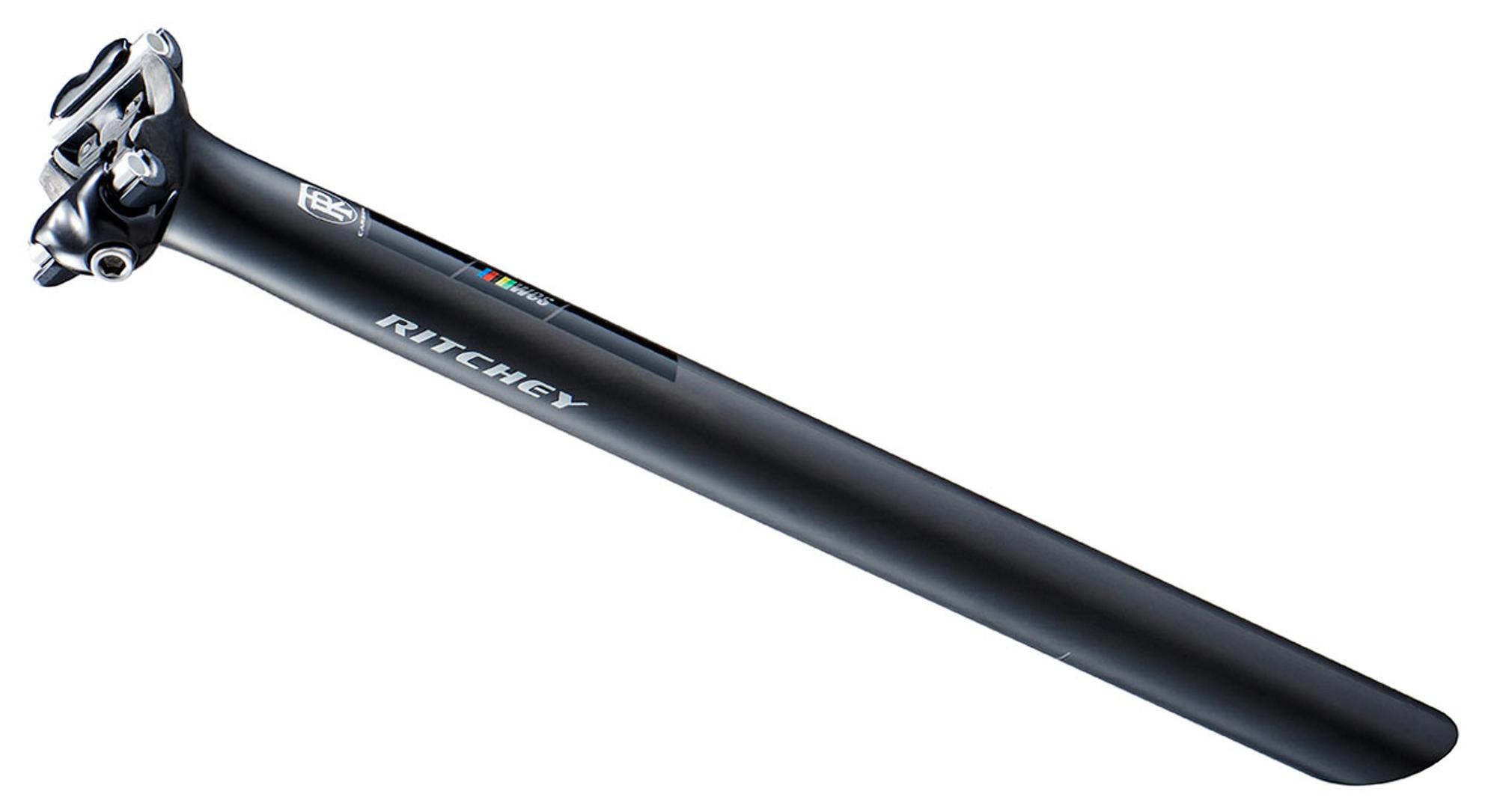
Expensive Component:
Steel mounting bolt after a few years, rusted:

Single bolt replacement cost (boltdepot.com):
Same issue with Ritchey stem mounting bolts. They become rusty after 1 or 2 seasons.
Why, Ritchey? Why?
WCS CARBON 1-BOLT ZERO OFFSET SEATPOST - $259.95
Steel mounting bolt after a few years, rusted:
Single bolt replacement cost (boltdepot.com):
- zinc-plated steel: $0.42
- stainless steel: $0.62
Same issue with Ritchey stem mounting bolts. They become rusty after 1 or 2 seasons.
Why, Ritchey? Why?
__________________
Ride, Rest, Repeat. ROUVY: terrymorse

Ride, Rest, Repeat. ROUVY: terrymorse

 01-20-23 | 03:54 PM
#3
Banned
Joined: Feb 2008
Posts: 8,701
Likes: 2,506
From: Mississauga/Toronto, Ontario canada
Bikes: I have 3 singlespeed/fixed gear bikes
My Thompson seat post and stem are 15 years old and still don't have any rust on the bolts despite being used during winter time and wet conditions. All the other bolts on all my other bikes and components have some rust on them. The disc brake adapter and caliper bolts have most rust on them even after after I've been greasing them during winter riding season. Axle nuts have no rust because they are zinc plated and i grease them regularly...It's just cosmetic rust and doesn't bother me.
01-20-23 | 04:40 PM
#4
Thread Starter
climber has-been
Joined: Dec 2004
Posts: 9,170
Likes: 6,061
From: Palo Alto, CA
Bikes: Scott Addict RC Pro & R1, Felt Z1
The zinc-plated bits rust rather quickly. The stainless ones don’t rust, unless they are in a very corrosive environment (like salt water spray) for a long time.
That Ritchey bolt was probably zinc-plated.
That Ritchey bolt was probably zinc-plated.
__________________
Ride, Rest, Repeat. ROUVY: terrymorse
Ride, Rest, Repeat. ROUVY: terrymorse
01-20-23 | 05:11 PM
#5
New here


Joined: Jul 2020
Posts: 15,534
Likes: 8,595
From: Tejas
 01-21-23 | 09:04 AM
#6
Senior Member

Joined: Mar 2012
Posts: 1,450
Likes: 982
My Thompson seat post and stem are 15 years old and still don't have any rust on the bolts despite being used during winter time and wet conditions. All the other bolts on all my other bikes and components have some rust on them. The disc brake adapter and caliper bolts have most rust on them even after after I've been greasing them during winter riding season. Axle nuts have no rust because they are zinc plated and i grease them regularly...It's just cosmetic rust and doesn't bother me.
01-21-23 | 09:11 AM
#7

Senior Member
Joined: Sep 2017
Posts: 2,368
Likes: 2,483
From: Upstate SC
If you're using a carbon seatpost to save some weight, why not go with titanium bolts? No rust, and lighter than stainless steel. Yes, they cost more, but if you're going with a $260 seatpost, well.....
Titanium Fasteners - Firmakes Titanium
Titanium Fasteners - Firmakes Titanium
 01-21-23 | 09:46 AM
#8

Senior Member
Joined: Jul 2011
Posts: 2,924
Likes: 529
From: Turku, Finland, Europe
Bikes: 2011 Specialized crux comp, 2013 Specialized Rockhopper Pro
I don't think any of my seat post bolts have ever rusted... but even if they did, I probably wouldn't swap to stanless or titanium. A seatpost bolt has to hold a lot of weight so that's one place I'd prefer 10.9 or higher grade steel.

 01-21-23 | 11:59 AM
#11

ignominious poltroon
Joined: Jan 2022
Posts: 6,027
Likes: 5,377
The problem is that titanium, or even stainless steel bolts, of the same size, are weaker.
The carbon/steel interface allows for an oxidation-reduction reaction to take place, due to their electrochemical potential difference.
The carbon/steel interface allows for an oxidation-reduction reaction to take place, due to their electrochemical potential difference.
01-21-23 | 01:24 PM
#12
Full Member
Joined: Mar 2022
Posts: 261
Likes: 85
That's a zinc-plated bolt. Is it adjacent or contacting the carbon? Or does it bolt to an aluminum casting? With the presence of an electrolyte, a carbon/zinc assembly will produce an electrochemical reaction resulting in the erosion of the zinc anode (the bolt).
I would look for a Titanium bolt for this application. Titanium bolts are not weak, but they have two problems: galling, and flex. The lack of lateral stiffness isn't an issue in this application. To address galling, be generous with anti-seize when installing it.
Another good one is aluminum alloys with scandium. I've used a lot of aluminum bolts for less critical applicaitons like bolting side covers on engines. The quality of the aluminum bolts was abysmal, but it didn't have to be. There are some great aluminum alloys and while they aren't direct replacements for steel where the tensile strength is critical, they are strong and light. Specifying a larger aluminum bolt can be an effective substitute for steel but has design/build implications. Another trick I've seen are hollow steel bolts. Those have incredible strength/weight ratios, but they still require a compatible finish process.
I don't know where a person can get a small quantity of high-quality bolts and fasteners nowadays. Back in the day, I ordered from Aircraft Spruce. They're still around. The Titanium bolt makers I used 25 years ago are all gone, but no doubt there are others now.
I would look for a Titanium bolt for this application. Titanium bolts are not weak, but they have two problems: galling, and flex. The lack of lateral stiffness isn't an issue in this application. To address galling, be generous with anti-seize when installing it.
Another good one is aluminum alloys with scandium. I've used a lot of aluminum bolts for less critical applicaitons like bolting side covers on engines. The quality of the aluminum bolts was abysmal, but it didn't have to be. There are some great aluminum alloys and while they aren't direct replacements for steel where the tensile strength is critical, they are strong and light. Specifying a larger aluminum bolt can be an effective substitute for steel but has design/build implications. Another trick I've seen are hollow steel bolts. Those have incredible strength/weight ratios, but they still require a compatible finish process.
I don't know where a person can get a small quantity of high-quality bolts and fasteners nowadays. Back in the day, I ordered from Aircraft Spruce. They're still around. The Titanium bolt makers I used 25 years ago are all gone, but no doubt there are others now.
Last edited by greatbasin; 01-21-23 at 01:36 PM.
01-21-23 | 02:37 PM
#13
Senior Member
Joined: Mar 2021
Posts: 2,090
Likes: 513
From looking at their website I think it’s a stainless m5 bolt, can’t find the length called out anywhere https://ritcheylogic.com/bike/seatpo...plete-clampset
https://www.mcmaster.com/product/91292A194 something like this of the correct length and “collar” (the distance between the bottom of the head and the start of the threads.) is what’s on there now, it’s almost certainly standard 304 series.
if you want more corrosion resistance with 316 McMaster offers that too https://www.mcmaster.com/product/92290A258
i naively think that is sensible.. replacing with titanium or aluminum alloy sounds really weird, don’t try to reinvent the wheel.
https://www.mcmaster.com/product/91292A194 something like this of the correct length and “collar” (the distance between the bottom of the head and the start of the threads.) is what’s on there now, it’s almost certainly standard 304 series.
if you want more corrosion resistance with 316 McMaster offers that too https://www.mcmaster.com/product/92290A258
i naively think that is sensible.. replacing with titanium or aluminum alloy sounds really weird, don’t try to reinvent the wheel.
01-21-23 | 02:40 PM
#14
Senior Member
Joined: Mar 2021
Posts: 2,090
Likes: 513
From looking at their website I think it’s a stainless m5 bolt, can’t find the length called out anywhere https://ritcheylogic.com/bike/seatpo...plete-clampset
https://www.mcmaster.com/product/91292A194 something like this of the correct length and “collar” (the distance between the bottom of the head and the start of the threads.) is what’s on there now, it’s almost certainly standard 304 series. That’s assuming it’s actually ss.
if you want more corrosion resistance with 316 McMaster offers that too https://www.mcmaster.com/product/92290A258
i naively think that is sensible.. replacing with titanium or aluminum alloy sounds really weird, don’t try to reinvent the wheel.
https://www.mcmaster.com/product/91292A194 something like this of the correct length and “collar” (the distance between the bottom of the head and the start of the threads.) is what’s on there now, it’s almost certainly standard 304 series. That’s assuming it’s actually ss.
if you want more corrosion resistance with 316 McMaster offers that too https://www.mcmaster.com/product/92290A258
i naively think that is sensible.. replacing with titanium or aluminum alloy sounds really weird, don’t try to reinvent the wheel.
01-21-23 | 02:58 PM
#15
Thread Starter
climber has-been
Joined: Dec 2004
Posts: 9,170
Likes: 6,061
From: Palo Alto, CA
Bikes: Scott Addict RC Pro & R1, Felt Z1
I replaced it with this stainless bolt.
__________________
Ride, Rest, Repeat. ROUVY: terrymorse
Ride, Rest, Repeat. ROUVY: terrymorse
01-21-23 | 03:13 PM
#16

Senior Member

Joined: May 2010
Posts: 5,626
Likes: 2,497
From: Bastrop Texas
Bikes: Univega, Peu P6, Peu PR-10, Ted Williams, Peu UO-8, Peu UO-18 Mixte, Peu Dolomites
What a sham. Components on a $259.95 Seat Post should not rust!
Just another example of not getting what you paid for... Come On Ritchey. It's little things like this that make me sober when pointing out defects in in some cheap ChiCom knockoff that doesn't rust...
Yep... This post deserves a Titanium bolt.
Just another example of not getting what you paid for... Come On Ritchey. It's little things like this that make me sober when pointing out defects in in some cheap ChiCom knockoff that doesn't rust...
Yep... This post deserves a Titanium bolt.
__________________
 No matter where you're at... There you are... Δf:=f(1/2)-f(-1/2)
01-21-23 | 03:27 PM
#17
dot dash
Joined: Jun 2015
Posts: 12,958
Likes: 6,514
From: Land of Pleasant Living
Bikes: Shmikes
Expensive Component:
Steel mounting bolt after a few years, rusted:
Single bolt replacement cost (boltdepot.com):
Same issue with Ritchey stem mounting bolts. They become rusty after 1 or 2 seasons.
Why, Ritchey? Why?
WCS CARBON 1-BOLT ZERO OFFSET SEATPOST - $259.95
Steel mounting bolt after a few years, rusted:
Single bolt replacement cost (boltdepot.com):
- zinc-plated steel: $0.42
- stainless steel: $0.62
Same issue with Ritchey stem mounting bolts. They become rusty after 1 or 2 seasons.
Why, Ritchey? Why?
01-21-23 | 03:39 PM
#18
Senior Member
Joined: Apr 2015
Posts: 4,272
Likes: 1,304
From: Seattle
The unthreaded portion of an M6 bolt has a cross-sectional area of about .044 square inches. High-strength 316 stainless hardware is usually rated for a minimum ultimate strength of around 110,000PSI, which over .044in^2 gives about 4,800 pounds.
But the threading also eats up a ton of the effective diameter. Realistically I'm not sure anyone should be counting on a coarse-thread M6 bolt to have an effective loaded cross-sectional area of much over .03 square inches, which gives 3,300 pounds.
Furthermore, stainless hardware often yields at far below its ultimate strength, so even "3300 pounds" is probably an optimistic perspective for most applications.
01-21-23 | 05:42 PM
#19
ignominious poltroon
Joined: Jan 2022
Posts: 6,027
Likes: 5,377
 01-21-23 | 06:45 PM
#22

Old and in the way
Joined: Jul 2004
Posts: 1,492
Likes: 1,074
From: City of Oaks, NC
Bikes: Look 765 Optimum, Spesh Aethos
01-21-23 | 07:23 PM
#23
Thread Starter
climber has-been
Joined: Dec 2004
Posts: 9,170
Likes: 6,061
From: Palo Alto, CA
Bikes: Scott Addict RC Pro & R1, Felt Z1
I'm skeptical of your math.
The unthreaded portion of an M6 bolt has a cross-sectional area of about .044 square inches. High-strength 316 stainless hardware is usually rated for a minimum ultimate strength of around 110,000PSI, which over .044in^2 gives about 4,800 pounds.
But the threading also eats up a ton of the effective diameter. Realistically I'm not sure anyone should be counting on a coarse-thread M6 bolt to have an effective loaded cross-sectional area of much over .03 square inches, which gives 3,300 pounds.
Furthermore, stainless hardware often yields at far below its ultimate strength, so even "3300 pounds" is probably an optimistic perspective for most applications.
The unthreaded portion of an M6 bolt has a cross-sectional area of about .044 square inches. High-strength 316 stainless hardware is usually rated for a minimum ultimate strength of around 110,000PSI, which over .044in^2 gives about 4,800 pounds.
But the threading also eats up a ton of the effective diameter. Realistically I'm not sure anyone should be counting on a coarse-thread M6 bolt to have an effective loaded cross-sectional area of much over .03 square inches, which gives 3,300 pounds.
Furthermore, stainless hardware often yields at far below its ultimate strength, so even "3300 pounds" is probably an optimistic perspective for most applications.
(I misread the table)
Still, pretty beefy.
__________________
Ride, Rest, Repeat. ROUVY: terrymorse
Ride, Rest, Repeat. ROUVY: terrymorse
01-21-23 | 08:09 PM
#25
Old and in the way
Joined: Jul 2004
Posts: 1,492
Likes: 1,074
From: City of Oaks, NC
Bikes: Look 765 Optimum, Spesh Aethos
.
__________________
--
Shad, Kitted up half wavin m’fer.
--
Shad, Kitted up half wavin m’fer.