


Big wheel
 03-19-26 | 03:35 PM
#1

Thread Starter
Senior Member

Joined: Jan 2017
Posts: 1,242
Likes: 1,359
From: falfurrias texas
Bikes: wabi classic (stolen & recovered)
Big wheel
the 32s are coming 
ts in the bike industry are like browser updates —constant and impossible to keep track of — you’re not alone. From minuscule changes in geometry to seemingly arbitrary systems of measurement, the marketing is so frustrating, it’s hilarious. And now, it seems, the next “it” fad may have arrived: 32-inch wheels.
This week in South Africa, at the “Tour de France of mountain biking,” a pair of 32-inch wheels just took home a first-stage win. Piloted by Swiss rider Felix Stehli and part of Stoll Bikes’ P32 race bike, the mammoth wheels could mark one of the biggest and most visible changes to bikes since 29-inch wheels became the standard 10-15 years ago.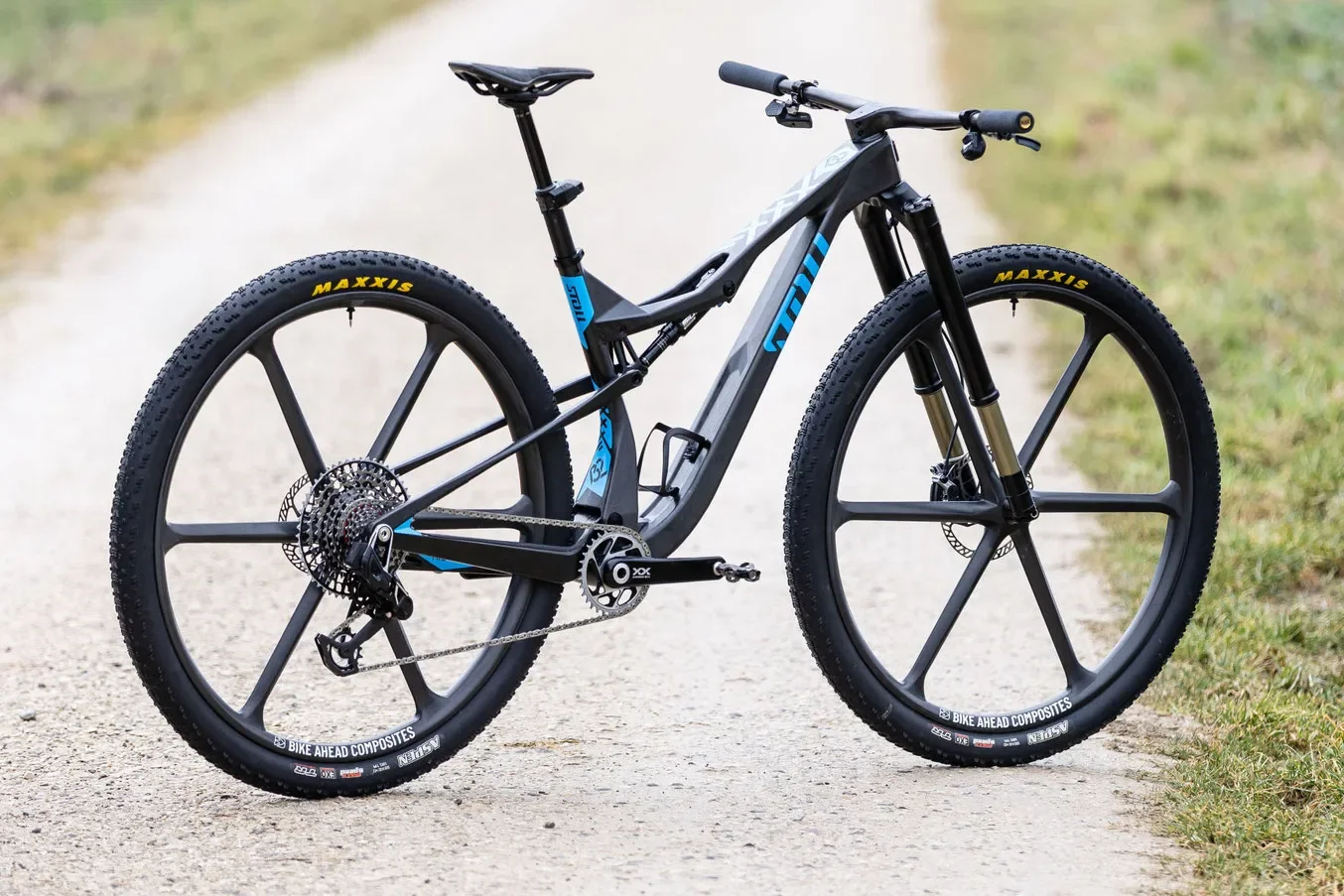
ts in the bike industry are like browser updates —constant and impossible to keep track of — you’re not alone. From minuscule changes in geometry to seemingly arbitrary systems of measurement, the marketing is so frustrating, it’s hilarious. And now, it seems, the next “it” fad may have arrived: 32-inch wheels.
This week in South Africa, at the “Tour de France of mountain biking,” a pair of 32-inch wheels just took home a first-stage win. Piloted by Swiss rider Felix Stehli and part of Stoll Bikes’ P32 race bike, the mammoth wheels could mark one of the biggest and most visible changes to bikes since 29-inch wheels became the standard 10-15 years ago.
- What is the Stoll P32? Short for Project 32, the P32 is the first mountain race bike with 32-inch-diameter wheels, a large step up from the 29-inch standard.
- Why does it matter? According to Stoll, 32-in. wheels have the highest top speed, most stability and traction, and the greatest ability to roll over obstacles.
- What’s the catch? Making bigger wheels is more complicated than it sounds; the bike frame has to be completely redesigned to accommodate the wheels. Also, bigger isn’t always better. The larger diameter makes the wheels heavier, and makes acceleration and tight cornering more difficult.
- Can I buy one? Yes, but it’s not cheap. Full builds for the P32 range from $12,000 to $18,000. You can buy the frame only for $6,400, but you’ll have to buy your own wheels.

 03-19-26 | 06:05 PM
#3

Disco Infiltrator


Joined: May 2013
Posts: 15,323
Likes: 3,512
From: Folsom CA
Bikes: Stormchaser, Paramount, Tilt, Samba tandem
Hey, I like my plus bike.
On my Kalshi for next year I've got 32/29 mullet bikes. Peter Verdone is already there, as usual.
Most of the material above is not correct; making larger rims or longer frame tubes is pretty trivial and larger companies will send it down the lineup over the next couple years like usual. Tires are the hardest part for making one, and they are arriving. (But on the other hand I also can't get premium 27.5 x 3 tires any more - woe!)
On my Kalshi for next year I've got 32/29 mullet bikes. Peter Verdone is already there, as usual.
Most of the material above is not correct; making larger rims or longer frame tubes is pretty trivial and larger companies will send it down the lineup over the next couple years like usual. Tires are the hardest part for making one, and they are arriving. (But on the other hand I also can't get premium 27.5 x 3 tires any more - woe!)
__________________
Genesis 49:16-17
"Well, well!" said Holmes, impatiently. "A good cyclist does not need a high road. The moor is intersected with paths and the moon is at the full."
Genesis 49:16-17
"Well, well!" said Holmes, impatiently. "A good cyclist does not need a high road. The moor is intersected with paths and the moon is at the full."
 03-19-26 | 10:40 PM
#5
Highly Enriched Driftium

Joined: Apr 2017
Posts: 6,637
Likes: 2,143
29er is just marketing speak for fatter tires on 700c (ISO 622) rims. Fine if you have the frame clearance.
I thought 27.5/650B/ISO584, a comeback of a very old size, was the stupidest idea ever, until I found out more; By being smaller diameter than 622, it allows mounting deeper section tires on road bikes which don't have the frame clearance for bigger tires on 700C/ISO 622. The result is roughly the same outside tire diameter as the skinny 700C wheels it replaces. BIG question on rim-brake compatibility, but with disc brakes, it should be cake.
32s? If a whole new rim size, that's both expensive, and a great way for the bike industry to sell people on a new standard that requires buying a new, expensive bike.
I've been going in the opposite direction, I'm 100% on 20"/406 wheel bikes, with all the advantages of smaller wheels. But I don't ride off road. BMX have been riding 20"/406 forever, and they do it, though on dry dirt. Smaller rims are STRONG. But for max traction in really bad muck, bigger wheels may help, it depends on the "cone index" of the surface, i.e., how soft and how deep tires sink in, but it also depends how much heavier the bike is to accommodate the bigger wheels, as a heavier bike will sink in more, all other factors being equal. Bigger diameter also applies more brake torque for a given ground brake thrust, thus requiring stronger brakes and structural attachments. "There Ain't No Such Thing As A Free Lunch." - Robert Heinlein
"Simplify, then add lightness." - Attributed to several, including Colin Chapman, owner and designer of Lotus Cars.
I thought 27.5/650B/ISO584, a comeback of a very old size, was the stupidest idea ever, until I found out more; By being smaller diameter than 622, it allows mounting deeper section tires on road bikes which don't have the frame clearance for bigger tires on 700C/ISO 622. The result is roughly the same outside tire diameter as the skinny 700C wheels it replaces. BIG question on rim-brake compatibility, but with disc brakes, it should be cake.
32s? If a whole new rim size, that's both expensive, and a great way for the bike industry to sell people on a new standard that requires buying a new, expensive bike.
I've been going in the opposite direction, I'm 100% on 20"/406 wheel bikes, with all the advantages of smaller wheels. But I don't ride off road. BMX have been riding 20"/406 forever, and they do it, though on dry dirt. Smaller rims are STRONG. But for max traction in really bad muck, bigger wheels may help, it depends on the "cone index" of the surface, i.e., how soft and how deep tires sink in, but it also depends how much heavier the bike is to accommodate the bigger wheels, as a heavier bike will sink in more, all other factors being equal. Bigger diameter also applies more brake torque for a given ground brake thrust, thus requiring stronger brakes and structural attachments. "There Ain't No Such Thing As A Free Lunch." - Robert Heinlein
"Simplify, then add lightness." - Attributed to several, including Colin Chapman, owner and designer of Lotus Cars.
Last edited by Duragrouch; 03-19-26 at 11:03 PM.
03-20-26 | 08:06 AM
#6
Clark W. Griswold
Joined: Mar 2014
Posts: 18,185
Likes: 6,597
From: ,location, location
Bikes: Foundry Chilkoot Ti W/Ultegra Di2, Salsa Timberjack Ti, Cinelli Mash Work RandoCross Fun Time Machine, 1x9 XT Parts Hybrid, Co-Motion Cascadia, Specialized Langster, Phil Wood Apple VeloXS Frame (w/DA 7400), R+M Supercharger2 Rohloff, Habanero Ti 26
Nothing is new bigger wheels is old news like 1800s news back when they were riding on penny farthings/highwheelers and the "mullet" came from that as well in a sense or maybe a reverse "mullet" in fact I think "mullet" bikes may have predated the hairstyle. Plus we have also had Unicycles for quite a while as well and those typically use a larger wheel especially for touring and MTB riding so again nothing new, just modernization.
03-20-26 | 08:59 AM
#7
Disco Infiltrator
Joined: May 2013
Posts: 15,323
Likes: 3,512
From: Folsom CA
Bikes: Stormchaser, Paramount, Tilt, Samba tandem
ooh, you should go mention unicycles in the "no one understands how bikes work" thread
__________________
Genesis 49:16-17
"Well, well!" said Holmes, impatiently. "A good cyclist does not need a high road. The moor is intersected with paths and the moon is at the full."
Genesis 49:16-17
"Well, well!" said Holmes, impatiently. "A good cyclist does not need a high road. The moor is intersected with paths and the moon is at the full."


 03-23-26 | 04:13 AM
#9
Senior Member
Joined: Jan 2023
Posts: 2,373
Likes: 2,080
From: Eastern Shore MD
Bikes: Lemond Zurich/Trek ALR/Giant TCX/Stumpy 15
I remember the same discussions when 29'ers were becoming a thing...
After not riding a MTB for a looong time - coming from an old school Rockhopper and then jumping on to a modern full squish 29'er - WOW - worlds of difference. While each small level of change that happened in between may have seemed like marketing or hype - the bikes have actually improved drastically. Especially when compared to the evolution of road bikes.
Maybe the brands have reached the limits of what they can do on a 29 platform, and this is just the next step.
After not riding a MTB for a looong time - coming from an old school Rockhopper and then jumping on to a modern full squish 29'er - WOW - worlds of difference. While each small level of change that happened in between may have seemed like marketing or hype - the bikes have actually improved drastically. Especially when compared to the evolution of road bikes.
Maybe the brands have reached the limits of what they can do on a 29 platform, and this is just the next step.
03-23-26 | 09:10 AM
#10
Senior Member
Joined: Jun 2015
Posts: 5,767
Likes: 1,788
From: North Central Wisconsin
Bike industry is hurting. They invent solutions looking for a problem to generate more sales. We'll soon be told how 29er tires are inferior and why we must purchase 32" tires.
03-23-26 | 08:39 PM
#11
Highly Enriched Driftium
Joined: Apr 2017
Posts: 6,637
Likes: 2,143
I remember the same discussions when 29'ers were becoming a thing...
After not riding a MTB for a looong time - coming from an old school Rockhopper and then jumping on to a modern full squish 29'er - WOW - worlds of difference. While each small level of change that happened in between may have seemed like marketing or hype - the bikes have actually improved drastically. Especially when compared to the evolution of road bikes.
Maybe the brands have reached the limits of what they can do on a 29 platform, and this is just the next step.
After not riding a MTB for a looong time - coming from an old school Rockhopper and then jumping on to a modern full squish 29'er - WOW - worlds of difference. While each small level of change that happened in between may have seemed like marketing or hype - the bikes have actually improved drastically. Especially when compared to the evolution of road bikes.
Maybe the brands have reached the limits of what they can do on a 29 platform, and this is just the next step.
On military off-road vehicles on very soft surfaces, there is a performance traction limit to tires, even very large tires, and that's when tracked vehicles take over, even with the frictional energy losses and skid-steering instead of direct steering like with tires. But that's not feasible with unpowered bikes.
03-23-26 | 08:45 PM
#12
Highly Enriched Driftium
Joined: Apr 2017
Posts: 6,637
Likes: 2,143
Last edited by Duragrouch; 03-23-26 at 08:50 PM.
03-23-26 | 10:38 PM
#13

I climb a lot
Joined: Mar 2023
Posts: 2,503
Likes: 5,462
From: NorCal
Bikes: Santa Cruz Blur 4 TR, Santa Cruz Hightower, Canyon Ultimate cf slx(x2), Canyon Endurace cf sl(rain bike,) Obed GVR, Ritchey Swiss Cross v3, Lauf Seigla rigid
Maybe. And these will fit members of the NBA and WNBA just fine. But for smaller statured than that, to package that big front wheel in full jounce/compression, requires a frameset that is not well suited to a less-tall rider.
On military off-road vehicles on very soft surfaces, there is a performance traction limit to tires, even very large tires, and that's when tracked vehicles take over, even with the frictional energy losses and skid-steering instead of direct steering like with tires. But that's not feasible with unpowered bikes.
On military off-road vehicles on very soft surfaces, there is a performance traction limit to tires, even very large tires, and that's when tracked vehicles take over, even with the frictional energy losses and skid-steering instead of direct steering like with tires. But that's not feasible with unpowered bikes.
As far as wheel diameter, traction isn't the driving issue IMO, rather it's about how well larger wheels roll over rough surfaces...which in some cases, does improve traction. Maybe not such a huge deal on smooth dirt, but 29" wheels are massive improvement for the rocky terrain I ride. I'm not about to trade in my 29"er for a big wheel bike quite yet, but I could imagine there are some benefits to a 32" wheel in certain MTB disciplines...assuming the geometry can be sorted out.
03-24-26 | 12:05 AM
#14
Highly Enriched Driftium
Joined: Apr 2017
Posts: 6,637
Likes: 2,143
I do think that bike geometry is a limiting factor to wheel circumference. On my 29"er XC bike, I'm running a slammed -13° stem to get into my preferred position. Unless the saddle and BB got raised a corresponding amount, I can imagine that I'd have to get fairly extreme with my stem choice on a 32" wheeled bike.
As far as wheel diameter, traction isn't the driving issue IMO, rather it's about how well larger wheels roll over rough surfaces...which in some cases, does improve traction. Maybe not such a huge deal on smooth dirt, but 29" wheels are massive improvement for the rocky terrain I ride. I'm not about to trade in my 29"er for a big wheel bike quite yet, but I could imagine there are some benefits to a 32" wheel in certain MTB disciplines...assuming the geometry can be sorted out.
As far as wheel diameter, traction isn't the driving issue IMO, rather it's about how well larger wheels roll over rough surfaces...which in some cases, does improve traction. Maybe not such a huge deal on smooth dirt, but 29" wheels are massive improvement for the rocky terrain I ride. I'm not about to trade in my 29"er for a big wheel bike quite yet, but I could imagine there are some benefits to a 32" wheel in certain MTB disciplines...assuming the geometry can be sorted out.
For other vehicles where the wheels and tires are heavier, once you are large enough diameter to mount the biggest brakes you need, and the tires roll over the obstacles you need them to, they try to get away with the smallest and lightest wheels and tires, and use suspension to suck up the bumps. However, cars, notably, have gotten ever bigger in wheel (rim) diameter, but with the same outside diameter on tires, with ever lower sidewall depth, and when they hit a bad pothole, it often bends the rim. For performance cars, lower profile tires improved handling. For average sedans, it's for looks, at the expense of ride and durability. 29er bike wheels were the opposite, same size (700c) rims, with much cushier tires. My grasp of the 32s is that they are increasing the rim diameter too.
A LBS here has that attitude about carbon fiber; Only use it if you are a bonafide racer. Otherwise, stick to more robust materials with safer failure modes. They have tons of jagged failed carbon to show folks.
Lastly, smaller wheels are stronger, better hoop/arch strength. Those 32 rims will be less resistant to bending inward radially than a smaller diameter, and will not transfer that load to other parts of the wheel as well. However, if they are strong enough to spring back, that might offer a bit more cushion. But it's better that cush be in the tires than the rims. Some vehicles now have flatproof solid rubber tires with wheel spokes in a spiral or S shape, for shock absorption.
03-24-26 | 04:25 AM
#15
Senior Member
Joined: Jan 2023
Posts: 2,373
Likes: 2,080
From: Eastern Shore MD
Bikes: Lemond Zurich/Trek ALR/Giant TCX/Stumpy 15
MTB's have improved greatly. Maybe if you were riding during every little iteration/improvement it may seem like a bunch of hype. But if you jumped directly from older to new - wow, massive difference. Road bikes - not so much.
Racing will tell the tale. If 32's are faster, if they get better lap times - you will see more 32's built and it will trickle down to the other bikes. Just like 29's did.
 03-27-26 | 08:02 AM
#17
Banned.
Joined: Jul 2006
Posts: 4,287
Likes: 837
Was able to ride a Walty custom last weekend with Maxxis tires. Felt fairly sluggish on pavement and gravel but came alive as soon as I hit singletrack. Despite the protestations of 32"-fans right now I don't think the geometry is there. It needs to be different enough from 29" geometry that we're a few or several rounds of iteration away from good geometry.
Riding the bike also made it clear that the bigger wheel size is much more scalable to gravel bikes than MTB. That is, the geometry and fit can be made to work with gravel easier and for a wider range of riders than MTB. We'll see if the consumer base has the hunger for a completely new wheel size. This is clearly going to be a years-long campaign, so many things to see in the future.
Riding the bike also made it clear that the bigger wheel size is much more scalable to gravel bikes than MTB. That is, the geometry and fit can be made to work with gravel easier and for a wider range of riders than MTB. We'll see if the consumer base has the hunger for a completely new wheel size. This is clearly going to be a years-long campaign, so many things to see in the future.
03-27-26 | 08:27 AM
#18
Senior Member
Joined: Jun 2015
Posts: 5,767
Likes: 1,788
From: North Central Wisconsin
Being that the consumer base didn't have a hunger for the 27.5, 27.5+ or 29+ tires for too long,..Like about 4 years...I doubt they will for 32".
So far none of the big players are in on it. All we have is a few boutique builders and very small handful of component suppliers. Not enough to move the needle.
Personally don't see an advantage myself and I see it as ploy by the bike industry to do something to generate sales since it's in a big slump right now. I don't blame them, but feel their focus on 32" wheels is misguided.
So far none of the big players are in on it. All we have is a few boutique builders and very small handful of component suppliers. Not enough to move the needle.
Personally don't see an advantage myself and I see it as ploy by the bike industry to do something to generate sales since it's in a big slump right now. I don't blame them, but feel their focus on 32" wheels is misguided.
Last edited by prj71; 03-27-26 at 08:30 AM.
03-27-26 | 08:53 AM
#19

Senior Member

Joined: Aug 2009
Posts: 4,253
Likes: 3,655
Tall riders would definitely benefit from big wheels. But statistically only 4% of US men and a negligible percent of women, are 6’2” and taller. So the market for these is just too small. It will have the same fate as the 650c and 650b wheels, which were a great choice for shorter riders, but could not survive for long on the market.
In fact smaller wheels have a far bigger market than larger wheels. Everyone of us went through a stage of life when we were 5’ or under.
In fact smaller wheels have a far bigger market than larger wheels. Everyone of us went through a stage of life when we were 5’ or under.
03-27-26 | 09:02 AM
#20
Banned.
Joined: Jul 2006
Posts: 4,287
Likes: 837
Being that the consumer base didn't have a hunger for the 27.5, 27.5+ or 29+ tires for too long,..Like about 4 years...I doubt they will for 32".
So far none of the big players are in on it. All we have is a few boutique builders and very small handful of component suppliers. Not enough to move the needle.
Personally don't see an advantage myself and I see it as ploy by the bike industry to do something to generate sales since it's in a big slump right now. I don't blame them, but feel their focus on 32" wheels is misguided.
So far none of the big players are in on it. All we have is a few boutique builders and very small handful of component suppliers. Not enough to move the needle.
Personally don't see an advantage myself and I see it as ploy by the bike industry to do something to generate sales since it's in a big slump right now. I don't blame them, but feel their focus on 32" wheels is misguided.
 03-27-26 | 09:46 AM
#21
Senior Member
Joined: Jun 2015
Posts: 5,767
Likes: 1,788
From: North Central Wisconsin
I keep hearing people say this but not exactly sure I buy into that. The wheel can be 26, 27.5 or 29 and all you have to do is adjust the geometry/tube lengths for taller riders...Longer chain stay, longer top tube, stack and reach etc.
Agreed. Unlike what I mentioned above, making an XS or Small frame is a challenge trying to cram bigger tires in there. The bike industry should really being offering 26 or 27.5 in those sizes.
And what problem are they trying to solve with a 32" tires anyway? A non existent one IMO.
Good article...
https://www.pinkbike.com/news/opinio...-industry.html
In fact smaller wheels have a far bigger market than larger wheels. Everyone of us went through a stage of life when we were 5’ or under.
And what problem are they trying to solve with a 32" tires anyway? A non existent one IMO.
Good article...
https://www.pinkbike.com/news/opinio...-industry.html
Last edited by prj71; 03-27-26 at 09:50 AM.
03-27-26 | 03:53 PM
#22

Senior Member
Joined: Mar 2016
Posts: 2,067
Likes: 573
Bikes: '87-ish Pinarello Montello; '89 Nishiki Ariel; '85 Raleigh Wyoming, '16 Wabi Special, '16 Wabi Classic, '14 Kona Cinder Cone, 2023 Surly Disk Trucker
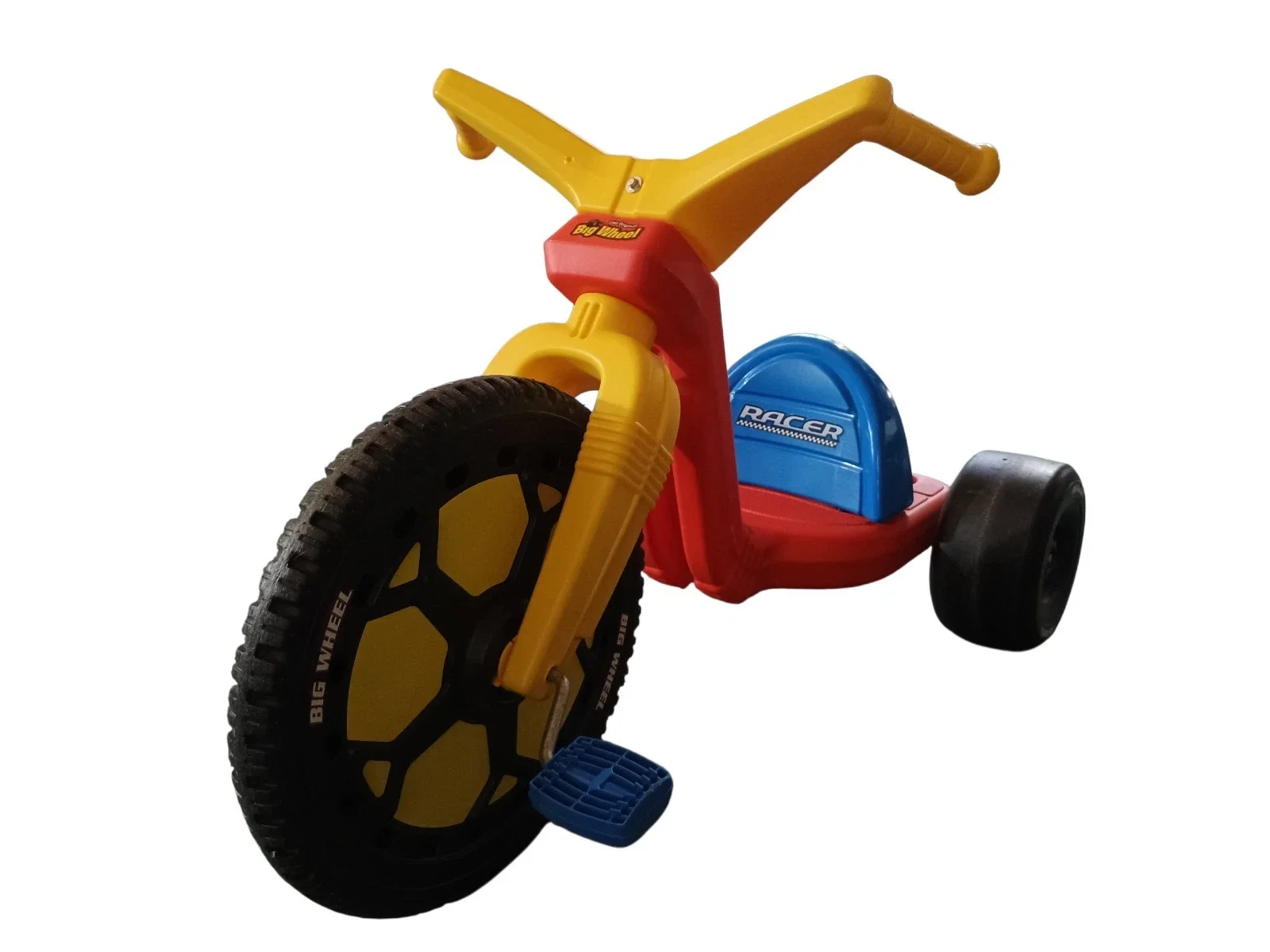
There is only one "Big Wheel", and this is it, the original:
03-27-26 | 07:14 PM
#23
Highly Enriched Driftium
Joined: Apr 2017
Posts: 6,637
Likes: 2,143
Was able to ride a Walty custom last weekend with Maxxis tires. Felt fairly sluggish on pavement and gravel but came alive as soon as I hit singletrack. Despite the protestations of 32"-fans right now I don't think the geometry is there. It needs to be different enough from 29" geometry that we're a few or several rounds of iteration away from good geometry.
Riding the bike also made it clear that the bigger wheel size is much more scalable to gravel bikes than MTB. That is, the geometry and fit can be made to work with gravel easier and for a wider range of riders than MTB. We'll see if the consumer base has the hunger for a completely new wheel size. This is clearly going to be a years-long campaign, so many things to see in the future.
Riding the bike also made it clear that the bigger wheel size is much more scalable to gravel bikes than MTB. That is, the geometry and fit can be made to work with gravel easier and for a wider range of riders than MTB. We'll see if the consumer base has the hunger for a completely new wheel size. This is clearly going to be a years-long campaign, so many things to see in the future.
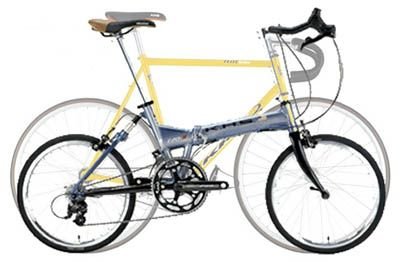
I've noticed the above dynamics are greatly improved on my 20"/406 bike, with lower axles, lower wheel torque, and longer wheelbase for the same overall length. I also have zero toe overlap when steering, unlike my 700c road race bike. This is all on pavement for me. The same benefits should acrue on dirt, and there are some off-road bikes in 406, notably the Bike Friday All-Packa, though I would imagine that where traction is critical on soft stuff, larger wheels would ultimately perform better, as well as better ride, spanning depressions better than smaller wheels. For agility under tight, low-speed steering on a narrow single-track, smaller may also be better, but I don't have MTB experience to be able to know for certain.
This visual shows a road bike, but I place it here only to help visualization of the above concepts:
 03-27-26 | 10:35 PM
#24
Senior Member


Joined: Jul 2005
Posts: 6,914
Likes: 1,257
This is why we are only now going back to the Moon after 50 years since the last attempt, and this attempt is no less fraught and over the bleeding edge of ability, sanity and safety. It was known decades ago that bigger wheels are faster wheels. Something called an 'angle of approach' or something similar. World record attempts used to be done on 36" wheels. Yes, bigger wheels make it easier to design a bike for an NBA player but that is NOT their only use case! I know 4'11" and 5'2" female cyclists that use 700C. If it were really necessary for a bikes wheels to have a proportion to the riders height, most women would be on 24" or 451 wheels. With what passes for "primo" pavement in 2026, Road wheels should in fact be at least 32". But because too many people don't have ANY ability to conceptualize, we get people arguing for 20" wheels or Plus or even FAT size tires, even when speed is the goal. Sigh.
03-28-26 | 12:07 AM
#25

Senior Member
Joined: Jul 2011
Posts: 2,923
Likes: 525
From: Turku, Finland, Europe
Bikes: 2011 Specialized crux comp, 2013 Specialized Rockhopper Pro
At what point does the added aerodynamic drag of a larger wheel and increased hub width become larger than the additional speed gained from a lower angle of attack of a larger wheel?