


Skin Protection
 03-20-26 | 01:46 PM
#1
Thread Starter
Newbie
Joined: Mar 2026
Posts: 1
Likes: 0
Skin Protection
Hello all,
I’ve been doing some research on saddle sore prevention and wanted to get some input from people who ride a lot. Most of the current products (chamois creams, etc.) seem to focus mainly on lubrication to reduce friction. In my experience they help, but don’t always fully solve the issue on longer or hotter rides.
I’ve been wondering whether a different approach might work better. Perhaps something more focused on supporting skin health over time, rather than just reducing friction. I’ve also come across some discussion around the skin’s natural bacteria (“skin microbiome”) and whether that plays a role in irritation, especially with repeated long rides.
Curious what people think:
• Do current products actually solve the problem for you?
• Do you think there’s room for something better/different?
• Would you be open to trying something that focuses more on skin health vs just lubrication?
Not selling anything, just doing some research and trying to understand what actually works (or doesn’t).
Thanks.
I’ve been doing some research on saddle sore prevention and wanted to get some input from people who ride a lot. Most of the current products (chamois creams, etc.) seem to focus mainly on lubrication to reduce friction. In my experience they help, but don’t always fully solve the issue on longer or hotter rides.
I’ve been wondering whether a different approach might work better. Perhaps something more focused on supporting skin health over time, rather than just reducing friction. I’ve also come across some discussion around the skin’s natural bacteria (“skin microbiome”) and whether that plays a role in irritation, especially with repeated long rides.
Curious what people think:
• Do current products actually solve the problem for you?
• Do you think there’s room for something better/different?
• Would you be open to trying something that focuses more on skin health vs just lubrication?
Not selling anything, just doing some research and trying to understand what actually works (or doesn’t).
Thanks.
 03-20-26 | 04:31 PM
#2
Clark W. Griswold


Joined: Mar 2014
Posts: 18,205
Likes: 6,605
From: ,location, location
Bikes: Foundry Chilkoot Ti W/Ultegra Di2, Salsa Timberjack Ti, Cinelli Mash Work RandoCross Fun Time Machine, 1x9 XT Parts Hybrid, Co-Motion Cascadia, Specialized Langster, Phil Wood Apple VeloXS Frame (w/DA 7400), R+M Supercharger2 Rohloff, Habanero Ti 26
I use Bike Glide (from Body Glide) and I don't have the problems and I am quick to chafe and get sores. For long rides I am 100% in bibs and they better be clean before I start and I start with a clean goochal region and apply the glide liberally and if I know I am doing a really long ride like a bike tour I am probably going to bring baby wipes and clean well down there and reapply and then when I get to camp I will clean again or if I am in the hotel I will shower and I might shower again in the morning. Typically at night I will use my Shikai Borage lotion or if I am out riding I will usually have some cortisone cream which helps greatly if I start to get a little something down there.
I am happy with Bike Glide but I am always willing to find another product which is even better. My needs are vegan meaning no animal products or testing and I want something that is in a stick form because it is easy to apply and no mess. But really the key is keeping things clean and dry (moisturized but not wet and sweaty)
I am happy with Bike Glide but I am always willing to find another product which is even better. My needs are vegan meaning no animal products or testing and I want something that is in a stick form because it is easy to apply and no mess. But really the key is keeping things clean and dry (moisturized but not wet and sweaty)
03-20-26 | 06:05 PM
#3

Senior Member

Joined: Mar 2018
Posts: 1,950
Likes: 1,922
I had occasional issues with saddle sores in the past, and found that cleanliness was next to Godliness in keeping them at bay. But on very long, multi-day rides they are harder to avoid. I found that padded shorts, while great for a few hours per day, are not so great for longer and frequent rides. They need to be washed after each ride, take time to dry, and such frequent washing slowly disintegrates them. You need at least a couple pair to rotate. A few years ago I gave up on padded shorts altogether. I started using Brooks B17 saddles, and found these great for all day rides with ordinary shorts, or even in jeans. I often go on long bikepacking trips, lots of hours each day, every day, and saddle sores can be a big issue. But unpadded shorts with cotton or merino wool underwear, with the aforementioned B17 saddle allow me to ride 8 to 10 (or more) hours per day in comfort, without getting saddle sores. Ordinary underwear and unpadded shorts are cheap, easy to wash, and quick to dry. I generally wear touring and MTB shorts by Pearl Izumi and Rapha, but Aere Tech makes good, unpadded lycra shorts.
03-20-26 | 06:11 PM
#4

Senior Member

Joined: Mar 2011
Posts: 3,860
Likes: 2,217
Hello all,
I’ve been doing some research on saddle sore prevention and wanted to get some input from people who ride a lot. Most of the current products (chamois creams, etc.) seem to focus mainly on lubrication to reduce friction. In my experience they help, but don’t always fully solve the issue on longer or hotter rides.
I’ve been wondering whether a different approach might work better. Perhaps something more focused on supporting skin health over time, rather than just reducing friction. I’ve also come across some discussion around the skin’s natural bacteria (“skin microbiome”) and whether that plays a role in irritation, especially with repeated long rides.
Curious what people think:
• Do current products actually solve the problem for you?
• Do you think there’s room for something better/different?
• Would you be open to trying something that focuses more on skin health vs just lubrication?
Not selling anything, just doing some research and trying to understand what actually works (or doesn’t).
Thanks.
I’ve been doing some research on saddle sore prevention and wanted to get some input from people who ride a lot. Most of the current products (chamois creams, etc.) seem to focus mainly on lubrication to reduce friction. In my experience they help, but don’t always fully solve the issue on longer or hotter rides.
I’ve been wondering whether a different approach might work better. Perhaps something more focused on supporting skin health over time, rather than just reducing friction. I’ve also come across some discussion around the skin’s natural bacteria (“skin microbiome”) and whether that plays a role in irritation, especially with repeated long rides.
Curious what people think:
• Do current products actually solve the problem for you?
• Do you think there’s room for something better/different?
• Would you be open to trying something that focuses more on skin health vs just lubrication?
Not selling anything, just doing some research and trying to understand what actually works (or doesn’t).
Thanks.
 03-21-26 | 09:25 AM
#5

Facts just confuse people

Joined: Jul 2017
Posts: 19,268
Likes: 7,021
From: Mississippi
Bikes: Tarmac Disc Comp Di2 - 2020
I've never used any chamois cream or ointments when cycling. The one time I did get something that looked like a saddle sore was from walking. And the cotton underwear bunching up as it got wet with sweat and lost all it's support. And becoming very abrasive to my skin as my thighs passed each other. That was the last time I ever wore cotton underpants. Now it's form fitting athletic underpants made from synthetic material.
As for cycling, the only other thing I do is make certain my bibbs or shorts fit snug enough to move with my skin. And that it doesn't have too many seams or badly made seams that will be irritating. And I also shave the hair everywhere under my shorts and jersey to a short length so that the moisture wicking ability of my clothing can effectively wick the moisture away from my skin.
Oh, and no underwear under the cycling bibbs or shorts. It's not needed. You wash them after a ride... don't you? <grin>
As for cycling, the only other thing I do is make certain my bibbs or shorts fit snug enough to move with my skin. And that it doesn't have too many seams or badly made seams that will be irritating. And I also shave the hair everywhere under my shorts and jersey to a short length so that the moisture wicking ability of my clothing can effectively wick the moisture away from my skin.
Oh, and no underwear under the cycling bibbs or shorts. It's not needed. You wash them after a ride... don't you? <grin>
03-21-26 | 10:28 AM
#6
Senior Member
Joined: Jul 2022
Posts: 511
Likes: 475
From: Illinois
Seriously, try a loin cloth (fundoshi). A light cotton gauze one for the win. Hemp also wicks/drys incredibly fast, but can seem a little stiffer or rougher than cotton, until it's been washed several times.
Last edited by streetsurfer; 03-21-26 at 10:31 AM.
03-21-26 | 11:54 AM
#7
Senior Member
Joined: Mar 2011
Posts: 3,860
Likes: 2,217
Hello all,
I’ve been doing some research on saddle sore prevention and wanted to get some input from people who ride a lot. Most of the current products (chamois creams, etc.) seem to focus mainly on lubrication to reduce friction. In my experience they help, but don’t always fully solve the issue on longer or hotter rides.
I’ve been wondering whether a different approach might work better. Perhaps something more focused on supporting skin health over time, rather than just reducing friction. I’ve also come across some discussion around the skin’s natural bacteria (“skin microbiome”) and whether that plays a role in irritation, especially with repeated long rides.
Curious what people think:
• Do current products actually solve the problem for you?
• Do you think there’s room for something better/different?
• Would you be open to trying something that focuses more on skin health vs just lubrication?
Not selling anything, just doing some research and trying to understand what actually works (or doesn’t).
Thanks.
I’ve been doing some research on saddle sore prevention and wanted to get some input from people who ride a lot. Most of the current products (chamois creams, etc.) seem to focus mainly on lubrication to reduce friction. In my experience they help, but don’t always fully solve the issue on longer or hotter rides.
I’ve been wondering whether a different approach might work better. Perhaps something more focused on supporting skin health over time, rather than just reducing friction. I’ve also come across some discussion around the skin’s natural bacteria (“skin microbiome”) and whether that plays a role in irritation, especially with repeated long rides.
Curious what people think:
• Do current products actually solve the problem for you?
• Do you think there’s room for something better/different?
• Would you be open to trying something that focuses more on skin health vs just lubrication?
Not selling anything, just doing some research and trying to understand what actually works (or doesn’t).
Thanks.
03-21-26 | 12:04 PM
#8

Senior Member
Joined: Jan 2017
Posts: 1,244
Likes: 1,360
From: falfurrias texas
Bikes: wabi classic (stolen & recovered)
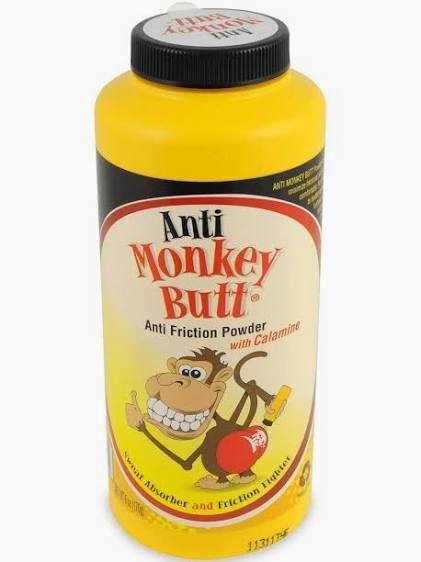
Harley guys swear by it and it's even sold at some Harley dealerships but it's kinda of a joke among the crotch rocketeers ...... i use Shea Butter and have never been chafed > apply at night and ride all day
03-21-26 | 12:55 PM
#9

Advocatus Diaboli
Joined: Feb 2015
Posts: 9,141
Likes: 1,735
From: Wherever I am
Bikes: Merlin Cyrene, Nashbar steel CX
Hello all,
I’ve been wondering whether a different approach might work better. Perhaps something more focused on supporting skin health over time, rather than just reducing friction. I’ve also come across some discussion around the skin’s natural bacteria (“skin microbiome”) and whether that plays a role in irritation, especially with repeated long rides.
.
I’ve been wondering whether a different approach might work better. Perhaps something more focused on supporting skin health over time, rather than just reducing friction. I’ve also come across some discussion around the skin’s natural bacteria (“skin microbiome”) and whether that plays a role in irritation, especially with repeated long rides.
.
 03-21-26 | 01:20 PM
#10
Senior Member

Joined: Apr 2005
Posts: 971
Likes: 401
From: Northern CA
Bikes: Cannondale tandems: '92 Road, '97 Mtn. Mongoose 10.9 Ti, Kelly Deluxe, Tommaso Chorus, Cdale MT2000, Schwinn Deluxe Cruiser, Torker Unicycle, among others.
A friend who rode cross country swore by his Brooks leather saddle. Said it helped reduce or even avoid "swamp butt." Plastic saddles offer NOTHING in this regard, so the difference in ventilation could be considerable.
However, for me, it doesn't matter, as I sweat profusely on hot rides. A little more airflow for me makes almost zero difference. Hygiene, saddle & bike fit, use of quality cycling shorts and chamois creme is usually the key to these issues. But as you say, skin microbiome is important too. I'd avoid antibacterial soaps, perfumes and oil-based lotions. Our skin has been evolving for hundreds of thousands of years before these consumer products came along. Sure, some modern products may help, but I'm doubtful. Good diet also affects overall health, so consider this aspect. And don't forget proper hydration (water and electrolytes) either!
However, for me, it doesn't matter, as I sweat profusely on hot rides. A little more airflow for me makes almost zero difference. Hygiene, saddle & bike fit, use of quality cycling shorts and chamois creme is usually the key to these issues. But as you say, skin microbiome is important too. I'd avoid antibacterial soaps, perfumes and oil-based lotions. Our skin has been evolving for hundreds of thousands of years before these consumer products came along. Sure, some modern products may help, but I'm doubtful. Good diet also affects overall health, so consider this aspect. And don't forget proper hydration (water and electrolytes) either!
03-21-26 | 03:26 PM
#11
Senior Member
Joined: May 2017
Posts: 2,419
Likes: 2,270
From: Hacienda Hgts
Bikes: 2026 Motobecane Mulekick 520 Steel 1999 Schwinn Peloton Ultegra 10, Kestrel RT-1000 Ultegra, Trek Marlin 6 Deore 29'er
Years ago someone on BF recommended Original Bag Balm. I tried it, converted and stopped using anything else since. Here is the ingredient list: Petrolatum, Lanolin, Paraffin Wax, Water, 8-Hydroxy Quinoline Sulfate 0.3%
If I ever develop a bacterial problem down there, I'll probably give Drapolene Cream a try. It was developed by GSK for "nappy" rash or urinary dermatitis as an antibacterial. I have used it as a topical for my father's skin after he developed ulcers, and that prevented reinfection after healing with Silvadene.
If I ever develop a bacterial problem down there, I'll probably give Drapolene Cream a try. It was developed by GSK for "nappy" rash or urinary dermatitis as an antibacterial. I have used it as a topical for my father's skin after he developed ulcers, and that prevented reinfection after healing with Silvadene.
03-21-26 | 03:59 PM
#12

OM boy
Joined: Jul 2005
Posts: 5,309
Likes: 1,299
From: Goleta CA
Bikes: a bunch
Within a few weeks of starting to ride regularly on performance road bikes (in 1966), I learned that using real cycling shorts of good quality (not necessarily 'high cost') was absolutely necessary; along with good kersey, socks, shoes, all the kit...
Those were the days of wool shorts and real chamois...
Having a number of shorts to switch out, because of riding daily, often hard and long, means having a wardrobe you can switch out and have at highest cleanliness was very important for comfort and reducing irritation and infections.
After washing real chamois, we would apply chamois cream, to keep the leather supple (reducing irritation. NOT applied to the skin. Some riders used a 'balm' for their skin, but I found it more uncomfortable and because it blocked my pores, more prone to small infections. So I quickly stopped using skin balms for a ride.
When good real chamois was becoming scarce, I had to shift to synthetic pads... I always prefer the minimum of good quality pad, similar to the thin single layer of real chamois - much better release of moisture and much cooler.
Excessive 'Heat' along with irritation are reasons for having skin problems, especially in the crotch.
A good ventilating pad, with not too much coverage is what I look for, besides a good cut/fit.
Keep the 'area. clean. keep the kit clean, have enough kit that you're able to change it out often, sometimes for each ride. I have some easy days and that kit can often go for a 2nd similar day.
I have kit if different materials and 'weights' for the often different riding conditions.
After a shower I now, since antibiotic cream has been over-the-counter, I would use a light application in the 'seat' area of skin. It has almost completely eliminated having any infections and skin problems.
IN the recent decade,when I'm not off somewhere doing other things (backpacking, snow skiing, skating, motorcycling, etc) I ride pedal bikes 6 out of 7 days avg. 2 hrs +ish... I ridden bikes continuously since '65, except for a hiatus from '99 thru mid '04.
This works best for me
Ride On
Yuri
Those were the days of wool shorts and real chamois...
Having a number of shorts to switch out, because of riding daily, often hard and long, means having a wardrobe you can switch out and have at highest cleanliness was very important for comfort and reducing irritation and infections.
After washing real chamois, we would apply chamois cream, to keep the leather supple (reducing irritation. NOT applied to the skin. Some riders used a 'balm' for their skin, but I found it more uncomfortable and because it blocked my pores, more prone to small infections. So I quickly stopped using skin balms for a ride.
When good real chamois was becoming scarce, I had to shift to synthetic pads... I always prefer the minimum of good quality pad, similar to the thin single layer of real chamois - much better release of moisture and much cooler.
Excessive 'Heat' along with irritation are reasons for having skin problems, especially in the crotch.
A good ventilating pad, with not too much coverage is what I look for, besides a good cut/fit.
Keep the 'area. clean. keep the kit clean, have enough kit that you're able to change it out often, sometimes for each ride. I have some easy days and that kit can often go for a 2nd similar day.
I have kit if different materials and 'weights' for the often different riding conditions.
After a shower I now, since antibiotic cream has been over-the-counter, I would use a light application in the 'seat' area of skin. It has almost completely eliminated having any infections and skin problems.
IN the recent decade,when I'm not off somewhere doing other things (backpacking, snow skiing, skating, motorcycling, etc) I ride pedal bikes 6 out of 7 days avg. 2 hrs +ish... I ridden bikes continuously since '65, except for a hiatus from '99 thru mid '04.
This works best for me
Ride On
Yuri
03-21-26 | 06:29 PM
#13
With a mighty wind
Joined: May 2015
Posts: 3,426
Likes: 1,480
Any ol lube seems to work.
The painful saddle sores are infected. They're basically acne. Clean the taint. Give it a scrub in the shower. Let that beast air out between rides. If you find a magic bullet, let us know, it's something I struggle with despite doing all the right things.
If you can get your doc to prescribe a bottle of topical (usually in a bottle with a sponge tip) bacitracin, rub that on your nethers after rides. Prevents and heals the taint acne. I did this once, it was pretty good.
03-22-26 | 04:14 AM
#15

Senior Member
Joined: Jan 2010
Posts: 45,132
Likes: 23,327
03-22-26 | 09:31 AM
#16
Senior Member
Joined: Mar 2012
Posts: 1,438
Likes: 974
Hello all,
I’ve been doing some research on saddle sore prevention and wanted to get some input from people who ride a lot. Most of the current products (chamois creams, etc.) seem to focus mainly on lubrication to reduce friction. In my experience they help, but don’t always fully solve the issue on longer or hotter rides.
I’ve been wondering whether a different approach might work better. Perhaps something more focused on supporting skin health over time, rather than just reducing friction. I’ve also come across some discussion around the skin’s natural bacteria (“skin microbiome”) and whether that plays a role in irritation, especially with repeated long rides.
Curious what people think:
• Do current products actually solve the problem for you?
• Do you think there’s room for something better/different?
• Would you be open to trying something that focuses more on skin health vs just lubrication?
Not selling anything, just doing some research and trying to understand what actually works (or doesn’t).
Thanks.
I’ve been doing some research on saddle sore prevention and wanted to get some input from people who ride a lot. Most of the current products (chamois creams, etc.) seem to focus mainly on lubrication to reduce friction. In my experience they help, but don’t always fully solve the issue on longer or hotter rides.
I’ve been wondering whether a different approach might work better. Perhaps something more focused on supporting skin health over time, rather than just reducing friction. I’ve also come across some discussion around the skin’s natural bacteria (“skin microbiome”) and whether that plays a role in irritation, especially with repeated long rides.
Curious what people think:
• Do current products actually solve the problem for you?
• Do you think there’s room for something better/different?
• Would you be open to trying something that focuses more on skin health vs just lubrication?
Not selling anything, just doing some research and trying to understand what actually works (or doesn’t).
Thanks.
03-22-26 | 12:59 PM
#17
Just a cyclist
Joined: Dec 2017
Posts: 92
Likes: 72
From: In the middle of NJ
Bikes: Trek Checkpoint ALR4, Giant Cypress DX, Trek 800. Liv Sedona DX (hers)
FWIW: I have 3 bikes with 3 different saddles. 2 used to give me sores and one does not. Strangely enough, the one that doesn't give me saddle sores is the drop bar gravel bike. My 2 more upright bikes both did it. I found a tip on the brooks website that said to rotate the saddle ever so slightly towards the side where you get the sores...like 1-2 degrees. It's so slight that it's hard to see that it's even been rotated. Once I did that on the 2 more upright bikes I never had a problem again.
For all of the bikes though - I always wear padded shorts and if I'm going longer than 25 miles or so I'll also lube up with Chamois Butt'r...
For all of the bikes though - I always wear padded shorts and if I'm going longer than 25 miles or so I'll also lube up with Chamois Butt'r...
03-23-26 | 10:52 AM
#18
Senior Member
Joined: Jan 2009
Posts: 4,360
Likes: 1,646
From: San Diego, CA
This is good for motorcycle riding where your butt pretty much doesn't move but gets sweaty. Works like sandpaper on cyclists gyrating cheeks though. I've used it for both.
03-23-26 | 11:25 AM
#19
Dont fix whats not broken
Joined: Sep 2019
Posts: 328
Likes: 185
From: Mooresville, NC
Bikes: Steelman Stage Race w/Ultegra 8000 11s, Trek Checkpoint SL5 Gen. 3
FWIW: I have 3 bikes with 3 different saddles. 2 used to give me sores and one does not. Strangely enough, the one that doesn't give me saddle sores is the drop bar gravel bike. My 2 more upright bikes both did it. I found a tip on the brooks website that said to rotate the saddle ever so slightly towards the side where you get the sores...like 1-2 degrees. It's so slight that it's hard to see that it's even been rotated. Once I did that on the 2 more upright bikes I never had a problem again.
For all of the bikes though - I always wear padded shorts and if I'm going longer than 25 miles or so I'll also lube up with Chamois Butt'r...
For all of the bikes though - I always wear padded shorts and if I'm going longer than 25 miles or so I'll also lube up with Chamois Butt'r...
03-24-26 | 05:53 AM
#20
Senior Member
Joined: Oct 2016
Posts: 871
Likes: 527
By far the most important factor in preventing saddle sores is getting the saddle position right.
Then comes your bibs/shorts - getting the brand that "fits your bits", and putting them on correctly.
Then comes pedaling form. Not sitting too far forward, rotating your pelvis to keep the pressure on your sit bones and not your perineum, keeping some weight off the saddle and on your legs, changing your position and standing periodically, etc.
After that, the chamois cream is to help with the last bit of remaining friction. Personally, I just get the cheapest/whatever is on sale/whatever is on the shelf at the LBS, and it seems to work (although I prefer chamois cream without "tingle"). I've tried A&D ointment, Bag Balm, etc. also, but the purpose-designed chamois cream cleans up better and seems to work longer. Among chamois creams I've tried, I have no preferences, they all seem to work fine. I'll still use A&D in a pinch if I run out of chamois cream, because it's around the house anyway.
Then comes your bibs/shorts - getting the brand that "fits your bits", and putting them on correctly.
Then comes pedaling form. Not sitting too far forward, rotating your pelvis to keep the pressure on your sit bones and not your perineum, keeping some weight off the saddle and on your legs, changing your position and standing periodically, etc.
After that, the chamois cream is to help with the last bit of remaining friction. Personally, I just get the cheapest/whatever is on sale/whatever is on the shelf at the LBS, and it seems to work (although I prefer chamois cream without "tingle"). I've tried A&D ointment, Bag Balm, etc. also, but the purpose-designed chamois cream cleans up better and seems to work longer. Among chamois creams I've tried, I have no preferences, they all seem to work fine. I'll still use A&D in a pinch if I run out of chamois cream, because it's around the house anyway.
