


MTB without suspension ?


 10-06-19 | 07:08 PM
#27

Disco Infiltrator


Joined: May 2013
Posts: 15,328
Likes: 3,518
From: Folsom CA
Bikes: Stormchaser, Paramount, Tilt, Samba tandem
The genius of the bicycle industry right now is that no matter what contrary idea you have, they have a product for you to buy to suit it
10-06-19 | 07:24 PM
#28

Advanced Slacker

Joined: Feb 2017
Posts: 6,286
Likes: 2,602
Bikes: Soma Fog Cutter, Surly Wednesday, Canfielld Tilt

I have a rigid Fatty now, not sure if that counts. Might try a plus-sized one at some point for tamer trails, we'll see.
However, my point was that what that dude is rambling on about with suspension bikes is pure freaking nonsense.
10-09-19 | 12:18 PM
#29

Junior Member
Joined: Oct 2019
Posts: 5
Likes: 0
10-11-19 | 09:41 AM
#30
Senior Member
Joined: Sep 2008
Posts: 660
Likes: 24
The Kona Rove is worth consideration. The Rove and Sutra have among the best geometry for rigid of any mass-production in my humble opinion. The vintage mtbs you find at garage sales or Goodwill are sometimes quite nice.
10-19-19 | 09:36 AM
#31

Junior Member
Joined: Jun 2019
Posts: 6
Likes: 1
From: Hilliard, OH
I bought a rigid MTB simply because it was the best option within my budget, and I don't spend much time on extreme offroad trails. The only complaint I have is from the stock grips, because my hands/wrists take a lot of punishment with no suspension to absorb the bumps. I think finding the right grips is a key factor.
11-05-19 | 08:23 PM
#32
Senior Member
Joined: Sep 2005
Posts: 2,116
Likes: 14
Vintage or modern is good. The question is how casual of a rider? Is it going to be ridden a lot? Or is this more of an infrequent riding habit? I'd say discs are great and really nice. But if it's not going to be ridden for say over 1,000 miles a year, then get any old jalopy that fits and beat it up.
Good luck. Lots of nice suggestions.
Good luck. Lots of nice suggestions.
11-06-19 | 01:24 AM
#33
Senior Member
Joined: Jun 2013
Posts: 517
Likes: 142
From: Yolo County, West Sacramento CA
Bikes: Modified 26 inch frame Schwinn Varsity with 700c wheels and 10 speed cassette hub. Ryan Vanguard recumbent. 67cm 27"x1 1/4" Schwinn Sports Tourer from the 1980's. 1980's 68cm Nishiki Sebring with 700c aero wheels, 30 speeds, flat bar bicycle.
A rigid MTB will go anywhere and do almost anything. MTB's whether rigid or sprung are designed for very harsh conditions. I raced for 4 years in Northern California at the end of the Klunker era and beginning of NORBA. All the race bicycles were unsprung. They were very fast. However the rider takes a beating at race speeds. Bleeding kidneys are not uncommon after a particularly rocky course. I found that I was no faster and finished no better on a derailleur equipped bicycle as opposed to a single speed. I raced bicycles that were equipped with coaster brakes and Mafac cantilever tandem brakes on the front fork. I raced bikes with cantilever brakes on both wheels. Frankly the coaster rear brake worked fine as long as you didn't use it for a drag brake. I would lock the rear wheel for a while until the bike started slewing around then unlock. This keeps the brake from overheating and usually provided the necessary speed reduction. Many downhills were so steep that the front brake needed to be used at times. This brings us to the other problem with rigid bikes. Basically going downhill at speed meant not grabbing the handlebar grips at all. I would ring the bars with my forefinger and thumb on each hand and push the bar instead of pulling it. The moment you grabbed the front brake you became one with the tremendous beating going on and you now couldn't see much of anything because your head and eyes were vibrating up and down so hard. After I quit racing I rode rigid MTB in the Sierra's a lot and really enjoyed it. I didn't have to go fast downhill like I did racing so a rigid bike is fine for casual rides. Now days I would opt for a full suspension bike with lockouts on both end suspension units. Suspension really shines going downhill. It mainly sucks energy the rest of the time and is usually not needed. That said I limit my offroad these days to gravel/dirt roads and easy trails. No more Downieville downhill or Tahoe rim trail. I'm getting too old for the beating.
 11-14-19 | 12:23 PM
#35
Advanced Slacker
Joined: Feb 2017
Posts: 6,286
Likes: 2,602
Bikes: Soma Fog Cutter, Surly Wednesday, Canfielld Tilt
Also, if the frame is too long AND too tall, you are just on the wrong sized frame.
 11-14-19 | 02:43 PM
#36
Senior Member
Joined: Sep 2008
Posts: 660
Likes: 24
This isn't a lark with me. I've been frustrated by 29ers since they first came out, waiting for a frame that could work with drop bars and climb steep mountains. The only mass-produced frame geometry that doesn't completely suck is on the Kona Sutra LTD. That's my choice for a potential rebuild.
Sure there are gravel bikes now, but they either use smaller wheels or have inadequate clearance for mtb tires. I'm not interested in skinnier, heavier, higher pressure tires. That's another botch. I'm satisfied with this current bike except it needs deeper drop bars to compensate for the crappy "modern" geometry.
Last edited by Clem von Jones; 11-14-19 at 04:12 PM.
11-14-19 | 03:22 PM
#37
Disco Infiltrator
Joined: May 2013
Posts: 15,328
Likes: 3,518
From: Folsom CA
Bikes: Stormchaser, Paramount, Tilt, Samba tandem
All of the things you say you hate about that bike are there to support the features you've removed. What a strange case of willfulness you have.
__________________
Genesis 49:16-17
"Well, well!" said Holmes, impatiently. "A good cyclist does not need a high road. The moor is intersected with paths and the moon is at the full."
Genesis 49:16-17
"Well, well!" said Holmes, impatiently. "A good cyclist does not need a high road. The moor is intersected with paths and the moon is at the full."
11-14-19 | 03:36 PM
#38
Member
Joined: Oct 2015
Posts: 31
Likes: 11
From: San Diego
Bikes: Yeti SB150, Specialized Chisel, Giant Defy Advanced Pro
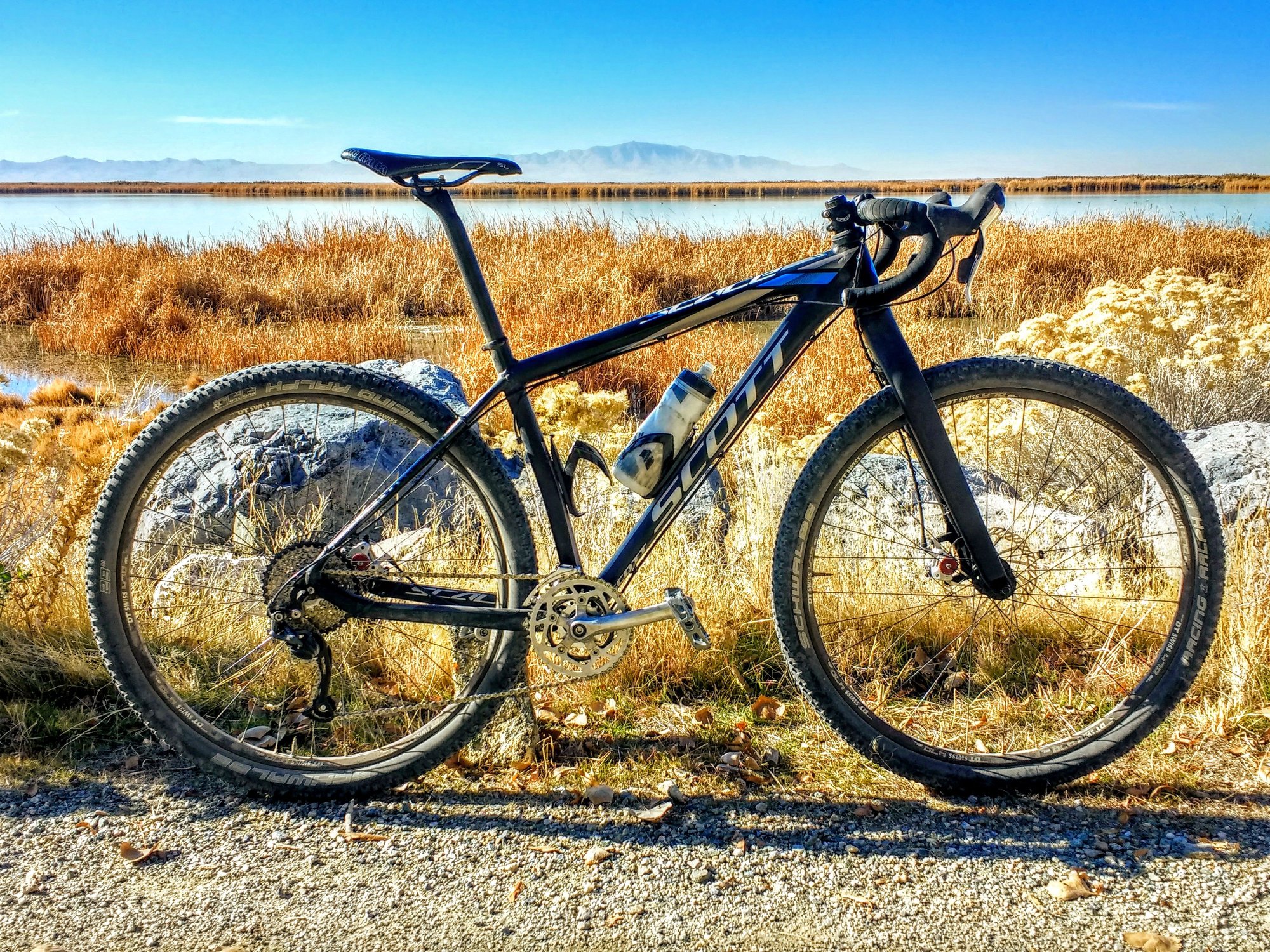
The geometry on 99.9% of 29ers is completely INSANE. I'm 6'2" and that's a large frame. I don't want no stinking flat bar bike, nor do I want a frame geometry that limits the choices of how I set it up. There's a two inch gap between my toes and the back of the front wheel. Look at that huge gap between the front wheel and frame. That enormous stretched-out wheelbase on 29ers is a flaw. It's more like train than a bicycle. No other mountain bikes are designed that way and 29ers shouldn't be that way either. And despite that crazy long and high geometry the bottom bracket still isn't high enough to run anything longer than 175mm cranks. I loathe modern mtb geometry. This frame is actually a lot better than most which is why I bought it. Most 29er frames are impossible to set up with drop bars even for tall people. The larger wheels are a good thing, especially for tall people, but the frame geometry of 29ers is totally botched. I prefer the first and second generation geometry of rigid 26" mtbs, but also 29" wheels.
11-15-19 | 01:27 PM
#39
Senior Member
Joined: Jun 2015
Posts: 5,786
Likes: 1,799
From: North Central Wisconsin
This isn't a lark with me. I've been frustrated by 29ers since they first came out, waiting for a frame that could work with drop bars and climb steep mountains. The only mass-produced frame geometry that doesn't completely suck is on the Kona Sutra LTD. That's my choice for a potential rebuild.
https://salsacycles.com/bikes/cutthr...at_grx_810_di2
 11-15-19 | 02:55 PM
#40
Advanced Slacker
Joined: Feb 2017
Posts: 6,286
Likes: 2,602
Bikes: Soma Fog Cutter, Surly Wednesday, Canfielld Tilt

And the Salsa Fargo (another drop bar MTB) has been out since 2008.
11-17-19 | 09:40 PM
#41
Senior Member

Joined: May 2004
Posts: 146
Likes: 0
I bought a rigid MTB simply because it was the best option within my budget, and I don't spend much time on extreme offroad trails. The only complaint I have is from the stock grips, because my hands/wrists take a lot of punishment with no suspension to absorb the bumps. I think finding the right grips is a key factor.
11-22-19 | 04:29 PM
#42
Senior Member
Joined: Sep 2008
Posts: 660
Likes: 24
I like the Cutthroat's geometry, but man that's an expensive bike. The first generation Fargo had its own rigid fork with a short crown height ("non-corrected for suspension") but all the latter ones give you the option of running a suspension fork. I loathe bikes designed around suspension forks. It makes the front end too high and I need lots of bar drop. The Cutthroat geometry is sort of in the middle, a compromise between both which isn't a bad solution although it isn't ideal.
Last edited by Clem von Jones; 11-22-19 at 11:52 PM.
11-22-19 | 09:50 PM
#43
Advanced Slacker
Joined: Feb 2017
Posts: 6,286
Likes: 2,602
Bikes: Soma Fog Cutter, Surly Wednesday, Canfielld Tilt
I like the Cutthroat's geometry, but man that's an expensive bike. The first generation Fargo had its own rigid fork with a short crown height ("non-corrected for suspension") but all the latter ones give you the option of running a suspension fork. I loathe bikes designed around suspension forks. It makes the front end too high and I need lots of bar drop. The Cutthroat geometry is sort of in the middle, a compromise between both which isn't a bad solution.
11-22-19 | 11:42 PM
#44
Senior Member
Joined: Sep 2008
Posts: 660
Likes: 24
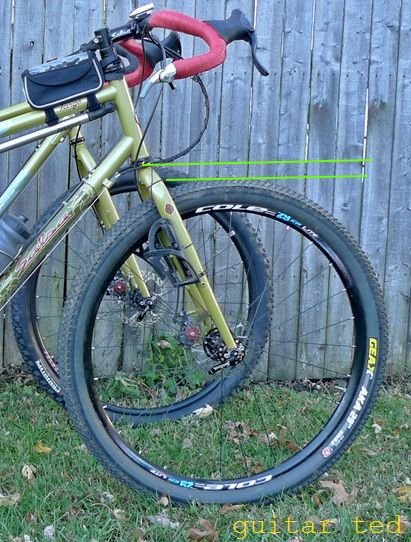
Here's the first generation in front of the second gen Fargo. With the first gen you at least had the option of buying a frame with a shorter headtube. In the later generations you only get too-high in every size. It's a bizarre geometry seemingly designed to frustrate anyone who rides in a lower position.
Here's the correct way to design a rigid 29er. This is a Kona Sutra LTD with its lower fork crown AND a shorter headtube. Congratulations to Kona for making the world's first sensible rigid 29er. For folks who like road bikes AND mountain bikes.

Last edited by Clem von Jones; 11-23-19 at 12:06 AM.
11-23-19 | 06:48 AM
#45
Advanced Slacker
Joined: Feb 2017
Posts: 6,286
Likes: 2,602
Bikes: Soma Fog Cutter, Surly Wednesday, Canfielld Tilt
Here's the first generation in front of the second gen Fargo. With the first gen you at least had the option of buying a frame with a shorter headtube. In the later generations you only get too-high in every size. It's a bizarre geometry seemingly designed to frustrate anyone who rides in a lower position.
Here's the correct way to design a rigid 29er. This is a Kona Sutra LTD with its lower fork crown AND a shorter headtube. Congratulations to Kona for making the world's first sensible rigid 29er. For folks who like road bikes AND mountain bikes.
Look at the head tubes on those Fargos. The one with the suspension corrected fork is much shorter..
That is what “suspension corrected” means..
You have to look at the hight of the fork plus the head tube length. You have only been looking at the fork length. This is why you are confused.
Also, you can’t go comparing head tube lengths of one bike to another (or anything really) unless you have bikes of the same size, and same fork length. And even then you are not taking into account BB height.
Forget the pictures, look at the actual geometry numbers.
Your frustration is not due to how bikes are designed, it is due to your profound lack of understanding of bike geometry. The fact that it is not obvious to you that you should be on a smaller sized frame is just one example of how clueless you are about any of this.
Last edited by Kapusta; 11-23-19 at 08:26 AM.
11-23-19 | 07:53 AM
#46
Senior Member
Joined: May 2013
Posts: 2,313
Likes: 1,186
From: Kips Bay, NY
Bikes: Ritchey Swiss Cross | Teesdale Kona Hot | Haro Extreme | Specialized Stumpjumper Comp | Cannondale F1000 | Shogun 1000 | Cannondale M500 | Norco Charger | Marin Muirwoods 29er | Shogun Kaze | Breezer Lightning
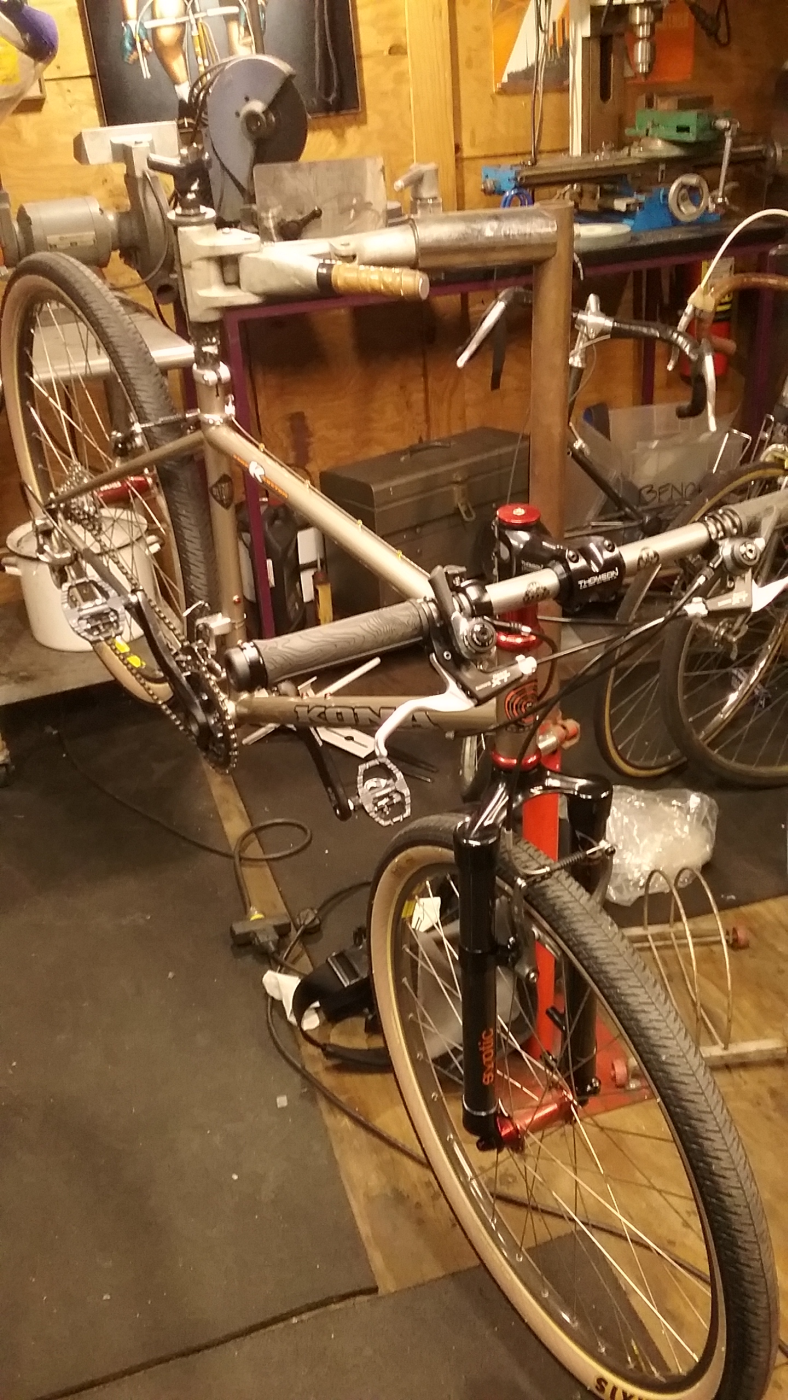
Another vote for vintage. Here is my current project, a 95 Kona Hot with 2x10.
11-23-19 | 10:48 AM
#47
Senior Member
Joined: Sep 2008
Posts: 660
Likes: 24
Um, no.
Look at the head tubes on those Fargos. The one with the suspension corrected fork is much shorter..
That is what “suspension corrected” means..
You have to look at the hight of the fork plus the head tube length. You have only been looking at the fork length. This is why you are confused.
Also, you can’t go comparing head tube lengths of one bike to another (or anything really) unless you have bikes of the same size, and same fork length. And even then you are not taking into account BB height.
Forget the pictures, look at the actual geometry numbers.
Your frustration is not due to how bikes are designed, it is due to your profound lack of understanding of bike geometry. The fact that it is not obvious to you that you should be on a smaller sized frame is just one example of how clueless you are about any of this.
Look at the head tubes on those Fargos. The one with the suspension corrected fork is much shorter..
That is what “suspension corrected” means..
You have to look at the hight of the fork plus the head tube length. You have only been looking at the fork length. This is why you are confused.
Also, you can’t go comparing head tube lengths of one bike to another (or anything really) unless you have bikes of the same size, and same fork length. And even then you are not taking into account BB height.
Forget the pictures, look at the actual geometry numbers.
Your frustration is not due to how bikes are designed, it is due to your profound lack of understanding of bike geometry. The fact that it is not obvious to you that you should be on a smaller sized frame is just one example of how clueless you are about any of this.
11-23-19 | 11:03 AM
#48
Advanced Slacker
Joined: Feb 2017
Posts: 6,286
Likes: 2,602
Bikes: Soma Fog Cutter, Surly Wednesday, Canfielld Tilt
The problem is that you bought the WRONG SIZED FRAME for what you want to do.
It is really THAT SIMPLE.
If the stack is too high and the reach too long, you go to a smaller sized frame. This is bike fitting 101.
11-23-19 | 11:43 AM
#49

Senior Member
Joined: Sep 2015
Posts: 5,126
Likes: 1,324
From: Left Coast, Canada
It's funny, wanting the world to build all their bikes to suit ones momentary whimsy rather than just thoughtfully choosing the bike for you.
If one has unique and specific tastes, get a frame built. It's not rocket surgery and far less expensive than buying successive new bikes made for other purposes to be unhappy with.
I also don't believe riding rigid makes for more skilled riding.. it just feels that way because you have to commit 100% effort into doing sub optimal routes compared to what one can do with suspension. People are doing things now that would have been inconceivable when rigid mtb was "the" thing.
Yes, you can drive a 1960's Lotus around an F1 track but that doesn't mean you are keeping up with the 2000's McLarens.
If one has unique and specific tastes, get a frame built. It's not rocket surgery and far less expensive than buying successive new bikes made for other purposes to be unhappy with.
I also don't believe riding rigid makes for more skilled riding.. it just feels that way because you have to commit 100% effort into doing sub optimal routes compared to what one can do with suspension. People are doing things now that would have been inconceivable when rigid mtb was "the" thing.
Yes, you can drive a 1960's Lotus around an F1 track but that doesn't mean you are keeping up with the 2000's McLarens.
Last edited by Happy Feet; 11-23-19 at 12:17 PM.
11-23-19 | 12:02 PM
#50
Senior Member
Joined: Sep 2008
Posts: 660
Likes: 24
I agree that frame sizing is a good place to start, but it doesn't solve the problem of ALL frames having excessive reach and stack for their size