


Why no riding in the rain?
 07-16-05 | 02:55 PM
#1

Thread Starter
What?

Joined: Oct 2003
Posts: 1,650
Likes: 0
From: N. Tx
Bikes: Bianchi Brava(retired), Surly Instigator(retired)
Why no riding in the rain?
Now, I'll be the first to admit it, I don't ride any of the trails in the rain. Honestly though it makes no sense to me. In places like BC or Northern Wales it rains, you would figure, 24 hours a day 7 days a week, it's always wet. They seem to ride fine and have some of the best trails on the planet. Now, I understand that our (Austin, TX) ecosystem differs vastly from theirs but I don't see how it can deter us from riding wet trails. If anything, yes it would "destroy" the trails, make them rutted and rooty and really a hassle to ride on, but also wouldn't it make them more technical and hard and isn't this sport about progression, doing things you otherwise wouldn't do? There seems to be lots of debates on this, with some saying "yeah go ride!!!" and others screaming "No God will hate you!" I just don't see the necessity to close a trail just because of a little rain. I'm at a lose guys, should I ride?
 07-16-05 | 03:02 PM
#2

Wood Licker

Joined: Apr 2002
Posts: 16,966
Likes: 2
From: Whistler,BC
Bikes: Trek Fuel EX 8 27.5 +, 2002 Transition Dirtbag, Kona Roast 2002
Well it isn't 24x7  ...except this last 2.5 months
In your case it has to do with soft land not used to rain. This creates an eco hazard by creating unatural water runoffs. This in theory takes water away from where the land is used to having it causing other ecological problems. If, this is a big if, you had skilled builders used to building while working with the flow of the water, anywhere could be a wet terrain safe place. But that not only takes time but lots of time. You need to go out and watch it rain. Ok where does the water run, why, how can I avoid it, bypass it or go over it. For a lengthy trail this is years of work.
The people who say it 'can't' be done simply fall into the category of "its beyond to much work, our local builders won't do it, so it CAN'T be done" Of course it CAN, but will anyone, I doubt it. You need a heavily dedicated set of builders who have some serious skills and concern for the environment. It also helps to have the local enviro parties backing them and the gov't
...except this last 2.5 months In your case it has to do with soft land not used to rain. This creates an eco hazard by creating unatural water runoffs. This in theory takes water away from where the land is used to having it causing other ecological problems. If, this is a big if, you had skilled builders used to building while working with the flow of the water, anywhere could be a wet terrain safe place. But that not only takes time but lots of time. You need to go out and watch it rain. Ok where does the water run, why, how can I avoid it, bypass it or go over it. For a lengthy trail this is years of work.
The people who say it 'can't' be done simply fall into the category of "its beyond to much work, our local builders won't do it, so it CAN'T be done" Of course it CAN, but will anyone, I doubt it. You need a heavily dedicated set of builders who have some serious skills and concern for the environment. It also helps to have the local enviro parties backing them and the gov't
07-16-05 | 03:07 PM
#3
Wood Licker
Joined: Apr 2002
Posts: 16,966
Likes: 2
From: Whistler,BC
Bikes: Trek Fuel EX 8 27.5 +, 2002 Transition Dirtbag, Kona Roast 2002
For example, gargamel has been 3 years in the making. Steady work, 1 builder (and I assume friends) and it seems, anyways, he has avoided natural runoffs and or worked them to advantage.
Another thing, if a trail Can't be build with the runoffs in mind, then trails here get reworked every few years to allow drainage to fix itself. This is usually a last resort and is almost always because of older trails being built without the environment in mind.
Another thing, if a trail Can't be build with the runoffs in mind, then trails here get reworked every few years to allow drainage to fix itself. This is usually a last resort and is almost always because of older trails being built without the environment in mind.
07-16-05 | 03:23 PM
#4

Senior Member
Joined: Aug 2003
Posts: 1,200
Likes: 0
From: colonial heights Va
Bikes: Devinci Guzzler, 04 Canadian version
doing the trail work is tedious but fun. Mael, as usual you brought up good stuff about water runoff.I had the privalege of leading a trail rework where others were doing the work to My standards and ideas this past spring. it was awesome to see the results after some of the monsoon rains weve had lately. I was real concerned that I was gonna take a bad situation and make it worse but it turned out better than we all expected. I must admit it only succeeded because another man who had over 100 hours of trail building as my eyes and slope master. if it werent for him it would not have turned out so well. to do all the work and see someone ride in the rainy stuff and destroy the flow is real frustrating.its hard enough to find time to do the work and the goal for us in Va. is to make the maintenence a minimum. I ride every Mon. in the one I speak of( Battlefield National Park) very Mon. to do light work such as remove excess leaves and stuff from the runoffs so they keep flowing and not get clogged as well as check for erosion and trash removal. sometimes I dont know whether I like riding or building better because I get a chance to see how the world of nature works when I check the work out. we have a rule of thumb on most trails here that is stay off 24 hours for every inch of rain. we resort to fire roads and stuff if it gets too bad for too long. it has cut way down on the reconstruction of many trails and keeps reworks to a minimum.you can still get muddy just not sloppy muddy
07-16-05 | 03:48 PM
#5

Withdrawal Symptoms!
Joined: Oct 2003
Posts: 1,258
Likes: 0
From: Cornwall UK
Bikes: Specialized Hardrock Sport Disc 2004 And identit Dr Jekyll
I could understand how riding in the rain would seem weird if youve only ever ridden in the dry, but over here you get used to it, i prefer riding in the tipping down rain than in the sun.
07-16-05 | 04:04 PM
#6


Riding muddy trails widens them, and can accelerate erosion. If you have clay soil like in the Dallas area, you won't get 50 feet without having to pick up your bike and carry it back to the trailhead anyway. I saw two guys do this in Dallas. What a mess. Serves them right for being so stupid.
07-16-05 | 04:45 PM
#7
Thread Starter
What?
Joined: Oct 2003
Posts: 1,650
Likes: 0
From: N. Tx
Bikes: Bianchi Brava(retired), Surly Instigator(retired)
Well you're right supcom, a sizeable lot of what is seen in the Austin area, with the exception of City Park, is clay soil and its nasty and gooey. I'd like to start helping with trail maintence and/or new trail building. The problem is, as we see mountain biking progress more and more to technical trails and larger drops, basically more fun, it seems the US is stuck in XC mode. I understand that it has a huge following, but the sport is moving away from that it seems with younger riders coming from BMX backgrounds, they are looking to go big. I would like the sport to progress in that direction. I am hoping Mael can give some pointers. I'm a political science major so if it takes some politicking on my part to get the city to ok some radical trail idea's, this would be a great opportunity for me to get a foot hold in the political arena and help something that I love. SO Mael, what do you suggest?
07-16-05 | 05:03 PM
#8
Wood Licker
Joined: Apr 2002
Posts: 16,966
Likes: 2
From: Whistler,BC
Bikes: Trek Fuel EX 8 27.5 +, 2002 Transition Dirtbag, Kona Roast 2002
Well it takes backing. Support of
a) the community where the trails will be built
b) the support of the riders/lbs's etc...
c) a good builder(s) to create good long lasting trails that also offer variety while not being insane. Insane trail especially in the states need to be left to the resorts or REALLY hidden. Sorry just a fact, your legal system sucks monkey nuts and is a serious detriment to any activity that involved personal risk.
If you can get all three that you can work on getting appropriate land. Start slow and build up. Get the support of IMBA to give credit to what you want to do. You shoudl also try to get out here and get a feel for how worca, whistler the city, intrawest the mountain all interact.
You also need to think of other riders, beginners etc. This really puts things into perspective. Also I would think a good trail labelling system would work. It helps keep the little boys off of the big boy trails. Maybe develop a 2 tier system. Green, Blue and black work perfectly here because people know what they are you may need more explanation. Something like
A6 - First letter represents the technical difficulty of the trail (stunts, steeps etc...) and the second number could represent drops, jumps etc.
Anyways if you REALLY want to work at it, you are gonna be working hard. You also have some serious environmental groups against you with lots of clout. Right now, standing up here, you guys seem to be in a loose battle ... good luck
a) the community where the trails will be built
b) the support of the riders/lbs's etc...
c) a good builder(s) to create good long lasting trails that also offer variety while not being insane. Insane trail especially in the states need to be left to the resorts or REALLY hidden. Sorry just a fact, your legal system sucks monkey nuts and is a serious detriment to any activity that involved personal risk.
If you can get all three that you can work on getting appropriate land. Start slow and build up. Get the support of IMBA to give credit to what you want to do. You shoudl also try to get out here and get a feel for how worca, whistler the city, intrawest the mountain all interact.
You also need to think of other riders, beginners etc. This really puts things into perspective. Also I would think a good trail labelling system would work. It helps keep the little boys off of the big boy trails. Maybe develop a 2 tier system. Green, Blue and black work perfectly here because people know what they are you may need more explanation. Something like
A6 - First letter represents the technical difficulty of the trail (stunts, steeps etc...) and the second number could represent drops, jumps etc.
Anyways if you REALLY want to work at it, you are gonna be working hard. You also have some serious environmental groups against you with lots of clout. Right now, standing up here, you guys seem to be in a loose battle ... good luck
07-16-05 | 05:08 PM
#9
Thread Starter
What?
Joined: Oct 2003
Posts: 1,650
Likes: 0
From: N. Tx
Bikes: Bianchi Brava(retired), Surly Instigator(retired)
Do you think we could make a sticky, not necessarily this thread, but a sticky post for trail building and trail advancement? All of us use trails but few of us really don't understand how they are built and work. It's up to use to the trails and keep them open.
07-16-05 | 10:24 PM
#10

Ride bike or bike ride?
Joined: Oct 2003
Posts: 1,447
Likes: 0
From: Adelaide, Australia
Bikes: MongoosePro DH, Dart custom road bike, .243 Racing FR street bike
I ride in the rain, it adds to the fun of the ride, last race was an absolute quagmire. Sponsored riders were easy to spot..... they were the ones on brown bikes with a couple of clean spots where sponsors stickers were Seriously, riding in the wet acan totally change a trail, however unless the trail is designed to have proper drainage as already maentioned, it will destroy it and the area. Even trails designed to be avle to be ridden in the rain change heaps, at the race Ithink every run I did was different, riding it in the wet was causing it to be thaty different each and every run. It is also very fun going way slower than if it was dry and still managing to get two wheel drifts without even trying
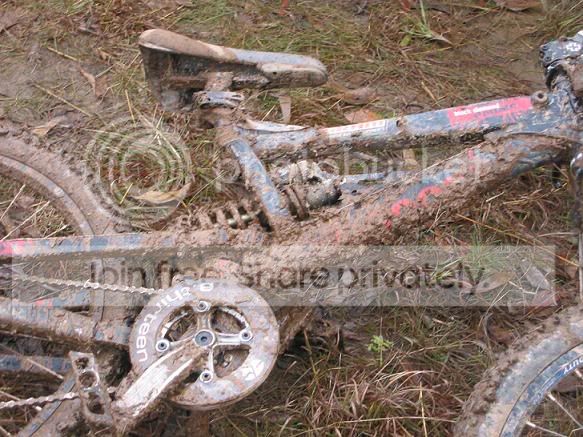
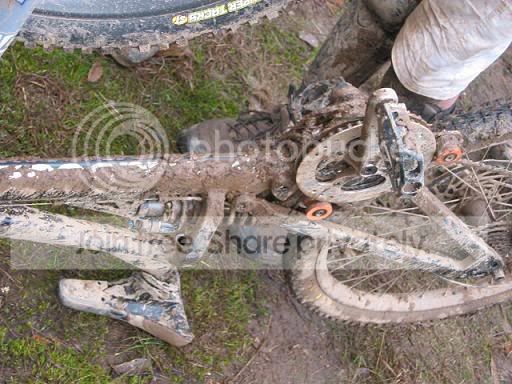
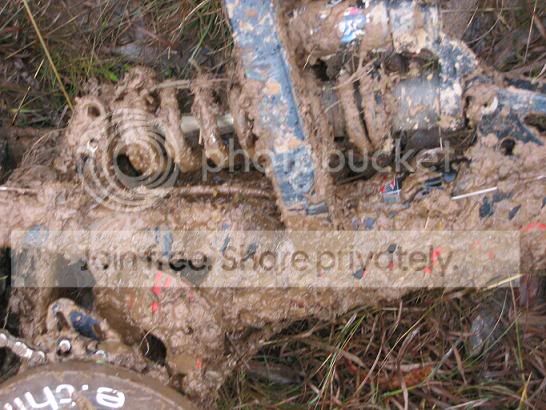
Also why not when you can get your bike looking like this (me and my mates bike after last race and halfway through getting cleaned)
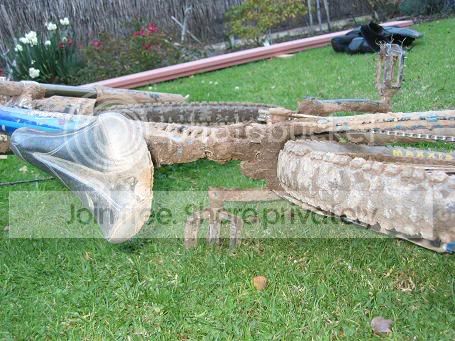
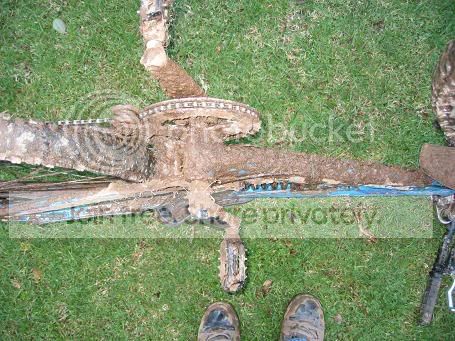
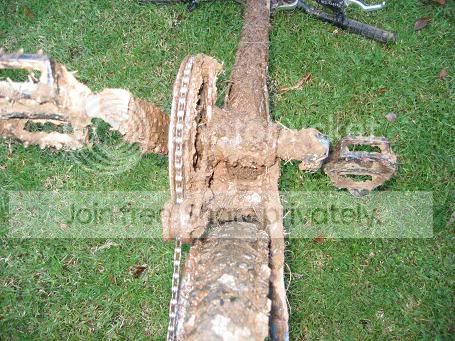
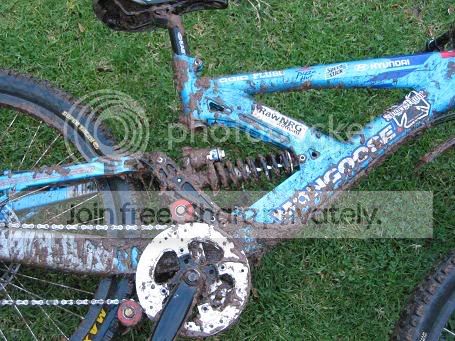
Seriously, riding in the wet acan totally change a trail, however unless the trail is designed to have proper drainage as already maentioned, it will destroy it and the area. Even trails designed to be avle to be ridden in the rain change heaps, at the race Ithink every run I did was different, riding it in the wet was causing it to be thaty different each and every run. It is also very fun going way slower than if it was dry and still managing to get two wheel drifts without even tryingAlso why not when you can get your bike looking like this (me and my mates bike after last race and halfway through getting cleaned)
07-17-05 | 02:50 PM
#12

eert a ekil yzarc
Joined: Oct 2000
Posts: 2,560
Likes: 0
From: Pasadena TX
Bikes: many bikes
Originally Posted by FreeridinLoon
I understand that it has a huge following, but the sport is moving away from that it seems with younger riders coming from BMX backgrounds, they are looking to go big.
Thing about riding in/after the rain for Jack Brooks. After a decent rain, it takes a week for the trails to dry. The trail system is next to and through a creek system. Lots of bridges. But all the low flat land through the trail is a temporary swamp when wet. With all the rain that has been dropping here lately, I know I should go out to smooth out the ruts that some have left. (Adopted one of the beginner level trails).
07-17-05 | 04:16 PM
#13
Withdrawal Symptoms!
Joined: Oct 2003
Posts: 1,258
Likes: 0
From: Cornwall UK
Bikes: Specialized Hardrock Sport Disc 2004 And identit Dr Jekyll
Originally Posted by supcom
Riding muddy trails widens them, and can accelerate erosion. If you have clay soil like in the Dallas area, you won't get 50 feet without having to pick up your bike and carry it back to the trailhead anyway. I saw two guys do this in Dallas. What a mess. Serves them right for being so stupid.
I know what you mean but over here we have no choice, if we waited to ride in the dry then we would never ride.
07-18-05 | 09:28 AM
#14
Senior Member
Joined: Jul 2002
Posts: 1,083
Likes: 0
From: seattle
I live in the NW. it rains, we ride.... but as mentioned, most trails are designed 'correctly'
what I find funny though, is people get really protective about trails (with good reason, lots of effort goes into them), the city comes in and says, "don't dig here, it's protected... we can't have you wrecking the place.. you'll ruin the eco system.."
then two years later, they are putting in condos'.
what I find funny though, is people get really protective about trails (with good reason, lots of effort goes into them), the city comes in and says, "don't dig here, it's protected... we can't have you wrecking the place.. you'll ruin the eco system.."
then two years later, they are putting in condos'.
07-18-05 | 10:35 AM
#15

Senior Member
Joined: Feb 2005
Posts: 504
Likes: 0
From: OC, California
Bikes: '04 Specialized Stumpy FSR Pro (Frame and Shock Only)
Originally Posted by FreeridinLoon
Well you're right supcom, a sizeable lot of what is seen in the Austin area, with the exception of City Park, is clay soil and its nasty and gooey. I'd like to start helping with trail maintence and/or new trail building. The problem is, as we see mountain biking progress more and more to technical trails and larger drops, basically more fun, it seems the US is stuck in XC mode. I understand that it has a huge following, but the sport is moving away from that it seems with younger riders coming from BMX backgrounds, they are looking to go big. I would like the sport to progress in that direction. I am hoping Mael can give some pointers. I'm a political science major so if it takes some politicking on my part to get the city to ok some radical trail idea's, this would be a great opportunity for me to get a foot hold in the political arena and help something that I love. SO Mael, what do you suggest?
Besides the fact that you kill the trails by riding them in the rain, you also piss off a lot of people who enjoy the trails as well (equestrians, hikers, trail-runners, etc) and, guess what, they have as much right to enjoy nice, clean, buffed trails as anyone else. So I ask you this: why is your agenda more important and more germaine than those of every other trail user (including the MAJORITY of the mountain bikers out there - the XC guys) in existence? I can provide you with a simple, concise answer on that one: it's not.
If you want to see progression through bigger drops, more challenging trails and more technical terrain then you need to go through legal channels by organizing interested parties, collecting funds, doing ecological impact studies and finding areas where you're not going to damage the ecosystem, impinge on other people's enjoyment of said trails or generally screw things up for sake of your own selfish motivation.
One other thing to keep in mind here: if you decide to ride in the rain and damage the trails, guess what; the trails will be closed to bikes PERMANENTLY. Is that what you really want?
07-18-05 | 11:26 AM
#16
Wood Licker
Joined: Apr 2002
Posts: 16,966
Likes: 2
From: Whistler,BC
Bikes: Trek Fuel EX 8 27.5 +, 2002 Transition Dirtbag, Kona Roast 2002
To be honest, I don't know the terrain there, and I don't know the eco-system. I know the west coast is built for rain. Everything about out terrain is. You might be SOL to be honest, your terrain may not support rainy season riding. I am only speakng from experience in an area where we live with the rain almost constantly.
what I find funny though, is people get really protective about trails (with good reason, lots of effort goes into them), the city comes in and says, "don't dig here, it's protected... we can't have you wrecking the place.. you'll ruin the eco system.."
then two years later, they are putting in condos'.
Ain't that the truth.
what I find funny though, is people get really protective about trails (with good reason, lots of effort goes into them), the city comes in and says, "don't dig here, it's protected... we can't have you wrecking the place.. you'll ruin the eco system.."
then two years later, they are putting in condos'.
07-18-05 | 12:36 PM
#17
Thread Starter
What?
Joined: Oct 2003
Posts: 1,650
Likes: 0
From: N. Tx
Bikes: Bianchi Brava(retired), Surly Instigator(retired)
Whoa Whoa Whoa Cranx chill out. I already said that I would be willing to do what I wanted to do through legal channels. Yes, XC is a huge part of the sport but you will notice a move away from that. I don't know many mountain bikers with light ti frames and 80mm of travel and Austin is a pretty big cycling community. So yes, the progression of the sport is to more technical, aggressive riding.
Second, I found Austin's only trail thats open during rain. It's a moto-cross trail thats shared by bikers. It's an AWESOME, technical trail. Lots of drops and real sketchy downhill sections, I'll say that wetness really make a technical trail even more technical, with the baby heads all wet and slippery and the wet leaves not giving you any grip; quite a different experience but I enjoyed it.
Second, I found Austin's only trail thats open during rain. It's a moto-cross trail thats shared by bikers. It's an AWESOME, technical trail. Lots of drops and real sketchy downhill sections, I'll say that wetness really make a technical trail even more technical, with the baby heads all wet and slippery and the wet leaves not giving you any grip; quite a different experience but I enjoyed it.
07-18-05 | 02:33 PM
#18

Senior Member
Joined: Jun 2005
Posts: 148
Likes: 0
I hate saying this but, I am an Army Engineer, and two things jump out at me from this discussion. One, the primary basis for almost all construction, and don’t doubt that these trails are a form of horizontal construction, is COMPACTION. It is almost impossible to get a normal construction standard compaction on these trails because the local soil is being used, and by taking out vegetation no matter how many people ride a trail it will always be more susceptible to erosion than the areas around it that still have vegetation. Second, the trail builders do a fantastic job, but water like those above have already mentioned, must be worked with, because you cannot beat it. Some areas will always have problems but then again, that's why we all have these expensive bikes with ugly tires. IMHO, if someone or someones’ have put so much work into landscaping a trail through an area, I feel I must respect their effort and stay off of trails that deteriorate when ridden if wet. I have spent my fare share of time on the working end of a shovel, hoe, brushhook, axe… etc. and personally I think that I might start stringing up booby traps for those less considerate types, but that’s just me.
