


Cable routing? In front or the back of the bars?
 01-21-12 | 10:49 PM
#1
Thread Starter
Senior Member
Joined: Jan 2011
Posts: 448
Likes: 0
Cable routing? In front or the back of the bars?
Any consensus on which way is better? Routing the shifter cable in front of the bars along side the brake cable or the back side? It actually seams to me you will have a sharper bend routing in the back side of the bars than the front.
 01-22-12 | 05:39 AM
#2

Voice of the Industry
Joined: May 2007
Posts: 12,572
Likes: 8
Nope..for Campy in particular and also for Sram and Shimano, routing derailleur cables behind the bars typically manifests the best shifting with less internal cable drag. I even opt to routing my derailleur cables outside and around the back of the FSA Kwing carbon bar versus internally which it has provision for. I run the brake housing thru the Kwing...but derailleur cables around the back. Bottom line is the back edge radius is less tight then the front radii of a handlebar...difference in radii being equal to the width of the handlebar.
01-22-12 | 07:40 AM
#3
Senior Member


Joined: Feb 2007
Posts: 15,410
Likes: 188
From: Tariffville, CT
Bikes: Tsunami road bikes, Dolan DF4 track
Above points are valid with regular housing.
If you use a segmented housing, you can select routing based on fit/feel preferences. Segmented housing, with a slightly wider teflon type lining and a narrow cable, allows you to make radical turns without significantly affecting friction/feel.
I use Nokons because of a prior car where I had to turn the bars a lot to get the bike to fit in said car. I blew out regular housing (campy and shimano) after a few months. The Nokons held up fine. I also run some tight turns between the bars/stem/frame, and Nokons (or any segmented housing I suppose) help with that. Finally a segmented housing allows you to "grow" housing, i.e. if you want to make it a segment longer you just add a segment (this is based on the premise that you'll be running the inner liner the whole length of the cable, which I do).
In other words I run my cables without any regards to cable friction, at least not anymore.
However... I like the feel of a "wing" bar. I run the cable in front and behind (Campy levers) the bar so that the bar takes on an oblong shape.
I just (and I mean just) bought an FSA wing compact bar and although I haven't taped it yet, I'm debating what I'll do. I like running the cable behind but I'm worried that I'll bruise my forearms on the bars when sprinting out of the saddle. I'm thinking that since the bar already has the wing shape and I want as much clearance just above the drops, I'll run the cables forward.
I usually ride the trainer without tape for a week or four to finalize lever position, experiment with housing routing, etc. Then I make the decision. I'm about 8 or 10 hours into this setup.
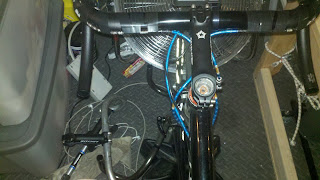
If you use a segmented housing, you can select routing based on fit/feel preferences. Segmented housing, with a slightly wider teflon type lining and a narrow cable, allows you to make radical turns without significantly affecting friction/feel.
I use Nokons because of a prior car where I had to turn the bars a lot to get the bike to fit in said car. I blew out regular housing (campy and shimano) after a few months. The Nokons held up fine. I also run some tight turns between the bars/stem/frame, and Nokons (or any segmented housing I suppose) help with that. Finally a segmented housing allows you to "grow" housing, i.e. if you want to make it a segment longer you just add a segment (this is based on the premise that you'll be running the inner liner the whole length of the cable, which I do).
In other words I run my cables without any regards to cable friction, at least not anymore.
However... I like the feel of a "wing" bar. I run the cable in front and behind (Campy levers) the bar so that the bar takes on an oblong shape.
I just (and I mean just) bought an FSA wing compact bar and although I haven't taped it yet, I'm debating what I'll do. I like running the cable behind but I'm worried that I'll bruise my forearms on the bars when sprinting out of the saddle. I'm thinking that since the bar already has the wing shape and I want as much clearance just above the drops, I'll run the cables forward.
I usually ride the trainer without tape for a week or four to finalize lever position, experiment with housing routing, etc. Then I make the decision. I'm about 8 or 10 hours into this setup.
01-22-12 | 07:57 AM
#4
Banned.
Joined: Apr 2010
Posts: 1,041
Likes: 0
From: Somewhere
Bikes: something
While people do say back of the bars for a good reason what matters far more is how tight the overall routing is. For example if you were to route around the front but then let the cables go on the underside of the bar and across it sort of diagonally you would get a less overall bend then if you just followed the contour of the bar on the inside.
01-22-12 | 09:08 AM
#5

Senior Member
Joined: Dec 2010
Posts: 8,951
Likes: 14
My current setup is routed inside, but I'm switching bars and plan to route outside as it looks like the overall radius will be greater. A bit OT, but I think the older shifters where the housings came out the sides and made nice gentle arcs to the frame stops instead of making multiple tight bends to follow the bars was a much better design.
01-22-12 | 09:48 AM
#6
Voice of the Industry
Joined: May 2007
Posts: 12,572
Likes: 8
My current setup is routed inside, but I'm switching bars and plan to route outside as it looks like the overall radius will be greater. A bit OT, but I think the older shifters where the housings came out the sides and made nice gentle arcs to the frame stops instead of making multiple tight bends to follow the bars was a much better design.
01-22-12 | 09:52 AM
#7
Voice of the Industry
Joined: May 2007
Posts: 12,572
Likes: 8
While people do say back of the bars for a good reason what matters far more is how tight the overall routing is. For example if you were to route around the front but then let the cables go on the underside of the bar and across it sort of diagonally you would get a less overall bend then if you just followed the contour of the bar on the inside.
01-22-12 | 09:58 AM
#8
Voice of the Industry
Joined: May 2007
Posts: 12,572
Likes: 8
Above points are valid with regular housing.
If you use a segmented housing, you can select routing based on fit/feel preferences. Segmented housing, with a slightly wider teflon type lining and a narrow cable, allows you to make radical turns without significantly affecting friction/feel.
I use Nokons because of a prior car where I had to turn the bars a lot to get the bike to fit in said car. I blew out regular housing (campy and shimano) after a few months. The Nokons held up fine. I also run some tight turns between the bars/stem/frame, and Nokons (or any segmented housing I suppose) help with that. Finally a segmented housing allows you to "grow" housing, i.e. if you want to make it a segment longer you just add a segment (this is based on the premise that you'll be running the inner liner the whole length of the cable, which I do).
In other words I run my cables without any regards to cable friction, at least not anymore.
However... I like the feel of a "wing" bar. I run the cable in front and behind (Campy levers) the bar so that the bar takes on an oblong shape.
I just (and I mean just) bought an FSA wing compact bar and although I haven't taped it yet, I'm debating what I'll do. I like running the cable behind but I'm worried that I'll bruise my forearms on the bars when sprinting out of the saddle. I'm thinking that since the bar already has the wing shape and I want as much clearance just above the drops, I'll run the cables forward.
I usually ride the trainer without tape for a week or four to finalize lever position, experiment with housing routing, etc. Then I make the decision. I'm about 8 or 10 hours into this setup.
If you use a segmented housing, you can select routing based on fit/feel preferences. Segmented housing, with a slightly wider teflon type lining and a narrow cable, allows you to make radical turns without significantly affecting friction/feel.
I use Nokons because of a prior car where I had to turn the bars a lot to get the bike to fit in said car. I blew out regular housing (campy and shimano) after a few months. The Nokons held up fine. I also run some tight turns between the bars/stem/frame, and Nokons (or any segmented housing I suppose) help with that. Finally a segmented housing allows you to "grow" housing, i.e. if you want to make it a segment longer you just add a segment (this is based on the premise that you'll be running the inner liner the whole length of the cable, which I do).
In other words I run my cables without any regards to cable friction, at least not anymore.
However... I like the feel of a "wing" bar. I run the cable in front and behind (Campy levers) the bar so that the bar takes on an oblong shape.
I just (and I mean just) bought an FSA wing compact bar and although I haven't taped it yet, I'm debating what I'll do. I like running the cable behind but I'm worried that I'll bruise my forearms on the bars when sprinting out of the saddle. I'm thinking that since the bar already has the wing shape and I want as much clearance just above the drops, I'll run the cables forward.
I usually ride the trainer without tape for a week or four to finalize lever position, experiment with housing routing, etc. Then I make the decision. I'm about 8 or 10 hours into this setup.
Below is my set up with the Kwing for some perspective. HTH.
01-22-12 | 10:04 AM
#9
Senior Member
Joined: Dec 2005
Posts: 7,848
Likes: 4
IMO it depends of the shifter levers, old ergo campy at the back for the derailleurs. I have a carbon handlebar with internal routing under the handlebar and works fine. With the new campy ergo from what I have seen people is routing the derailleurs at the front and then under the handlebar, if you use the split going to the back looks like you have more chances to get friction problems but pretty much all of that is debatable. With shimano no clue im not a shimano guy.
01-22-12 | 02:45 PM
#10
Thread Starter
Senior Member
Joined: Jan 2011
Posts: 448
Likes: 0
This is the reason I asked this question. I have always run the cable behind the bars. But when I did the above, where I ran it to the front and then down to the underside of the bars, it has a little less of a bend than running it behind the bars. Also, since it comes out from the bottom side there is a slightly larger radius on the bend going to the cable stop than if you run the cable behind the bars. I know it goes against conventional wisdom, but I've never been a fan of conventional wisdom.
I'm thinking the slight improvement will not make a noticable difference. So, I think I'm going to run it in the back because I'm used to and like the feel of of it there. But, if there is a noticeable improvement in shifting, I would be willing to run it in the front.


Last edited by Painful Chafe; 01-22-12 at 06:25 PM.
01-23-12 | 06:38 AM
#11
Senior Member
Joined: Feb 2007
Posts: 15,410
Likes: 188
From: Tariffville, CT
Bikes: Tsunami road bikes, Dolan DF4 track
Tip - once you decide where to put the housing and the levers, use a lot of electrical tape. It holds the housing in place (you don't need to rely on the bar tape) and it leaves the bar cleaner than bar tape when you change it.
Full bar tape tips:
https://sprinterdellacasa.blogspot.co...ebar-tape.html
Full bar tape tips:
https://sprinterdellacasa.blogspot.co...ebar-tape.html
01-23-12 | 07:50 AM
#12

Senior Member
Joined: Jul 2007
Posts: 7,622
Likes: 734
As already noted, around the back generally will produce better shifting as it produces a less tight bend in the housing.
That said, I do not like the feel of the shift cable on the backside of the bars. I prefer the feel of the shift and brake lever running together along the front of my bars. And that too is important.
That said, I do not like the feel of the shift cable on the backside of the bars. I prefer the feel of the shift and brake lever running together along the front of my bars. And that too is important.

Thread
Thread Starter
Forum
Replies
Last Post
pstock
Bicycle Mechanics
18
10-15-13 07:16 AM
frantik
Classic & Vintage
11
04-30-11 07:07 AM
Zef
Bicycle Mechanics
1
01-14-10 02:52 AM
