


Waxing - another controversial topic
 12-03-25 | 04:42 PM
#101

Mad bike riding scientist


Joined: Nov 2004
Posts: 29,135
Likes: 6,180
From: Denver, CO
Bikes: Some silver ones, a red one, a black and orange one, and a few titanium ones
Only here. Was a research chemist for almost 40 years.
 Do you teach chemistry or something?
__________________
Stuart Black
Dreamin' of Bemidji Down the Mississippi (in part)
Plan Epsilon Around Lake Michigan in the era of Covid
Gold Fever Three days of dirt in Colorado
Pokin' around the Poconos A cold ride around Lake Erie
Dinosaurs in Colorado A mountain bike guide to the Purgatory Canyon dinosaur trackway
Solo Without Pie. The search for pie in the Midwest.
Picking the Scablands. Washington and Oregon, 2005. Pie and spiders on the Columbia River!
Stuart Black
Dreamin' of Bemidji Down the Mississippi (in part)
Plan Epsilon Around Lake Michigan in the era of Covid
Gold Fever Three days of dirt in Colorado
Pokin' around the Poconos A cold ride around Lake Erie
Dinosaurs in Colorado A mountain bike guide to the Purgatory Canyon dinosaur trackway
Solo Without Pie. The search for pie in the Midwest.
Picking the Scablands. Washington and Oregon, 2005. Pie and spiders on the Columbia River!
 12-03-25 | 04:59 PM
#102
Senior Member

Joined: Jul 2010
Posts: 13,903
Likes: 1,241
From: Montreal Canada
There really is no difference between hot wax, solvent wax, and water suspension wax. They are all wax and will all perform pretty much the same way. Each has some limitations in application, however. Hot wax needs a way to make it hot…not the most convenient thing to do at a campsite…and a lot of paraphernalia to do it. It takes time as well.
Water suspension waxes have the problem of long dry times and are likely longer in humid conditions. Applying it the night before would be best so that it can dry. And, as I pointed out above, if you have something to make the wax compatible with water, once it is reexposed to water, there is nothing keeping it from resuspending. The wax would wash off.
Solvent wax is in a solvent. That wigs out some people and can be problematic if someone in authority decides that a little bit of solvent is worse than entire gas tanks full of a similar solvent. But it is easy to apply and dries quickly.
Just finished a ride with a chain that has been 490+ miles since my last application of White Lightning. I could hear the tires on the bike (slightly knobby Gravel Kings) but not a sound out of the chain. Shifts are as crisp as ever. I’ve been using White Lightning since the late 90s and I may be used to the noise that it makes but there is nothing noticeable that I can hear. No squeaks, no rattling, no sounds over what is normal.
Water suspension waxes have the problem of long dry times and are likely longer in humid conditions. Applying it the night before would be best so that it can dry. And, as I pointed out above, if you have something to make the wax compatible with water, once it is reexposed to water, there is nothing keeping it from resuspending. The wax would wash off.
Solvent wax is in a solvent. That wigs out some people and can be problematic if someone in authority decides that a little bit of solvent is worse than entire gas tanks full of a similar solvent. But it is easy to apply and dries quickly.
Just finished a ride with a chain that has been 490+ miles since my last application of White Lightning. I could hear the tires on the bike (slightly knobby Gravel Kings) but not a sound out of the chain. Shifts are as crisp as ever. I’ve been using White Lightning since the late 90s and I may be used to the noise that it makes but there is nothing noticeable that I can hear. No squeaks, no rattling, no sounds over what is normal.
I would try out a small bottle of it first though.
And yes, the wig out factor is curious I reckon , but it perhaps should always be taken into consideration when traveling by large tube with thousands of gallons of similar fluid in the long stubby things on either side.
Interesting your take on both the chain sound, shift characteristics and especially your example of close to 800kms since last application. I guess in good riding conditions, ie not rain, Ive gone similar distances while on tour before relubing with Tri-Flow (which I have liked for its compromise of being thin, but oily just enough to last better in bad rainy conditions)
dumb question-- do you and STR use the dip your chains in melted wax thing at first, regularly, or just after X miles or kilometers?
thanks
12-03-25 | 06:08 PM
#103
Mad bike riding scientist
Joined: Nov 2004
Posts: 29,135
Likes: 6,180
From: Denver, CO
Bikes: Some silver ones, a red one, a black and orange one, and a few titanium ones
thanks for all that, and the solvent based stuff like White Lightning seems to me as the most useful. Ive looked into it here and there are even 1 L bottles of it available, a lot more expensive here than in the States, but would seem like a great buy long term.
I would try out a small bottle of it first though.
And yes, the wig out factor is curious I reckon , but it perhaps should always be taken into consideration when traveling by large tube with thousands of gallons of similar fluid in the long stubby things on either side.
Interesting your take on both the chain sound, shift characteristics and especially your example of close to 800kms since last application. I guess in good riding conditions, ie not rain, Ive gone similar distances while on tour before relubing with Tri-Flow (which I have liked for its compromise of being thin, but oily just enough to last better in bad rainy conditions)
I would try out a small bottle of it first though.
And yes, the wig out factor is curious I reckon , but it perhaps should always be taken into consideration when traveling by large tube with thousands of gallons of similar fluid in the long stubby things on either side.
Interesting your take on both the chain sound, shift characteristics and especially your example of close to 800kms since last application. I guess in good riding conditions, ie not rain, Ive gone similar distances while on tour before relubing with Tri-Flow (which I have liked for its compromise of being thin, but oily just enough to last better in bad rainy conditions)
My touring bike, on the other hand, has endured many days of rain while on tour. I do reapply after rain but I would do that with an oil as well.
dumb question-- do you and STR use the dip your chains in melted wax thing at first, regularly, or just after X miles or kilometers?
thanks
thanks
I don’t do melt wax because it is fiddly. I can’t be bothered with all the taking the chain off, waxing it, putting it back on, rinse and repeat. I could not imagine doing multiple chains per bike as I have 12 of my own, 5 for my wife, and, currently 2 for my daughter in Tucson. At just 2 chains each, that would require keeping track of 38 chains to keep track of. No thanks.
__________________
Stuart Black
Dreamin' of Bemidji Down the Mississippi (in part)
Plan Epsilon Around Lake Michigan in the era of Covid
Gold Fever Three days of dirt in Colorado
Pokin' around the Poconos A cold ride around Lake Erie
Dinosaurs in Colorado A mountain bike guide to the Purgatory Canyon dinosaur trackway
Solo Without Pie. The search for pie in the Midwest.
Picking the Scablands. Washington and Oregon, 2005. Pie and spiders on the Columbia River!
Stuart Black
Dreamin' of Bemidji Down the Mississippi (in part)
Plan Epsilon Around Lake Michigan in the era of Covid
Gold Fever Three days of dirt in Colorado
Pokin' around the Poconos A cold ride around Lake Erie
Dinosaurs in Colorado A mountain bike guide to the Purgatory Canyon dinosaur trackway
Solo Without Pie. The search for pie in the Midwest.
Picking the Scablands. Washington and Oregon, 2005. Pie and spiders on the Columbia River!
12-03-25 | 06:37 PM
#104
Senior Member
Joined: Jul 2010
Posts: 13,903
Likes: 1,241
From: Montreal Canada
This chain has been in use since April 2023. The bike is my kind of go to bike for riding around town but I do have a number of bikes to choose from which is why it has taken 2 years to get to around 1600 miles (2500 km). This is also a bike that doesn’t see a lot of bad weather riding. I haven’t had it out in rain in ages.
My touring bike, on the other hand, has endured many days of rain while on tour. I do reapply after rain but I would do that with an oil as well.
Although the factory lube is okay, I have found that it gets black and gunky if I don’t remove it first even with drip wax. I strip all my chains with mineral spirits (aka Stoddard solvent or naphtha) before I use drip wax. It just makes everything cleaner in the end. That stripping isn’t anywhere near a stringent as you’ll find people doing on-line. I put the chain in a wide mouthed Gatorade bottle, shake it for about 30 seconds or until my arm gets tired (whichever is less) and let it dry. No need for anything more elaborate than that. I have seen people suggest up to 10 step cleanings that are just a waste of time and completely unnecessary. Once the chain goes on, I flood it with the solvent wax and let it stand until the mineral spirits evaporates. Additionally, once the chain goes on it doesn’t come off for any cleaning. I take the chain off when it wears out or if I have to do some kind of maintenance that requires it but I don’t need to do anything else.
I don’t do melt wax because it is fiddly. I can’t be bothered with all the taking the chain off, waxing it, putting it back on, rinse and repeat. I could not imagine doing multiple chains per bike as I have 12 of my own, 5 for my wife, and, currently 2 for my daughter in Tucson. At just 2 chains each, that would require keeping track of 38 chains to keep track of. No thanks.
My touring bike, on the other hand, has endured many days of rain while on tour. I do reapply after rain but I would do that with an oil as well.
Although the factory lube is okay, I have found that it gets black and gunky if I don’t remove it first even with drip wax. I strip all my chains with mineral spirits (aka Stoddard solvent or naphtha) before I use drip wax. It just makes everything cleaner in the end. That stripping isn’t anywhere near a stringent as you’ll find people doing on-line. I put the chain in a wide mouthed Gatorade bottle, shake it for about 30 seconds or until my arm gets tired (whichever is less) and let it dry. No need for anything more elaborate than that. I have seen people suggest up to 10 step cleanings that are just a waste of time and completely unnecessary. Once the chain goes on, I flood it with the solvent wax and let it stand until the mineral spirits evaporates. Additionally, once the chain goes on it doesn’t come off for any cleaning. I take the chain off when it wears out or if I have to do some kind of maintenance that requires it but I don’t need to do anything else.
I don’t do melt wax because it is fiddly. I can’t be bothered with all the taking the chain off, waxing it, putting it back on, rinse and repeat. I could not imagine doing multiple chains per bike as I have 12 of my own, 5 for my wife, and, currently 2 for my daughter in Tucson. At just 2 chains each, that would require keeping track of 38 chains to keep track of. No thanks.
I'm also not super interested in doing the melt wax in pot thing (tried it maybe 40 years ago) so what you do seems very reasonable to me, both getting the thick sticky factory lube off, and also not mucking about with multiple chains. We too have a bunch of bikes and I also only take a chain off when it's worn out or if a repair necessitates that.
Your chain life estimates also seem quite reasonable to me too, and as I know you are a rigorous person, I trust your mileage quotes. I'm a lot lighter than you and often get better mileage out of my chains than other riders a lot heavier and stronger than I am, so I'm fine with your projected chain lives using White Lightning.
thanks again.
(oh, and I've always relubed after riding a lot in rain, so no change there for me)
12-04-25 | 06:59 AM
#105
Senior Member

Joined: Aug 2010
Posts: 12,717
Likes: 2,104
From: Madison, WI
Bikes: 1961 Ideor, 1966 Perfekt 3 Speed AB Hub, 1994 Bridgestone MB-6, 2006 Airnimal Joey, 2009 Thorn Sherpa, 2013 Thorn Nomad MkII, 2015 VO Pass Hunter, 2017 Lynskey Backroad, 2017 Raleigh Gran Prix, 1980s Bianchi Mixte on a trainer. Others are now gone.
12-04-25 | 07:06 AM
#106
Mad bike riding scientist
Joined: Nov 2004
Posts: 29,135
Likes: 6,180
From: Denver, CO
Bikes: Some silver ones, a red one, a black and orange one, and a few titanium ones
I worked to get rid of those petroleum based fuels. That’s the meaning of one of my top caps I had made. For the uninitiated, that a molecule of ethanol

__________________
Stuart Black
Dreamin' of Bemidji Down the Mississippi (in part)
Plan Epsilon Around Lake Michigan in the era of Covid
Gold Fever Three days of dirt in Colorado
Pokin' around the Poconos A cold ride around Lake Erie
Dinosaurs in Colorado A mountain bike guide to the Purgatory Canyon dinosaur trackway
Solo Without Pie. The search for pie in the Midwest.
Picking the Scablands. Washington and Oregon, 2005. Pie and spiders on the Columbia River!
Stuart Black
Dreamin' of Bemidji Down the Mississippi (in part)
Plan Epsilon Around Lake Michigan in the era of Covid
Gold Fever Three days of dirt in Colorado
Pokin' around the Poconos A cold ride around Lake Erie
Dinosaurs in Colorado A mountain bike guide to the Purgatory Canyon dinosaur trackway
Solo Without Pie. The search for pie in the Midwest.
Picking the Scablands. Washington and Oregon, 2005. Pie and spiders on the Columbia River!

 12-22-25 | 09:28 PM
#108
Newbie
Joined: Feb 2025
Posts: 3
Likes: 0
From: Hong Kong
Hi, first post here. I wax for the cleanness and do credit card tours only. I use the cheapest paraffin wax (ard $5 for 2kg) without addictives and lasts up to 500km in dry weather (squealing chain noise as indicator); drops to 200km when it rains.
I bring a small bottle of make-up remover as chain lube as the main ingredient is paraffin oil. Easy to obtain in convenience store when needed. The make-up remover is very easily washed away with warm water and maybe some dish soap/detergen.
I find it's the best compromise between weight/volume vs to bring one more waxed chain. Definitely better if you're unlucky to have more than a full rainy day or two during the entire tour.
I bring a small bottle of make-up remover as chain lube as the main ingredient is paraffin oil. Easy to obtain in convenience store when needed. The make-up remover is very easily washed away with warm water and maybe some dish soap/detergen.
I find it's the best compromise between weight/volume vs to bring one more waxed chain. Definitely better if you're unlucky to have more than a full rainy day or two during the entire tour.
04-05-26 | 09:27 AM
#109

Senior Member

Joined: Jul 2011
Posts: 2,923
Likes: 525
From: Turku, Finland, Europe
Bikes: 2011 Specialized crux comp, 2013 Specialized Rockhopper Pro
So I did some testing.
First test was to ascertain whether you could heat a water emulsion waxed chain safely on the field after the wax was still a bit runny. I used a Primus power lighter III, so a fairly hot concentrated blue flame. The results were unsurprising. You can dry and melt the wax without too much effort. With the primus lighter it took very little time per link to melt the wax.
Second test was to see the safety aspect, ie. is there a fire hazard while exposing the chain to an open blue flame. I could not get the chain to catch fire but I did develop quite a bit of smoke. One would have to be absolutely negligent while heating their chain in order to cause a chain fire. With the amount of smoke I got out of the chain, lighting a chain on fire does not happen accidentally if one is paying attention.
Third test I did because I was feeling adventurous. A while back I made a small batch of white lightning clean ride copy by combining CRC brake cleaner pro, IPA and rex hot wax. Trying it out reminded me why I stopped using solvent wax back in the day. For some reason a large portion of the solvent gets trapped inside the wax and so the wax remains soft for a long time.
Anyways, I guess most of you reading are getting where this is going...
It turns out, that the fastest, most consistent and seemingly efficient way to introduce wax inside a chain aside from actual hot waxing is to apply ample amounts of solvent wax on the chain and then introduce a flame. The following blaze is quite dramatic and uncontrollable, but it peters out in a few seconds and after the chain cools, it becomes stiff like a hot waxed chain.
Hopefully it's obvious this is not something anyone should do in the field ever. You'd burn your bike or something else. Also some of the burning solvent/wax mixture dropped out the chain and on the non burning surface above which I was doing the tests. Had the surface been dry grass... You get the idea.
The tinkerer in me is immediately thinking of solutions, like carrying a disposable aluminum oven tray (the kind you can use as a single use grill) on which do the burns. But honestly there's still too many issues even though it could be done safely. The first and foremost being that solvent wax is like solvent based dry lube: You go through it crazy fast. Water emulsion wax is more lasting as you use it far less per waxing. The second issue is that I don't know whether the very yellow sooty flame introduces contaminants inside the chain. That could be counter-productive.
First test was to ascertain whether you could heat a water emulsion waxed chain safely on the field after the wax was still a bit runny. I used a Primus power lighter III, so a fairly hot concentrated blue flame. The results were unsurprising. You can dry and melt the wax without too much effort. With the primus lighter it took very little time per link to melt the wax.
Second test was to see the safety aspect, ie. is there a fire hazard while exposing the chain to an open blue flame. I could not get the chain to catch fire but I did develop quite a bit of smoke. One would have to be absolutely negligent while heating their chain in order to cause a chain fire. With the amount of smoke I got out of the chain, lighting a chain on fire does not happen accidentally if one is paying attention.
Third test I did because I was feeling adventurous. A while back I made a small batch of white lightning clean ride copy by combining CRC brake cleaner pro, IPA and rex hot wax. Trying it out reminded me why I stopped using solvent wax back in the day. For some reason a large portion of the solvent gets trapped inside the wax and so the wax remains soft for a long time.
Anyways, I guess most of you reading are getting where this is going...
It turns out, that the fastest, most consistent and seemingly efficient way to introduce wax inside a chain aside from actual hot waxing is to apply ample amounts of solvent wax on the chain and then introduce a flame. The following blaze is quite dramatic and uncontrollable, but it peters out in a few seconds and after the chain cools, it becomes stiff like a hot waxed chain.
Hopefully it's obvious this is not something anyone should do in the field ever. You'd burn your bike or something else. Also some of the burning solvent/wax mixture dropped out the chain and on the non burning surface above which I was doing the tests. Had the surface been dry grass... You get the idea.
The tinkerer in me is immediately thinking of solutions, like carrying a disposable aluminum oven tray (the kind you can use as a single use grill) on which do the burns. But honestly there's still too many issues even though it could be done safely. The first and foremost being that solvent wax is like solvent based dry lube: You go through it crazy fast. Water emulsion wax is more lasting as you use it far less per waxing. The second issue is that I don't know whether the very yellow sooty flame introduces contaminants inside the chain. That could be counter-productive.
04-05-26 | 11:05 AM
#110

Senior Moment
Joined: Oct 2015
Posts: 185
Likes: 171
Bikes: '74 Eisentraut, '94 Univega Alpina Pro, KLR650, R1200RT
All that sounds quite mad.
I have hot-waxed chains for a very long time, using rotation. When cleaning the bike (not all that frequently), I swap the chain. That takes a couple of minutes. I'm happy.
Were I on a tour that went so long that I needed to lube, I'd use White Lightning. I'd be happy.
Honestly, this has been interesting and, though I've done it for ages, I've had the most takeaways from cyccommute and phughes. Thank you both.
All that said, all y'all got nothing on motorcyclists when it comes to chain lube. That's a different animal, though, as those chains are permanently lubed and need...nothing. In fact, there is nothing you can do that will lube them. Still, they have a panoply of lotions and potions.
I have hot-waxed chains for a very long time, using rotation. When cleaning the bike (not all that frequently), I swap the chain. That takes a couple of minutes. I'm happy.
Were I on a tour that went so long that I needed to lube, I'd use White Lightning. I'd be happy.
Honestly, this has been interesting and, though I've done it for ages, I've had the most takeaways from cyccommute and phughes. Thank you both.
All that said, all y'all got nothing on motorcyclists when it comes to chain lube. That's a different animal, though, as those chains are permanently lubed and need...nothing. In fact, there is nothing you can do that will lube them. Still, they have a panoply of lotions and potions.
__________________
Struggling to keep up with Malabrocca...
Struggling to keep up with Malabrocca...
 04-05-26 | 07:19 PM
#111

aka Timi
Joined: Feb 2009
Posts: 3,599
Likes: 320
From: Gothenburg, Sweden
Bikes: Bianchi Lupo & Bianchi Volpe Disc: touring. Bianchi Volpe: commuting

 04-06-26 | 09:22 AM
#112
Mad bike riding scientist
Joined: Nov 2004
Posts: 29,135
Likes: 6,180
From: Denver, CO
Bikes: Some silver ones, a red one, a black and orange one, and a few titanium ones
The tinkerer in me is immediately thinking of solutions, like carrying a disposable aluminum oven tray (the kind you can use as a single use grill) on which do the burns. But honestly there's still too many issues even though it could be done safely. The first and foremost being that solvent wax is like solvent based dry lube: You go through it crazy fast. Water emulsion wax is more lasting as you use it far less per waxing. The second issue is that I don't know whether the very yellow sooty flame introduces contaminants inside the chain. That could be counter-productive.
As to your claim that solvent wax has a shorter duty cycle than water wax, I doubt that claim. As I’ve stated above, I’m currently doing a tracking experiment. In 1960 miles, I’ve lubricated the chain 4 times since installation. The average mileage between applications is 450 miles. The highest mileage is 680 miles and the lowest is 265 miles. The bike that I am using for tracking is my main/commuter bike and the rides I do are around 20 each. At 450 miles average, that is around 22 rides between application of lubricant. Personally I’m not looking for anything that is longer lasting.
__________________
Stuart Black
Dreamin' of Bemidji Down the Mississippi (in part)
Plan Epsilon Around Lake Michigan in the era of Covid
Gold Fever Three days of dirt in Colorado
Pokin' around the Poconos A cold ride around Lake Erie
Dinosaurs in Colorado A mountain bike guide to the Purgatory Canyon dinosaur trackway
Solo Without Pie. The search for pie in the Midwest.
Picking the Scablands. Washington and Oregon, 2005. Pie and spiders on the Columbia River!
Stuart Black
Dreamin' of Bemidji Down the Mississippi (in part)
Plan Epsilon Around Lake Michigan in the era of Covid
Gold Fever Three days of dirt in Colorado
Pokin' around the Poconos A cold ride around Lake Erie
Dinosaurs in Colorado A mountain bike guide to the Purgatory Canyon dinosaur trackway
Solo Without Pie. The search for pie in the Midwest.
Picking the Scablands. Washington and Oregon, 2005. Pie and spiders on the Columbia River!
04-06-26 | 10:39 AM
#113
Senior Member
Joined: Jul 2011
Posts: 2,923
Likes: 525
From: Turku, Finland, Europe
Bikes: 2011 Specialized crux comp, 2013 Specialized Rockhopper Pro
Setting your bike on fire is generally not a good idea. I fail to see the reason in the first place. It’s an unnecessary step. Solvent wax may take some time to dry but even if it isn’t “hard”, that doesn’t mean that it isn’t doing its job. Even if you have to ride right after applying it, the solvent will dry reasonably quickly. No need for heat or flame or anything. Water emulsion wax, by the way, will dry even slower than solvents.
Any burns one does on a solvent wax (nobody should do that. It was just a test for a laugh) should be done with the chain off the bike. But it was interesting how the wax was deposited inside the chain and didn't burn off with the solvent.
The idea behind heating water emulsion wax is to make it dry quicker than the recommended 24 hours and make the resulting wax molten and homogenous instead of the tacky wax flour that results after the wax has dried. Ie. make it work even if relative humidity is high.
And as I noticed, heating a chain enough to melt wax /evaporate water doesn't take long even with a blue flame lighter. I'm guessing it'd take a few seconds to run a chain through a gas stove flame so an easy quick chore while cooking.
As to your claim that solvent wax has a shorter duty cycle than water wax, I doubt that claim. As I’ve stated above, I’m currently doing a tracking experiment. In 1960 miles, I’ve lubricated the chain 4 times since installation. The average mileage between applications is 450 miles. The highest mileage is 680 miles and the lowest is 265 miles. The bike that I am using for tracking is my main/commuter bike and the rides I do are around 20 each. At 450 miles average, that is around 22 rides between application of lubricant. Personally I’m not looking for anything that is longer lasting.
On the other hand water emulsion waxes tend to have the viscosity of wet lubes so you can apply it one drop per roller. Ok, sometimes the drop rolls off the chain so you need to add another one, but in general a bottle lasts quite a few applications.
Both work and on short tours it doesn't really matter. On longer tours it can make a difference which one chooses if resupply isn't easy, especially if one uses particularly long chains and/or rides in weather that eats up chain lube. Our cargo bike (that we use for touring) chains are nearly 200 links so give or take double that of an ordinary bike. It takes a while to lube those up.
04-06-26 | 11:09 AM
#114
Mad bike riding scientist
Joined: Nov 2004
Posts: 29,135
Likes: 6,180
From: Denver, CO
Bikes: Some silver ones, a red one, a black and orange one, and a few titanium ones
I'm guessing that a chain that moves will agitate the solvent wax and thus make it dry quicker.
Any burns one does on a solvent wax (nobody should do that. It was just a test for a laugh) should be done with the chain off the bike. But it was interesting how the wax was deposited inside the chain and didn't burn off with the solvent.
Any burns one does on a solvent wax (nobody should do that. It was just a test for a laugh) should be done with the chain off the bike. But it was interesting how the wax was deposited inside the chain and didn't burn off with the solvent.
The idea behind heating water emulsion wax is to make it dry quicker than the recommended 24 hours and make the resulting wax molten and homogenous instead of the tacky wax flour that results after the wax has dried. Ie. make it work even if relative humidity is high.
And as I noticed, heating a chain enough to melt wax /evaporate water doesn't take long even with a blue flame lighter. I'm guessing it'd take a few seconds to run a chain through a gas stove flame so an easy quick chore while cooking.
So there shouldn't really be a difference between how long wax lasts on a chain (solvent or water emulsion) given that the actual wax is the same. What I meant is that when applying, one uses so much more solvent wax. In order for the solvent wax to remain fluid, it needs to have a water-like viscosity, which results in a lot of applied wax with some of it flushing though the chain (which in some cases is of course a desirable thing) It begins hardening the second it leaves the bottle and in my experience a fair amount is left on the outside of the chain.
On the other hand water emulsion waxes tend to have the viscosity of wet lubes so you can apply it one drop per roller. Ok, sometimes the drop rolls off the chain so you need to add another one, but in general a bottle lasts quite a few applications.
On the other hand water emulsion waxes tend to have the viscosity of wet lubes so you can apply it one drop per roller. Ok, sometimes the drop rolls off the chain so you need to add another one, but in general a bottle lasts quite a few applications.
Both work and on short tours it doesn't really matter. On longer tours it can make a difference which one chooses if resupply isn't easy, especially if one uses particularly long chains and/or rides in weather that eats up chain lube. Our cargo bike (that we use for touring) chains are nearly 200 links so give or take double that of an ordinary bike. It takes a while to lube those up.
__________________
Stuart Black
Dreamin' of Bemidji Down the Mississippi (in part)
Plan Epsilon Around Lake Michigan in the era of Covid
Gold Fever Three days of dirt in Colorado
Pokin' around the Poconos A cold ride around Lake Erie
Dinosaurs in Colorado A mountain bike guide to the Purgatory Canyon dinosaur trackway
Solo Without Pie. The search for pie in the Midwest.
Picking the Scablands. Washington and Oregon, 2005. Pie and spiders on the Columbia River!
Stuart Black
Dreamin' of Bemidji Down the Mississippi (in part)
Plan Epsilon Around Lake Michigan in the era of Covid
Gold Fever Three days of dirt in Colorado
Pokin' around the Poconos A cold ride around Lake Erie
Dinosaurs in Colorado A mountain bike guide to the Purgatory Canyon dinosaur trackway
Solo Without Pie. The search for pie in the Midwest.
Picking the Scablands. Washington and Oregon, 2005. Pie and spiders on the Columbia River!
04-06-26 | 02:33 PM
#115
Newbie
Joined: Nov 2022
Posts: 34
Likes: 12
I've used both methods, extra chain and drip lube, on the KATY. Another consideration is the hassle of swapping chains. Now, I just carry a small bottle of wax-based lube, and clean the chain when I get home. There's more crud on the chain, but it's still relatively clean if you have to handle it.
04-06-26 | 09:30 PM
#116
Senior Member
Joined: Jul 2011
Posts: 2,923
Likes: 525
From: Turku, Finland, Europe
Bikes: 2011 Specialized crux comp, 2013 Specialized Rockhopper Pro
Thermodynamics says no. Heating the a water emulsion wax won’t really help make it dry more quickly unless you keep it heated. Heating it and then applying it to the chain is going to suck any heat you added out of the liquid and bring it back down to the temperature of the chain very quickly. Water evaporates very slowly because of hydrogen bonding that makes it difficult to get the water into a vapor. The other part of the problem is that water evaporation takes energy which cools the whole system as it evaporates. When a surfactant is added that is meant to make the water compatible with a hydrophobic material, the evaporation process is even slower. Air moving over the chain would increase the evaporation rate, however.
I don’t see the need. You are over complicating the process. If the solvent or water takes 24 hours to evaporate, just apply it the night before riding. Or just apply it and let it evaporate as you ride. Nothing is going to be harmed by the wax being slightly softer.
The trouble with applying water based wax in wet weather is that it doesn't dry due to relative humidity being high. And solvent wax has the same issue no matter the humidity as you need to ride it to harden it. Heating the chain removes the issue with water based waxes but I was curious how one could safely do that while on tour. And it seems a stove will work just fine.
I have carried a 2 oz bottle of White Lightning on tour for years. Over several 1000+ mile tours, I have yet to empty the bottle on tour. I get similar mileages per application as I am now…in excess of 400 miles…so I don’t need a whole lot of lubricant. On a long chain bike…I have a tandem…I use a little more per application but the additional amount needed isn’t all that onerous.
04-06-26 | 10:45 PM
#117
Mad bike riding scientist
Joined: Nov 2004
Posts: 29,135
Likes: 6,180
From: Denver, CO
Bikes: Some silver ones, a red one, a black and orange one, and a few titanium ones
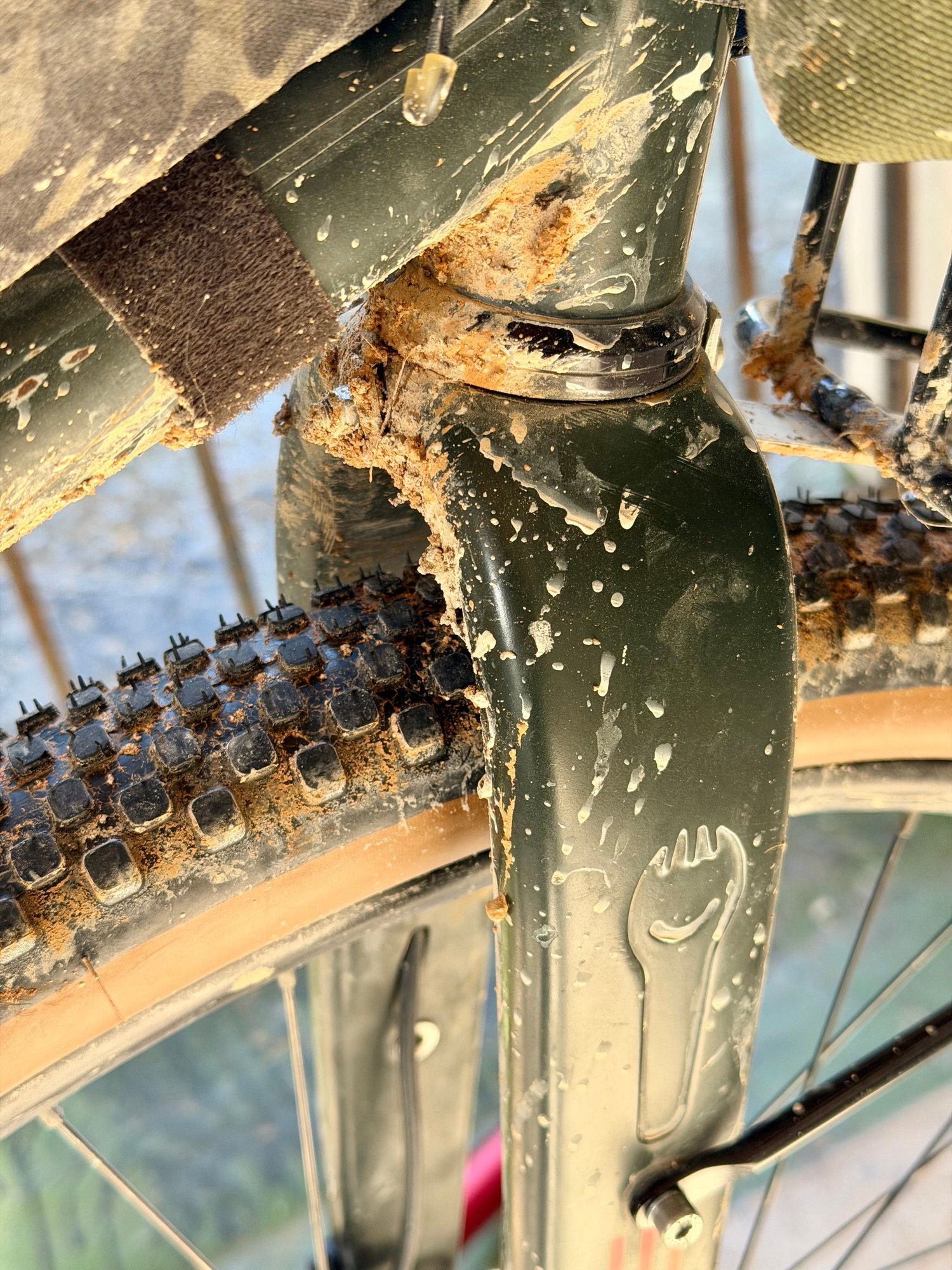
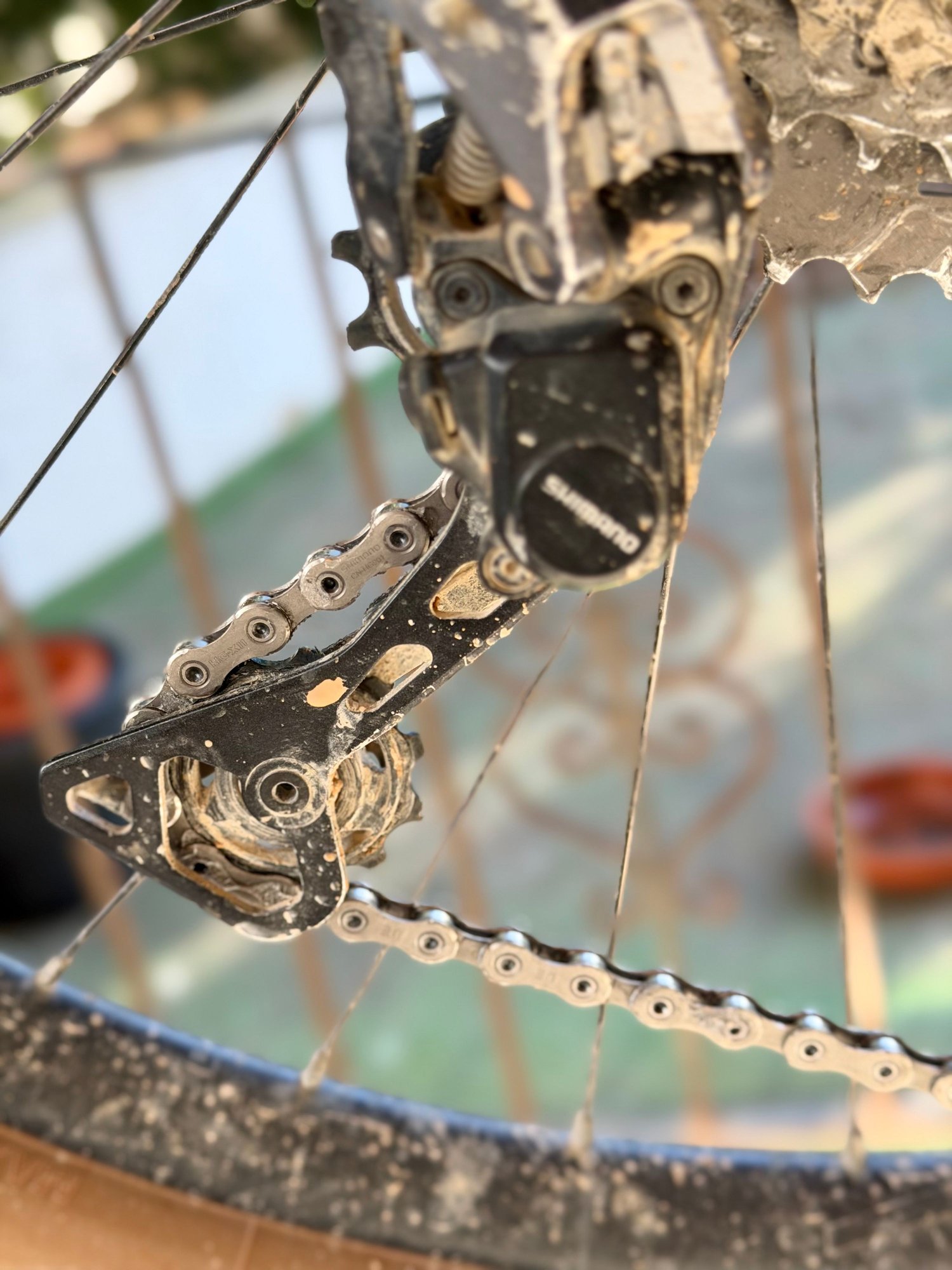
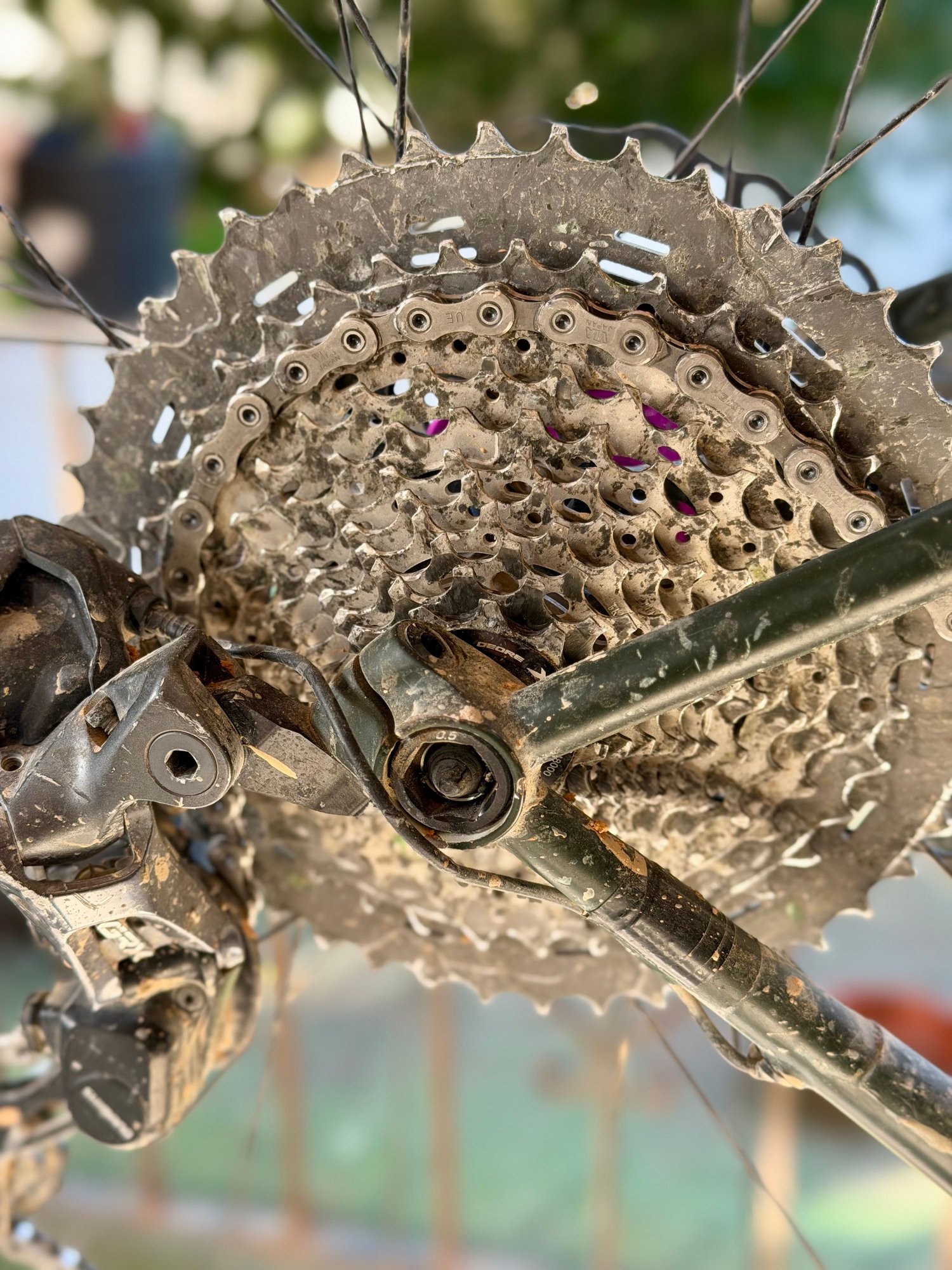
In a typical situation I would agree, but there are situations where the wax does need to be bone dry before setting off, or it will become a wet lube simulator. Wet gravel days (depending on the type of gravel) is one where even a dry waxed chain can accumulate a lot of dirt. I've had days when the chain was not visible below the buildup when I got to my destination. Had I had a wet chain then, the crud would have most likely gotten inside the chain. And when you tour in the spring (I'm going on tour in less than a week) or autumn, the expectation is that there will be no sun, just rain. That's a tough ask for a chain lube on the field no less.
[The trouble with applying water based wax in wet weather is that it doesn't dry due to relative humidity being high. And solvent wax has the same issue no matter the humidity as you need to ride it to harden it. Heating the chain removes the issue with water based waxes but I was curious how one could safely do that while on tour. And it seems a stove will work just fine.
Then again you wear through chain in less miles than I do. Our application intervals are pretty different which I'm guessing is the explaining factor since I don't use expensive chains. Even at home I rarely ride a chain more than 300km before swapping. On tour it depends but I generally re-apply every 200km.
__________________
Stuart Black
Dreamin' of Bemidji Down the Mississippi (in part)
Plan Epsilon Around Lake Michigan in the era of Covid
Gold Fever Three days of dirt in Colorado
Pokin' around the Poconos A cold ride around Lake Erie
Dinosaurs in Colorado A mountain bike guide to the Purgatory Canyon dinosaur trackway
Solo Without Pie. The search for pie in the Midwest.
Picking the Scablands. Washington and Oregon, 2005. Pie and spiders on the Columbia River!
Stuart Black
Dreamin' of Bemidji Down the Mississippi (in part)
Plan Epsilon Around Lake Michigan in the era of Covid
Gold Fever Three days of dirt in Colorado
Pokin' around the Poconos A cold ride around Lake Erie
Dinosaurs in Colorado A mountain bike guide to the Purgatory Canyon dinosaur trackway
Solo Without Pie. The search for pie in the Midwest.
Picking the Scablands. Washington and Oregon, 2005. Pie and spiders on the Columbia River!
04-07-26 | 03:46 AM
#119
Senior Member
Joined: Jul 2011
Posts: 2,923
Likes: 525
From: Turku, Finland, Europe
Bikes: 2011 Specialized crux comp, 2013 Specialized Rockhopper Pro
That’s not where I thought you were going. I was thinking you meant to heat the water emulsion wax before application to make it evaporate faster. But I wouldn’t heat it with an open flame either. There is simply no need. Either solvent based wax or water emulsion wax will work even when wet and there is no reason to try and use a torch, heater, lighter, or camp stove to hurry the process.
And, at 1300°C, you could easily get past the flash point to sustainable ignition.
Not really. Even when slightly wet, waxes are semisolid and don’t pump grit into the chain like oil does. Essentially, the dirt deposits on the outside of the chain but there isn’t really anyway for the grit to get down into the chain. The gaps are filled. Oil doesn’t provide the same kind of blocking of grit as wax does.
Again, no need. The biggest problem I have with water based emulsions would be that the material that allows the wax to emulsify with the water is still there after it dries. Add water and it becomes an emulsion again.
I don’t know that you can say that. I get around 3000 miles out of a chain (around 5000 km). That’s a reasonable mileage. And I apparently get far more distance out of a chain lube application than you seem to. If I were only getting 300 km (200 miles) out of the lubricant, I’d be looking for something different. I get 2 to 3 times that distance and still get 3000 overall miles out to the chain.
Anyway, not one of our chains registers any wear since I started this whole hot waxing thing three years ago (I think. Could be four...). Even the e-cargo bike that now has around 2000 miles per chain doesn't register any wear whatsoever on any of the chains. And the chains on that thing are seeing a lot more abuse than what could be achieved with a non electrified bike.
I mention the cargo bike, because that computer on that one has actually stayed on the bike for the time we've owned it. For the other bikes I have no clue because bike computers break, or don't work or get stolen etc.
04-07-26 | 03:54 AM
#120
Senior Member
Joined: Jul 2011
Posts: 2,923
Likes: 525
From: Turku, Finland, Europe
Bikes: 2011 Specialized crux comp, 2013 Specialized Rockhopper Pro
During the summer I've never seen the need to try how long a chain lasts with a single application.
04-07-26 | 09:45 AM
#121
Mad bike riding scientist
Joined: Nov 2004
Posts: 29,135
Likes: 6,180
From: Denver, CO
Bikes: Some silver ones, a red one, a black and orange one, and a few titanium ones
Yet soft waxes don't work as well against contamination. The wetness or stickiness in the wax, be it from water or solvent does cause particles to cling to the wax and potentially lets them transfer inside. A chain is not sealed so it doesn't take much for stuff to crawl in. Also it's a bit misleading to compare oil in this instance since what is being discussed is wax at its best and wax at its worst. I'd rather not take wax at its worse when the conditions are as bad for a chain as they can be.
It would appear that this is not really an issue. After the water dries, the wax particles get compacted into a more solid form when the chain is used, so there's no real way for water to get inside the now mostly homogenous wax. Also emulsifying wax with water requires aggressive machinery, like a high shear mixer. Once the wax has been dried and compacted, the conditions inside a chain and some moisture are nowhere near the conditions where the wax would turn into emulsifiable particles again. Once the wax has dried and has been molten and spread inside the chain, it's just like your regular old hot wax. It'd take quite a bit to emulsify it into water again.
In a solvent wax, the same open structure would exist but there is no emulsifier around. The water has zero chance of making the wax mobile again.
5000km is definitely reasonable. But it's also not the best you can achieve with chain wax apparently. With short enough intervals the chains don't really have a chance to develop wear. But my waxing interval isn't because it's based on anything other than how much the wax lasts before the chain begins squeaking on the worst possible conditions (salt slush) when the bikes are used for commuting. I just go with that. I'm sure I could get a lot more out of a chain in during the three months we actually get nice weather or if the bikes got hosed down after rides, but trying to evaluate whether a chain could go on for 100 or 200 miles more during that time is more trouble than just swapping in a fresh chain. Except when the wife or I forgets and a chain is ridden a double or triple distance.
I also don’t agree with your statement that chains used for short intervals don’t have a chance to develop wear. That would be true if you disposed of the chain after that short interval but if you are using the chain in rotation, it will take a similar mileage to wear out as a chain that isn’t rotated. In other words, if you have two chains in rotation, they may take a combined mileage of 10,000 km to wear out but that’s not a doubling of an individual chain’s mileage.
Anyway, not one of our chains registers any wear since I started this whole hot waxing thing three years ago (I think. Could be four...). Even the e-cargo bike that now has around 2000 miles per chain doesn't register any wear whatsoever on any of the chains. And the chains on that thing are seeing a lot more abuse than what could be achieved with a non electrified bike.
I mention the cargo bike, because that computer on that one has actually stayed on the bike for the time we've owned it. For the other bikes I have no clue because bike computers break, or don't work or get stolen etc.
__________________
Stuart Black
Dreamin' of Bemidji Down the Mississippi (in part)
Plan Epsilon Around Lake Michigan in the era of Covid
Gold Fever Three days of dirt in Colorado
Pokin' around the Poconos A cold ride around Lake Erie
Dinosaurs in Colorado A mountain bike guide to the Purgatory Canyon dinosaur trackway
Solo Without Pie. The search for pie in the Midwest.
Picking the Scablands. Washington and Oregon, 2005. Pie and spiders on the Columbia River!
Stuart Black
Dreamin' of Bemidji Down the Mississippi (in part)
Plan Epsilon Around Lake Michigan in the era of Covid
Gold Fever Three days of dirt in Colorado
Pokin' around the Poconos A cold ride around Lake Erie
Dinosaurs in Colorado A mountain bike guide to the Purgatory Canyon dinosaur trackway
Solo Without Pie. The search for pie in the Midwest.
Picking the Scablands. Washington and Oregon, 2005. Pie and spiders on the Columbia River!
04-09-26 | 10:21 AM
#122
Senior Member
Joined: Jul 2011
Posts: 2,923
Likes: 525
From: Turku, Finland, Europe
Bikes: 2011 Specialized crux comp, 2013 Specialized Rockhopper Pro
You disregard the obvious to fit a single thing pulled out of context to fit your narrative. Here you state that heating the chain would have a detrimental effect while in other waxing topics you've gone on about how difficult it is to overheat wax. The flame stays on one link for a second or two. That's obvious and not enough heat to be detrimental.
Also, just because, I tested adding a fresh coat of water emulsion wax on a chain and then grilling it a bit. It takes a little longer but it cuts down the drying time from 24 hours to a couple of minutes. Not something that's really necessary but it still works. Chain became stiff, wax hardened. But of course since this teat wasn't done by an independent organization following impossible protocols, it is of no value or merit and therefore none of the findings can be true.
04-10-26 | 08:57 AM
#123
Mad bike riding scientist
Joined: Nov 2004
Posts: 29,135
Likes: 6,180
From: Denver, CO
Bikes: Some silver ones, a red one, a black and orange one, and a few titanium ones
I'm just going to reply to this paragraph because this all just got tiresome again. Like always, you only have your beliefs and no amount of proof, facts or expert opinions is going to change them.
You disregard the obvious to fit a single thing pulled out of context to fit your narrative. Here you state that heating the chain would have a detrimental effect while in other waxing topics you've gone on about how difficult it is to overheat wax. The flame stays on one link for a second or two. That's obvious and not enough heat to be detrimental.
Also, just because, I tested adding a fresh coat of water emulsion wax on a chain and then grilling it a bit. It takes a little longer but it cuts down the drying time from 24 hours to a couple of minutes. Not something that's really necessary but it still works. Chain became stiff, wax hardened. But of course since this teat wasn't done by an independent organization following impossible protocols, it is of no value or merit and therefore none of the findings can be true.
You disregard the obvious to fit a single thing pulled out of context to fit your narrative. Here you state that heating the chain would have a detrimental effect while in other waxing topics you've gone on about how difficult it is to overheat wax. The flame stays on one link for a second or two. That's obvious and not enough heat to be detrimental.
Also, just because, I tested adding a fresh coat of water emulsion wax on a chain and then grilling it a bit. It takes a little longer but it cuts down the drying time from 24 hours to a couple of minutes. Not something that's really necessary but it still works. Chain became stiff, wax hardened. But of course since this teat wasn't done by an independent organization following impossible protocols, it is of no value or merit and therefore none of the findings can be true.
While, yes, this is my opinion, it is based on 40+ years of science experience and about the same experience with bicycle mechanics. Not exactly just “some guy” spouting off on the internet.
__________________
Stuart Black
Dreamin' of Bemidji Down the Mississippi (in part)
Plan Epsilon Around Lake Michigan in the era of Covid
Gold Fever Three days of dirt in Colorado
Pokin' around the Poconos A cold ride around Lake Erie
Dinosaurs in Colorado A mountain bike guide to the Purgatory Canyon dinosaur trackway
Solo Without Pie. The search for pie in the Midwest.
Picking the Scablands. Washington and Oregon, 2005. Pie and spiders on the Columbia River!
Stuart Black
Dreamin' of Bemidji Down the Mississippi (in part)
Plan Epsilon Around Lake Michigan in the era of Covid
Gold Fever Three days of dirt in Colorado
Pokin' around the Poconos A cold ride around Lake Erie
Dinosaurs in Colorado A mountain bike guide to the Purgatory Canyon dinosaur trackway
Solo Without Pie. The search for pie in the Midwest.
Picking the Scablands. Washington and Oregon, 2005. Pie and spiders on the Columbia River!
Last edited by cyccommute; 04-10-26 at 12:17 PM.
04-10-26 | 04:25 PM
#124
Senior Member
Joined: Aug 2010
Posts: 12,717
Likes: 2,104
From: Madison, WI
Bikes: 1961 Ideor, 1966 Perfekt 3 Speed AB Hub, 1994 Bridgestone MB-6, 2006 Airnimal Joey, 2009 Thorn Sherpa, 2013 Thorn Nomad MkII, 2015 VO Pass Hunter, 2017 Lynskey Backroad, 2017 Raleigh Gran Prix, 1980s Bianchi Mixte on a trainer. Others are now gone.
If you want to heat something, use a hair dryer on a low setting. High setting might overheat the hair dryer, as those devices usually are designed with a short duty cycle, likely no more than a minute or two.
That said, I do not know if hair dryers in EU have a low heat setting due to the higher voltage. If not, I would not run a hair dryer longer than a couple minutes.
That said, I do not know if hair dryers in EU have a low heat setting due to the higher voltage. If not, I would not run a hair dryer longer than a couple minutes.
04-11-26 | 04:24 AM
#125
Senior Member
Joined: Jul 2011
Posts: 2,923
Likes: 525
From: Turku, Finland, Europe
Bikes: 2011 Specialized crux comp, 2013 Specialized Rockhopper Pro
If you want to heat something, use a hair dryer on a low setting. High setting might overheat the hair dryer, as those devices usually are designed with a short duty cycle, likely no more than a minute or two.
That said, I do not know if hair dryers in EU have a low heat setting due to the higher voltage. If not, I would not run a hair dryer longer than a couple minutes.
That said, I do not know if hair dryers in EU have a low heat setting due to the higher voltage. If not, I would not run a hair dryer longer than a couple minutes.