


Sub-ultralight Bikes?
 01-09-12 | 04:41 PM
#1
Thread Starter
eternalvoyage
Joined: Feb 2007
Posts: 2,256
Likes: 0
Sub-ultralight Bikes?
Carbon fiber bikes weighing about seventeen pounds have been discussed and used for touring.
TDF riders often use bikes weighing about fifteen pounds. These bikes usually hold up for thousands of miles of hard, fast riding. The riders have the strength, skill, and motivation to push them very hard. The bikes are stressed much more than a reasonably gentle light weight or ultralight touring cyclist's bike.
But these TDF bikes' weights are artificially high, because the governing organisation (the UCI) drew a line years ago, and disallowed bikes lighter than 6.8 kilograms. With newer materials and technologies, this could be safely reduced -- and there have been many calls for this.
In other words, even lighter bikes can be plenty strong for (reasonably gentle) ultralight (UL) and sub-ultralight (SUL) touring.
The question here is, How light can one go? What are the (safe) limits, while still maintaining sufficient performance and reliability?
And what components might be used? And could the costs be kept to a reasonable level?
(I once came across a website by a German guy and his son. Their enviable hobby was building bikes that were as light as possible. And they succeeded in building several mountain bikes that were down around ten pounds, and road bikes that were down around six or seven pounds.)
If they handle well and hold up, then why not -- this could make for some light touring. Some of us enjoy the lighter bikes, and riding them, in the mountains especially, with lighter loads.
TDF riders often use bikes weighing about fifteen pounds. These bikes usually hold up for thousands of miles of hard, fast riding. The riders have the strength, skill, and motivation to push them very hard. The bikes are stressed much more than a reasonably gentle light weight or ultralight touring cyclist's bike.
But these TDF bikes' weights are artificially high, because the governing organisation (the UCI) drew a line years ago, and disallowed bikes lighter than 6.8 kilograms. With newer materials and technologies, this could be safely reduced -- and there have been many calls for this.
In other words, even lighter bikes can be plenty strong for (reasonably gentle) ultralight (UL) and sub-ultralight (SUL) touring.
The question here is, How light can one go? What are the (safe) limits, while still maintaining sufficient performance and reliability?
And what components might be used? And could the costs be kept to a reasonable level?
(I once came across a website by a German guy and his son. Their enviable hobby was building bikes that were as light as possible. And they succeeded in building several mountain bikes that were down around ten pounds, and road bikes that were down around six or seven pounds.)
If they handle well and hold up, then why not -- this could make for some light touring. Some of us enjoy the lighter bikes, and riding them, in the mountains especially, with lighter loads.
Last edited by Niles H.; 01-09-12 at 04:50 PM. Reason: clarification

 01-09-12 | 05:59 PM
#4

Senior Member

Joined: Dec 2005
Posts: 1,445
Likes: 116
From: Cape Vincent, NY
Bikes: Specialized Tarmac Expert, Schwinn Mesa, Huffy Rock Creek 29er, Fuji Cambridge, 1970s-era Ross ten speed. Various parts bikes in various stages of disassembly.
TDF riders often use bikes weighing about fifteen pounds. These bikes usually hold up for thousands of miles of hard, fast riding. The riders have the strength, skill, and motivation to push them very hard. The bikes are stressed much more than a reasonably gentle light weight or ultralight touring cyclist's bike.
The bikes are stressed much more than a reasonably gentle light weight or ultralight touring cyclist's bike.
What exactly does that mean?
Last edited by Thulsadoom; 01-09-12 at 06:12 PM.
01-09-12 | 07:12 PM
#5

Real Men Ride Ordinaries
Joined: Sep 2008
Posts: 3,723
Likes: 3
It means that pro cyclists put out a lot more power (often measured in watts) than us tourists do. If you have 50 pounds of static weight on your bike, there are other forces at play, but if you have a 'SUL' load, then it shouldn't be much of an issue.
01-09-12 | 07:24 PM
#6
Senior Member
Joined: Oct 2007
Posts: 5,773
Likes: 105
From: West Yorkshire, United Kingdom
There are 2 big problems with using carbon for touring bikes.
1 - limited sizes, not a problem for most, but if you want something unique, metal (normally Steel or Titanium) is far easier to be worked for a on-off design
2 - the biggest problem, lack of mounts (braze-on's fender & rack), there arn't many carbon bikes out there which have these, don't see it as an issue for manufacturing, and I'm sure they would be as strong as any other frame if fitted, but no-one spec's them with these (plenty of carbon bikes have disc mounts, so if this can be done a rack mount shouldn't be too hard.
I think that unless there is a large increase in the number sold, there won't be the demand for touring frames to be made from CF.
For changes to makes bikes, lighter, an internal geared drive train with Gates Carbon Drive would be better than a carbon frame
1 - limited sizes, not a problem for most, but if you want something unique, metal (normally Steel or Titanium) is far easier to be worked for a on-off design
2 - the biggest problem, lack of mounts (braze-on's fender & rack), there arn't many carbon bikes out there which have these, don't see it as an issue for manufacturing, and I'm sure they would be as strong as any other frame if fitted, but no-one spec's them with these (plenty of carbon bikes have disc mounts, so if this can be done a rack mount shouldn't be too hard.
I think that unless there is a large increase in the number sold, there won't be the demand for touring frames to be made from CF.
For changes to makes bikes, lighter, an internal geared drive train with Gates Carbon Drive would be better than a carbon frame
01-09-12 | 08:08 PM
#7


Membership Not Required
Joined: Jan 2005
Posts: 16,853
Likes: 18
From: On the road-USA
Bikes: Giant Excursion, Raleigh Sports, Raleigh R.S.W. Compact, Motobecane? and about 20 more! OMG
I question how many of those bikes make it through the complete Tour de France, those guys have several bikes that are all set up the same, not just one.
Ultralight touring bikes aren't anything new. The Technical Trials from the 1940's produced some spectacular bikes. I am not a huge fan of CF, engineered properly it can do some amazing things, but that doesn't mean you should.
If you have the money to spend, go for it. I will stick with my proven, heavy, inexpensive (relatively speaking) steel bikes. Some of which are still rolling after tens of thousands of miles and decades of riding.
Aaron
Ultralight touring bikes aren't anything new. The Technical Trials from the 1940's produced some spectacular bikes. I am not a huge fan of CF, engineered properly it can do some amazing things, but that doesn't mean you should.
If you have the money to spend, go for it. I will stick with my proven, heavy, inexpensive (relatively speaking) steel bikes. Some of which are still rolling after tens of thousands of miles and decades of riding.
Aaron
__________________
Webshots is bailing out, if you find any of my posts with corrupt picture files and want to see them corrected please let me know. :(
ISO: A late 1980's Giant Iguana MTB frameset (or complete bike) 23" Red with yellow graphics.
"Cycling should be a way of life, not a hobby.
RIDE, YOU FOOL, RIDE!"_Nicodemus
"Steel: nearly a thousand years of metallurgical development
Aluminum: barely a hundred
Which one would you rather have under your butt at 30mph?"_krazygluon
Webshots is bailing out, if you find any of my posts with corrupt picture files and want to see them corrected please let me know. :(
ISO: A late 1980's Giant Iguana MTB frameset (or complete bike) 23" Red with yellow graphics.
"Cycling should be a way of life, not a hobby.
RIDE, YOU FOOL, RIDE!"_Nicodemus
"Steel: nearly a thousand years of metallurgical development
Aluminum: barely a hundred
Which one would you rather have under your butt at 30mph?"_krazygluon
01-09-12 | 09:19 PM
#8
Senior Member
Joined: Nov 2008
Posts: 7,239
Likes: 8
From: Bay Area, Calif.
I don't think you'd have much trouble touring with a reasonably light load on most of today's road bikes in the 13 - 15 pound range. But there would be some compromises as a result of how those bikes are set up and built compared to a touring bike that weighs 10 or so pounds more.
Light racing wheels can hold up to a lot of stress, but they aren't as tolerant of spoke failures as my touring wheels. When a spoke breaks on one of the light, minimal spoke-count wheels on one of our club rides it needs considerable tweaking to continue at all and frequently has resulted in a call for a ride to get back home. OTOH, I've broken a spoke on one of my 36 spoke touring wheels and was able to just keep riding for the rest of the day with the wheel being a bit out of true but still clearing the brake pads.
And most light carbon frames aren't designed for touring which frequently calls for wider tires, clearance for fenders, rack mounts, etc. I've found that a rack can still be attached without too much trouble, but it's not quite as convenient, and it's usually possible to make it through the occasional rough gravel road on 23mm tires - but it's easier and less stressful with 32mm ones.
So it's a question of what tradeoffs you want to make - with a reasonably light camping load (say 15 lbs. or so) and a 13 lb. bike you should be able to climb faster than on a heavier bike with only a few compromises. But it will be more costly and might make you a little more nervous on difficult terrain - so how much is the slightly faster speed worth to you?
Light racing wheels can hold up to a lot of stress, but they aren't as tolerant of spoke failures as my touring wheels. When a spoke breaks on one of the light, minimal spoke-count wheels on one of our club rides it needs considerable tweaking to continue at all and frequently has resulted in a call for a ride to get back home. OTOH, I've broken a spoke on one of my 36 spoke touring wheels and was able to just keep riding for the rest of the day with the wheel being a bit out of true but still clearing the brake pads.
And most light carbon frames aren't designed for touring which frequently calls for wider tires, clearance for fenders, rack mounts, etc. I've found that a rack can still be attached without too much trouble, but it's not quite as convenient, and it's usually possible to make it through the occasional rough gravel road on 23mm tires - but it's easier and less stressful with 32mm ones.
So it's a question of what tradeoffs you want to make - with a reasonably light camping load (say 15 lbs. or so) and a 13 lb. bike you should be able to climb faster than on a heavier bike with only a few compromises. But it will be more costly and might make you a little more nervous on difficult terrain - so how much is the slightly faster speed worth to you?
01-09-12 | 09:29 PM
#9
Senior Member
Joined: Jan 2010
Posts: 7,037
Likes: 12
From: Eugene, Oregon
Pro riders put out more power per mass than tourists, but not necessarily more power. They still manage to have many bike failures over the course of a grand tour, which is fine when you have a team car with replacements. That wouldn't work out so well for a tourist on the Lost Coast.
01-10-12 | 02:32 AM
#11
Real Men Ride Ordinaries
Joined: Sep 2008
Posts: 3,723
Likes: 3
I question how many of those bikes make it through the complete Tour de France, those guys have several bikes that are all set up the same, not just one.
Ultralight touring bikes aren't anything new. The Technical Trials from the 1940's produced some spectacular bikes. I am not a huge fan of CF, engineered properly it can do some amazing things, but that doesn't mean you should.
If you have the money to spend, go for it. I will stick with my proven, heavy, inexpensive (relatively speaking) steel bikes. Some of which are still rolling after tens of thousands of miles and decades of riding.
Aaron
Ultralight touring bikes aren't anything new. The Technical Trials from the 1940's produced some spectacular bikes. I am not a huge fan of CF, engineered properly it can do some amazing things, but that doesn't mean you should.
If you have the money to spend, go for it. I will stick with my proven, heavy, inexpensive (relatively speaking) steel bikes. Some of which are still rolling after tens of thousands of miles and decades of riding.
Aaron
Those technical trials sound pretty awesome actually, and more or less what the OP had in mind. Modern road racing bikes wouldn't be very good for touring, but that's because they weren't built for touring. If, however, you were to start from the ground up and have a carbon bike built for you and your 15 pound load, it could work out. You could have it built with room for 28mm tires, fenders (maybe an excuse to use those ridiculous CF fenders Bruce Gordon sells).
It would be fantastically expensive, and you would have to have all the gear work together (Use the bike as the center pole for a Cuben Fiber tarp and you could have a storm worthy camping shelter for close to half a pound), but it would be a really fun project. Think of it as a modern day Technical Trial; just because a technology is old and proven doesn't make it the best, there can still be room for improvement. I don't know if I would want to take this elaborate construction on a round the world tour, but if I had unlimited funds, it could be a fun path to pursue.
For a technology to be proven, someone has to do the proving.
01-10-12 | 08:58 AM
#12
Senior Member
Joined: Oct 2005
Posts: 3,670
Likes: 43
Bikes: Rivendell Quickbeam, Rivendell Rambouillet, Rivendell Atlantis, Circle A town bike, De Rosa Neo Primato, Cervelo RS, Specialized Diverge
Many manufacturers are bringing out "relaxed geometry" CF bikes with clearance for 28mm tyres. These are derivatives of their pro Northern Classic bikes and basically aimed at guys like me; overweight middle aged cyclists with money to spend on bikes that are better than their fitness level requires. However, they might be useful as UL touring bikes for those that don't need conventional racks as they don't have rack mounting eyelets and I wouldn't want to use p-clamps on the CF.
The Pinarello Rokh and Kohb look like excellent CF UL touring candidates and come in at under 17lbs, but are not light on the wallet
The Pinarello Rokh and Kohb look like excellent CF UL touring candidates and come in at under 17lbs, but are not light on the wallet
01-10-12 | 09:48 AM
#13
Senior Member
Joined: Jun 2010
Posts: 7,579
Likes: 6
From: Pearland, Texas
Bikes: Cannondale, Trek, Raleigh, Santana
Niles, I don't think the TdF analogy works in the touring sense as: a) The teams have plenty of spare parts and bicycles. b) A professional mechanic's attention is available every night. c) The racers use a different bike for different stage requirements.
I do think that in the future there will be a light carbon fiber tourer built. I would expect it to be more expensive than other premium touring rigs and have a weight advantage over an aluminum tourer, but similar to steel vs. aluminum, not by a staggering amount. In the meantime the ability to handle dead weight consisting of more than a change of clothes and personal items on any sort of carrier by an ultra light high end CF racing frame is questionable in my mind.
Brad
I do think that in the future there will be a light carbon fiber tourer built. I would expect it to be more expensive than other premium touring rigs and have a weight advantage over an aluminum tourer, but similar to steel vs. aluminum, not by a staggering amount. In the meantime the ability to handle dead weight consisting of more than a change of clothes and personal items on any sort of carrier by an ultra light high end CF racing frame is questionable in my mind.
Brad
01-10-12 | 11:27 AM
#14
Senior Member
Joined: Apr 2008
Posts: 5,428
Likes: 2
Bikes: Cervelo RS, Specialized Stumpjumper FSR Pro, Schwinn Typhoon, Nashbar touring, custom steel MTB
Agree. As others have mentioned: for a professional racer frames are a consumable, just like brake pads. The entire bike can be made incredibly light, because it really only has to last for 6-8 hours (e.g. one day's racing). Granted, the team doesn't want to have to haul around hundreds of bikes or build-up dozens of new frames each night but they're prepared to make durability sacrifices that a bicycle tourist probably wouldn't be happy making.
01-10-12 | 11:44 AM
#15
Senior Member
Joined: Apr 2008
Posts: 5,428
Likes: 2
Bikes: Cervelo RS, Specialized Stumpjumper FSR Pro, Schwinn Typhoon, Nashbar touring, custom steel MTB
On my credit-card tour down the Pacific Coast, I averaged almost 15mph on an aluminum bike that weighed around 50lbs ready-to-ride (23lb base weight + luggage, spares, clothing, water, etc). Given my fitness level and the amount of climbing involved, I'm not sure that I could have gone much faster if I'd been riding my 17lb carbon fiber road bike and carrying nothing.
Other than being able to say you've ridden across the country on a 5lb bike, I'm not sure I see much point to an ultra-light touring bicycle. You'd likely save more weight for less money by leaving your stove, cookset, and fuel at home and eating cold sandwiches for dinner every night. Or do some training before you leave, lose the extra 5-10lbs of fat that many of us carry, and build some fitness so that you can go farther/faster/longer each day...
 01-10-12 | 12:23 PM
#17

Senior Member


Joined: Aug 2006
Posts: 12,037
Likes: 827
From: Tallahassee, FL
Bikes: Several
That said I think carbon fiber would be a fine material to make touring bikes of whatever weight from. I personally would love to have a lighter bike, but not at any cost. The thing is that:
- The demand would be pretty low for the lighter weight CF touring bikes given that there are not that many folks touring really light.
- The demand would probably be pretty low for heavier duty CF touring bikes because the heavy touring market tends to be a pretty traditional market (and small).
- The low demand for both would mean low production and high cost.
__________________
Pete in Tallahassee
Check out my profile, articles, and trip journals at:
https:/www.crazyguyonabike.com/staehpj1
Pete in Tallahassee
Check out my profile, articles, and trip journals at:
https:/www.crazyguyonabike.com/staehpj1
01-10-12 | 01:10 PM
#18
Senior Member
Joined: Feb 2001
Posts: 12,948
Likes: 9
From: England
A touring bike is stressed quite differently to a racing bike. The luggage system is held to the frame at the chainstay tubes. Ultralight steel tubing (Reynolds 753) is not used in touring bikes because it can't withstand the luggage loading. 753 was an excellent tube for TdF riders but not for tourists.
I'm sure you could build a carbon bike to take those stresses, it just wouldn't be an ultralight one.
The other problem with carbon fibre is mechanical damage to the frame due to drops and scrapes. I have had my steel tourer slide down a brick wall of its own accord and the paint was scratched.
Touring bikes are not replaced every year or 2, like elite racing bikes. Mine is 15 years old and many are older.
If you are considering light/day-touring bikes for non athletes, then certainly they can be build lighter than professional grade bikes and lighter than the UCI mandatory limit, esp when made for smaller riders.
I'm sure you could build a carbon bike to take those stresses, it just wouldn't be an ultralight one.
The other problem with carbon fibre is mechanical damage to the frame due to drops and scrapes. I have had my steel tourer slide down a brick wall of its own accord and the paint was scratched.
Touring bikes are not replaced every year or 2, like elite racing bikes. Mine is 15 years old and many are older.
If you are considering light/day-touring bikes for non athletes, then certainly they can be build lighter than professional grade bikes and lighter than the UCI mandatory limit, esp when made for smaller riders.
01-10-12 | 01:30 PM
#19
Senior Member
Joined: Sep 2008
Posts: 5,300
Likes: 115
for those folks who already have 5% body fat mass and are riding with 10lbs of gear I could see it. But if you've got an extra five lbs of fat or ride with over 20lbs lbs of gear it's pretty obvious dropping five lbs off the bike is a hell of a compromise for little benefit.
01-10-12 | 02:19 PM
#20
Thread Starter
eternalvoyage
Joined: Feb 2007
Posts: 2,256
Likes: 0
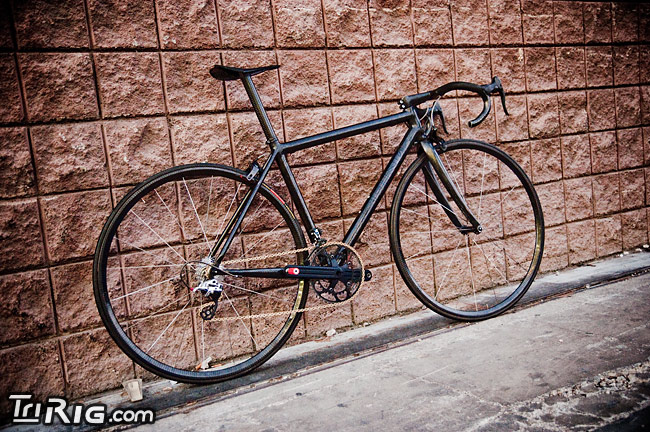
It looks as if the lightest (known) road bike out there right now weighs in at about six pounds. It is not particularly fragile -- the original owner put something like 20,000 kilometers on it, and it's still good to go.
However [and this is the real deal killer for me, at the moment at least, and probably forever as well, no matter how much more money I have] -- it will cost at least 45k USDs to duplicate the effort.
https://www.antranik.org/worlds-light...bike-at-2-7kg/
For 100k, you might be able to get down to five pounds. Maybe even lower. A four-point-something pound bike. Awesome.
The money might not be totally wasted either -- at least you would be supporting some [mentally challenged obsessives?] [perfectly normal guys interested in pushing the limits?] [meaninglessly frittering away their lives] [or not].
However [and this is the real deal killer for me, at the moment at least, and probably forever as well, no matter how much more money I have] -- it will cost at least 45k USDs to duplicate the effort.
https://www.antranik.org/worlds-light...bike-at-2-7kg/
For 100k, you might be able to get down to five pounds. Maybe even lower. A four-point-something pound bike. Awesome.
The money might not be totally wasted either -- at least you would be supporting some [mentally challenged obsessives?] [perfectly normal guys interested in pushing the limits?] [meaninglessly frittering away their lives] [or not].
Last edited by Niles H.; 01-10-12 at 02:33 PM.
01-10-12 | 02:40 PM
#21

Senior Member
Joined: Mar 2009
Posts: 1,480
Likes: 9
people spend lots of money on things that most others think are realy silly, like super fast cars, paintings, custom jello filled hot tubs. Most people I know think that over a thousand dollars for any bike is goofy. SO if someone had the splash to get a uber light wonder bike and pack half a toothbrush and three square feet of tyveck as camping gear, and the desire to do it, there is no knocking that. Or to pay to have a fully loaded tourer custom made to weigh ten to fifteen pounds. Even if you just want to go SUL on a off the shelf madone, if thats more in reach then no one can say don't(exept for your touring partner who is sick of letting you use everything they are lugging on thier 28 pound naked bike)
I go light bordering on ultra light sometimes. You can feel the difference, its fun. But its on a steel frame rig with enough spokes to handle a couple breaking.
Once I came on a road that had slid off the mountain. The workers told me that as it was two miles and traffic was going 25 over a rocky temporary road, they would drive me over it. The guys tossed my rig into the truck before I could get there to do it myself, on a bunch of tools, rocks, and barrier materials. It was nice to have just some scraped paint instead of the constant worry about damage to any carbon.
I go light bordering on ultra light sometimes. You can feel the difference, its fun. But its on a steel frame rig with enough spokes to handle a couple breaking.
Once I came on a road that had slid off the mountain. The workers told me that as it was two miles and traffic was going 25 over a rocky temporary road, they would drive me over it. The guys tossed my rig into the truck before I could get there to do it myself, on a bunch of tools, rocks, and barrier materials. It was nice to have just some scraped paint instead of the constant worry about damage to any carbon.
01-10-12 | 10:44 PM
#22

Vain, But Lacking Talent
Joined: Aug 2009
Posts: 5,510
Likes: 81
From: Denton, TX
Bikes: Trek Domane 5.9 DA 9000, Trek Crockett Pink Frosting w/105 5700
I would agree that the traditional touring approach and frames do not mix. The mounting for racks, etc. is just not going to work well with any current off the shelf carbon frame, and a touring specific CF wouldn't make much sense market wise.
But then again, the original question was not about that. I did one overnighter on a Specialized Roubaix. Except for the horrible route, the bike and gear did fine. If you're going with the UL approach without racks, any off the shelf bike should work. Go nuts. No problems.
But seriously, what do you guys think happens at the TDF anyway? The way you talk about it, it's a miracle any bike ever crosses the line so that they can throw it in the garbage on the way to the team bus where a fresh one awaits them for tomorrow. This just isn't how it works. As much money as teams appear to have, they just don't toss aside bikes as flippantly as some of you guys suggest. Here's an excerpt from an early installment of "Ask Nick" on Velo News:
"Great question. The work involved in preparing for a day like Roubaix is enormous. This July we had to do it in the middle of a grand tour. Because so much is invested in one day, we want to throw away as little as possible.
There are a lot of misconceptions about the consumption of pro teams. Some fans actually believe that we glue up new tires for every day of racing. Utter nonsense. Remember that even if a tire sponsor was willing to give a team that many tires, the mechanics aren’t interested in doing that much work!
Roubaix is particularly taxing on riders and equipment. But you’d be surprised to see how much is cleaned up, checked thoroughly and put away until the next season’s classics. Handbuilt wheels are a big investment for pro teams these days because they aren’t mass-produced. They will be re-used season after season, sometimes with the same tires even (after a fresh layer of glue). If you look closely at photos, you might see hubs that aren’t currently produced.
Frames are re-used as well. In some cases these bikes are ridden only three times in a season; Flanders if a rider wants to get on the bike early, Roubaix reconnaissance and Roubaix itself. Unless the frame is obviously broken in a crash, it is saved as a spare for next year.
Cables, chain, bartape and brake pads are the exceptions. They’ll be pulled off and replaced."
And that was just for the northern classics. Those are BRUTAL on both bikes and men. I'm sure that an average TDF team probably goes through maybe slightly more frames as any other team did in the days of steel. With the exception of a large crash, pretty much every bike crosses the line as good as when it started. Lots of steel frames in past TDF's were lost in crashes as well. Freak failures occurred on steel frames back in the day, too. Probably just as rarely as a freak failure on carbon frames now. I can't even remember the last time a carbon component had a freak failure during the tour. But then again, I'm not thinking very hard. In fact, the one that everyone likes to make a big deal about, Hincapie's steerer breaking on the Paris-Roubaix, was actually an aluminum failure. There was that crash that tacoed Cavendish's wheel near the line of one finish. But that happened because he was on his way down and another bike actually ran over the carbon wheel.
Anyhow, I'm rambling, my apologies.
But then again, the original question was not about that. I did one overnighter on a Specialized Roubaix. Except for the horrible route, the bike and gear did fine. If you're going with the UL approach without racks, any off the shelf bike should work. Go nuts. No problems.
But seriously, what do you guys think happens at the TDF anyway? The way you talk about it, it's a miracle any bike ever crosses the line so that they can throw it in the garbage on the way to the team bus where a fresh one awaits them for tomorrow. This just isn't how it works. As much money as teams appear to have, they just don't toss aside bikes as flippantly as some of you guys suggest. Here's an excerpt from an early installment of "Ask Nick" on Velo News:
"Great question. The work involved in preparing for a day like Roubaix is enormous. This July we had to do it in the middle of a grand tour. Because so much is invested in one day, we want to throw away as little as possible.
There are a lot of misconceptions about the consumption of pro teams. Some fans actually believe that we glue up new tires for every day of racing. Utter nonsense. Remember that even if a tire sponsor was willing to give a team that many tires, the mechanics aren’t interested in doing that much work!
Roubaix is particularly taxing on riders and equipment. But you’d be surprised to see how much is cleaned up, checked thoroughly and put away until the next season’s classics. Handbuilt wheels are a big investment for pro teams these days because they aren’t mass-produced. They will be re-used season after season, sometimes with the same tires even (after a fresh layer of glue). If you look closely at photos, you might see hubs that aren’t currently produced.
Frames are re-used as well. In some cases these bikes are ridden only three times in a season; Flanders if a rider wants to get on the bike early, Roubaix reconnaissance and Roubaix itself. Unless the frame is obviously broken in a crash, it is saved as a spare for next year.
Cables, chain, bartape and brake pads are the exceptions. They’ll be pulled off and replaced."
And that was just for the northern classics. Those are BRUTAL on both bikes and men. I'm sure that an average TDF team probably goes through maybe slightly more frames as any other team did in the days of steel. With the exception of a large crash, pretty much every bike crosses the line as good as when it started. Lots of steel frames in past TDF's were lost in crashes as well. Freak failures occurred on steel frames back in the day, too. Probably just as rarely as a freak failure on carbon frames now. I can't even remember the last time a carbon component had a freak failure during the tour. But then again, I'm not thinking very hard.
In fact, the one that everyone likes to make a big deal about, Hincapie's steerer breaking on the Paris-Roubaix, was actually an aluminum failure. There was that crash that tacoed Cavendish's wheel near the line of one finish. But that happened because he was on his way down and another bike actually ran over the carbon wheel.Anyhow, I'm rambling, my apologies.
01-10-12 | 10:58 PM
#23

Senior Member
Joined: Jun 2009
Posts: 1,775
Likes: 9
From: Los Altos, CA
It looks as if the lightest (known) road bike out there right now weighs in at about six pounds. It is not particularly fragile -- the original owner put something like 20,000 kilometers on it, and it's still good to go.
However [and this is the real deal killer for me, at the moment at least, and probably forever as well, no matter how much more money I have] -- it will cost at least 45k USDs to duplicate the effort.
https://www.antranik.org/worlds-light...bike-at-2-7kg/
For 100k, you might be able to get down to five pounds. Maybe even lower. A four-point-something pound bike. Awesome.
The money might not be totally wasted either -- at least you would be supporting some [mentally challenged obsessives?] [perfectly normal guys interested in pushing the limits?] [meaninglessly frittering away their lives] [or not].
However [and this is the real deal killer for me, at the moment at least, and probably forever as well, no matter how much more money I have] -- it will cost at least 45k USDs to duplicate the effort.
https://www.antranik.org/worlds-light...bike-at-2-7kg/
For 100k, you might be able to get down to five pounds. Maybe even lower. A four-point-something pound bike. Awesome.
The money might not be totally wasted either -- at least you would be supporting some [mentally challenged obsessives?] [perfectly normal guys interested in pushing the limits?] [meaninglessly frittering away their lives] [or not].
 01-11-12 | 09:43 AM
#24

Senior Member


Joined: Jan 2010
Posts: 45,200
Likes: 23,368
The real question is: who cares?
On my credit-card tour down the Pacific Coast, I averaged almost 15mph on an aluminum bike that weighed around 50lbs ready-to-ride (23lb base weight + luggage, spares, clothing, water, etc). Given my fitness level and the amount of climbing involved, I'm not sure that I could have gone much faster if I'd been riding my 17lb carbon fiber road bike and carrying nothing.
Other than being able to say you've ridden across the country on a 5lb bike, I'm not sure I see much point to an ultra-light touring bicycle. You'd likely save more weight for less money by leaving your stove, cookset, and fuel at home and eating cold sandwiches for dinner every night. Or do some training before you leave, lose the extra 5-10lbs of fat that many of us carry, and build some fitness so that you can go farther/faster/longer each day...
On my credit-card tour down the Pacific Coast, I averaged almost 15mph on an aluminum bike that weighed around 50lbs ready-to-ride (23lb base weight + luggage, spares, clothing, water, etc). Given my fitness level and the amount of climbing involved, I'm not sure that I could have gone much faster if I'd been riding my 17lb carbon fiber road bike and carrying nothing.
Other than being able to say you've ridden across the country on a 5lb bike, I'm not sure I see much point to an ultra-light touring bicycle. You'd likely save more weight for less money by leaving your stove, cookset, and fuel at home and eating cold sandwiches for dinner every night. Or do some training before you leave, lose the extra 5-10lbs of fat that many of us carry, and build some fitness so that you can go farther/faster/longer each day...
01-11-12 | 11:01 AM
#25
Thread Starter
eternalvoyage
Joined: Feb 2007
Posts: 2,256
Likes: 0
Apparently, triathletes' bikes are usually unrestricted in weight, and are not governed by the UCI rules.
Yet they often seem to hover around the same weight as the TDF riders' bikes. Some of the exceptionally light ones go lower, but not often much lower.
The lightest production bikes appear to be 11.4 pounds, and the frames are titanium, with a twenty-five year warranty. They are made by Everti,
https://www.bikerumor.com/2009/04/22/...ion-road-bike/
Yet they often seem to hover around the same weight as the TDF riders' bikes. Some of the exceptionally light ones go lower, but not often much lower.
The lightest production bikes appear to be 11.4 pounds, and the frames are titanium, with a twenty-five year warranty. They are made by Everti,
https://www.bikerumor.com/2009/04/22/...ion-road-bike/
Last edited by Niles H.; 01-11-12 at 02:17 PM.