


View Poll Results: What Are Your Helmet Wearing Habits?
I've never worn a bike helmet


52
10.40%
I used to wear a helmet, but have stopped


24
4.80%
I've always worn a helmet


208
41.60%
I didn't wear a helmet, but now do


126
25.20%
I sometimes wear a helmet depending on the conditions


90
18.00%
Voters: 500. You may not vote on this poll
The Helmet Thread 2
 01-04-15 | 06:36 PM
#701
Senior Member

Joined: Jul 2012
Posts: 3,839
Likes: 57
From: Canada, PG BC
Bikes: 27 speed ORYX with over 39,000Kms on it and another 14,000KMs with a BionX E-Assist on it
And also some hard facts. One of them, out of all of the cyclists who ride at all in the USA, even if they ride for 30 years they still only have a 25% chance of being in any injury accident. This post
Less than 1% probability of an incident in an entire year, including the minor injuries. Is that a "substantial risk" in your opinion?
Less than 1% probability of an incident in an entire year, including the minor injuries. Is that a "substantial risk" in your opinion?
Last edited by 350htrr; 01-04-15 at 07:24 PM. Reason: add stuff
 01-04-15 | 07:31 PM
#702

Senior Member
Joined: Apr 2011
Posts: 15,278
Likes: 342
From: Alpharetta, GA
Bikes: Nashbar Road
I have a problem with that 1% in the sense that it's correct for injuries that required a hospital visit where the helmet failed to protect enough... But what about all those other crashes that people walked away with no injuries or slight injuries because they were wearing a helmet and it saved them enough to not require a hospital visit, nobody knows those numbers but I suspect the potential is a lot higher than 1% chance of an incident with injuries requiring a hospital visit, if all those numbers were known, the incident level for possible injuries would rise, and if nobody wore a helmet because it's only a 1% chance... that number may skyrocket to 2%... 3%...4%...5%+...? JMO
01-04-15 | 08:20 PM
#703
Senior Member
Joined: Jul 2012
Posts: 3,839
Likes: 57
From: Canada, PG BC
Bikes: 27 speed ORYX with over 39,000Kms on it and another 14,000KMs with a BionX E-Assist on it
Yes and I agree the 1% is the risk of having an accident where the helmet failed to protect enough to avoid a hospital visit... But what the actual risk of having an accident where head hits the ground is unknown, totally unknown... That's my point.(trying to be)... So what if the actual chance is 5% but I decide that 1% is safe enough and start to not wear a helmet? A 5% compared to 1% is a big difference, we just don't know the actual % number... We don't have any % numbers where a helmet actually did it's job and shouldn't dismiss that greater possibility...
Last edited by 350htrr; 01-04-15 at 08:26 PM. Reason: spelling add more stuff
01-04-15 | 08:31 PM
#704
Senior Member
Joined: Apr 2011
Posts: 15,278
Likes: 342
From: Alpharetta, GA
Bikes: Nashbar Road
Yes and I agree the 1% is the risk of having an accident where the helmet failed to protect enough to avoid a hospital visit... But what the actual risk of having an accident where head hits the ground is unknown, totally unknown... That's my point.(trying to be)... So what if the actual chance is 5% but I decide that 1% is safe enough and start to not wear a helmet? A 5% compared to 1% is a big difference, we just don't know the actual % number...
That's the reason I insisted on separating the two probabilities with the other guy. They really are two independent probabilities, and one is a lot easier to put an accurate number to than the other. It's easier to know total accidents, and some estimate of cycling trips or cyclists, than it is to put a number on how much a helmet will help given an accident. Because we have better (but not perfect) data on those. But you have to multiply the two probabilities together in the end.
01-04-15 | 09:13 PM
#705
Senior Member
Joined: Jul 2012
Posts: 3,839
Likes: 57
From: Canada, PG BC
Bikes: 27 speed ORYX with over 39,000Kms on it and another 14,000KMs with a BionX E-Assist on it
But my thinking is, let say 100 people visit the emergency. OK it works out to 1% of the people we know about, but what if 1,000 people actually hit their heads but the helmet did it's job for 900 people out of the 1,000 that bounced their head on the pavement but they didn't go to the emergency... Kind of skews the numbers if you don't include those 900 people... No?
Last edited by 350htrr; 01-04-15 at 09:37 PM. Reason: add stuff
01-05-15 | 09:07 AM
#706
Senior Member
Joined: Apr 2011
Posts: 15,278
Likes: 342
From: Alpharetta, GA
Bikes: Nashbar Road
But my thinking is, let say 100 people visit the emergency. OK it works out to 1% of the people we know about, but what if 1,000 people actually hit their heads but the helmet did it's job for 900 people out of the 1,000 that bounced their head on the pavement but they didn't go to the emergency... Kind of skews the numbers if you don't include those 900 people... No?
I cited the US Department of Transportation data, which I presumed relied on accident reports rather than hospital data. But that might not be a valid assumption - I'll try to find out.
01-05-15 | 12:49 PM
#707
Senior Member
Joined: Jul 2012
Posts: 3,839
Likes: 57
From: Canada, PG BC
Bikes: 27 speed ORYX with over 39,000Kms on it and another 14,000KMs with a BionX E-Assist on it
And that's what I'm trying to point out, that all these statistics show is when something went wrong and the helmet failed to protect enough... There is no statistic on when something went wrong and the helmet helped... Thus, by making the choice to not wear a helmet you could increase the chance of injury way more than some people would think just looking at those statistics/risk numbers where the helmet failed. That's the way I see it. 
EDIT; What we need to know to make an intelligent/educated decision is the one thing we don't have any numbers for... How many people did helmets protect enough to keep from going to the ER... If we knew that it was only 1% I too would stop wearing a helmet as I can work with that number no problem, but what if, when in the group where head meets pavement (and it's probably not as small a number as most people think), it's 5%, 10%, 20%+ of that, that the helmet is helping enough to keep from going to ER? So with that lack of data I choose wearing a helmet as that's the prudent thing to do...
EDIT; What we need to know to make an intelligent/educated decision is the one thing we don't have any numbers for... How many people did helmets protect enough to keep from going to the ER... If we knew that it was only 1% I too would stop wearing a helmet as I can work with that number no problem, but what if, when in the group where head meets pavement (and it's probably not as small a number as most people think), it's 5%, 10%, 20%+ of that, that the helmet is helping enough to keep from going to ER?
So with that lack of data I choose wearing a helmet as that's the prudent thing to do...
Last edited by 350htrr; 01-05-15 at 04:31 PM. Reason: add stuff
01-05-15 | 04:47 PM
#708
Senior Member
Joined: Apr 2011
Posts: 15,278
Likes: 342
From: Alpharetta, GA
Bikes: Nashbar Road
Yes and I agree the 1% is the risk of having an accident where the helmet failed to protect enough to avoid a hospital visit... But what the actual risk of having an accident where head hits the ground is unknown, totally unknown... That's my point.(trying to be)... So what if the actual chance is 5% but I decide that 1% is safe enough and start to not wear a helmet? A 5% compared to 1% is a big difference, we just don't know the actual % number... We don't have any % numbers where a helmet actually did it's job and shouldn't dismiss that greater possibility...
01-05-15 | 06:13 PM
#709
Senior Member
Joined: Sep 2013
Posts: 4,530
Likes: 664
From: Massachusetts
Well, I see we are still swagging away.
But helmeted riders have a serious trauma rate (medical attention sought for an injury) on the order of once every 20 years.
Unhelmeted riders have a serious trauma rate (medical attention sought for an injury) on the order of once every 8 years.
(Trauma, that is injury with self care, about once every 5 years.)
Your choice.
-mr. bill
But helmeted riders have a serious trauma rate (medical attention sought for an injury) on the order of once every 20 years.
Unhelmeted riders have a serious trauma rate (medical attention sought for an injury) on the order of once every 8 years.
(Trauma, that is injury with self care, about once every 5 years.)
Your choice.
-mr. bill
Last edited by mr_bill; 01-05-15 at 06:56 PM.
01-05-15 | 06:23 PM
#710
Senior Member
Joined: Jul 2012
Posts: 3,839
Likes: 57
From: Canada, PG BC
Bikes: 27 speed ORYX with over 39,000Kms on it and another 14,000KMs with a BionX E-Assist on it
And 5% or more would put it over the top for me as far as risk, 1% I could live with... Here there is a helmet law and I think 80% of the people are wearing helmets, so using that number = 20%.???
01-05-15 | 06:50 PM
#711


Been Around Awhile

Joined: Oct 2004
Posts: 30,680
Likes: 1,996
From: Burlington Iowa
Bikes: Vaterland and Ragazzi
Well, I see we are still swagging away.
But helmeted riders have a severe trauma rate (medical attention sought for an injury) on the order of once every 20 years.
Unhelmeted riders have a severe trauma rate (medical attention sought for an injury) on the order of once every 8 years.
(Trauma, that is injury with self care, about once every 5 years.)
Your choice.
-mr. bill
But helmeted riders have a severe trauma rate (medical attention sought for an injury) on the order of once every 20 years.
Unhelmeted riders have a severe trauma rate (medical attention sought for an injury) on the order of once every 8 years.
(Trauma, that is injury with self care, about once every 5 years.)
Your choice.
-mr. bill
01-05-15 | 07:24 PM
#714
Banned
Joined: Apr 2010
Posts: 9,923
Likes: 1,066
From: Lincoln Ne
Bikes: RANS Stratus TerraTrike Tour II
I do see some positive progress here. Most everyone but the hard core anti helmet types admit that most all the reports and studies are flawed since they do not include all accidents. Especially the ones that helmets prevented injury. As I pointed out, no one reports that I wasnt injured.
01-05-15 | 07:29 PM
#715
Been Around Awhile
Joined: Oct 2004
Posts: 30,680
Likes: 1,996
From: Burlington Iowa
Bikes: Vaterland and Ragazzi
The silliness of that definition of serious trauma is just as wacky. What is "Hoffman, MR et al."
Of course it fits right in this recent discussion of risk where any injury, no matter what the severity
is given equal value.
Of course it fits right in this recent discussion of risk where any injury, no matter what the severity
is given equal value.
01-05-15 | 07:55 PM
#717
Been Around Awhile
Joined: Oct 2004
Posts: 30,680
Likes: 1,996
From: Burlington Iowa
Bikes: Vaterland and Ragazzi
I do see some positive progress here. Most everyone but the hard core anti helmet types admit that most all the reports and studies are flawed since they do not include all accidents. Especially the ones that helmets prevented injury. As I pointed out, no one reports that I wasnt injured.
01-05-15 | 07:57 PM
#718
Been Around Awhile
Joined: Oct 2004
Posts: 30,680
Likes: 1,996
From: Burlington Iowa
Bikes: Vaterland and Ragazzi
 01-05-15 | 08:10 PM
#719
Senior Member
Joined: Nov 2008
Posts: 7,239
Likes: 8
From: Bay Area, Calif.
Is it this one?
Bicycle commuter injury prevention: it is time to focus on the envi... - PubMed - NCBI
The abstract doesn't mention the once every 8 years figure but does have the once every 20 years one. Interestingly it states:
"Traumatic events were not related to rider demographics, safety practices, or experience levels." I'd think helmet usage would be one consideration under safety practices, so it sounds like they didn't see any significant effect on rate of traumatic events based on that. [Unfortunately I don't have access to the full article right now but could get it soon.]
Based on the previously stated every 8 years figure I was afraid that I was overdue for at least 7 serious traumatic events.
Bicycle commuter injury prevention: it is time to focus on the envi... - PubMed - NCBI
The abstract doesn't mention the once every 8 years figure but does have the once every 20 years one. Interestingly it states:
"Traumatic events were not related to rider demographics, safety practices, or experience levels." I'd think helmet usage would be one consideration under safety practices, so it sounds like they didn't see any significant effect on rate of traumatic events based on that. [Unfortunately I don't have access to the full article right now but could get it soon.]
Based on the previously stated every 8 years figure I was afraid that I was overdue for at least 7 serious traumatic events.
 01-05-15 | 08:20 PM
#721
Senior Member
Joined: Sep 2013
Posts: 4,530
Likes: 664
From: Massachusetts
Is it this one?
Bicycle commuter injury prevention: it is time to focus on the envi... - PubMed - NCBI
The abstract doesn't mention the once every 8 years figure but does have the once every 20 years one. Interestingly it states:
"Traumatic events were not related to rider demographics, safety practices, or experience levels." I'd think helmet usage would be one consideration under safety practices, so it sounds like they didn't see any significant effect on rate of traumatic events based on that. [Unfortunately I don't have access to the full article right now but could get it soon.]
Based on the previously stated every 8 years figure I was afraid that I was overdue for at least 7 serious traumatic events.
Bicycle commuter injury prevention: it is time to focus on the envi... - PubMed - NCBI
The abstract doesn't mention the once every 8 years figure but does have the once every 20 years one. Interestingly it states:
"Traumatic events were not related to rider demographics, safety practices, or experience levels." I'd think helmet usage would be one consideration under safety practices, so it sounds like they didn't see any significant effect on rate of traumatic events based on that. [Unfortunately I don't have access to the full article right now but could get it soon.]
Based on the previously stated every 8 years figure I was afraid that I was overdue for at least 7 serious traumatic events.
"Except for helmet use, there were no statistical differences between those commuters who experienced a serious traumatic event and those who did not."
....
"Thirteen percent (6) of commuters who did not wear a helmet experienced a serious traumatic event [in the year of the study], compared with 5% (43) of those who did (p 0.023). In an additional analysis comparing commuters who reported a traumatic event with those who reported a serious traumatic event, lack of helmet use was the only statistical difference between the two groups (p 0.013)."
-mr. bill
Last edited by mr_bill; 01-05-15 at 08:37 PM.
01-05-15 | 09:04 PM
#722
Been Around Awhile
Joined: Oct 2004
Posts: 30,680
Likes: 1,996
From: Burlington Iowa
Bikes: Vaterland and Ragazzi
The summary is a bit inelegant - "safety practices" are lights, reflective clothing, and mirrors.
"Except for helmet use, there were no statistical differences between those commuters who experienced a serious traumatic event and those who did not."
....
"Thirteen percent (6) of commuters who did not wear a helmet experienced a serious traumatic event [in the year of the study], compared with 5% (43) of those who did (p 0.023). In an additional analysis comparing commuters who reported a traumatic event with those who reported a serious traumatic event, lack of helmet use was the only statistical difference between the two groups (p 0.013)."
-mr. bill
"Except for helmet use, there were no statistical differences between those commuters who experienced a serious traumatic event and those who did not."
....
"Thirteen percent (6) of commuters who did not wear a helmet experienced a serious traumatic event [in the year of the study], compared with 5% (43) of those who did (p 0.023). In an additional analysis comparing commuters who reported a traumatic event with those who reported a serious traumatic event, lack of helmet use was the only statistical difference between the two groups (p 0.013)."
-mr. bill
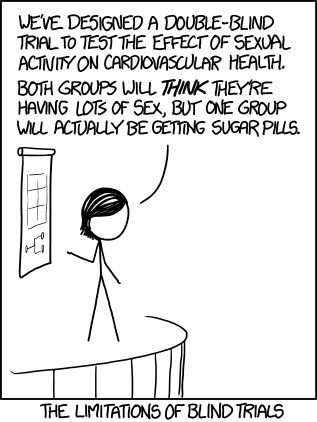
It should also be pointed out that the so-called Serious Trauma data is not limited to portions of the body putatively "protected" by a helmet. Mr. Bill do you believe helmet wear also reduced the so called serious trauma rate to the entire body of those wearing a helmet?
IMO, only a moron about riskevaluation or a zealot with an agenda would give any credence to any conclusions from a report about accident risk that defines "serious trauma" as any injury that gets medical attention.
 01-05-15 | 09:34 PM
#724
Been Around Awhile
Joined: Oct 2004
Posts: 30,680
Likes: 1,996
From: Burlington Iowa
Bikes: Vaterland and Ragazzi
Nuff said.
01-05-15 | 09:37 PM
#725
Senior Member
Joined: Nov 2008
Posts: 7,239
Likes: 8
From: Bay Area, Calif.
"Thirteen percent (6) of commuters who did not wear a helmet experienced a serious traumatic event [in the year of the study], compared with 5% (43) of those who did (p 0.023). In an additional analysis comparing commuters who reported a traumatic event with those who reported a serious traumatic event, lack of helmet use was the only statistical difference between the two groups (p 0.013)."
-mr. bill
Misuse of statistics - Wikipedia, the free encyclopedia