


Penetrating oil
 12-07-17 | 09:01 AM
#1
Thread Starter
Full Member

Joined: Dec 2004
Posts: 310
Likes: 26
From: Chattanooga, Tn
Bikes: 1977 Raleigh Record, 1987 Schwinn Prelude, 1971 Raleigh Record, 1988 Schwinn Traveler, 1967 (?) Carlton Super Course, 1959 Huffy Sportsman 3 speed, 1972 Raleigh Super Course, yet another 70-something Raleigh Record
Penetrating oil
Liquid Wrench, PB Blaster, other penetrating oils -- for many years I have been using them with the assumption that they have some acidic, or otherwise corrosive component, that breaks down corrosion. Not sure how I arrived at this idea, no doubt someone else told me. And I've never thought they should be left as a final lubricant, or that not applying some other lube would leave ferrous metal in jeopardy of some long term damage from them. Is there any truth to this, or am I just wrong (again), and these penetrating oils work through some other action?
 12-07-17 | 09:20 AM
#2

Facts just confuse people


Joined: Jul 2017
Posts: 19,422
Likes: 7,115
From: Mississippi
Bikes: Tarmac Disc Comp Di2 - 2020
Never heard anything about acids. But your hands have acids on them and some claim that enough to damage bearings if you don't wash your hands before handling them. I don't keep up with it now, but when I was young, that was a common position in the aircraft mechanic conversations and racing circles. This was before the days of computer bulletin boards and forums.
Since you are asking about all, then I won't say for certain, but I doubt most use acids. They just have a particular formula of oils and modifiers that help the oil penetrate and spread instead of staying in a blob.
But since they are so light, obviously their lubricating properties may not be adequate for the part you put them on. Then the question becomes is there enough of the thinner penetrating oil left to dilute the other lubricant significantly or will the coating of penetrating oil prevent the grease from clinging to the bearing surface and doing what it is supposed to do.
Most of the website for those penetrating oils have a good write up about them. sometime you have to dig a little and even look at the MSDS data or such.
And don't forget about Kroil. Sometimes it works when the others fail.
Since you are asking about all, then I won't say for certain, but I doubt most use acids. They just have a particular formula of oils and modifiers that help the oil penetrate and spread instead of staying in a blob.
But since they are so light, obviously their lubricating properties may not be adequate for the part you put them on. Then the question becomes is there enough of the thinner penetrating oil left to dilute the other lubricant significantly or will the coating of penetrating oil prevent the grease from clinging to the bearing surface and doing what it is supposed to do.
Most of the website for those penetrating oils have a good write up about them. sometime you have to dig a little and even look at the MSDS data or such.
And don't forget about Kroil. Sometimes it works when the others fail.
 12-07-17 | 09:22 AM
#3

Mad bike riding scientist
Joined: Nov 2004
Posts: 29,209
Likes: 6,285
From: Denver, CO
Bikes: Some silver ones, a red one, a black and orange one, and a few titanium ones
Liquid Wrench, PB Blaster, other penetrating oils -- for many years I have been using them with the assumption that they have some acidic, or otherwise corrosive component, that breaks down corrosion. Not sure how I arrived at this idea, no doubt someone else told me. And I've never thought they should be left as a final lubricant, or that not applying some other lube would leave ferrous metal in jeopardy of some long term damage from them. Is there any truth to this, or am I just wrong (again), and these penetrating oils work through some other action?
Iron oxidation (aka "rust") has a very porous nature so the oil can penetrate into it better than other kinds of oxidation. Rust is also softer than the metal it is formed from so it tends to break when force is put on it. If the iron parts can slide past each other, they can come apart easier.
Aluminum oxidation products, for example, are extremely hard and many even be nonporous. Think anodized aluminum. The aluminum oxide is also much harder than the underlying metal so it doesn't break and slide as easily. Penetration oils often don't work on aluminum parts for this reason.
You could leave the oil in place as it will still lubricate but the oil is so low a viscosity that it will eventually flow away or evaporate. Putting something like grease on the threads after you've gotten them apart will go a lot further towards keeping the parts from welding back together.
__________________
Stuart Black
Dreamin' of Bemidji Down the Mississippi (in part)
Plan Epsilon Around Lake Michigan in the era of Covid
Gold Fever Three days of dirt in Colorado
Pokin' around the Poconos A cold ride around Lake Erie
Dinosaurs in Colorado A mountain bike guide to the Purgatory Canyon dinosaur trackway
Solo Without Pie. The search for pie in the Midwest.
Picking the Scablands. Washington and Oregon, 2005. Pie and spiders on the Columbia River!
Stuart Black
Dreamin' of Bemidji Down the Mississippi (in part)
Plan Epsilon Around Lake Michigan in the era of Covid
Gold Fever Three days of dirt in Colorado
Pokin' around the Poconos A cold ride around Lake Erie
Dinosaurs in Colorado A mountain bike guide to the Purgatory Canyon dinosaur trackway
Solo Without Pie. The search for pie in the Midwest.
Picking the Scablands. Washington and Oregon, 2005. Pie and spiders on the Columbia River!
12-07-17 | 09:28 AM
#4
Senior Member

Joined: Dec 2015
Posts: 1,958
Likes: 1,243
From: Menomonee Falls, WI
Bikes: 1984 Schwinn Supersport, 1988 Trek 400T, 1977 Trek TX900, 1982 Bianchi Champione del Mondo, 1978 Raleigh Supercourse, 1986 Trek 400 Elance, 1991 Waterford PDG OS Paramount, 1971 Schwinn Sports Tourer, 1985 Trek 670
I have a 70s British sports car with chrome and stainless wire wheels. Every year before winter storage, I coat the wheels liberally with WD-40, and leave it so all winter. I bought those wheels in 1995, they still look new. Never heard of any instance of WD-40 actually harming metal surfaces. Not sure on PB Blaster, my first choice on seized hardware.
Tim
Tim
12-07-17 | 09:35 AM
#5
Senior Member
Joined: Aug 2005
Posts: 33,657
Likes: 1,119
From: Pittsburgh, PA
Bikes: '96 Litespeed Catalyst, '05 Litespeed Firenze, '06 Litespeed Tuscany, '20 Surly Midnight Special, All are 3x10. It is hilly around here!
There are "penetrating oils" that are more than low viscosity oil. "Ed's Red" was developed as a target rifle bore cleaner but has a great reputation as a penetrating oil. It's an equal volume mix of Kerosine (or OMS), Dexron ATF and Acetone. However, as noted above, no acids of any kind.
12-07-17 | 09:35 AM
#6
Senior Member
Joined: Dec 2015
Posts: 1,958
Likes: 1,243
From: Menomonee Falls, WI
Bikes: 1984 Schwinn Supersport, 1988 Trek 400T, 1977 Trek TX900, 1982 Bianchi Champione del Mondo, 1978 Raleigh Supercourse, 1986 Trek 400 Elance, 1991 Waterford PDG OS Paramount, 1971 Schwinn Sports Tourer, 1985 Trek 670
Cyccommute's answer is way better then mine. I'd go with that. Tim
12-07-17 | 09:47 AM
#7

Senior Member

Joined: Sep 2010
Posts: 8,327
Likes: 1,112
From: Roswell, GA
Bikes: '93 Trek 750, '92 Schwinn Crisscross, '93 Mongoose Alta
12-07-17 | 10:06 AM
#8
Thread Starter
Full Member
Joined: Dec 2004
Posts: 310
Likes: 26
From: Chattanooga, Tn
Bikes: 1977 Raleigh Record, 1987 Schwinn Prelude, 1971 Raleigh Record, 1988 Schwinn Traveler, 1967 (?) Carlton Super Course, 1959 Huffy Sportsman 3 speed, 1972 Raleigh Super Course, yet another 70-something Raleigh Record
Sometimes I have come up with these ideas, and hold on to them forever, and have no idea how I got them. Sounds like this one is wrong. It's good to know -- I may have avoided using penetrating oil for this reason, and didn't need to. Thanks, folks.
12-07-17 | 03:14 PM
#9

Senior Member

Joined: Jul 2015
Posts: 7,494
Likes: 3,296
From: NW Oregon
Bikes: 1982 Trek 930R Custom, '91 Diamondback Ascent w/ XT, XTR updates, Fuji Team Pro CF road flyer, Specialized Sirrus Gravel Convert, '09 Comencal Meta 5.5 XC, '02 Marin MBX500, '84 Gitane Criterium bike
i use a light coating of PB to remove/reduce Aluminum oxide on parts all the time... no ill effects, and the parts look MUCH BETTER!
12-07-17 | 04:21 PM
#11
Thread Starter
Full Member
Joined: Dec 2004
Posts: 310
Likes: 26
From: Chattanooga, Tn
Bikes: 1977 Raleigh Record, 1987 Schwinn Prelude, 1971 Raleigh Record, 1988 Schwinn Traveler, 1967 (?) Carlton Super Course, 1959 Huffy Sportsman 3 speed, 1972 Raleigh Super Course, yet another 70-something Raleigh Record
Thanks again -- looked up the MSDS for Liquid Wrench, PB Blaster, and Aero Kroil. Under ph, for each of them, it said N/A -- so, obviously not an issue.
 12-07-17 | 05:32 PM
#13
Mad bike riding scientist
Joined: Nov 2004
Posts: 29,209
Likes: 6,285
From: Denver, CO
Bikes: Some silver ones, a red one, a black and orange one, and a few titanium ones
In these cases, I sure that the NA means "not applicable" rather than "not available". They would have no pH since they are neither acidic nor basic nor can even ionize.
__________________
Stuart Black
Dreamin' of Bemidji Down the Mississippi (in part)
Plan Epsilon Around Lake Michigan in the era of Covid
Gold Fever Three days of dirt in Colorado
Pokin' around the Poconos A cold ride around Lake Erie
Dinosaurs in Colorado A mountain bike guide to the Purgatory Canyon dinosaur trackway
Solo Without Pie. The search for pie in the Midwest.
Picking the Scablands. Washington and Oregon, 2005. Pie and spiders on the Columbia River!
Stuart Black
Dreamin' of Bemidji Down the Mississippi (in part)
Plan Epsilon Around Lake Michigan in the era of Covid
Gold Fever Three days of dirt in Colorado
Pokin' around the Poconos A cold ride around Lake Erie
Dinosaurs in Colorado A mountain bike guide to the Purgatory Canyon dinosaur trackway
Solo Without Pie. The search for pie in the Midwest.
Picking the Scablands. Washington and Oregon, 2005. Pie and spiders on the Columbia River!
12-08-17 | 10:17 PM
#14
Senior Member
Joined: Mar 2017
Posts: 1,923
Likes: 233
From: Madison, WI
Bikes: Giant Toughroad SLR1 and Motobecane Sturgis NX
Penetrating oils are just a low viscosity oils. Nothing corrosive in them. Most rust and corrosion has a lower density than the metal it forms from so the oil penetrates into the threads and lubricates them. This allows the parts to be separated because they can now slide past each other.
Iron oxidation (aka "rust") has a very porous nature so the oil can penetrate into it better than other kinds of oxidation. Rust is also softer than the metal it is formed from so it tends to break when force is put on it. If the iron parts can slide past each other, they can come apart easier.
Aluminum oxidation products, for example, are extremely hard and many even be nonporous. Think anodized aluminum. The aluminum oxide is also much harder than the underlying metal so it doesn't break and slide as easily. Penetration oils often don't work on aluminum parts for this reason.
You could leave the oil in place as it will still lubricate but the oil is so low a viscosity that it will eventually flow away or evaporate. Putting something like grease on the threads after you've gotten them apart will go a lot further towards keeping the parts from welding back together.
Iron oxidation (aka "rust") has a very porous nature so the oil can penetrate into it better than other kinds of oxidation. Rust is also softer than the metal it is formed from so it tends to break when force is put on it. If the iron parts can slide past each other, they can come apart easier.
Aluminum oxidation products, for example, are extremely hard and many even be nonporous. Think anodized aluminum. The aluminum oxide is also much harder than the underlying metal so it doesn't break and slide as easily. Penetration oils often don't work on aluminum parts for this reason.
You could leave the oil in place as it will still lubricate but the oil is so low a viscosity that it will eventually flow away or evaporate. Putting something like grease on the threads after you've gotten them apart will go a lot further towards keeping the parts from welding back together.
12-08-17 | 11:28 PM
#15
Senior Member
Joined: Jun 2014
Posts: 875
Likes: 203
Bikes: custom Cyclery North (Chicago), Schwinn Circuit
12-09-17 | 10:35 AM
#16

Generally bewildered
Joined: Aug 2015
Posts: 3,038
Likes: 344
From: Eastern PA, USA
Bikes: 2014 Trek Domane 6.9, 1999 LeMond Zurich, 1978 Schwinn Superior
BTW, in at least one test (and I don't think its apochryfal), a 50:50 mix of ATF and acetone worked better than any pre-made product. But the acetone will strip your paint. I think a product called Kroil was the best commercial penetrating oil.
12-09-17 | 04:26 PM
#17
Senior Member
Joined: Jul 2014
Posts: 884
Likes: 30
From: SGV So Cal
Bikes: 80's Schwinn High Plains, Motobecane Ti Cyclocross
I have a 70s British sports car with chrome and stainless wire wheels. Every year before winter storage, I coat the wheels liberally with WD-40, and leave it so all winter. I bought those wheels in 1995, they still look new. Never heard of any instance of WD-40 actually harming metal surfaces. Not sure on PB Blaster, my first choice on seized hardware.
Tim
Tim
The WD in WD-40 stands for "water displacing formulation #40" It was specifically developed to get and keep moisture out of equipment. It's fairly ineffective as a penetrating oil except in relatively undemanding circumstances.
It's also great as a cutting lubricant /coolant when drilling, taping and machining aluminum. (just don't make the mistake of using it on steel particularly with a tap!)
BITD I ran a ceramics plant. We had lots of water around machinery so used a lot of it. I had to keep it locked up because it kept disappearing. Turned out some of the older women on the lines though it was good as an arthritis treatment.
They'd heard it fixed squeaking joints.
Best penetrating oil I ever got my hands on was some sort of aircraft hydraulic fluid that was repackaged and sold as penetrating oil. That stuff was like magic so of course you can't get it anymore.
Liquid wrench seems to be about as good as there is out there now. Also works as a tapping fluid for steel and stainless steel. Not as good as the old Carbon Tet based fluids though.
Last edited by TGT1; 12-09-17 at 04:31 PM.
12-09-17 | 04:30 PM
#18

Full Member
Joined: Feb 2015
Posts: 372
Likes: 14
From: Milwaukee-Chicago (Last stop on the North Shore Metra Line)
Bikes: 1975 Fuji 'The Finest', 1975 Fuji Super Road Racer S10-S,1980 SR 10-Speed, 1980 Fuji Newest, 1984 Araya 14-Speed, 1985 Bridgestone 500, 1986 Fuji 'Sekkei Series', 1995 Gary Fisher Kaitai MTB
 THE BEST - darn thing is it's been around forever
  12-09-17 | 04:44 PM
#19

Senior Member
Joined: Mar 2013
Posts: 891
Likes: 136
From: Southern Ontario, Canada
Bikes: Too, too many....
12-09-17 | 04:50 PM
#20
Senior Member
Joined: Mar 2013
Posts: 891
Likes: 136
From: Southern Ontario, Canada
Bikes: Too, too many....
12-09-17 | 04:54 PM
#21

Senior Member
Joined: Mar 2016
Posts: 2,095
Likes: 591
Bikes: '87-ish Pinarello Montello; '89 Nishiki Ariel; '85 Raleigh Wyoming, '16 Wabi Special, '16 Wabi Classic, '14 Kona Cinder Cone, 2023 Surly Disk Trucker
+1 for Kano's Kroil. The best there is. Is also the best gun bore solvent made. Lifts lead and copper residue off of a gun barrel in one swipe by breaking the bond from the metal of the gun barrel. It is not an acidic chemical.
Kroil also works well on spoke nipples that are stuck or cotter pins on cottered cranks, stuck nuts, etc.
Kroil also works well on spoke nipples that are stuck or cotter pins on cottered cranks, stuck nuts, etc.
12-09-17 | 10:31 PM
#22
Senior Member
Joined: Jul 2015
Posts: 7,494
Likes: 3,296
From: NW Oregon
Bikes: 1982 Trek 930R Custom, '91 Diamondback Ascent w/ XT, XTR updates, Fuji Team Pro CF road flyer, Specialized Sirrus Gravel Convert, '09 Comencal Meta 5.5 XC, '02 Marin MBX500, '84 Gitane Criterium bike
Patience, Dan... Patience...... and there's a point of no return for rusted stuff...
Last edited by maddog34; 12-09-17 at 10:44 PM.
03-24-19 | 10:29 AM
#23

Steel is real
Joined: Dec 2014
Posts: 772
Likes: 18
From: Australia
Bikes: Custom - Record Vortex 8 spd Nexus & Mistral Le Mans 3 spd Shimano. Giant Kronos. Raliegh Single Speed
And of course, the VERY best penetrating oil by far, a mixture of 50% ATF & 50% Acetone.
https://www.youtube.com/watch?v=CESDxCloCoQ
https://www.youtube.com/watch?v=CESDxCloCoQ
I haven't had much joy with that far as seized stems go
03-24-19 | 11:18 AM
#24
Senior Member
Joined: Mar 2013
Posts: 891
Likes: 136
From: Southern Ontario, Canada
Bikes: Too, too many....
So far I have been lucky but on the rare occasion that penetrants have not worked, I have always had success with carefully thinning the wall of the stem with a drill and PATIENTLY using a hacksaw blade to further weaken the walls of the stem until it comes free.
Works with alloy stems and with alloy seat posts..... but i have never had to try it on steel.
Bink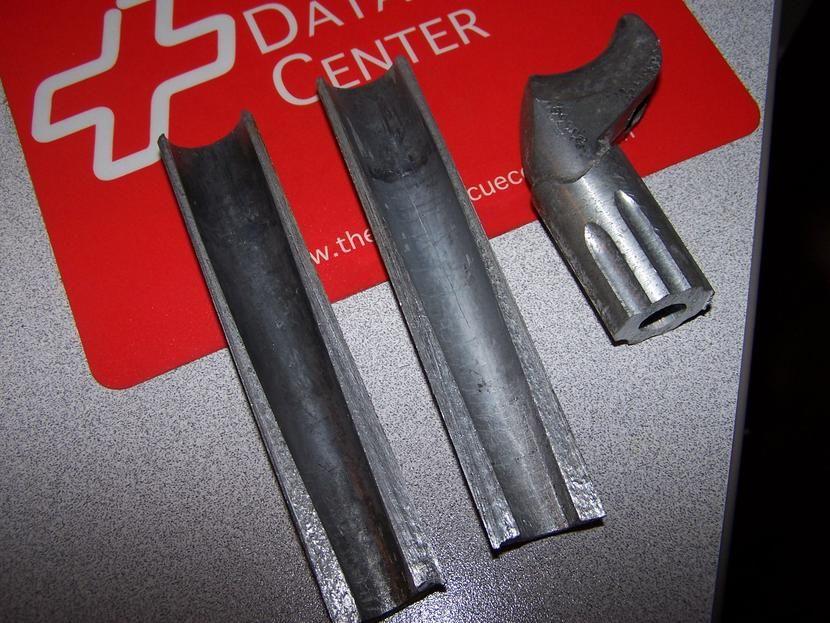
Works with alloy stems and with alloy seat posts..... but i have never had to try it on steel.
Bink
03-24-19 | 11:30 AM
#25
Steel is real
Joined: Dec 2014
Posts: 772
Likes: 18
From: Australia
Bikes: Custom - Record Vortex 8 spd Nexus & Mistral Le Mans 3 spd Shimano. Giant Kronos. Raliegh Single Speed
My last resort is to shock it heating it with a torch gun then squirting it with WD-40, Binky, especially when stems want to be saved {works everytime!
I have an issue with a Miyata frame though atm that got given to me, he started sanding the frame down but couldn't get the seat post out, cut it flush to the seat tube, lol, dang
drilled a hole on the back where you can, fed a wired rope through, and hitched it up to a tree and my towball, broke the damn wire so upgraded to a stronger one then broke the rope on the towball, upgraded that to a chain then broke that other wire
i may need to use your method or dissolve it with caustic soda
I have an issue with a Miyata frame though atm that got given to me, he started sanding the frame down but couldn't get the seat post out, cut it flush to the seat tube, lol, dang
drilled a hole on the back where you can, fed a wired rope through, and hitched it up to a tree and my towball, broke the damn wire so upgraded to a stronger one then broke the rope on the towball, upgraded that to a chain then broke that other wire
i may need to use your method or dissolve it with caustic soda
Last edited by le mans; 03-24-19 at 11:36 AM.

