


Replacing a crankset
 01-28-24 | 07:49 PM
#1
Thread Starter
Senior Member
Joined: Dec 2021
Posts: 1,519
Likes: 908
Replacing a crankset
Never done it.
I'm about to pull the trigger on shorter crank arms for my Ridley. The bike came with 170mm FSA crankset. I have been completely unable to find replacement crank arms so I'm looking at replacing the entire crankset. I keep hearing that shorter cranksets are starting to become more available but so far I've only found one Shimano at 160 and one FSA at 160. So I'm faced with the option of replacing the entire crankset. Nothing shorter than 160 anywhere I've looked, but then again, I don't know if there is like some super secret bike parts underground where some of this stuff is more readily available. I've looked at Jenson, Amazon, Performance Bike and REI.
I'm leaning towards the FSA only because that's what's already there, but I have no loyalty towards FSA and I trust Shimano a little more. Price is comparable but I don't know if either is just a simple swap out the old for the new stuff. If it's that easy, I'd probably go Shimano, but that's why I'm posting here. Is there any voodoo to replacing a crankset?
I'm about to pull the trigger on shorter crank arms for my Ridley. The bike came with 170mm FSA crankset. I have been completely unable to find replacement crank arms so I'm looking at replacing the entire crankset. I keep hearing that shorter cranksets are starting to become more available but so far I've only found one Shimano at 160 and one FSA at 160. So I'm faced with the option of replacing the entire crankset. Nothing shorter than 160 anywhere I've looked, but then again, I don't know if there is like some super secret bike parts underground where some of this stuff is more readily available. I've looked at Jenson, Amazon, Performance Bike and REI.
I'm leaning towards the FSA only because that's what's already there, but I have no loyalty towards FSA and I trust Shimano a little more. Price is comparable but I don't know if either is just a simple swap out the old for the new stuff. If it's that easy, I'd probably go Shimano, but that's why I'm posting here. Is there any voodoo to replacing a crankset?


 01-28-24 | 08:33 PM
#3

Old fart


Joined: Nov 2004
Posts: 26,402
Likes: 5,333
From: Appleton WI
Bikes: Several, mostly not name brands.
TA still offers their Pro 5 Vis crank arms in 160mm, but finding an importer might be an issue.
https://specialites-ta.com/pro-5-vis...nivelles,170mm
Otherwise, BMX crank arms come in lengths down to 110mm; you can expect to do a bit of fiddling if you intend to run a double or triple ring setup.
Finally, Mark Stonich at BikeSmithDesign has a crank-shortening service:
https://bikesmithdesign.com/Short_Cranks/index.html
https://specialites-ta.com/pro-5-vis...nivelles,170mm
Otherwise, BMX crank arms come in lengths down to 110mm; you can expect to do a bit of fiddling if you intend to run a double or triple ring setup.
Finally, Mark Stonich at BikeSmithDesign has a crank-shortening service:
https://bikesmithdesign.com/Short_Cranks/index.html
 01-28-24 | 09:34 PM
#5

Senior Member


Joined: Apr 2016
Posts: 3,877
Likes: 1,786
Never done it.
I'm about to pull the trigger on shorter crank arms for my Ridley. The bike came with 170mm FSA crankset. I have been completely unable to find replacement crank arms so I'm looking at replacing the entire crankset. I keep hearing that shorter cranksets are starting to become more available but so far I've only found one Shimano at 160 and one FSA at 160. So I'm faced with the option of replacing the entire crankset. Nothing shorter than 160 anywhere I've looked, but then again, I don't know if there is like some super secret bike parts underground where some of this stuff is more readily available. I've looked at Jenson, Amazon, Performance Bike and REI.
I'm about to pull the trigger on shorter crank arms for my Ridley. The bike came with 170mm FSA crankset. I have been completely unable to find replacement crank arms so I'm looking at replacing the entire crankset. I keep hearing that shorter cranksets are starting to become more available but so far I've only found one Shimano at 160 and one FSA at 160. So I'm faced with the option of replacing the entire crankset. Nothing shorter than 160 anywhere I've looked, but then again, I don't know if there is like some super secret bike parts underground where some of this stuff is more readily available. I've looked at Jenson, Amazon, Performance Bike and REI.
 01-28-24 | 10:47 PM
#6

Really Old Senior Member

Joined: Feb 2007
Posts: 14,667
Likes: 1,904
From: Mid Willamette Valley, Orygun
Bikes: 87 RockHopper,2008 Specialized Globe. Both upgraded to 9 speeds. 2019 Giant Explore E+3
I'm not sure of your body ergonomics or reasons for shorter ranks.
I use 165mm because my old, beat up, knees simply don't bend like they used to.
While experimenting with shorter cranks, I tried 160mm and they were simply just too short.
They made me feel like I was on a kids tricycle with only 2-3 RPM added to my cadence.
You might be able to find 160's from a kids/BMX/junior size bike to try before you spend "real" money for a size you end up not liking.
I was 6' 50 years ago, but have shrunk.
I use 165mm because my old, beat up, knees simply don't bend like they used to.
While experimenting with shorter cranks, I tried 160mm and they were simply just too short.
They made me feel like I was on a kids tricycle with only 2-3 RPM added to my cadence.
You might be able to find 160's from a kids/BMX/junior size bike to try before you spend "real" money for a size you end up not liking.
I was 6' 50 years ago, but have shrunk.
01-28-24 | 10:54 PM
#7
Highly Enriched Driftium

Joined: Apr 2017
Posts: 6,879
Likes: 2,240
For reasons having nothing to do with length, recommendations:
- Not current Shimano; There is a recall out, the spider is "bonded" somehow to one ring or the spider, and they have been coming apart ("delaminating"). Also, that design may be less conducive to finding a shorter crank, due to higher tooling cost.
- I strongly endorse the "hollowtech II" style cranks (originally a shimano design); Large diameter hollow axle (light, rigid), permanently attached (with pressed splines and perhaps some epoxy as well) to the right spider, with "external" bottom bracket bearings (of different standards requiring different wrenches, I went with "ISO External", quite common, and bought a 4-way wrench to handle most of the other types as well). This bearing style is more durable than an internal cartridge of any type (square taper, octalink, etc), because the bearing balls are larger or more of them, and bearing preload can be adjusted as they wear, which is critical for durability; Once you have slack, wear accelerates. You can also remove the crank easily in the field without a crank pulling tool, just loosen the two clamp bolts on the left crank arm (around the splined shaft), and the whole right spider and axle slides right out.
- My personal favorite now is 5x110BCD chainring pattern (50/34 double), but big road doubles (53/39) are usually on 130BCD. But check the cost of replacement chainrings in various patterns; I have stayed away from 4 bolt and especially 4 bolt asymmetrical. That said, my crank with rings and bearings ($75) was equal or less cost than just two rings.
- For road bike, or other bike with sufficient clearance at chainstays, look for low Q-factor, i.e., pedals closer together, crank arms less flared outward.
I don't know if you are seeking a doube or triple and chainring sizes, chainwidth (how many cogs on cassette), you should specify all.
Try to know your desired "chainline" dimension before ordering, this is from bike centerline to center of crank chainring(s), should be same as to center of cassette cogs.
Quick look on amazon, here is one available in 160, but is the problematic design I spoke of, notice no chainring bolts:
https://www.amazon.com/SHIMANO-FC-R7...8-4&th=1&psc=1
My current favorite crankset with all desired features mentioned above, but I only see in 170; This used to be available on amazon but no longer, but still available on ebay, with bearings included, $59 for steel rings and $68 for aluminum:
https://www.ebay.com/itm/31423839097...Bk9SR_zz3bmqYw
- Not current Shimano; There is a recall out, the spider is "bonded" somehow to one ring or the spider, and they have been coming apart ("delaminating"). Also, that design may be less conducive to finding a shorter crank, due to higher tooling cost.
- I strongly endorse the "hollowtech II" style cranks (originally a shimano design); Large diameter hollow axle (light, rigid), permanently attached (with pressed splines and perhaps some epoxy as well) to the right spider, with "external" bottom bracket bearings (of different standards requiring different wrenches, I went with "ISO External", quite common, and bought a 4-way wrench to handle most of the other types as well). This bearing style is more durable than an internal cartridge of any type (square taper, octalink, etc), because the bearing balls are larger or more of them, and bearing preload can be adjusted as they wear, which is critical for durability; Once you have slack, wear accelerates. You can also remove the crank easily in the field without a crank pulling tool, just loosen the two clamp bolts on the left crank arm (around the splined shaft), and the whole right spider and axle slides right out.
- My personal favorite now is 5x110BCD chainring pattern (50/34 double), but big road doubles (53/39) are usually on 130BCD. But check the cost of replacement chainrings in various patterns; I have stayed away from 4 bolt and especially 4 bolt asymmetrical. That said, my crank with rings and bearings ($75) was equal or less cost than just two rings.
- For road bike, or other bike with sufficient clearance at chainstays, look for low Q-factor, i.e., pedals closer together, crank arms less flared outward.
I don't know if you are seeking a doube or triple and chainring sizes, chainwidth (how many cogs on cassette), you should specify all.
Try to know your desired "chainline" dimension before ordering, this is from bike centerline to center of crank chainring(s), should be same as to center of cassette cogs.
Quick look on amazon, here is one available in 160, but is the problematic design I spoke of, notice no chainring bolts:
https://www.amazon.com/SHIMANO-FC-R7...8-4&th=1&psc=1
My current favorite crankset with all desired features mentioned above, but I only see in 170; This used to be available on amazon but no longer, but still available on ebay, with bearings included, $59 for steel rings and $68 for aluminum:
https://www.ebay.com/itm/31423839097...Bk9SR_zz3bmqYw
Last edited by Duragrouch; 01-28-24 at 11:10 PM.
01-28-24 | 11:17 PM
#8
Highly Enriched Driftium
Joined: Apr 2017
Posts: 6,879
Likes: 2,240
TA still offers their Pro 5 Vis crank arms in 160mm, but finding an importer might be an issue.
https://specialites-ta.com/pro-5-vis...nivelles,170mm
Otherwise, BMX crank arms come in lengths down to 110mm; you can expect to do a bit of fiddling if you intend to run a double or triple ring setup.
Finally, Mark Stonich at BikeSmithDesign has a crank-shortening service:
https://bikesmithdesign.com/Short_Cranks/index.html
https://specialites-ta.com/pro-5-vis...nivelles,170mm
Otherwise, BMX crank arms come in lengths down to 110mm; you can expect to do a bit of fiddling if you intend to run a double or triple ring setup.
Finally, Mark Stonich at BikeSmithDesign has a crank-shortening service:
https://bikesmithdesign.com/Short_Cranks/index.html
01-28-24 | 11:47 PM
#9
Thread Starter
Senior Member
Joined: Dec 2021
Posts: 1,519
Likes: 908
TA still offers their Pro 5 Vis crank arms in 160mm, but finding an importer might be an issue.
https://specialites-ta.com/pro-5-vis...nivelles,170mm
Otherwise, BMX crank arms come in lengths down to 110mm; you can expect to do a bit of fiddling if you intend to run a double or triple ring setup.
Finally, Mark Stonich at BikeSmithDesign has a crank-shortening service:
https://bikesmithdesign.com/Short_Cranks/index.html
https://specialites-ta.com/pro-5-vis...nivelles,170mm
Otherwise, BMX crank arms come in lengths down to 110mm; you can expect to do a bit of fiddling if you intend to run a double or triple ring setup.
Finally, Mark Stonich at BikeSmithDesign has a crank-shortening service:
https://bikesmithdesign.com/Short_Cranks/index.html
On the Ridley, the FSA crank arms are carbon. Can carbon be shortened? And thanks for the length. Reading it now.
I'm not sure of your body ergonomics or reasons for shorter ranks.
I use 165mm because my old, beat up, knees simply don't bend like they used to.
While experimenting with shorter cranks, I tried 160mm and they were simply just too short.
They made me feel like I was on a kids tricycle with only 2-3 RPM added to my cadence.
You might be able to find 160's from a kids/BMX/junior size bike to try before you spend "real" money for a size you end up not liking.
I was 6' 50 years ago, but have shrunk.
I use 165mm because my old, beat up, knees simply don't bend like they used to.
While experimenting with shorter cranks, I tried 160mm and they were simply just too short.
They made me feel like I was on a kids tricycle with only 2-3 RPM added to my cadence.
You might be able to find 160's from a kids/BMX/junior size bike to try before you spend "real" money for a size you end up not liking.
I was 6' 50 years ago, but have shrunk.
For reasons having nothing to do with length, recommendations:
- Not current Shimano; There is a recall out, the spider is "bonded" somehow to one ring or the spider, and they have been coming apart ("delaminating"). Also, that design may be less conducive to finding a shorter crank, due to higher tooling cost.
- I strongly endorse the "hollowtech II" style cranks (originally a shimano design); Large diameter hollow axle (light, rigid), permanently attached (with pressed splines and perhaps some epoxy as well) to the right spider, with "external" bottom bracket bearings (of different standards requiring different wrenches, I went with "ISO External", quite common, and bought a 4-way wrench to handle most of the other types as well). This bearing style is more durable than an internal cartridge of any type (square taper, octalink, etc), because the bearing balls are larger or more of them, and bearing preload can be adjusted as they wear, which is critical for durability; Once you have slack, wear accelerates. You can also remove the crank easily in the field without a crank pulling tool, just loosen the two clamp bolts on the left crank arm (around the splined shaft), and the whole right spider and axle slides right out.
- My personal favorite now is 5x110BCD chainring pattern (50/34 double), but big road doubles (53/39) are usually on 130BCD. But check the cost of replacement chainrings in various patterns; I have stayed away from 4 bolt and especially 4 bolt asymmetrical. That said, my crank with rings and bearings ($75) was equal or less cost than just two rings.
- For road bike, or other bike with sufficient clearance at chainstays, look for low Q-factor, i.e., pedals closer together, crank arms less flared outward.
I don't know if you are seeking a doube or triple and chainring sizes, chainwidth (how many cogs on cassette), you should specify all.
Try to know your desired "chainline" dimension before ordering, this is from bike centerline to center of crank chainring(s), should be same as to center of cassette cogs.
Quick look on amazon, here is one available in 160, but is the problematic design I spoke of, notice no chainring bolts:
https://www.amazon.com/SHIMANO-FC-R7...8-4&th=1&psc=1
My current favorite crankset with all desired features mentioned above, but I only see in 170; This used to be available on amazon but no longer, but still available on ebay, with bearings included, $59 for steel rings and $68 for aluminum:
https://www.ebay.com/itm/31423839097...Bk9SR_zz3bmqYw
- Not current Shimano; There is a recall out, the spider is "bonded" somehow to one ring or the spider, and they have been coming apart ("delaminating"). Also, that design may be less conducive to finding a shorter crank, due to higher tooling cost.
- I strongly endorse the "hollowtech II" style cranks (originally a shimano design); Large diameter hollow axle (light, rigid), permanently attached (with pressed splines and perhaps some epoxy as well) to the right spider, with "external" bottom bracket bearings (of different standards requiring different wrenches, I went with "ISO External", quite common, and bought a 4-way wrench to handle most of the other types as well). This bearing style is more durable than an internal cartridge of any type (square taper, octalink, etc), because the bearing balls are larger or more of them, and bearing preload can be adjusted as they wear, which is critical for durability; Once you have slack, wear accelerates. You can also remove the crank easily in the field without a crank pulling tool, just loosen the two clamp bolts on the left crank arm (around the splined shaft), and the whole right spider and axle slides right out.
- My personal favorite now is 5x110BCD chainring pattern (50/34 double), but big road doubles (53/39) are usually on 130BCD. But check the cost of replacement chainrings in various patterns; I have stayed away from 4 bolt and especially 4 bolt asymmetrical. That said, my crank with rings and bearings ($75) was equal or less cost than just two rings.
- For road bike, or other bike with sufficient clearance at chainstays, look for low Q-factor, i.e., pedals closer together, crank arms less flared outward.
I don't know if you are seeking a doube or triple and chainring sizes, chainwidth (how many cogs on cassette), you should specify all.
Try to know your desired "chainline" dimension before ordering, this is from bike centerline to center of crank chainring(s), should be same as to center of cassette cogs.
Quick look on amazon, here is one available in 160, but is the problematic design I spoke of, notice no chainring bolts:
https://www.amazon.com/SHIMANO-FC-R7...8-4&th=1&psc=1
My current favorite crankset with all desired features mentioned above, but I only see in 170; This used to be available on amazon but no longer, but still available on ebay, with bearings included, $59 for steel rings and $68 for aluminum:
https://www.ebay.com/itm/31423839097...Bk9SR_zz3bmqYw
I heard something about a Shimano recall but I kind of assumed that anything currently for sale would be post redesign. I can't imagine any company allowing a product with a known recall to continue to be sold, but then again, maybe some retailers want their money and will let Shimano deal with that headache.
01-29-24 | 12:02 AM
#10
Highly Enriched Driftium
Joined: Apr 2017
Posts: 6,879
Likes: 2,240
I have heard of some places that do shortening. I'm pretty sure the crank arms on my K2 can have a good bit taken out of them. There is a scallop in the arm, but I think they just use the same arm for multiple lengths because the scallop stops somewhere around 5 or 6 inches, then the rest if full thickness. These arms are 175mm and I'm thinking of taking them down to either 160 or 165, depending on what length still gives me sufficient structure.
On the Ridley, the FSA crank arms are carbon. Can carbon be shortened? And thanks for the length. Reading it now.
Ya, well I started out at 5'4" 30 years ago and I'm not getting any taller. I have kind of short legs anyway.
Thanks. There's still a bunch I don't understand about a lot of this terminology., like "chainline". I read that the other day but had no idea what it meant. Also, O.L.D.? Read about that but only the acronym. Haven't seen an explanation of what it stands for.
I heard something about a Shimano recall but I kind of assumed that anything currently for sale would be post redesign. I can't imagine any company allowing a product with a known recall to continue to be sold, but then again, maybe some retailers want their money and will let Shimano deal with that headache.
On the Ridley, the FSA crank arms are carbon. Can carbon be shortened? And thanks for the length. Reading it now.
Ya, well I started out at 5'4" 30 years ago and I'm not getting any taller. I have kind of short legs anyway.
Thanks. There's still a bunch I don't understand about a lot of this terminology., like "chainline". I read that the other day but had no idea what it meant. Also, O.L.D.? Read about that but only the acronym. Haven't seen an explanation of what it stands for.
I heard something about a Shimano recall but I kind of assumed that anything currently for sale would be post redesign. I can't imagine any company allowing a product with a known recall to continue to be sold, but then again, maybe some retailers want their money and will let Shimano deal with that headache.
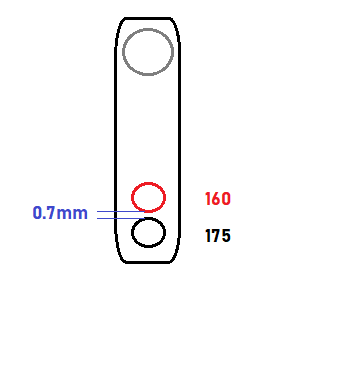
Shortening current crank: Well let's math this out: Pedal threads are 9/16" which is 14.3mm. 175-160 (center to center)= 15mm. So with those two holes next to each other, you have the radius of each hole intruding to that distance by half the hole diameter, which leaves only 0.7mm of metal on the outside end of the new hole. No, this will not work. You need to start with a long enough crank, so that when done, enough metal exists on the end of your new pedal hole, to equal what was there for the old pedal hole.
Chainline: You want the chain between the crank and the cassette to be as straight as possible, for least wear, and to keep it from falling off. It can't always be straight on a derailleur system, so the best way to average this is, the center of the crank (meaning the middle ring on a triple, or halfway between rings on a double, or just a single), lines up with the middle of the cassette (either the middle cog for odd-number of cogs, or between middle cogs for even number of cogs). You check this by:
- crank: measure from center (as noted above) to center of seat tube.
- cassette: measure from center of cogs to inside of right dropout; Subtract this from (OLD divided by 2); OLD is Outer Locknut Distance, which is the inside dimension of your frame rear dropouts, where the rear wheel is clamped. Probably either 130mm or 135mm.
You want the two chainlines values to match, as best as possible. When my crank was just 3mm too far outboard, if I was on the lowest cog, and shifted from the big ring to the small ring, it would drop the chain. Corrected chain line, it no longer does that.
Chainline is often specified on cranks, mine was when purchased on amazon. Be especially careful about trying to change the chainline value on a crank; You cannot reduce it. Increasing it by spacing the crank out can be problematic, I tried that by spacing out the right external bearing with 3mm of spacers, but this shortened the clamp area of the left arm (hollowtech II style crank), and it came loose.
Last edited by Duragrouch; 01-29-24 at 12:46 AM.
01-29-24 | 12:13 AM
#11
Thread Starter
Senior Member
Joined: Dec 2021
Posts: 1,519
Likes: 908
Shimano: I heard the recall was the dealers inspect, if no delamination, they don't replace. I don't trust the assembly. It may have a catastophic failure mode (sudden and without warning), versus a graceful degradation failure mode (lots of warning, distortion, etc.) Those are actual engineering terms.
Shortening current crank: Well let's math this out: Pedal threads are 9/16" which is 14.3mm. 175-160 (center to center)= 15mm. So with those two holes next to each other, you have the radius of each hole intruding to that distance by half the hole diameter, which leaves only 0.7mm of metal on the outside end of the new hole. No, this will not work. You need to start with a long enough crank, so that when done, enough metal exists on the end of your new pedal hole, to equal what was there for the old pedal hole.
Chainline: You want the chain between the crank and the cassette to be as straight as possible.l.. (continued in a minute)
Shortening current crank: Well let's math this out: Pedal threads are 9/16" which is 14.3mm. 175-160 (center to center)= 15mm. So with those two holes next to each other, you have the radius of each hole intruding to that distance by half the hole diameter, which leaves only 0.7mm of metal on the outside end of the new hole. No, this will not work. You need to start with a long enough crank, so that when done, enough metal exists on the end of your new pedal hole, to equal what was there for the old pedal hole.
Chainline: You want the chain between the crank and the cassette to be as straight as possible.l.. (continued in a minute)
Kind of surprised regarding the Shimano recall. I guess they don't figure it's likely to be a life-and-death kind of failure.
01-29-24 | 12:28 AM
#12
Highly Enriched Driftium
Joined: Apr 2017
Posts: 6,879
Likes: 2,240
Maybe I'm not explaining it well enough. The crankset on my K2 is a Ritchey and there is probably around 1.5" of full thickness aluminum at the ends of the crank arms. The existing pedal holes are towards the end of that thickness and they are stamped as 175mm arms. Now, I admit I'm just eye-balling this but I would guess there's at least 3/4" of an inch of full thickness aluminum from the inner most portion of the existing threaded hole to the scallop. Could be more. Either way, I'll probably take some measurements after work this week.
Kind of surprised regarding the Shimano recall. I guess they don't figure it's likely to be a life-and-death kind of failure.
Kind of surprised regarding the Shimano recall. I guess they don't figure it's likely to be a life-and-death kind of failure.
If you still can't see this, take a piece of paper, draw two 15mm diameter circles, 15mm apart (center to center). (The pedal threads are actually 14.3mm diameter, but 15mm is close enough.) See the circles touching? That means almost no metal between the holes.
On the other hand, if you shortened the 175 crank to 150, then you have just over 10mm of metal outside the new threads, that may be sound, if the crank is still full thickess there. 160 no.
Last edited by Duragrouch; 01-29-24 at 12:37 AM.
 01-29-24 | 12:47 AM
#14
Highly Enriched Driftium
Joined: Apr 2017
Posts: 6,879
Likes: 2,240
0.7mm = 0.0275", less than 1/32". Coins aren't that thin, and they are stronger material and not under stress.
Last edited by Duragrouch; 01-29-24 at 12:53 AM.
01-29-24 | 01:12 AM
#15

Senior Member
Joined: Oct 2013
Posts: 8,290
Likes: 3,691
From: Mich
Bikes: RSO E-tire dropper fixie brifter
it's just a recalled shimano crank, that's why things are 'off' .
__________________
-YMMV
-YMMV
01-29-24 | 01:21 AM
#16
Senior Member
Joined: Jan 2009
Posts: 4,415
Likes: 1,679
From: San Diego, CA
Here's one place that does shortening but personally I think you're better off trying to sell your current cranks and get the size you want as it's probably less expensive and the old one still has some re-sale value. Short Bicycle Cranks (bikesmithdesign.com)
01-29-24 | 01:27 AM
#17
Highly Enriched Driftium
Joined: Apr 2017
Posts: 6,879
Likes: 2,240

They used to be so good, setting the standard really, ahead of the market. For a long time now, their part interfaces were going "proprietary" which I avoid like the plague, and some designs, like that crank, seem to be pursuing lower manufacturing cost, trying to leverage their economies of scale. But for critical structural items, the problem with any sort of "bonding", is that the manufacturing process and cleanliness needs to be exceptional, and sometimes there is degradation with time, due to fatigue, or material aging, and there is no way to assess that, prior a failure. Plus when I look at it, I don't even know if you can replace the chainrings. EDIT: I looked online, the 4 spider bolts are on the inboard side, go through the inner chainring, spider, and then into a blind threaded hole in the outer chainring. Also note, that to line up nicely in appearance, you probably need a genuine shimano outer chainring; In fact, in the video I just saw, seems the different levels of this crank design are not identical in that respect, which is why he had to get the exact correct chainring as a replacement. I wouldn't put that on any bike I owned, if you gave it to me.

Last edited by Duragrouch; 01-29-24 at 02:52 AM.
01-29-24 | 05:10 AM
#18
Highly Enriched Driftium
Joined: Apr 2017
Posts: 6,879
Likes: 2,240
I will also add, if not obvious: If you drill and tap into the crank arm for a new pedal position, that hole axis must be *absolutely parallel* with the crank bottom bracket axis, otherwise, the pedal will tilt up and down, and swing fore and aft, as the crank, and the fixed pedal axis, go through its rotation. And that (correct) hole may not be perpindicular to the crank arm surface. Thus, if I were doing this:
- Find a Bridgeport mill, copy, or other suitable vertical milling maching.
- Check "tram", i.e., alignment of the head with respect to the precision milling vise, correct as necessary. This is done with a precision dial indicator.
- If the crank has a hollowtech II style axle, I'd clamp that vertically in a milling machine vise with precision v-blocks. If square taper or other, I'd attach the crank to the bottom bracket cartridge, and clamp the bottom bracket cartridge vertically in a milling machine vise with precision v-blocks. I'd dial-indicate along the axle or BB sides to make sure it was perfectly vertical (parallel to the milling machine spindle).
- I'd determine correct height of spacer blocks to support the end of the crank from flexing downward under machining pressure, then clamp downward onto the crank with hold-down clamps.
- I'd mark the desired hole center, then use a "wiggler" to align the mill spindle with the marked location, and lock the table in both directions from moving.
- I'd spot-face the to-be-drilled area with a 2-flute end mill, to make it horizontal, so the drill will not drift, as it will when contacting an angled surface. This will also provide a perfect 360 degree seat for the pedal shaft flange, essential for the pedal staying tight, so make the end mill diameter just slightly larger than the pedal shaft flange. Make your spot face only deep enough to make a complete circle on the surface, no deeper.
- I'd center-drill, if next step will be using a drill, or not, if using an end mill as pilot.
- I'd pilot-drill the hole, preferrably with a small 2-flute end mill, as it will not drift.
- I'd gradually work up in drilled hole size, to just under the minor diameter of the thread size. I want that final drill at minor diameter to not have to remove that much material, as then it will be more precise.
- I'd tap the hole by mounting the tap in a chuck to maintain alignment, but then rotate the tap by hand to get it started. For better leverage, this can be done by putting the mill in direct drive, and advancing the tap by putting a wrench on the top spindle drawbar, and rotating clockwise, periodically reversing the tap by hand on the chuck (not the drawbar, as rotating it counterclockwise will loosen the drawbar and chuck). Complete tapping, open chuck and retract, and back out the tap with a tap wrench or other wrench.
Lest you think you can just lay the crank spider flat and do the above, the spider plane may not be perfectly normal (perpindicular in 3D) to the crank axle. Also, the left crank arm has no spider.
I haven't run a Bridgeport mill in almost 40 years. Like riding a bike. Some things you never forget.
- Find a Bridgeport mill, copy, or other suitable vertical milling maching.
- Check "tram", i.e., alignment of the head with respect to the precision milling vise, correct as necessary. This is done with a precision dial indicator.
- If the crank has a hollowtech II style axle, I'd clamp that vertically in a milling machine vise with precision v-blocks. If square taper or other, I'd attach the crank to the bottom bracket cartridge, and clamp the bottom bracket cartridge vertically in a milling machine vise with precision v-blocks. I'd dial-indicate along the axle or BB sides to make sure it was perfectly vertical (parallel to the milling machine spindle).
- I'd determine correct height of spacer blocks to support the end of the crank from flexing downward under machining pressure, then clamp downward onto the crank with hold-down clamps.
- I'd mark the desired hole center, then use a "wiggler" to align the mill spindle with the marked location, and lock the table in both directions from moving.
- I'd spot-face the to-be-drilled area with a 2-flute end mill, to make it horizontal, so the drill will not drift, as it will when contacting an angled surface. This will also provide a perfect 360 degree seat for the pedal shaft flange, essential for the pedal staying tight, so make the end mill diameter just slightly larger than the pedal shaft flange. Make your spot face only deep enough to make a complete circle on the surface, no deeper.
- I'd center-drill, if next step will be using a drill, or not, if using an end mill as pilot.
- I'd pilot-drill the hole, preferrably with a small 2-flute end mill, as it will not drift.
- I'd gradually work up in drilled hole size, to just under the minor diameter of the thread size. I want that final drill at minor diameter to not have to remove that much material, as then it will be more precise.
- I'd tap the hole by mounting the tap in a chuck to maintain alignment, but then rotate the tap by hand to get it started. For better leverage, this can be done by putting the mill in direct drive, and advancing the tap by putting a wrench on the top spindle drawbar, and rotating clockwise, periodically reversing the tap by hand on the chuck (not the drawbar, as rotating it counterclockwise will loosen the drawbar and chuck). Complete tapping, open chuck and retract, and back out the tap with a tap wrench or other wrench.
Lest you think you can just lay the crank spider flat and do the above, the spider plane may not be perfectly normal (perpindicular in 3D) to the crank axle. Also, the left crank arm has no spider.
I haven't run a Bridgeport mill in almost 40 years. Like riding a bike. Some things you never forget.
Last edited by Duragrouch; 01-29-24 at 05:42 AM.
01-29-24 | 07:41 AM
#19
Senior Member
Joined: Oct 2008
Posts: 1,873
Likes: 358
From: Right where I'm supposed to be
Bikes: Franklin Frames Custom, Rivendell Bombadil
Jen, As I noted in another post about short cranks, the most suitable for shortening are the ones that have relatively the same thickness throughout the arm. Older vintage cranks are a good example of that, most of those can be shortened safely, and yes, that's a relative term. As safe as the original, I'll put it that way ! A fluted crank "may" be suitable only if the non-fluted section remains a relatively constant thickness(see the Andel). Hollowtech cranks for example, are a no-go. Mark [MENTION=33931]Bikesmith[/MENTION]Designs explained how he shortens them with machinery, but I forget the details. The arm ends have a machined arc to them. Below is a FSA and SRAM road crank that he shortens to 150-153mm and costs $149 w/rings. I suggest just buying an already short/shortened crank as by the time you'd pay for shipping your crank to him to even see if they'd qualify for shortening, then you add labor, plus return shipping, you've invested a notable amount of cash with no guarantee the crank is even suitable. That money would better be invested in a new crank, in my opinion. Like these (do read the details, including BB type, and check the BCD so your rings can transfer, if applicable):
https://bikesmithdesign.com/Short_Cranks/vero.html
https://www.bikesmithdesign.com/Short_Cranks/apex.html
I have sets of these Origin8 cranks, available in wide variety of lengths. A good price to try them out.
https://www.amazon.com/Origin8-Alloy...000AOC5FO?th=1
This is "an opinion", but I don't think 160mm is short enough for you.. While 10mm may seem great, for your goal to feel that push-down-and-back to the BB, go shorter still, like 140-150mm. It may take a while to get used to it but no guarantees. You'll have to play with your seat height and angle for sure, as well as cleat position(backwards). With effectively short cranks, you may be able to remove your home-made seatpost forward extension. (Isn't that the reason you made it, to get yourself more forward of the pedal spindles ?) Sort out the the crank first, then go about adjusting your forward reach. If you absolutely hate a short crank, you can shoot me ! I think you'll find them suitable however ! I tried the tip toe approach, going from 185's to 175's, then 170's. Not an appreciable effect I was being drawn to. I was too far back of pedals/BB. and I was being drawn forward, much more forward than I ever imagined. EVER ! So I saw Sugino made some 152's and just bought them. (Now I ride 150's) Bingo ! For reference, my floor to sit bone is 35-1/2 to 36". Speed speed speed, leg speed. The ability to push down and back over the spindle effectively and efficiently, which the shorter arms favor as with a smaller circle to spin you have less bodily movement. And no, you don't lose any power with shorter cranks ! From where I began with a Nitto S84 mega-setback post, to where I am now on a zero setback post, I've moved my saddle forward 35-40mm. This was after I had been riding the 150's for some years, but in a much more upright position. Now I'm way down low, lower than I ever remember being years ago. The lower I go, the more forward of the crank/bb I'm drawn.
Moving your feet forward over the spindle some as I referenced in the other post really helps to stabilize your entire lower body, to feel more connected to, or "in the bike" so to speak.
Like all of this, expressing it in words doesn't do the actual experiencing justice. There is no try, only DO !
https://bikesmithdesign.com/Short_Cranks/vero.html
https://www.bikesmithdesign.com/Short_Cranks/apex.html
I have sets of these Origin8 cranks, available in wide variety of lengths. A good price to try them out.
https://www.amazon.com/Origin8-Alloy...000AOC5FO?th=1
This is "an opinion", but I don't think 160mm is short enough for you.. While 10mm may seem great, for your goal to feel that push-down-and-back to the BB, go shorter still, like 140-150mm. It may take a while to get used to it but no guarantees. You'll have to play with your seat height and angle for sure, as well as cleat position(backwards). With effectively short cranks, you may be able to remove your home-made seatpost forward extension. (Isn't that the reason you made it, to get yourself more forward of the pedal spindles ?) Sort out the the crank first, then go about adjusting your forward reach. If you absolutely hate a short crank, you can shoot me
! I think you'll find them suitable however ! I tried the tip toe approach, going from 185's to 175's, then 170's. Not an appreciable effect I was being drawn to. I was too far back of pedals/BB. and I was being drawn forward, much more forward than I ever imagined. EVER ! So I saw Sugino made some 152's and just bought them. (Now I ride 150's) Bingo ! For reference, my floor to sit bone is 35-1/2 to 36". Speed speed speed, leg speed. The ability to push down and back over the spindle effectively and efficiently, which the shorter arms favor as with a smaller circle to spin you have less bodily movement. And no, you don't lose any power with shorter cranks ! From where I began with a Nitto S84 mega-setback post, to where I am now on a zero setback post, I've moved my saddle forward 35-40mm. This was after I had been riding the 150's for some years, but in a much more upright position. Now I'm way down low, lower than I ever remember being years ago. The lower I go, the more forward of the crank/bb I'm drawn.Moving your feet forward over the spindle some as I referenced in the other post really helps to stabilize your entire lower body, to feel more connected to, or "in the bike" so to speak.
Like all of this, expressing it in words doesn't do the actual experiencing justice. There is no try, only DO !
01-29-24 | 08:01 AM
#20

Mad bike riding scientist
Joined: Nov 2004
Posts: 29,183
Likes: 6,261
From: Denver, CO
Bikes: Some silver ones, a red one, a black and orange one, and a few titanium ones
Maybe I'm not explaining it well enough. The crankset on my K2 is a Ritchey and there is probably around 1.5" of full thickness aluminum at the ends of the crank arms. The existing pedal holes are towards the end of that thickness and they are stamped as 175mm arms. Now, I admit I'm just eye-balling this but I would guess there's at least 3/4" of an inch of full thickness aluminum from the inner most portion of the existing threaded hole to the scallop. Could be more. Either way, I'll probably take some measurements after work this week.
Kind of surprised regarding the Shimano recall. I guess they don't figure it's likely to be a life-and-death kind of failure.
Kind of surprised regarding the Shimano recall. I guess they don't figure it's likely to be a life-and-death kind of failure.
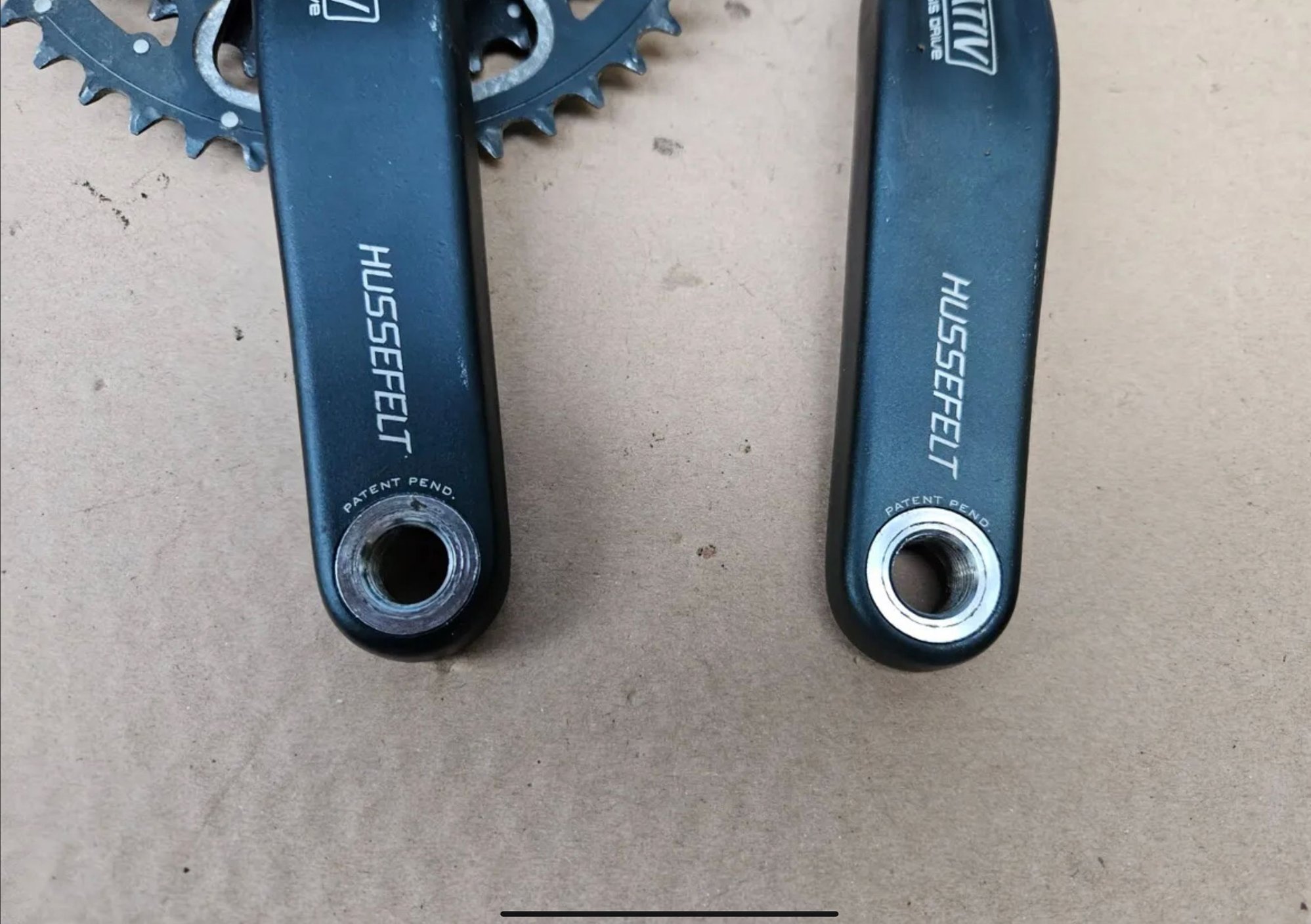
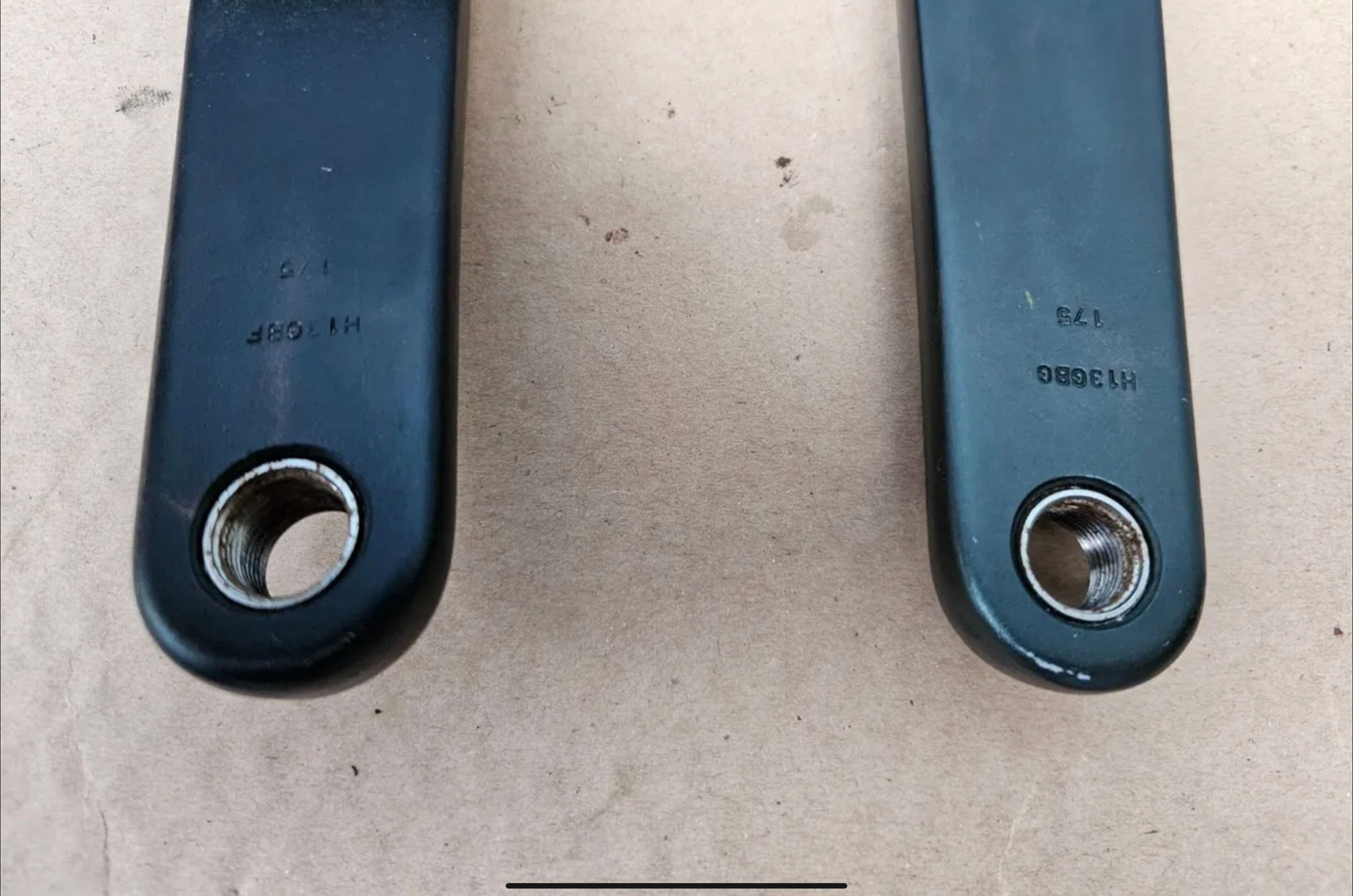
I have done several of my own as a test to see if it would work and because it did work. But you do have to choose cranks that are thick and you need a fair amount of length. A 185 to 160 would probably work. I was going from a 175 to a 140. Be warned that to do the work at home involves a lot of work and it’s easy to screw up. I start with 5 drills to step up the hole size to the 1/2” hole needed for the taps.
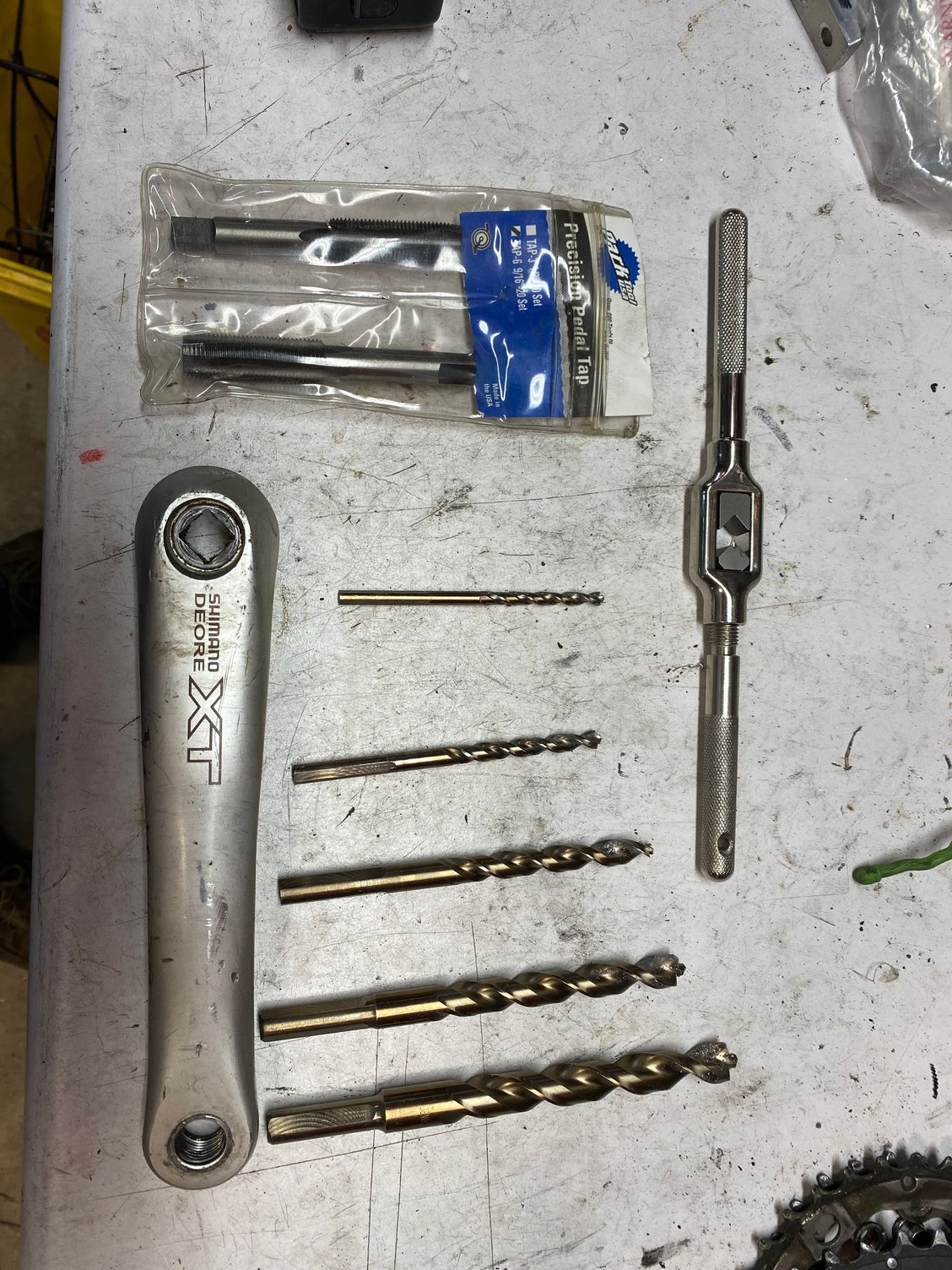
For me, one of the most difficult parts is to find, and mark, the center of the pilot hole.
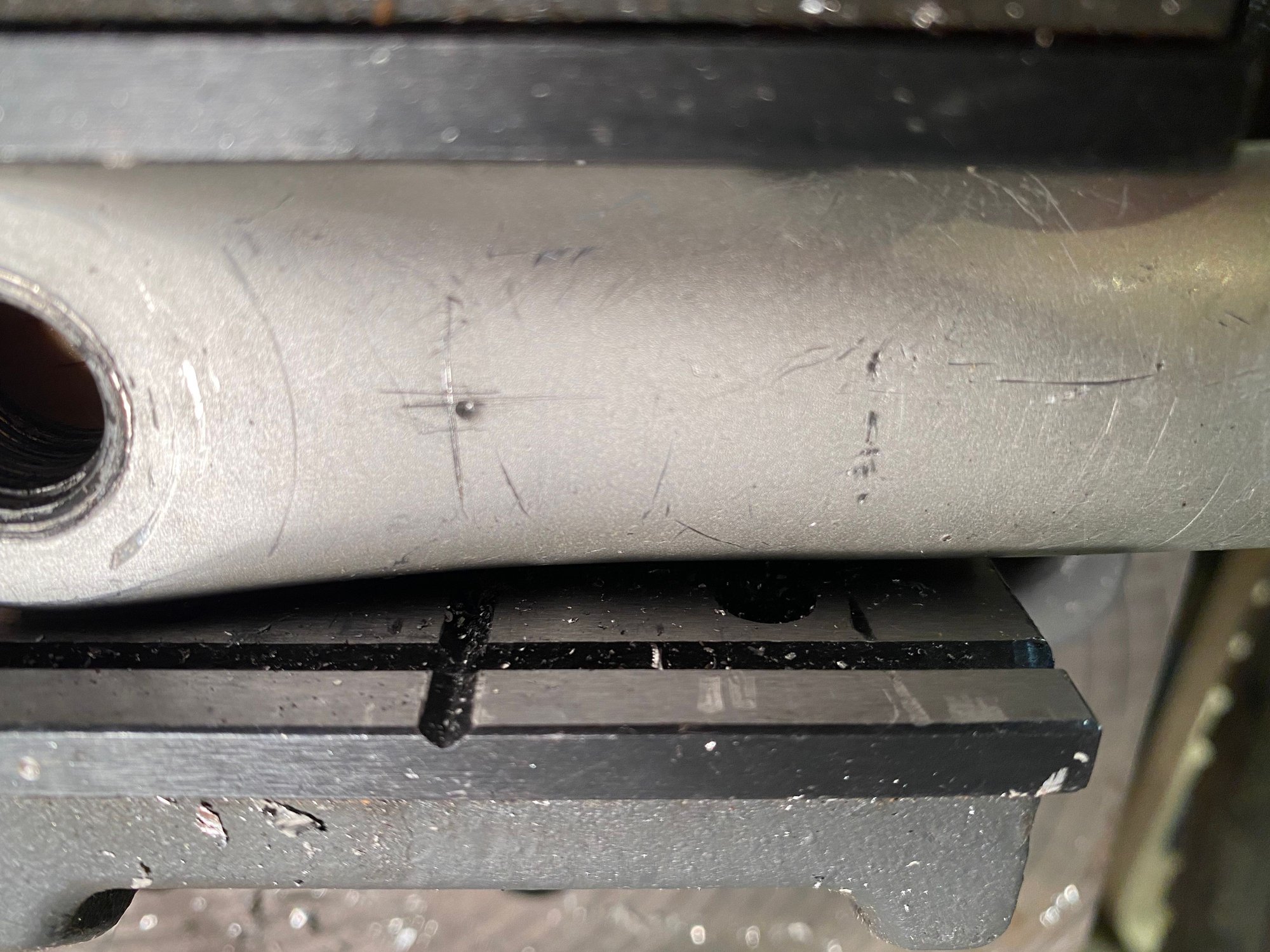
I use a vise to clamp the crank in place but I also make sure the vise is clamped to the drill press. You don’t want the last bit of the drill going through the metal to grab it and spin it around. Ask me how I know.
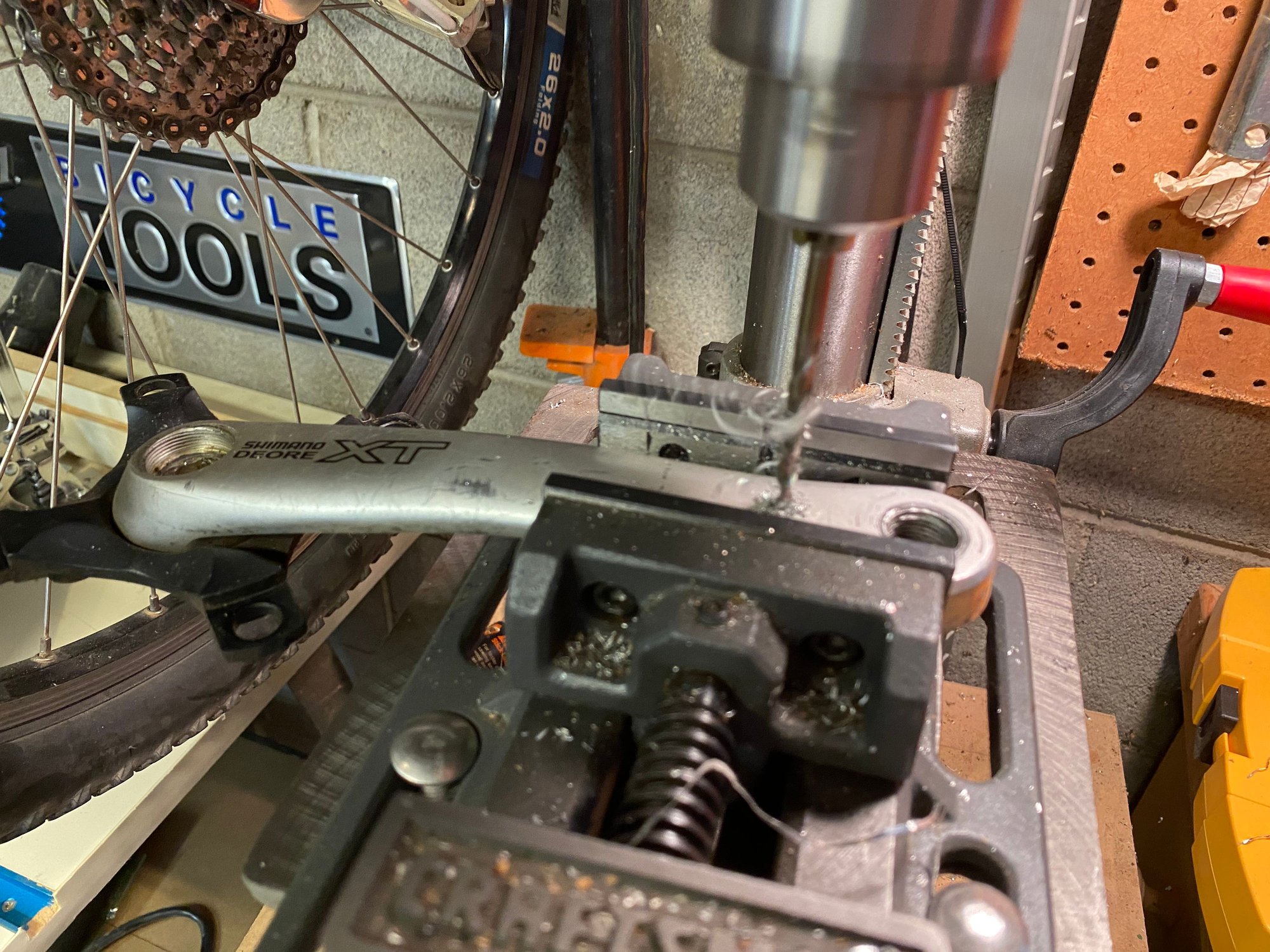
Centering the drill as you step up the drill size can also be difficult. The pilot hole is easy but I have to move the deck on the drill press to install the next larger (and longer) drill so there’s a bit of fiddling. I only have a small press without much of a throw on the drill shaft.
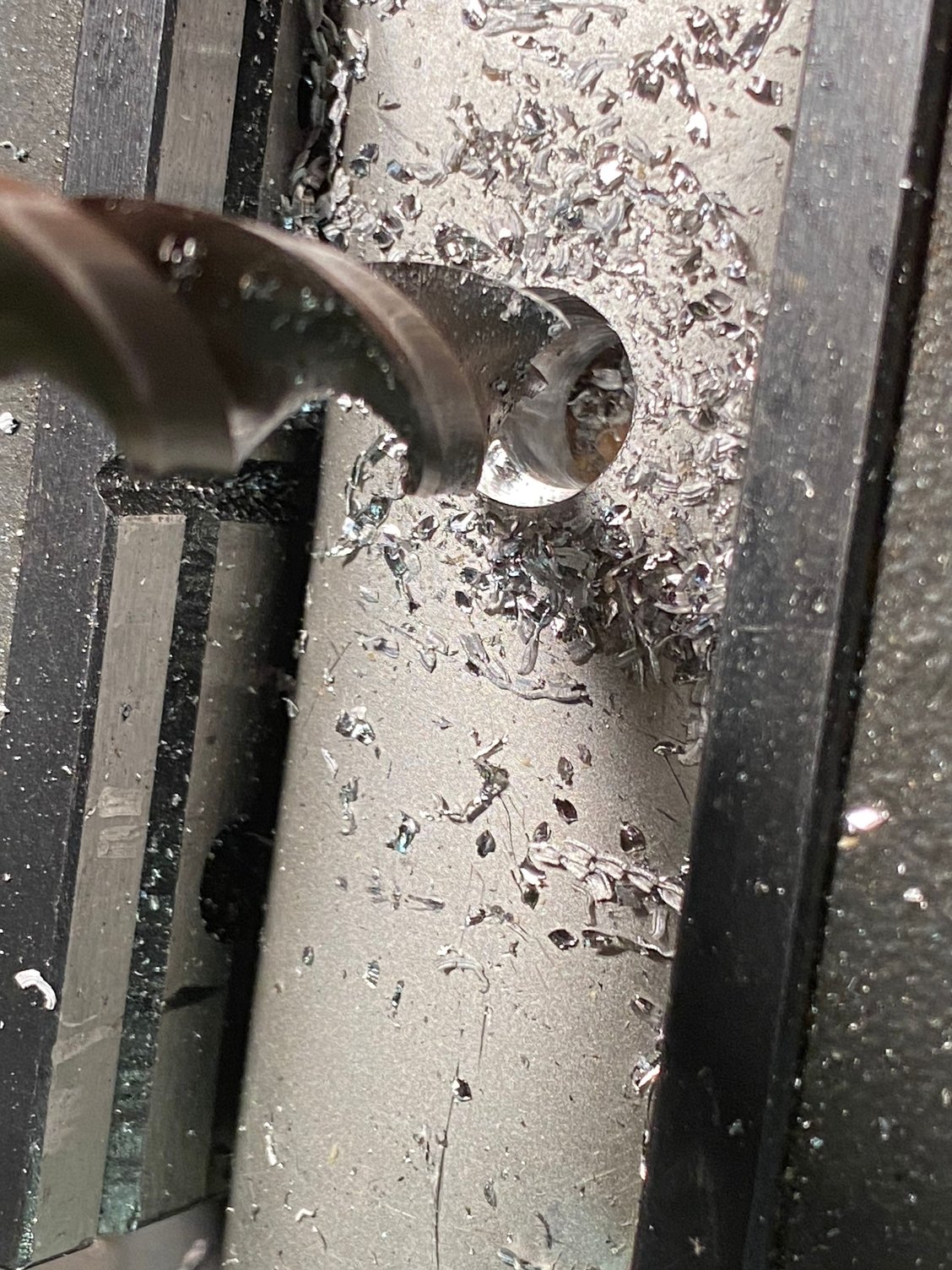
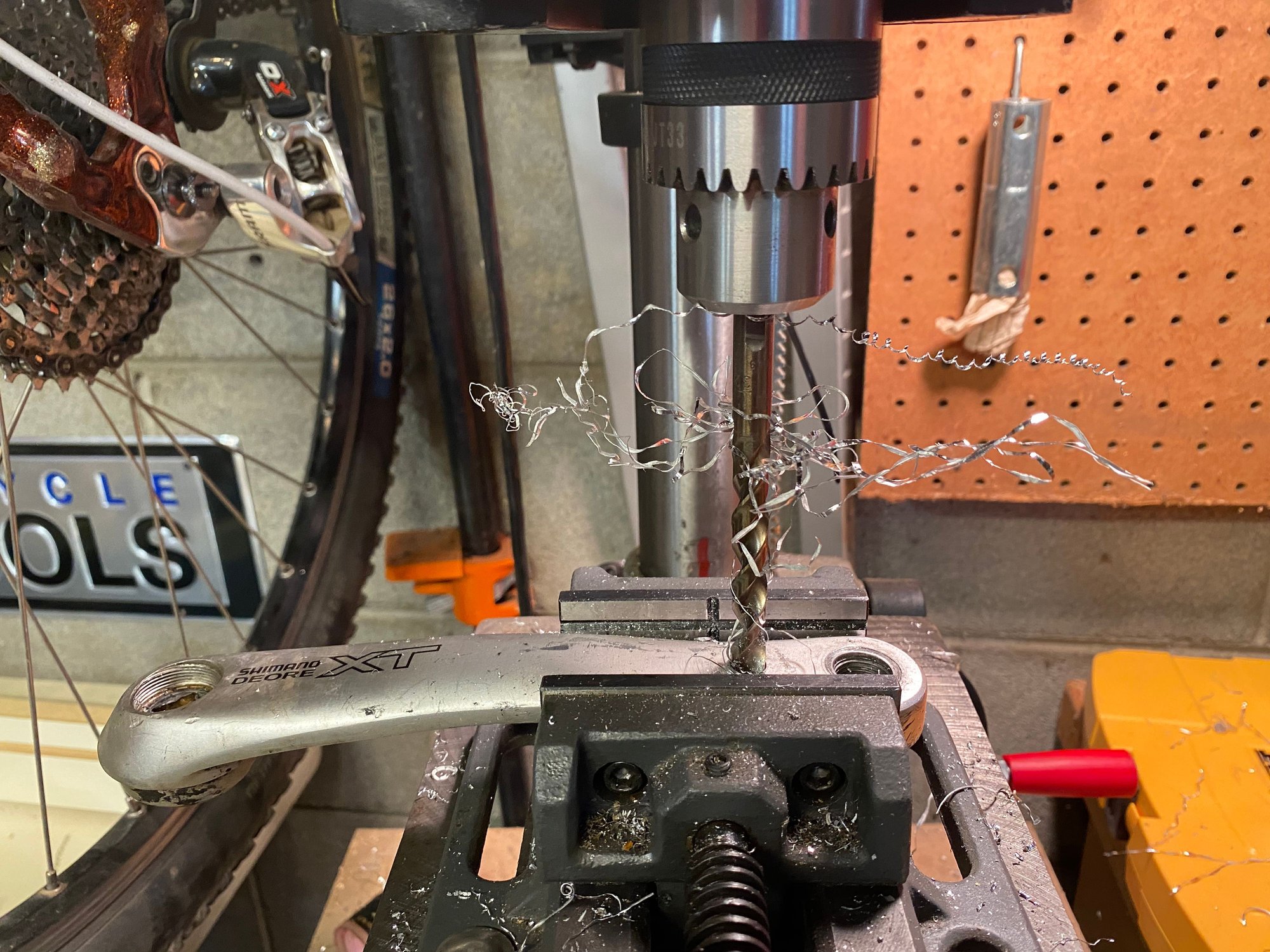
Tapping is another place where it’s easy to make errors. A few of my efforts have been not as good as others because the tap went in slightly crooked.
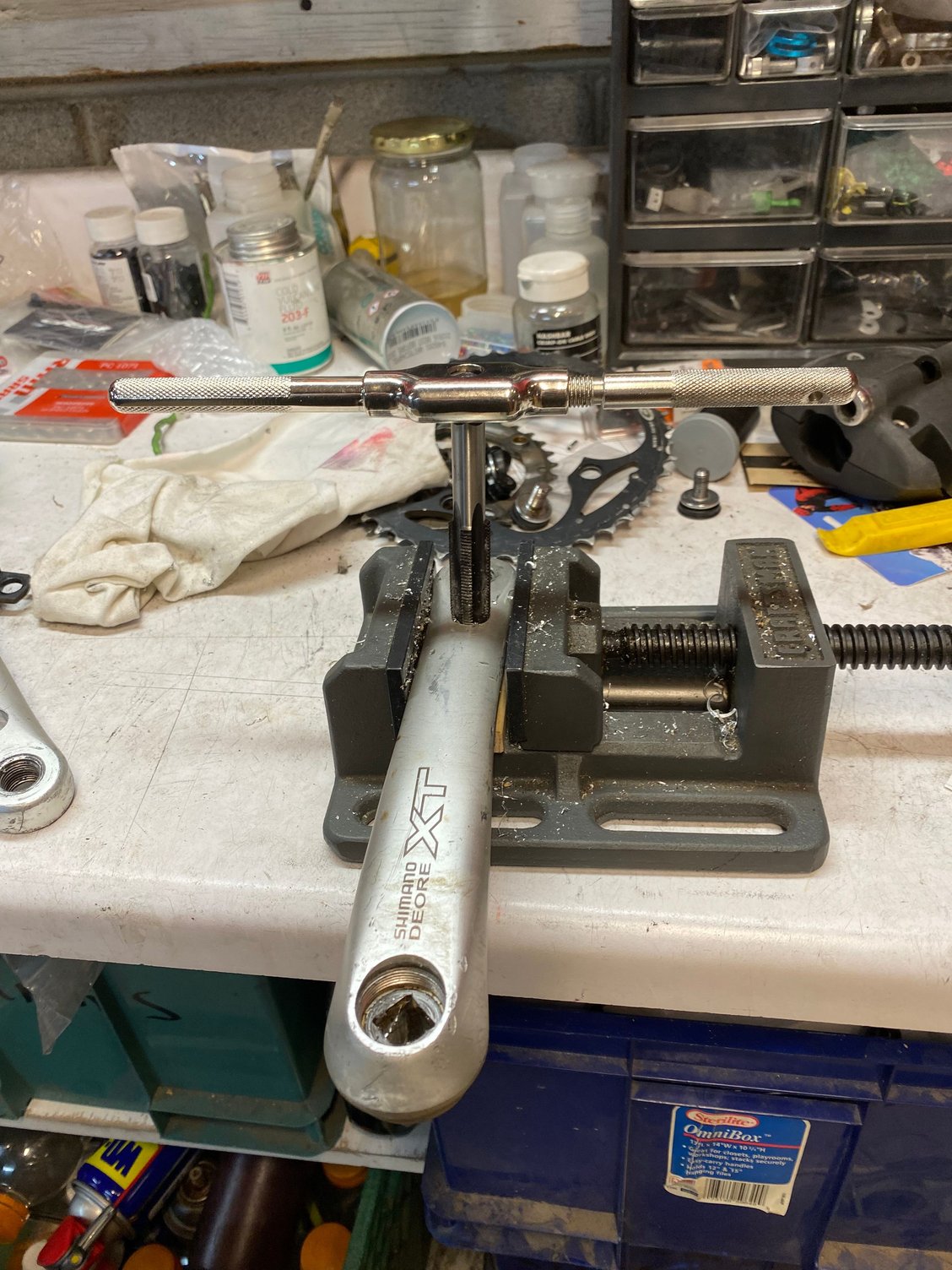
The final bit, for which I don’t have pictures, is cutting off the old threads. I tried a hand grinder. Don’t do that unless you have a really steady hand. I usually end up with a hacksaw and/or a Drimel and a lot of file work. It’s almost easier to drill and tap than to cut off the crank arm. Frankly, it’s easier, cheaper, and the results are better if you just send or buy cranks from Bikesmith.
By the way, my wife is only 5’ tall. The reason for shortening the cranks came out of my about ruining her knees on a tandem ride in Nebraska. We did 50 miles on the first day with her using a 175mm stoker crank. She was in agony at the end of the first day. We had done 35 to 40 mile days but nothing quite as long. We were able to do the second day but just. I found this article by Bikesmith about stokers and the problems they have with longer arms and started to experiment.
I then stated thinking about her other bikes and decided to change cranks on them too. Recently we went on a ride with a new bike with short cranks and she decided to try and climb a short hill standing up. She never stands to climb. She was shocked that she could actually do it and that it felt good! That’s a 140mm crank in comparison to a 165mm crank that she uses often. I have made cranks for all her bikes now.
__________________
Stuart Black
Dreamin' of Bemidji Down the Mississippi (in part)
Plan Epsilon Around Lake Michigan in the era of Covid
Gold Fever Three days of dirt in Colorado
Pokin' around the Poconos A cold ride around Lake Erie
Dinosaurs in Colorado A mountain bike guide to the Purgatory Canyon dinosaur trackway
Solo Without Pie. The search for pie in the Midwest.
Picking the Scablands. Washington and Oregon, 2005. Pie and spiders on the Columbia River!
Stuart Black
Dreamin' of Bemidji Down the Mississippi (in part)
Plan Epsilon Around Lake Michigan in the era of Covid
Gold Fever Three days of dirt in Colorado
Pokin' around the Poconos A cold ride around Lake Erie
Dinosaurs in Colorado A mountain bike guide to the Purgatory Canyon dinosaur trackway
Solo Without Pie. The search for pie in the Midwest.
Picking the Scablands. Washington and Oregon, 2005. Pie and spiders on the Columbia River!
01-29-24 | 08:38 AM
#21
Senior Member
Joined: Jan 2009
Posts: 4,415
Likes: 1,679
From: San Diego, CA
Stronglight also makes a decent crank in "kids" sizes, 155mm and shorter. STRONGLIGHT Impact Kid Chainset | £69.00 | Drivetrain | Chainsets | Spa Cycles
You can also just get the arms (and proper bottom bracket) and possibly use your current chainrings. STRONGLIGHT Impact Kid Cranks (pair) | £38.00 | Drivetrain | Chainsets | Spa Cycles They ship to the USA if you can't find a seller here.
You can also just get the arms (and proper bottom bracket) and possibly use your current chainrings. STRONGLIGHT Impact Kid Cranks (pair) | £38.00 | Drivetrain | Chainsets | Spa Cycles They ship to the USA if you can't find a seller here.
01-29-24 | 09:13 AM
#22

Senior Member
Joined: Dec 2008
Posts: 2,734
Likes: 2,792
From: Pioneer Valley
I’d suggest buying from a bike shop, which will help with sourcing the correct parts for your bike and setup. Even if you spend more than elsewhere, this is a valuable service in itself. If you’ve never picked out or installed a crankset, there are many compatibility issues that can arise.
Last edited by bboy314; 01-29-24 at 09:20 AM.
01-29-24 | 09:19 AM
#23
Senior Member
Joined: Oct 2023
Posts: 1,141
Likes: 1,019
Bikes: *'00 LS Vortex/Chorus 12/Campag Zondas*98 LS Classic - S&S couplers/Chorus 12/Rolf Vector Pros*'95 DeBernardi Cromor S/S, Mavic Open Pros on Phil Wood track hubs*
I have heard of some places that do shortening. I'm pretty sure the crank arms on my K2 can have a good bit taken out of them. There is a scallop in the arm, but I think they just use the same arm for multiple lengths because the scallop stops somewhere around 5 or 6 inches, then the rest if full thickness. These arms are 175mm and I'm thinking of taking them down to either 160 or 165, depending on what length still gives me sufficient structure.
On the Ridley, the FSA crank arms are carbon. Can carbon be shortened? And thanks for the length. Reading it now.
Ya, well I started out at 5'4" 30 years ago and I'm not getting any taller. I have kind of short legs anyway.
Thanks. There's still a bunch I don't understand about a lot of this terminology., like "chainline". I read that the other day but had no idea what it meant. Also, O.L.D.? Read about that but only the acronym. Haven't seen an explanation of what it stands for.
I heard something about a Shimano recall but I kind of assumed that anything currently for sale would be post redesign. I can't imagine any company allowing a product with a known recall to continue to be sold, but then again, maybe some retailers want their money and will let Shimano deal with that headache.
On the Ridley, the FSA crank arms are carbon. Can carbon be shortened? And thanks for the length. Reading it now.
Ya, well I started out at 5'4" 30 years ago and I'm not getting any taller. I have kind of short legs anyway.
Thanks. There's still a bunch I don't understand about a lot of this terminology., like "chainline". I read that the other day but had no idea what it meant. Also, O.L.D.? Read about that but only the acronym. Haven't seen an explanation of what it stands for.
I heard something about a Shimano recall but I kind of assumed that anything currently for sale would be post redesign. I can't imagine any company allowing a product with a known recall to continue to be sold, but then again, maybe some retailers want their money and will let Shimano deal with that headache.
Last edited by 13ollocks; 01-29-24 at 09:23 AM.
01-29-24 | 09:39 AM
#24
Mad bike riding scientist
Joined: Nov 2004
Posts: 29,183
Likes: 6,261
From: Denver, CO
Bikes: Some silver ones, a red one, a black and orange one, and a few titanium ones
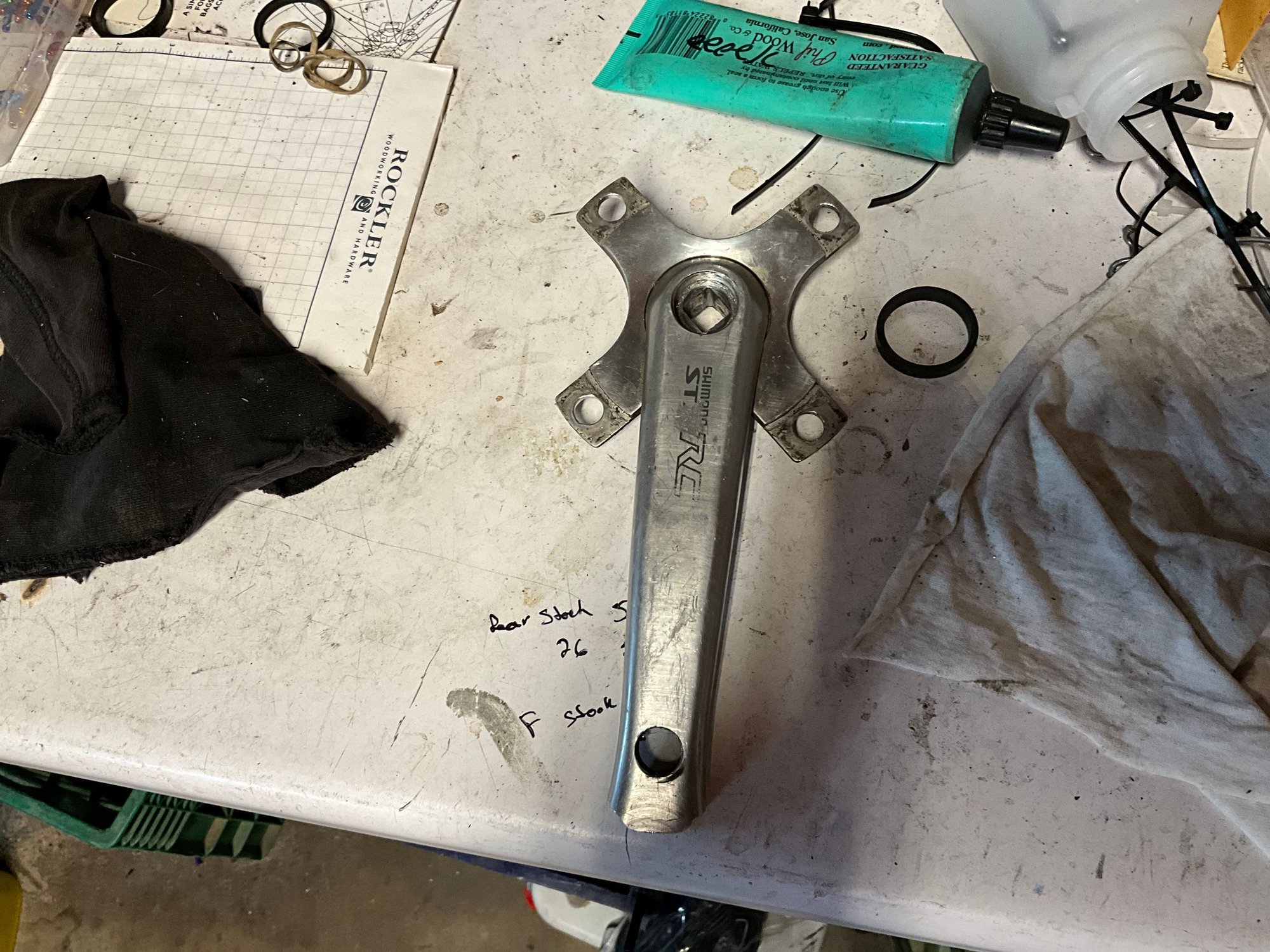
Pictures of the modified cranks. These are the Hussefelts on the tandem. One downside I’ve discovered is that the crank arms are short enough that they are difficult to get enough leverage to properly torque the crank arm bolts.
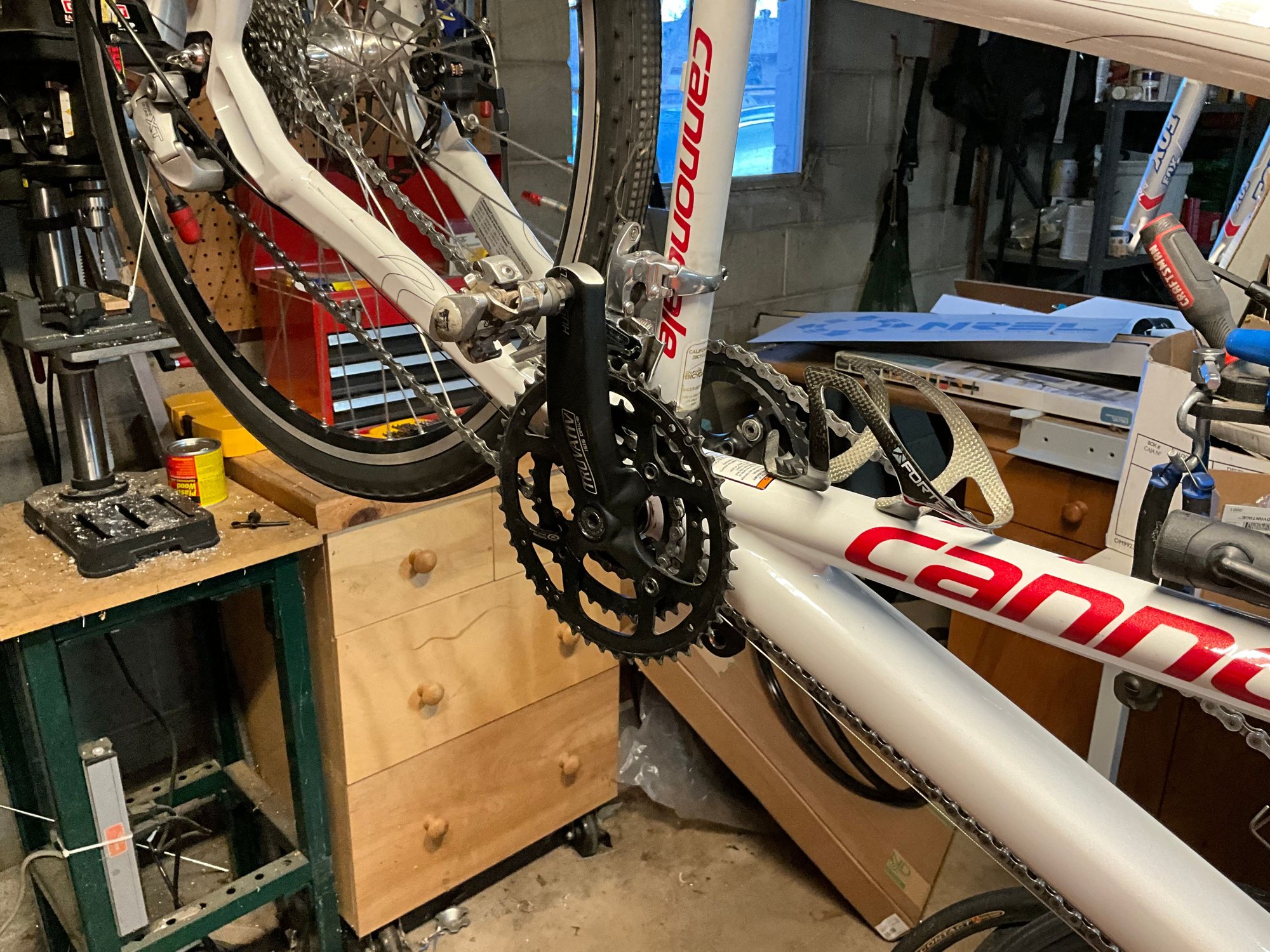
This is the only “before” I have of the tandem with the original 175mm cranks.
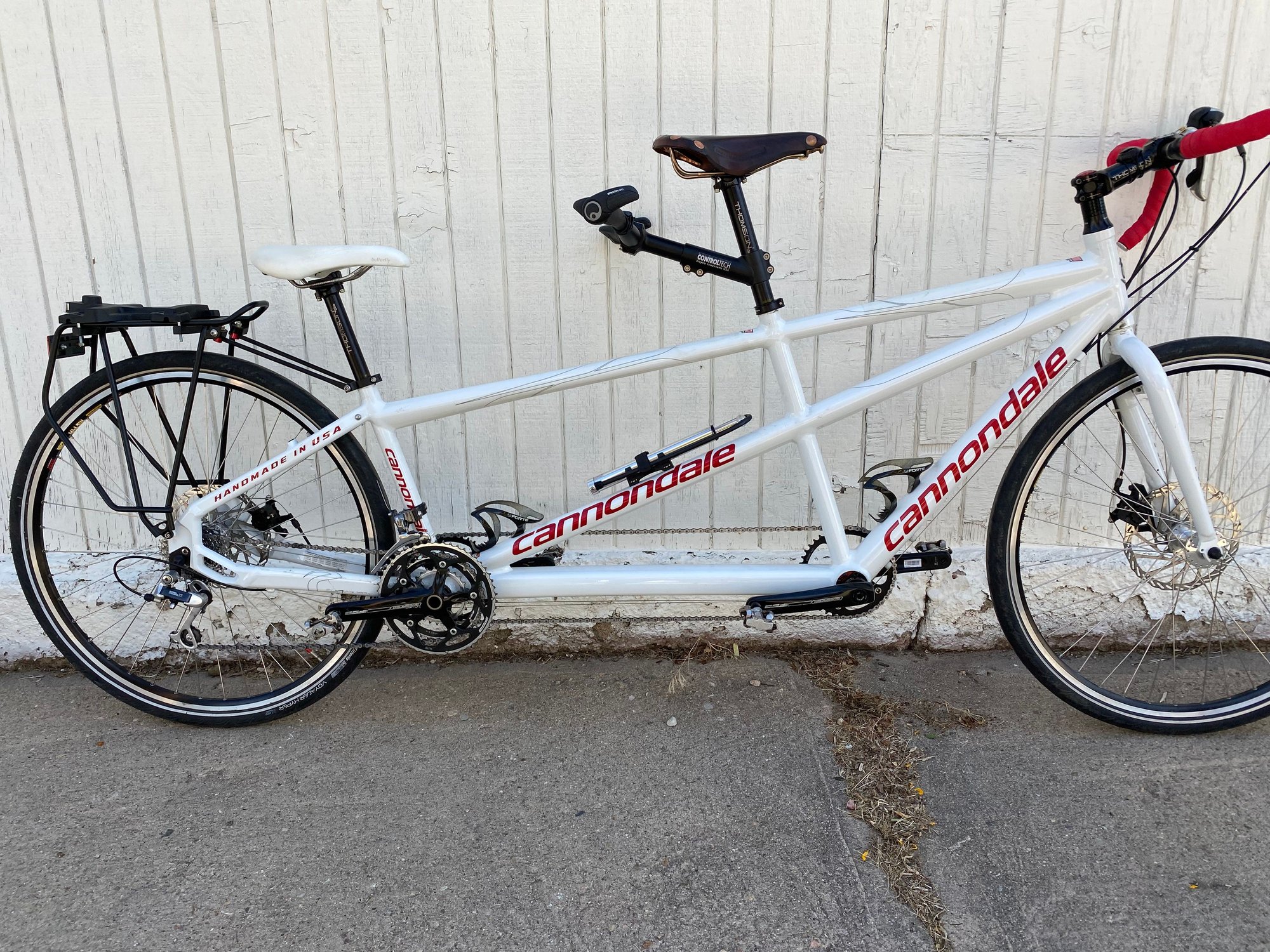
However, I did have someone take pictures of us riding and I measured my knee angle vs her angle. You can see that her leg has to fold up further when at the top of the stroke than mine does. It puts a lot of stress on her knees to do that 70 to 80 times per minute.
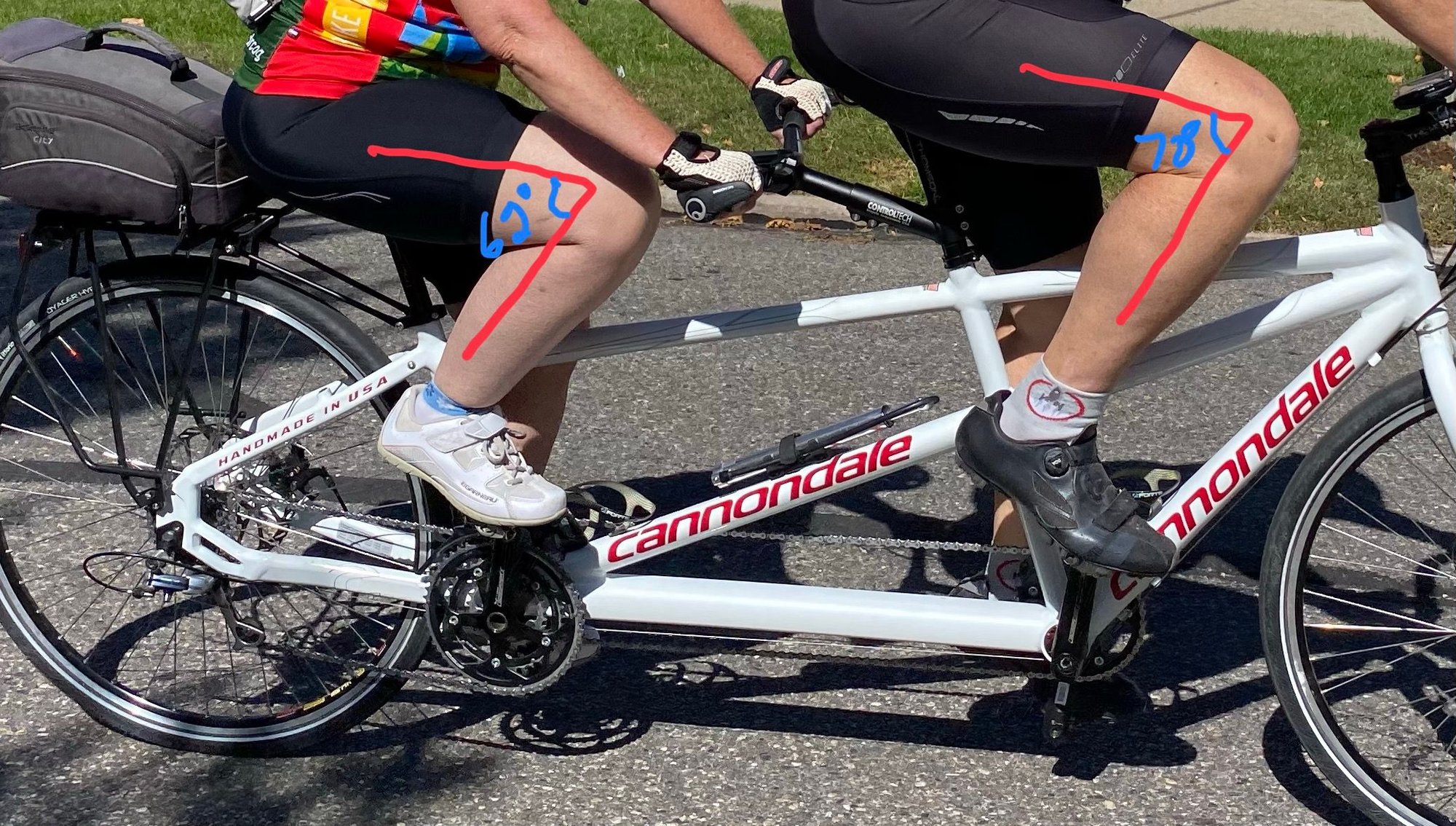
One of my efforts showing the finished product. I’m not very good at cutting off the excess. This one is better than some others.
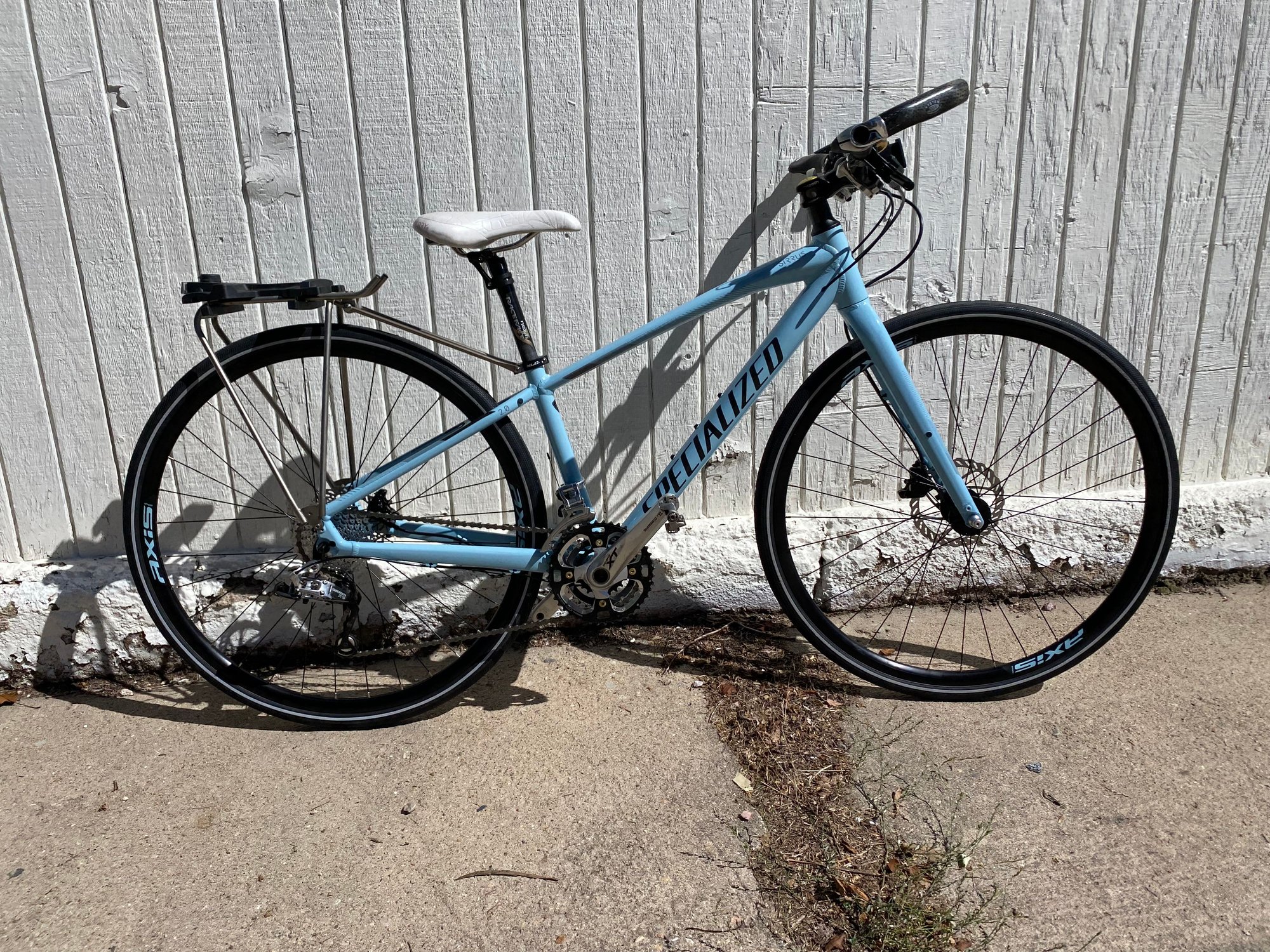
This series shows the progression of the shorter cranks. The first picture is of an unmodified Specialized Sirrus 2.0 in size XXS (my wife is very tiny). I think the original boat anchor cranks were 165mm.

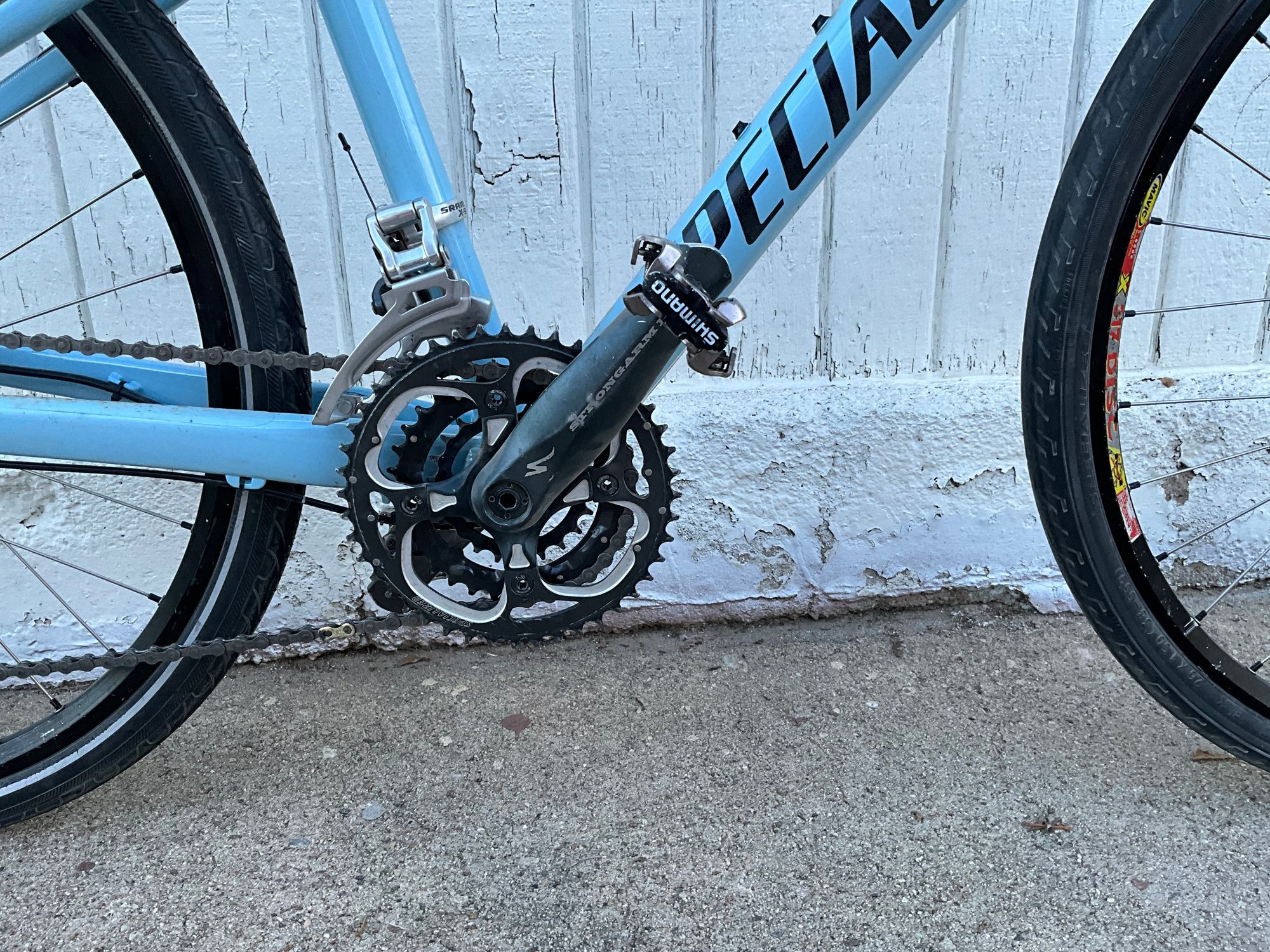
This is an XT Hollowtech II 165mm crank. You can see the length of the crank by how it covers the “P” on Specialized.
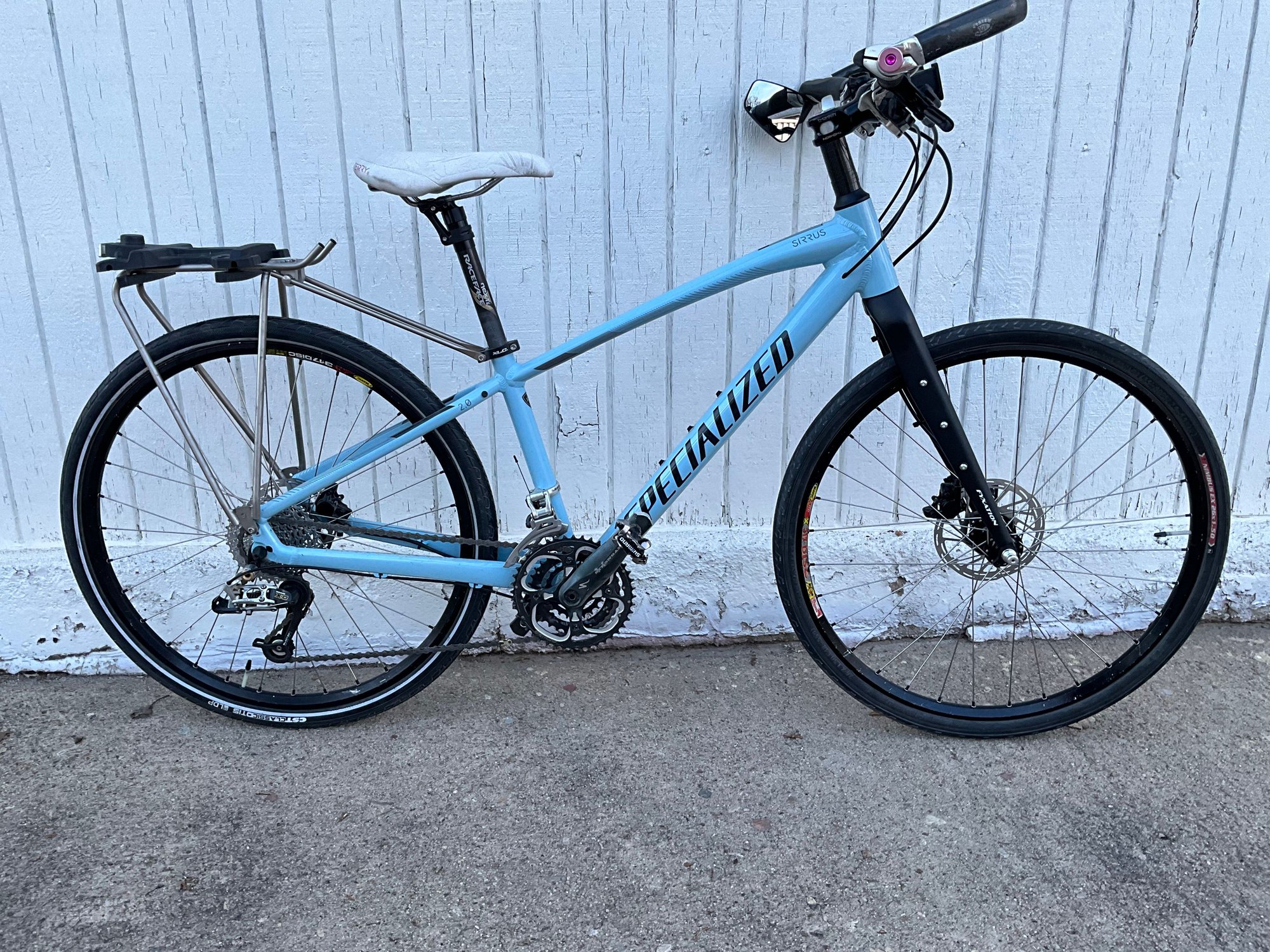
The bike as it sits now with cranks shortened to 140mm. You can see that the pedal hole is almost to the “S” now. The bike also sports 26” wheels instead of 700C wheels. The smaller wheels make the stand over better for her. I told you she was small With the shorter cranks, going to smaller wheels isn’t an issue on ground clearance.
This is the only “before” I have of the tandem with the original 175mm cranks.
However, I did have someone take pictures of us riding and I measured my knee angle vs her angle. You can see that her leg has to fold up further when at the top of the stroke than mine does. It puts a lot of stress on her knees to do that 70 to 80 times per minute.
One of my efforts showing the finished product. I’m not very good at cutting off the excess. This one is better than some others.
This series shows the progression of the shorter cranks. The first picture is of an unmodified Specialized Sirrus 2.0 in size XXS (my wife is very tiny). I think the original boat anchor cranks were 165mm.
This is an XT Hollowtech II 165mm crank. You can see the length of the crank by how it covers the “P” on Specialized.
The bike as it sits now with cranks shortened to 140mm. You can see that the pedal hole is almost to the “S” now. The bike also sports 26” wheels instead of 700C wheels. The smaller wheels make the stand over better for her. I told you she was small
With the shorter cranks, going to smaller wheels isn’t an issue on ground clearance.
__________________
Stuart Black
Dreamin' of Bemidji Down the Mississippi (in part)
Plan Epsilon Around Lake Michigan in the era of Covid
Gold Fever Three days of dirt in Colorado
Pokin' around the Poconos A cold ride around Lake Erie
Dinosaurs in Colorado A mountain bike guide to the Purgatory Canyon dinosaur trackway
Solo Without Pie. The search for pie in the Midwest.
Picking the Scablands. Washington and Oregon, 2005. Pie and spiders on the Columbia River!
Stuart Black
Dreamin' of Bemidji Down the Mississippi (in part)
Plan Epsilon Around Lake Michigan in the era of Covid
Gold Fever Three days of dirt in Colorado
Pokin' around the Poconos A cold ride around Lake Erie
Dinosaurs in Colorado A mountain bike guide to the Purgatory Canyon dinosaur trackway
Solo Without Pie. The search for pie in the Midwest.
Picking the Scablands. Washington and Oregon, 2005. Pie and spiders on the Columbia River!
Last edited by cyccommute; 01-29-24 at 09:51 AM.
01-29-24 | 09:44 AM
#25
Mad bike riding scientist
Joined: Nov 2004
Posts: 29,183
Likes: 6,261
From: Denver, CO
Bikes: Some silver ones, a red one, a black and orange one, and a few titanium ones
Another source of shorter cranks is da Vinci Tandems. They have a crank with 3 holes in two different lengths if you can’t decide and don’t want to ruin a crank to try to make one. The length are 130/150/170mm or 120/140/160mm. They sell both tandem sets (spiders on both sides) or single bike cranks.
__________________
Stuart Black
Dreamin' of Bemidji Down the Mississippi (in part)
Plan Epsilon Around Lake Michigan in the era of Covid
Gold Fever Three days of dirt in Colorado
Pokin' around the Poconos A cold ride around Lake Erie
Dinosaurs in Colorado A mountain bike guide to the Purgatory Canyon dinosaur trackway
Solo Without Pie. The search for pie in the Midwest.
Picking the Scablands. Washington and Oregon, 2005. Pie and spiders on the Columbia River!
Stuart Black
Dreamin' of Bemidji Down the Mississippi (in part)
Plan Epsilon Around Lake Michigan in the era of Covid
Gold Fever Three days of dirt in Colorado
Pokin' around the Poconos A cold ride around Lake Erie
Dinosaurs in Colorado A mountain bike guide to the Purgatory Canyon dinosaur trackway
Solo Without Pie. The search for pie in the Midwest.
Picking the Scablands. Washington and Oregon, 2005. Pie and spiders on the Columbia River!