Bottom bracket threading, explain it to me.
 06-20-25 | 05:58 PM
#1
Thread Starter
Newbie

Joined: Dec 2017
Posts: 63
Likes: 18
Bottom bracket threading, explain it to me.
I had a bottom bracket cup loosen up on me today on a ride. It needs a somewhat specific spanner wrench to tighten which I didn't have on me, and which is probably why it came loose in the first place since I can't properly torque it. To make things worse this is an eccentric BB for a single speed conversion, which meant the chain kept tightening and the crank spindle would be out square.
Now my question is... I thought that BB reverse threading is done so that the cups self tighten as you pedal, am I wrong?
But if I look at it from the drive side for example, you tighten the BB cup CCW and you pedal CW. So doesn't pedaling actually loosen the BB? What am I missing here? Sorry if this is a dumb question
Now my question is... I thought that BB reverse threading is done so that the cups self tighten as you pedal, am I wrong?
But if I look at it from the drive side for example, you tighten the BB cup CCW and you pedal CW. So doesn't pedaling actually loosen the BB? What am I missing here? Sorry if this is a dumb question
 06-20-25 | 06:12 PM
#2

Senior Member


Joined: Apr 2016
Posts: 3,835
Likes: 1,769
I had a bottom bracket cup loosen up on me today on a ride. It needs a somewhat specific spanner wrench to tighten which I didn't have on me, and which is probably why it came loose in the first place since I can't properly torque it. To make things worse this is an eccentric BB for a single speed conversion, which meant the chain kept tightening and the crank spindle would be out square.
Now my question is... I thought that BB reverse threading is done so that the cups self tighten as you pedal, am I wrong?
But if I look at it from the drive side for example, you tighten the BB cup CCW and you pedal CW. So doesn't pedaling actually loosen the BB? What am I missing here? Sorry if this is a dumb question
Now my question is... I thought that BB reverse threading is done so that the cups self tighten as you pedal, am I wrong?
But if I look at it from the drive side for example, you tighten the BB cup CCW and you pedal CW. So doesn't pedaling actually loosen the BB? What am I missing here? Sorry if this is a dumb question
06-20-25 | 06:17 PM
#3
Senior Member

Joined: May 2019
Posts: 3,958
Likes: 3,185
From: Bloomington, IN
Bikes: Paramount, Faggin, Ochsner, Rossin, Ciocc
The BB threads are designed to unthread as you pedal forward in the event a bearing should seize up so that you won't break an ankle or other body part.
If the BB is designed for an eccentric insert to change from Ashtabula cups to three piece cranks, then there should be a way to lock the adaptor into place as in a pair of clamp bolts for each side of the eccentric insert.
If that is not present you will need to change the insert to one that can be fixed in place. The fixed ones centers the insert and the chain tension is adjusted by chain length. HTH, Smiles, MH
If the BB is designed for an eccentric insert to change from Ashtabula cups to three piece cranks, then there should be a way to lock the adaptor into place as in a pair of clamp bolts for each side of the eccentric insert.
If that is not present you will need to change the insert to one that can be fixed in place. The fixed ones centers the insert and the chain tension is adjusted by chain length. HTH, Smiles, MH
06-20-25 | 06:29 PM
#4

Senior Member

Joined: Jul 2005
Posts: 4,987
Likes: 709
From: Boulder County, CO
Bikes: '80 Masi Gran Criterium, '12 Trek Madone, early '60s Frejus track
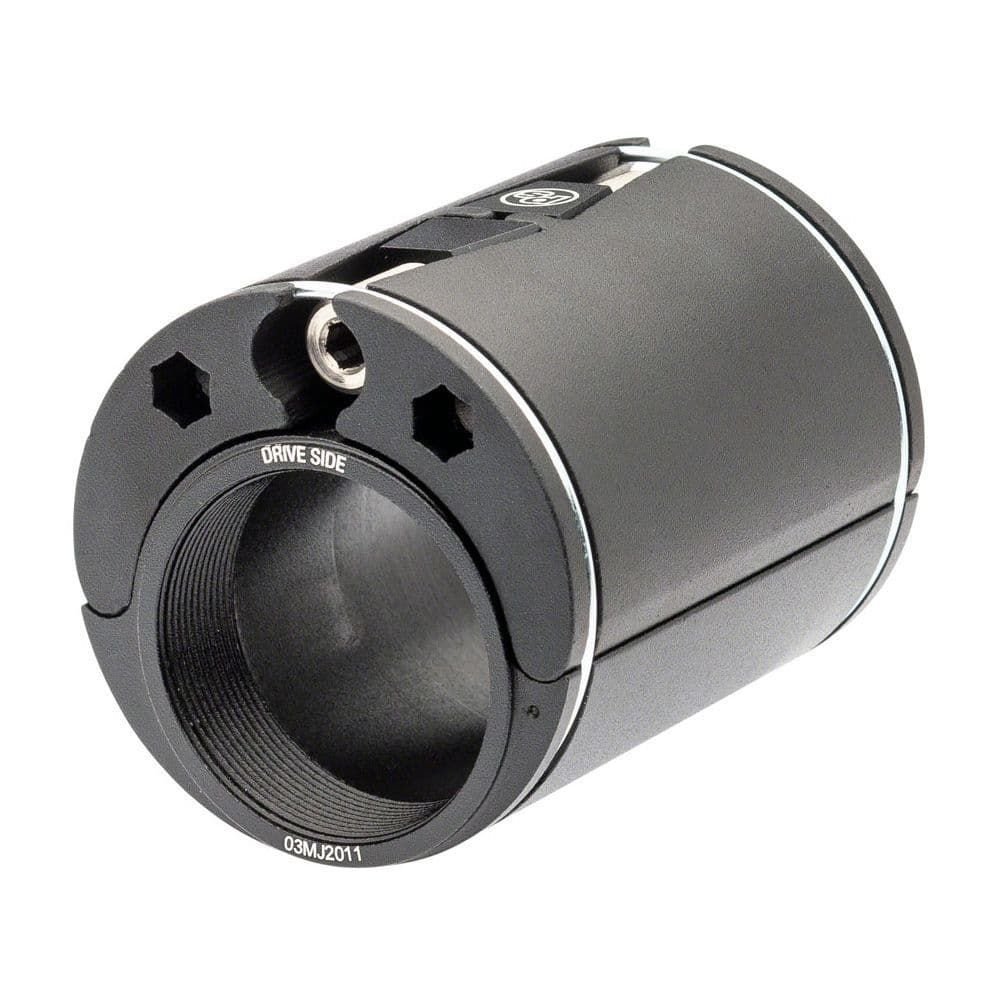
Eccentric bottom brackets rotate freely inside the bottom bracket shell. Then spindle is eccentric, that is, off-center, so you can position the unit for the correct chain line and chain tension. Then, when you find that point, you tighten the bolts, usually Allen-head, that hold it in place.
06-20-25 | 06:31 PM
#5

Senior Member


Joined: Apr 2011
Posts: 12,648
Likes: 4,791
The cups self tighten because the ball bearings act like a sun and planetary gear system.

But we don't rely on this effect to set or maintain the bearing adjustment. It mainly helps keep the fixed cup from loosening.
But we don't rely on this effect to set or maintain the bearing adjustment. It mainly helps keep the fixed cup from loosening.
 06-20-25 | 06:34 PM
#6
Thread Starter
Newbie
Joined: Dec 2017
Posts: 63
Likes: 18
The BB threads are designed to unthread as you pedal forward in the event a bearing should seize up so that you won't break an ankle or other body part.
If the BB is designed for an eccentric insert to change from Ashtabula cups to three piece cranks, then there should be a way to lock the adaptor into place as in a pair of clamp bolts for each side of the eccentric insert.
If that is not present you will need to change the insert to one that can be fixed in place. The fixed ones centers the insert and the chain tension is adjusted by chain length. HTH, Smiles, MH
If the BB is designed for an eccentric insert to change from Ashtabula cups to three piece cranks, then there should be a way to lock the adaptor into place as in a pair of clamp bolts for each side of the eccentric insert.
If that is not present you will need to change the insert to one that can be fixed in place. The fixed ones centers the insert and the chain tension is adjusted by chain length. HTH, Smiles, MH
So you're saying the cups are designed to loosen as you pedal? This makes sense in my head as I look at it, but I always thought it was the opposite

 06-20-25 | 08:58 PM
#9
Senior Member
Joined: Apr 2011
Posts: 12,648
Likes: 4,791
06-20-25 | 09:04 PM
#10
Senior Member
Joined: Apr 2011
Posts: 12,648
Likes: 4,791
I wouldn't say it is 'designed' to work that way, but it is a happy coincidence that a seized bearing does the opposite of the self tightening tendency of a working bearing.
06-20-25 | 09:24 PM
#11
Thread Starter
Newbie
Joined: Dec 2017
Posts: 63
Likes: 18
Also in that gif I'm assuming the orange gear is the spindle, the light green are the ball bearings and the dark green is the cup, correct? Except that in that illustration the green gears are spinning around fixed pins, while in a bearing the balls just roll forward
06-20-25 | 09:54 PM
#12

Really Old Senior Member
Joined: Feb 2007
Posts: 14,631
Likes: 1,882
From: Mid Willamette Valley, Orygun
Bikes: 87 RockHopper,2008 Specialized Globe. Both upgraded to 9 speeds. 2019 Giant Explore E+3
They had to keep the same threading even though it became moot so the newer tech would fit would fit the older BB's.
 06-20-25 | 11:13 PM
#13
Senior Member
Joined: Apr 2011
Posts: 12,648
Likes: 4,791
Yes but are you talking about a cup and cone bottom bracket? This a sealed cartridge bearing BB.
Also in that gif I'm assuming the orange gear is the spindle, the light green are the ball bearings and the dark green is the cup, correct? Except that in that illustration the green gears are spinning around fixed pins, while in a bearing the balls just roll forward
Also in that gif I'm assuming the orange gear is the spindle, the light green are the ball bearings and the dark green is the cup, correct? Except that in that illustration the green gears are spinning around fixed pins, while in a bearing the balls just roll forward
The gears behave just like bearings - they are similarly trapped and turn in the same plane. The difference is that the outer gear ring - the cup - is not allowed to rotate, so the balls don't purely roll, but backslip. The gears illustrate what would happen if the cup had no friction and was threaded the wrong way, like Italian fixed cups.
If bearings have too much preload, that slipping becomes that much harder and the bearing have greater traction on the cups, increasing the transfer of motion to the cups.
06-21-25 | 01:33 AM
#15
Highly Enriched Driftium
Joined: Apr 2017
Posts: 6,708
Likes: 2,173
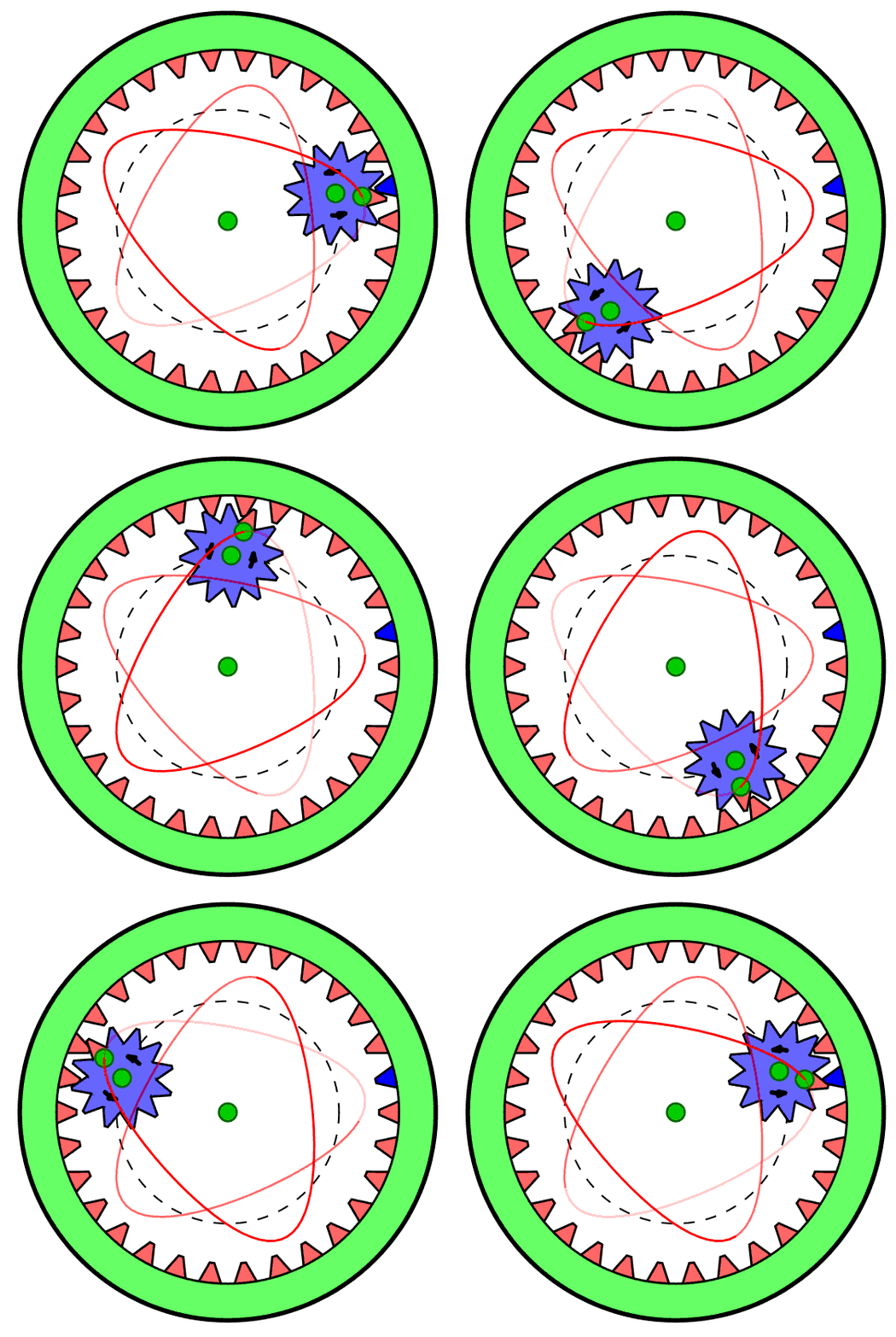
The bottom bracket cup is the smaller gear, in the animation above, on the right (drive) side of the BB; As you rotate the spindle clockwise (under pedal force, a radial load that is constantly rotating clockwise), the cup precesses counter-clockwise, or to the left, so that's why you need left-hand (tightening) threads on the right side.
 06-21-25 | 01:37 AM
#17
Highly Enriched Driftium
Joined: Apr 2017
Posts: 6,708
Likes: 2,173
Well, an actual animation of the BB cup in a slightly larger shell, would be better. HAH, here it is:
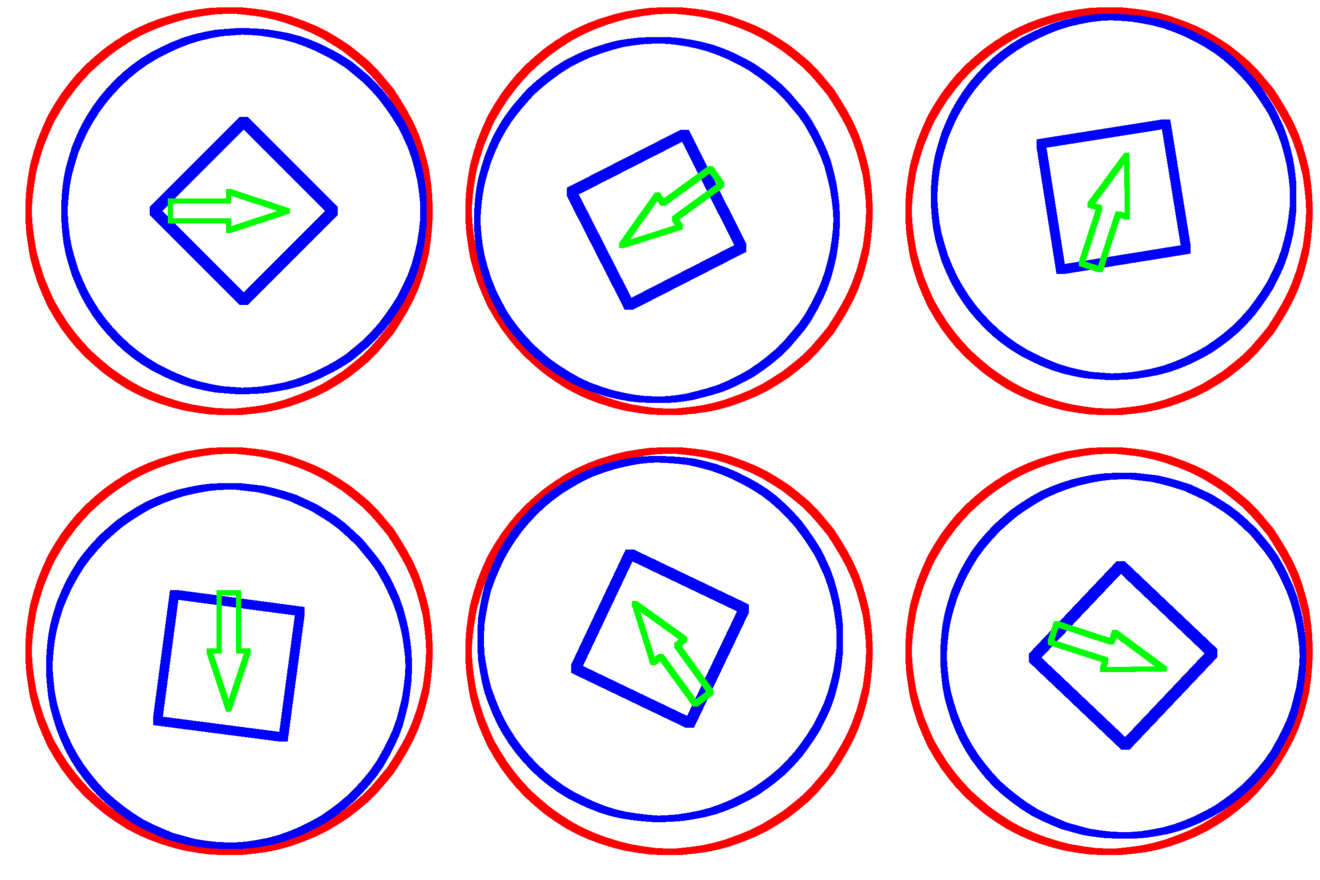
EDIT: This pictured example would represent the non-drive (left) side of the bottom bracket; The pedaling force forward is to the left, counter-clockwise, and thus same is the closest contact point between the cup (blue) and the shell (red) due to radial load at the bottom bracket, indicated by the green arrow. But then notice how the precession causes the cup to slowly rotate opposite, clockwise, to the right, thus the left side of the BB requires right hand thread to keep tight. The drive (right) side is opposite, precession to the left, so requires left hand thread.
EDIT: This pictured example would represent the non-drive (left) side of the bottom bracket; The pedaling force forward is to the left, counter-clockwise, and thus same is the closest contact point between the cup (blue) and the shell (red) due to radial load at the bottom bracket, indicated by the green arrow. But then notice how the precession causes the cup to slowly rotate opposite, clockwise, to the right, thus the left side of the BB requires right hand thread to keep tight. The drive (right) side is opposite, precession to the left, so requires left hand thread.
Last edited by Duragrouch; 06-22-25 at 09:36 PM.
06-21-25 | 01:48 AM
#19
Highly Enriched Driftium
Joined: Apr 2017
Posts: 6,708
Likes: 2,173
- the rotating radial load from pedaling, acting on...
- sufficient radial clearance between the threaded cup and threaded BB shell.
No-bearing example: Car wheels used to have left hand lug studs and nuts on left side due to precession. Tapered seat lug nuts eliminated the clearance required for precession and all cars suddenly had right hand lug threading on both sides. Heavy trucks that use flat-seat lugs still have left-left lugs, and even some with taper seats just to be on the safe side, in case non-taper wheels are mounted. Close-fit hub-piloting wheels also help.
06-21-25 | 02:06 AM
#21
Highly Enriched Driftium
Joined: Apr 2017
Posts: 6,708
Likes: 2,173
Last edited by Duragrouch; 06-21-25 at 02:10 AM.
06-21-25 | 02:50 AM
#22
Senior Member
Joined: Apr 2019
Posts: 3,835
Likes: 1,456
From: UK
No they’re rotating in the opposite direction to the spindle, while they move in the same direction
although I think I get the thing about the position of the force applied shifting around the diameter of the cup as the crank moves.
although I think I get the thing about the position of the force applied shifting around the diameter of the cup as the crank moves.
06-21-25 | 03:06 AM
#23
Highly Enriched Driftium
Joined: Apr 2017
Posts: 6,708
Likes: 2,173
There another thread right now, suddenly spindle got tight; Lockring had loosened just enough that the cup promptly tightened on the bearings, due to precession.
06-21-25 | 04:44 AM
#24

Senior member
Joined: Oct 2004
Posts: 8,368
Likes: 886
From: Oakville Ontario
Those gave way to hub piloted wheels in the late 80s. All right hand threads, no ball seats, and nuts with bell washers. One set of nuts secures both inner and outer wheel. No inner cone to secure the inside wheel first.
Of course, I refer to American units. Things may be done differently elsewhere.
06-21-25 | 06:45 AM
#25
Senior Member
Joined: Apr 2016
Posts: 3,835
Likes: 1,769