


Does Frame Saver Stop Existing Rust?
 01-16-14 | 09:16 PM
#1

Thread Starter
Extraordinary Magnitude


Joined: Aug 2009
Posts: 14,081
Likes: 2,135
From: Waukesha WI
Bikes: 1978 Trek TX700; 1978/79 Trek 736; 1984 Specialized Stumpjumper Sport; 1984 Schwinn Voyageur SP; 1985 Trek 620; 1985 Trek 720; 1986 Trek 400 Elance; 1987 Schwinn High Sierra; 1990 Miyata 1000LT
Does Frame Saver Stop Existing Rust?
I've read in various places on the internet that JP Weigle's Frame Saver will stop existing rust.
This is something I'd like to believe, however, it doesn't really make sense and my common sense tells me it's not true. I don't see a JP Weigle web page- so I don't see anything official from the company- just people talking.
I recently bought a bike that looks quite pretty on the outside, but has some rust issues in the seat tube- I assume it's in the other tubes as well.
So is this truth or fiction?
This is something I'd like to believe, however, it doesn't really make sense and my common sense tells me it's not true. I don't see a JP Weigle web page- so I don't see anything official from the company- just people talking.
I recently bought a bike that looks quite pretty on the outside, but has some rust issues in the seat tube- I assume it's in the other tubes as well.
So is this truth or fiction?
__________________
*Recipient of the 2006 Time Magazine "Person Of The Year" Award*
Commence to jigglin’ huh?!?!
"But hey, always love to hear from opinionated amateurs." -says some guy to Mr. Marshall.
Commence to jigglin’ huh?!?!
"But hey, always love to hear from opinionated amateurs." -says some guy to Mr. Marshall.

 01-16-14 | 09:34 PM
#3

Senior Member
Joined: Nov 2010
Posts: 22,994
Likes: 10,497
From: Sacramento, CA
Bikes: old ones
....ahem. Since rust on steel is an oxidative process, almost anything that
excludes oxygen from the surface will slow rust down quite a bit.
I'm not certain you can altogether stop rust on anything, once it has begun.
A lot depends on the conditions to which your newly treated surface will be exposed.
Here in Sacratomato, it's pretty dry a lot of the year, so rust is less of an issue for me.
Thanks for this opportunity to once again hold forth in the most supercilious of manners.
excludes oxygen from the surface will slow rust down quite a bit.
I'm not certain you can altogether stop rust on anything, once it has begun.
A lot depends on the conditions to which your newly treated surface will be exposed.
Here in Sacratomato, it's pretty dry a lot of the year, so rust is less of an issue for me.
Thanks for this opportunity to once again hold forth in the most supercilious of manners.
01-16-14 | 09:59 PM
#4

Senior Member
Joined: May 2010
Posts: 5,609
Likes: 2,477
From: Bastrop Texas
Bikes: Univega, Peu P6, Peu PR-10, Ted Williams, Peu UO-8, Peu UO-18 Mixte, Peu Dolomites
There was a Huffy bicycle at the end of a bicycle parking stand out side of the medical school at UTMB Galveston (its right on Galveston Bay) - Only major components of the frame and crank were left - The aluminium wheels and chain powdered remnants on the side walk - No one dared to move it and we often stared at it as a fine piece of art - In 1990 it had been there only 4 years and by 1998 it was completely dissolved and only a rust stain on the side walk - As we transitioned in and out of the school we became like it a myth - Lesson being - That's what happens to metal when bathed in sea mist twice a day...
I also remember the remnants of what appeared to be a 1950's schwinn bicycle chained to a Barbed wire fence in an empty field outside of the old ER in Ft Stockten Tx - The staff said it has been there before the hospital or even the highway had been built (40 yrs?) - That's what happens to metal in South West Texas...
Why am I even writing about this...
I guess a small bit of rust is not a big thing in Ft Stockten Tx but I think I would really chase down clean and seal off as much rust as I could in Galveston...
I also remember the remnants of what appeared to be a 1950's schwinn bicycle chained to a Barbed wire fence in an empty field outside of the old ER in Ft Stockten Tx - The staff said it has been there before the hospital or even the highway had been built (40 yrs?) - That's what happens to metal in South West Texas...
Why am I even writing about this...
I guess a small bit of rust is not a big thing in Ft Stockten Tx but I think I would really chase down clean and seal off as much rust as I could in Galveston...
01-16-14 | 10:24 PM
#5
Senior Member
Joined: Apr 2009
Posts: 39,897
Likes: 3,865
From: New Rochelle, NY
Bikes: too many bikes from 1967 10s (5x2)Frejus to a Sumitomo Ti/Chorus aluminum 10s (10x2), plus one non-susp mtn bike I use as my commuter
But, new or old, polished, or rough, unrusted, or some rust, block the oxygen and the process stops.
So Framesaver will stop rust, but because the surface is rough, you have to be sure that the coverage is 100%.
__________________
FB
Chain-L site
An ounce of diagnosis is worth a pound of cure.
Just because I'm tired of arguing, doesn't mean you're right.
“One accurate measurement is worth a thousand expert opinions” - Adm Grace Murray Hopper - USN
WARNING, I'm from New York. Thin skinned people should maintain safe distance.
FB
Chain-L site
An ounce of diagnosis is worth a pound of cure.
Just because I'm tired of arguing, doesn't mean you're right.
“One accurate measurement is worth a thousand expert opinions” - Adm Grace Murray Hopper - USN
WARNING, I'm from New York. Thin skinned people should maintain safe distance.
01-16-14 | 10:45 PM
#6
Senior Member
Joined: Nov 2010
Posts: 672
Likes: 1
From: River City, OR
The old adage amongst custom car builders, restorers, and bodymen is... "rust never sleeps." You can slow the process, but somewhere along the line oxygen will find the way- not matter what. In your case, it's only a bicycle. Do the best you can, and when rust takes over, retire it.
01-17-14 | 06:02 AM
#7

Senior Member

Joined: Jun 2013
Posts: 3,434
Likes: 1,603
From: 700 Ft. above sea level.
Bikes: Not as many as there were awhile ago.
Never used the product in question but there are several rust inhibitors in the automotive market that work exceptionally well and if applied properly would probably add a few decades to the life of a "mildly" rusty frame. POR-15 is one of the best, it won't hold up to UV so if exposed to UV it must be painted over but inside a bike frame it would be fine. I live in the Rust Belt and it works very well here but, as stated above, "Rust never sleeps". Just a guess but Frame Saver is probably very similar, what do you have to lose?
__________________
".....distasteful and easily triggered."
".....distasteful and easily triggered."
 01-17-14 | 08:19 AM
#9

Senior Member
Joined: Sep 2010
Posts: 8,327
Likes: 1,110
From: Roswell, GA
Bikes: '93 Trek 750, '92 Schwinn Crisscross, '93 Mongoose Alta
HinderRust seems to get some good reviews; I haven't used it myself but it was developed by the inventor of Tufoil, which I swear by. https://www.hinderrust.com/
As noted above, rust is an oxidative process. It is not a living thing like cancer which will no longer grow if completely removed, it will grow on its own given the right conditions. Keep the oxygen away and it will not grow. Existing rust does not spawn rust, oxygen and iron does. Water and salts will hasten the process.
As noted above, rust is an oxidative process. It is not a living thing like cancer which will no longer grow if completely removed, it will grow on its own given the right conditions. Keep the oxygen away and it will not grow. Existing rust does not spawn rust, oxygen and iron does. Water and salts will hasten the process.
01-17-14 | 10:43 AM
#11

Senior Member
Joined: Dec 2009
Posts: 28,682
Likes: 63
From: Houston, TX
Bikes: 1990 Romic Reynolds 531 custom build, Merlin Works CR Ti custom build, super light Workswell 066 custom build
HinderRust seems to get some good reviews; I haven't used it myself but it was developed by the inventor of Tufoil, which I swear by. https://www.hinderrust.com/
As noted above, rust is an oxidative process. It is not a living thing like cancer which will no longer grow if completely removed, it will grow on its own given the right conditions. Keep the oxygen away and it will not grow. Existing rust does not spawn rust, oxygen and iron does. Water and salts will hasten the process.
As noted above, rust is an oxidative process. It is not a living thing like cancer which will no longer grow if completely removed, it will grow on its own given the right conditions. Keep the oxygen away and it will not grow. Existing rust does not spawn rust, oxygen and iron does. Water and salts will hasten the process.
01-17-14 | 03:00 PM
#12

Senior Member
Joined: Apr 2008
Posts: 1,258
Likes: 1
From: St. Pete, Florida
When you use a coating like frame saver, some amount of oxygen remains trapped in the coated rust (rust is like an oxygen sponge). That trapped oxygen will continue to oxidize the underlying steel until the oxygen is used up. At that point the rusting would theoretically stop. However, the problem with iron oxide (rust) is that it has lousy structural properties. In other words, it crumbles and/or flakes off (from shock, vibration, temperature changes, etc.). When it does, it takes the coating with it allowing oxygen to once again seep through the remaining rust and further attack the underlying steel.
If you can reduce the thickness of the rust coating (wire brushing, sanding, media blasting, chemical dipping, etc.) and then apply a rust inhibitor, it will work pretty well. Unfortunately, none of those processes (except dipping which is messy/dangerous/expensive) are really feasible inside a bike frame. Using the coatings on an already rusted frame may slow the oxidation process down some, and with repeated applications at regular intervals could even (theoretically) extend the life of the frame. But they'll never stop the rust completely. Given the amount of work involved, you're probably better off to just ride it as is and put your time/effort/money into finding a replacement.
On a new steel frame, it's a bit of a different story. Since the rust is still very thin, the inhibitor is far more effective.
If you can reduce the thickness of the rust coating (wire brushing, sanding, media blasting, chemical dipping, etc.) and then apply a rust inhibitor, it will work pretty well. Unfortunately, none of those processes (except dipping which is messy/dangerous/expensive) are really feasible inside a bike frame. Using the coatings on an already rusted frame may slow the oxidation process down some, and with repeated applications at regular intervals could even (theoretically) extend the life of the frame. But they'll never stop the rust completely. Given the amount of work involved, you're probably better off to just ride it as is and put your time/effort/money into finding a replacement.
On a new steel frame, it's a bit of a different story. Since the rust is still very thin, the inhibitor is far more effective.
01-17-14 | 03:23 PM
#13
Senior Member

Joined: Aug 2005
Posts: 1,837
Likes: 253
I used por 15 on my 67 galaxie's rusty frame and it worked really well on that. It is very thick so you would have to thin it out a lot to use it on the inside of a bike frame. Also WEAR GLOVES while working with por 15. If you get any on you you will be wearing it for a long time.
01-19-14 | 03:50 AM
#14
Senior Member
Joined: Oct 2011
Posts: 428
Likes: 3
From: SF Bay Area
Bikes: 2003 Lemond Zurich; 1987 Schwinn Tempo; 1968 PX10; 1978 PX10LE, Peugeot Course; A-D Vent Noir
If you really want to stop rust, you need to remove the rust from the frame and then coat it with some sort of rust ******ant. Frame Saver is meant to be applied to the inside of your frame tubes. It displaces moisture and probably slows down rust formation. Probably works fine if there is no rust inside to begin with, but if there is some you will only slow down the progression of rust. If you could clear the inside of the frame of rust (say by brushing it out), it would work really well.
01-19-14 | 08:56 AM
#15
Senior Member
Joined: Aug 2005
Posts: 33,657
Likes: 1,119
From: Pittsburgh, PA
Bikes: '96 Litespeed Catalyst, '05 Litespeed Firenze, '06 Litespeed Tuscany, '20 Surly Midnight Special, All are 3x10. It is hilly around here!
Frame Saver, and it's alter ego Amsoil HDMP, do contain rust inhibitors so they are more than a "sticky oil" (actually a wax) that coats the frame tubes. I wouldn't rely on it to salvage a badly rusted frame but it is great on a new frame and will greatly extend the life of one that has some rust already in place. They are more effective than boiled linseed oil or similar coatings that are nothing more than a barrier film.
01-19-14 | 09:29 AM
#16

Senior Member
Joined: Nov 2007
Posts: 634
Likes: 38
I've used Permatex Rust Treatment on cars with pretty good success. This stuff is available in small bottles, enough to do a bike frame, at almost all the big chain auto parts stores. It's not very expensive either, I think I paid less than $10 https://www.permatex.com/products-2/p...eatment-detail
01-19-14 | 11:12 AM
#17
Thread Starter
Extraordinary Magnitude
Joined: Aug 2009
Posts: 14,081
Likes: 2,135
From: Waukesha WI
Bikes: 1978 Trek TX700; 1978/79 Trek 736; 1984 Specialized Stumpjumper Sport; 1984 Schwinn Voyageur SP; 1985 Trek 620; 1985 Trek 720; 1986 Trek 400 Elance; 1987 Schwinn High Sierra; 1990 Miyata 1000LT
This isn't a badly rusted frame- I see NO indications of rust anywhere on the exterior of the bike. It is, however a 30 year old (pretty much unused) frame, and any rust would probably be from condensation moisture.
I know steel rusts- it's a part of what steel is- but I don't know how much is normal for an uncoated 30 year old frame interior. This is a really nice bike and a really nice, quality frame- so I think it is worth any effort into it. Most of what scares me is the corrosion on the seatpost- Although it wasn't stuck- I don't think it was greased very well when it was put in... 30 years ago.
Thanks again everyone.
I know steel rusts- it's a part of what steel is- but I don't know how much is normal for an uncoated 30 year old frame interior. This is a really nice bike and a really nice, quality frame- so I think it is worth any effort into it. Most of what scares me is the corrosion on the seatpost- Although it wasn't stuck- I don't think it was greased very well when it was put in... 30 years ago.
Thanks again everyone.
__________________
*Recipient of the 2006 Time Magazine "Person Of The Year" Award*
Commence to jigglin’ huh?!?!
"But hey, always love to hear from opinionated amateurs." -says some guy to Mr. Marshall.
Commence to jigglin’ huh?!?!
"But hey, always love to hear from opinionated amateurs." -says some guy to Mr. Marshall.
01-19-14 | 05:52 PM
#18
Senior Member
Joined: Nov 2010
Posts: 22,994
Likes: 10,497
From: Sacramento, CA
Bikes: old ones
...on very nice bikes, such as the one you describe, it is not unusual to see more corrosion
along the seat tube/seat post interface due to the combination of regular atmospheric effects
and the galvanic difference between the (usually) aluminum alloy seat post and the (usually)
steel seat tubing of the frame. I encounter this all the time here in NorCal.
So I routinely treat the interiors of all the tubes I can get into with this stuff I get at Home Depot:
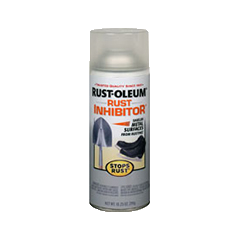
I've read the material safety data sheet for this, and also for the Amsoil product,
and they seem similar enough to me that I'm comfortable recommending and using it.
It has to dry for a couple of days after application, and you really ought to strip the
bike of all components in order to apply it easily and thoroughly.
I am also a believer in the use of anti-seize grease on dissimilar metal surface contacts,
which includes seat posts and small machine screws that go into alloy parts. Not everyone
agrees, and I have learned not to argue the point here on teh Biekfrorums.
along the seat tube/seat post interface due to the combination of regular atmospheric effects
and the galvanic difference between the (usually) aluminum alloy seat post and the (usually)
steel seat tubing of the frame. I encounter this all the time here in NorCal.
So I routinely treat the interiors of all the tubes I can get into with this stuff I get at Home Depot:
I've read the material safety data sheet for this, and also for the Amsoil product,
and they seem similar enough to me that I'm comfortable recommending and using it.
It has to dry for a couple of days after application, and you really ought to strip the
bike of all components in order to apply it easily and thoroughly.
I am also a believer in the use of anti-seize grease on dissimilar metal surface contacts,
which includes seat posts and small machine screws that go into alloy parts. Not everyone
agrees, and I have learned not to argue the point here on teh Biekfrorums.
01-21-14 | 08:10 AM
#19
Thread Starter
Extraordinary Magnitude
Joined: Aug 2009
Posts: 14,081
Likes: 2,135
From: Waukesha WI
Bikes: 1978 Trek TX700; 1978/79 Trek 736; 1984 Specialized Stumpjumper Sport; 1984 Schwinn Voyageur SP; 1985 Trek 620; 1985 Trek 720; 1986 Trek 400 Elance; 1987 Schwinn High Sierra; 1990 Miyata 1000LT
Are there really people that argue against greasing seatposts and stems?
__________________
*Recipient of the 2006 Time Magazine "Person Of The Year" Award*
Commence to jigglin’ huh?!?!
"But hey, always love to hear from opinionated amateurs." -says some guy to Mr. Marshall.
Commence to jigglin’ huh?!?!
"But hey, always love to hear from opinionated amateurs." -says some guy to Mr. Marshall.
01-21-14 | 09:58 AM
#20
Senior Member
Joined: Aug 2005
Posts: 33,657
Likes: 1,119
From: Pittsburgh, PA
Bikes: '96 Litespeed Catalyst, '05 Litespeed Firenze, '06 Litespeed Tuscany, '20 Surly Midnight Special, All are 3x10. It is hilly around here!
No, what 3alarmer uses is anti-seize grease, (Never-Seez and Permatex are two common brands) which is not plain grease, but is formulated to prevent dissimilar metals from corroding together. Generally anti-seize is required in very hot and demanding service, like steel spark plug threads in an aluminum engine head, but is not essential for the low demands of bicycle fasteners. It certainly is a good and effective product to use but is overkill for most bike applications. It's only real downside is that it's very messy and will stain any clothing it touches so be sure to carefully wipe off any excess if you use it.
01-21-14 | 10:26 AM
#21
Thread Starter
Extraordinary Magnitude
Joined: Aug 2009
Posts: 14,081
Likes: 2,135
From: Waukesha WI
Bikes: 1978 Trek TX700; 1978/79 Trek 736; 1984 Specialized Stumpjumper Sport; 1984 Schwinn Voyageur SP; 1985 Trek 620; 1985 Trek 720; 1986 Trek 400 Elance; 1987 Schwinn High Sierra; 1990 Miyata 1000LT
No, what 3alarmer uses is anti-seize grease, (Never-Seez and Permatex are two common brands) which is not plain grease, but is formulated to prevent dissimilar metals from corroding together. Generally anti-seize is required in very hot and demanding service, like steel spark plug threads in an aluminum engine head, but is not essential for the low demands of bicycle fasteners. It certainly is a good and effective product to use but is overkill for most bike applications. It's only real downside is that it's very messy and will stain any clothing it touches so be sure to carefully wipe off any excess if you use it.
The amount of corrosion on the seatpost of the Voyageur SP is pretty scary to me- I did some scrubbing with BarKeeper's Friend and a blue Scotch Brite- took most of it off- but the seatpost is pretty scarred.
__________________
*Recipient of the 2006 Time Magazine "Person Of The Year" Award*
Commence to jigglin’ huh?!?!
"But hey, always love to hear from opinionated amateurs." -says some guy to Mr. Marshall.
Commence to jigglin’ huh?!?!
"But hey, always love to hear from opinionated amateurs." -says some guy to Mr. Marshall.
01-21-14 | 10:59 AM
#23
Senior Member
Joined: Apr 2008
Posts: 1,258
Likes: 1
From: St. Pete, Florida
Anti-seize typically contains fine metal particles (copper or zinc) that serve as a sacrificial anode. This prevents galvanic welding of dissimilar metals (eg. Al and Steel). Heat + water vapor (like you get at the interface between a spark plug and cylinder head) is one example where this occurs. Liquid water + salt (from sweat) dripping down the seatpost is another. Anti-seize is definitely not overkill for bicycle applications. It's a little more expensive than plain grease, but a little goes a LONG way (I'm about half way through the tube of Permatex anti-seize I bought in the late '90s) and it can significantly extend the maintenance interval where it is used.

Thread
Thread Starter
Forum
Replies
Last Post
Wolf Dust
Classic & Vintage
37
04-28-15 04:31 PM
