


Why slammed stems?
 04-13-19 | 08:41 PM
#26

Senior Member


Joined: Oct 2011
Posts: 10,051
Likes: 2,508
From: Fairplay Co
Bikes: Current 79 Nishiki Custum Sport, Jeunet 620, notable previous bikes P.K. Ripper loop tail, Kawahara Laser Lite, Paramount Track full chrome, Raliegh Internatioanl, Motobecan Super Mirage. 59 Crown royak 3 speed
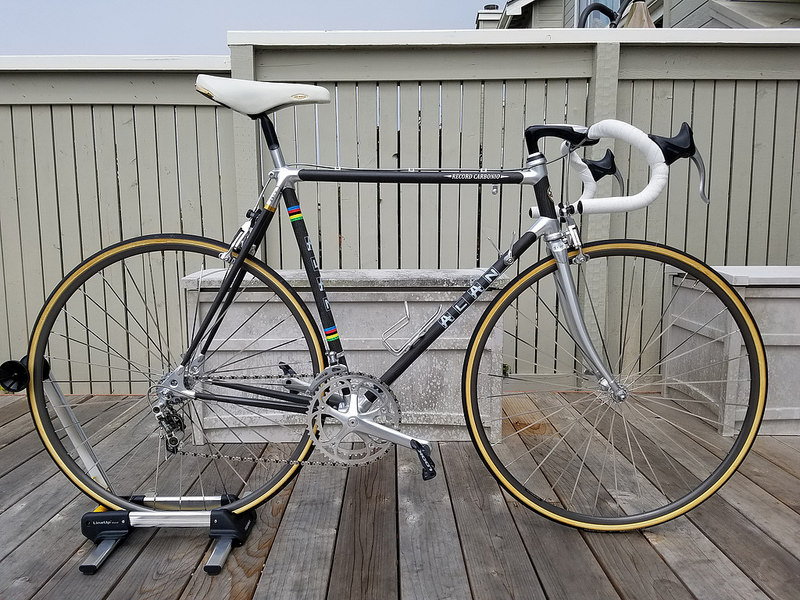
My stems are quite low, but never slammed. All from getting used to laid out, flat back position riding I developed, emulating (at least, tried to.....
 ) the Guimard's Gitane pro team in the 80's
I've been always surprised though, that even at this low stem position, how I'm not that far from the minimum insertion line with most of my stems...
 04-13-19 | 09:41 PM
#27

Master Parts Rearranger
Joined: Mar 2015
Posts: 4,850
Likes: 2,832
From: Portlandia's Kuiper Belt, OR
Bikes: 1987 Woodrup Competition - 2025 Trek Checkpoint SL 6 Gen 3 - 1987 Lotus Legend - 2024 Trek Emonda ALR Rim Brake - 1980 Trek 510 - 1988 Cannondale SR500 - 1985 Trek 670 - 1982 Trek 730
Depending on how you do it, slammed (threadless) stems can looks pretty sweet. Comfortable or not, it's like concept cars--exaggerated proportions in search of the visual 'thrust' that the person or designer is going for. I don't find a slammed quill stem to be attractive as the quill stem form factor is to make a "7" and not a single line. Low-set quills are fine, and all of us have a height range that brings about our idea of an ideal "rise-to-run" proportion. This generally gets trickier with tall and short frames, for various reasons.
In the case of my '15 CAAD10 Black, Inc. Disc, the steerer was already cut super low. The saddle to bar drop is the most extreme of my fleet, but hey, horizontal emphasis = speedy looking. I have tan wall 28mm tires (same size as these Schwalbs) on this now, and normally I'm not one for the murdered out look (lol, as I have three bikes with largely this aesthetic, well, they're at least not all matte black everything--that's lame), but man, this thing looks hot.
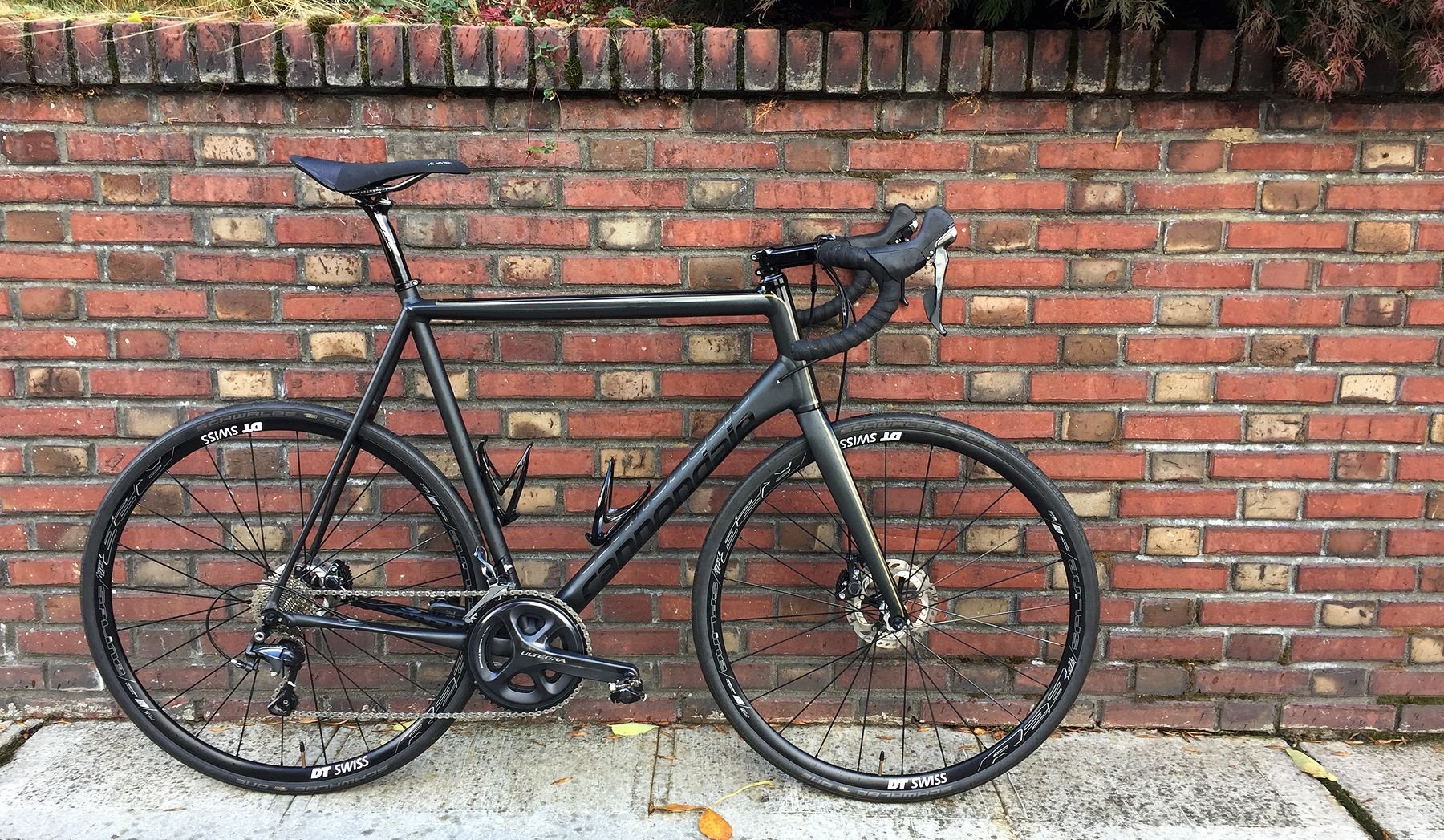
Stem conversion, with only a 'slammed' look being visually acceptable given the bike's race geometry and purpose. Also hot.

In the case of my '15 CAAD10 Black, Inc. Disc, the steerer was already cut super low. The saddle to bar drop is the most extreme of my fleet, but hey, horizontal emphasis = speedy looking. I have tan wall 28mm tires (same size as these Schwalbs) on this now, and normally I'm not one for the murdered out look (lol, as I have three bikes with largely this aesthetic, well, they're at least not all matte black everything--that's lame), but man, this thing looks hot.
Stem conversion, with only a 'slammed' look being visually acceptable given the bike's race geometry and purpose. Also hot.
04-14-19 | 12:22 PM
#28

Ride, Wrench, Swap, Race

Joined: Jan 2010
Posts: 9,834
Likes: 1,809
From: Northern California
Bikes: Cheltenham-Pedersen racer, Boulder F/S Paris-Roubaix, Varsity racer, '52 Christophe, '62 Continental, '92 Merckx, '75 Limongi, '76 Presto, '72 Gitane SC, '71 Schwinn SS, etc.
Depending on the rider's physical proportions, mass distribution and intended pedaling intensity, the positioning of the saddle and handlebar relative to the bb can be all over the place.
Shorter, more-intense rides with very-fit riders favor a body mass center that is further ahead of the bottom bracket, the better to resist pedaling forces which apply rearward rotation torque about the bb to the rider's body.
And such forward positioning of the rider over the bb will move the rider's hands both forward and downward along a circle centered around the bb.
So, for better mass-balance over the bb while pedaling hard, a lower and longer stem becomes appropriate as the saddle also moves forward.
Endurance bikes favor a more-rearward body mass positioning over the bb as appropriate to a lower level of pedaling force.
So with that, a taller headtube allows the handlebar position to follow the concentric circle about the bb upward and rearward as the saddle moves rearward.
A bigger frame can tend to force the issue toward a forward body positioning, as the rider tries to achieve a better mass positioning over the bb so as to prevent the steering from feeling too flighty if it's a race bike with aggressive steering geometry.
Using a shorter stem not only quickens the steering, but also puts the front tire further ahead of the rider's body and closer to a leading rider's rear wheel, so drafting efficiency is compromised.
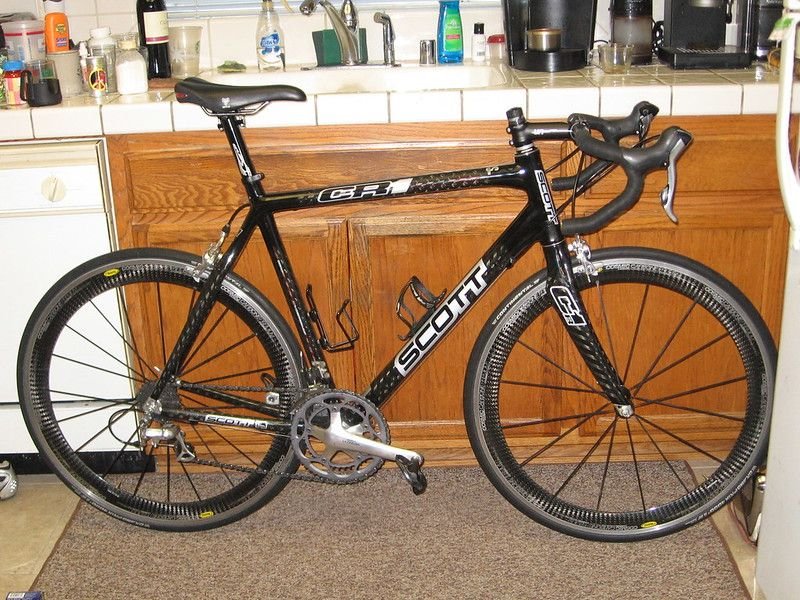
This one is a good visual example of my trying to fit on a bike with a bit too much toptube length for all but very intense levels of pedaling effort relative to my age. Thus descending comfort and control are likely compromised, as is comfort on longer rides. Still not a bad bike for 2-3-hour rides however, and I'll perhaps try a shorter stem one of these days if I don't sell it first.
Shorter, more-intense rides with very-fit riders favor a body mass center that is further ahead of the bottom bracket, the better to resist pedaling forces which apply rearward rotation torque about the bb to the rider's body.
And such forward positioning of the rider over the bb will move the rider's hands both forward and downward along a circle centered around the bb.
So, for better mass-balance over the bb while pedaling hard, a lower and longer stem becomes appropriate as the saddle also moves forward.
Endurance bikes favor a more-rearward body mass positioning over the bb as appropriate to a lower level of pedaling force.
So with that, a taller headtube allows the handlebar position to follow the concentric circle about the bb upward and rearward as the saddle moves rearward.
A bigger frame can tend to force the issue toward a forward body positioning, as the rider tries to achieve a better mass positioning over the bb so as to prevent the steering from feeling too flighty if it's a race bike with aggressive steering geometry.
Using a shorter stem not only quickens the steering, but also puts the front tire further ahead of the rider's body and closer to a leading rider's rear wheel, so drafting efficiency is compromised.
This one is a good visual example of my trying to fit on a bike with a bit too much toptube length for all but very intense levels of pedaling effort relative to my age. Thus descending comfort and control are likely compromised, as is comfort on longer rides. Still not a bad bike for 2-3-hour rides however, and I'll perhaps try a shorter stem one of these days if I don't sell it first.
04-14-19 | 07:41 PM
#29

Senior Member
Joined: Sep 2008
Posts: 488
Likes: 16
From: Ashfield, Mass.
From Sheldon Brown: "
Nowadays, most cyclists set their stems all the way up (at the "minimum insertion" mark). With the smaller frame sizes used now, the "7" shaped stem is an atavism, a stylistic holdover from an obsolete technology. An extended "7" stem is two sides of a triangle. A stem that follows the diagonal, directly from just above the headset to the handlebar clamp makes more sense geometrically. Such a stem would be as strong as a similarly made "7" stem, but substantially lighter. It would also be more crash-worthy. Modern Allen-bolt stems are certainly safer than the old style that had a protruding hex head and a sharp rear corner, but the shape is still a threat to the rider's groin in a collision.
There is a trend to use "mountain-bike type" stems on road bikes, and it really makes a lot of sense. All that the "7" stem has going for it is tradition."
Why The Seven?
The "7" shaped handlebar stem gets its shape from a historical accident. The style in the old days was to ride rather tall frames by our standards, and the older handlebar shapes had less drop than modern designs. (When the transition from the "highwheeler" to the "safety" bike occurred, the idea of being able to stand over the frame did not occur immediately. Cyclists were in the habit of having to mount and dismount on the fly.) The stem would usually be inserted so that only an inch or less stuck out of the headset. The "7" shape allowed the lowest possible handlebar placement with as much forward reach as was wanted.Nowadays, most cyclists set their stems all the way up (at the "minimum insertion" mark). With the smaller frame sizes used now, the "7" shaped stem is an atavism, a stylistic holdover from an obsolete technology. An extended "7" stem is two sides of a triangle. A stem that follows the diagonal, directly from just above the headset to the handlebar clamp makes more sense geometrically. Such a stem would be as strong as a similarly made "7" stem, but substantially lighter. It would also be more crash-worthy. Modern Allen-bolt stems are certainly safer than the old style that had a protruding hex head and a sharp rear corner, but the shape is still a threat to the rider's groin in a collision.
There is a trend to use "mountain-bike type" stems on road bikes, and it really makes a lot of sense. All that the "7" stem has going for it is tradition."
04-15-19 | 12:39 AM
#30
Master Parts Rearranger
Joined: Mar 2015
Posts: 4,850
Likes: 2,832
From: Portlandia's Kuiper Belt, OR
Bikes: 1987 Woodrup Competition - 2025 Trek Checkpoint SL 6 Gen 3 - 1987 Lotus Legend - 2024 Trek Emonda ALR Rim Brake - 1980 Trek 510 - 1988 Cannondale SR500 - 1985 Trek 670 - 1982 Trek 730
^^^ And the fact that it looks nice! Haha.
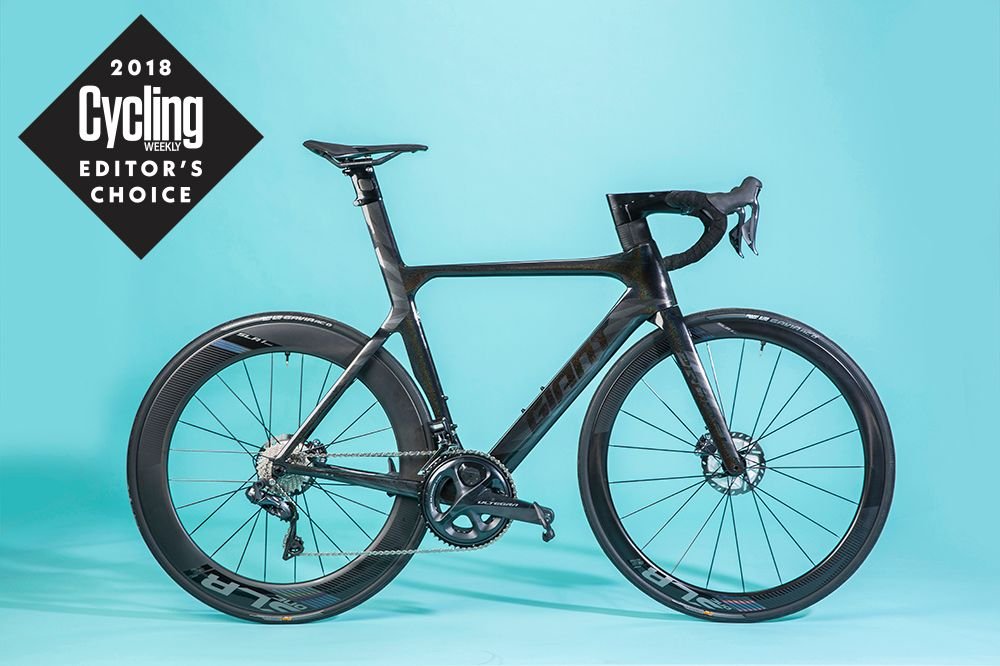
Actually, amusingly the recent trend of aero bikes has an integrated stem that can either lie close to flush with the TT in extreme situations or can have a number of stem-matching aero spacers (up to 7cm or so!). Guess what shape that stem-and-spacer combo makes??? A seven! Nothing is new, and the new '7' looks considerably worse. Proportions proportions proportions!
Current generation Giant Propel. Yikes. [and yes, I've seen a Propel Advanced Disc in orange/black in person and there is a lot to like looks wise, but that stem better be super low with no spacers otherwise, it still looks bad in real life...]
Actually, amusingly the recent trend of aero bikes has an integrated stem that can either lie close to flush with the TT in extreme situations or can have a number of stem-matching aero spacers (up to 7cm or so!). Guess what shape that stem-and-spacer combo makes??? A seven! Nothing is new, and the new '7' looks considerably worse. Proportions proportions proportions!
Current generation Giant Propel. Yikes. [and yes, I've seen a Propel Advanced Disc in orange/black in person and there is a lot to like looks wise, but that stem better be super low with no spacers otherwise, it still looks bad in real life...]

 04-15-19 | 06:10 PM
#34

Senior Member
Joined: Jul 2006
Posts: 11,499
Likes: 4,919
From: San Jose (Willow Glen) Ca
Bikes: Kirk Custom JK Special, 86 De Rosa Pro, '84 Team Miyata,(dura ace old school) 80?? SR Semi-Pro 600 Arabesque
I saw a post, recently that theorized that other than style or looking like a pro rider bike, stems are slammed because fewer riders use the drops....and slamming a stem effectively puts the top of the bars where the drops would be on an unslammed stem.
again a theory, not mine, but it makes sense to me
again a theory, not mine, but it makes sense to me
__________________
Life is too short not to ride the best bike you have, as much as you can.
Life is too short not to ride the best bike you have, as much as you can.


Thread
Thread Starter
Forum
Replies
Last Post
kirke
Classic & Vintage
8
12-20-09 06:32 AM
