


Stuck freewheel
 07-21-24 | 02:47 PM
#26

Senior Member


Joined: May 2010
Posts: 5,626
Likes: 2,497
From: Bastrop Texas
Bikes: Univega, Peu P6, Peu PR-10, Ted Williams, Peu UO-8, Peu UO-18 Mixte, Peu Dolomites
Aluminum alloy Hub and a Steel Freewheel. Very dissimilar metals and with just a little oxidation they can be a bugger to separate. Of course PB Blaster, and allowing time for it to work, is usually your savior. One trick not recently mentioned is using a Trifloroethaine spray. Something like CRC Freeze Off or just a can of Liquid Air held upside down as a spray.
The coefficients of expansion between the Aluminum Alloy and steel are very much different. That difference could work for you. I would not aggressively heat up the freewheel. Some of the Shimano freewheels I have taken apart have plastic spacers between the cogs.
It could be that the energy that broke that axle most likely bent or got the hub out of round further complicating the freewheels removal.
https://www.engineeringtoolbox.com/t...als-d_859.html
Hey... A stuck Freewheel! Finally something I know about... Ha
The coefficients of expansion between the Aluminum Alloy and steel are very much different. That difference could work for you. I would not aggressively heat up the freewheel. Some of the Shimano freewheels I have taken apart have plastic spacers between the cogs.
It could be that the energy that broke that axle most likely bent or got the hub out of round further complicating the freewheels removal.
https://www.engineeringtoolbox.com/t...als-d_859.html
Hey... A stuck Freewheel! Finally something I know about... Ha
__________________
 No matter where you're at... There you are... Δf:=f(1/2)-f(-1/2)
Last edited by zandoval; 07-21-24 at 02:54 PM.
 07-21-24 | 03:45 PM
#27

aka Tom Reingold


Joined: Jan 2009
Posts: 44,302
Likes: 6,559
From: New York, NY, and High Falls, NY, USA
Bikes: 1962 Rudge Sports, 1971 Raleigh Super Course, 1971 Raleigh Pro Track, 1974 Raleigh International, 1975 Viscount Fixie, 1982 McLean, 1996 Lemond (Ti), 2002 Burley Zydeco tandem
They were fragile. You had to use them very carefully, and even then, they would still fail. They were the best thing in some situations such as the original small-splined Shimano freewheel, because the only way to use a standard extractor was to remove the axle from the hub, and that was something mechanics wanted to avoid.
__________________
Tom Reingold, tom@noglider.com
New York City and High Falls, NY
Blogs: The Experienced Cyclist; noglider's ride blog
“When man invented the bicycle he reached the peak of his attainments.” — Elizabeth West, US author
Please email me rather than PM'ing me. Thanks.
Tom Reingold, tom@noglider.com
New York City and High Falls, NY
Blogs: The Experienced Cyclist; noglider's ride blog
“When man invented the bicycle he reached the peak of his attainments.” — Elizabeth West, US author
Please email me rather than PM'ing me. Thanks.
07-21-24 | 04:25 PM
#29

ambulatory senior

Joined: Dec 2016
Posts: 6,451
Likes: 4,517
From: Peoria Il
Bikes: Austro Daimler modified by Gugie! Raleigh Professional and lots of other bikes.
The issue is it would have had to be incredibly thin to work. Suntour removers are fine because there is more clearance and since I have several good suntour freewheels that is what I will use in the future
 07-21-24 | 04:47 PM
#31
ambulatory senior
Joined: Dec 2016
Posts: 6,451
Likes: 4,517
From: Peoria Il
Bikes: Austro Daimler modified by Gugie! Raleigh Professional and lots of other bikes.
07-21-24 | 05:11 PM
#32

Old fart

Joined: Nov 2004
Posts: 26,402
Likes: 5,333
From: Appleton WI
Bikes: Several, mostly not name brands.
And if you have an older Dura Ace freewheel with the two-notch remover style, be sure to use a real Shimano TL-FW10 remover, not a generic one.

What the TL-FW10 has that generics don't is that ring around the prongs. It strengthens them immensely.
There was another one with the ring that also works, I forget, by Bicycle Research maybe? But the TL-FW10 is a safe bet, never known one to fail.
The prong type (whether 2-, 3- or 4-prong) are the ones where it's most important to use the skewer. Splined removers are much safer to use without a skewer, but prong-type? Don't even think of it.
The TL-FW10 is also the best tool to use on old Regina FWs with the two-notch body. That Shimano tool fits a Regina better than a Regina tool does. So it's a super-valuable tool for a C&V kinda guy to own.
What the TL-FW10 has that generics don't is that ring around the prongs. It strengthens them immensely.
There was another one with the ring that also works, I forget, by Bicycle Research maybe? But the TL-FW10 is a safe bet, never known one to fail.
The prong type (whether 2-, 3- or 4-prong) are the ones where it's most important to use the skewer. Splined removers are much safer to use without a skewer, but prong-type? Don't even think of it.
The TL-FW10 is also the best tool to use on old Regina FWs with the two-notch body. That Shimano tool fits a Regina better than a Regina tool does. So it's a super-valuable tool for a C&V kinda guy to own.
N.B. the Bicycle Research CT-1 also has that ring and works on those old Dura-Ace, Regina, and Caimi freewheels with the two notches:
 07-21-24 | 05:12 PM
#33
Senior Member
Joined: May 2019
Posts: 3,976
Likes: 3,216
From: Bloomington, IN
Bikes: Paramount, Faggin, Ochsner, Rossin, Ciocc
 07-21-24 | 05:50 PM
#35

Senior Member
Joined: Apr 2009
Posts: 3,785
Likes: 5,636
From: Seattle
Just a note hear on something I recently did. I put a French freewheel, (English thread) on an early phil wood freewheel hub. Once in place I realized the two smallest cogs were skipping and worn. Let me just say removal was exceedingly difficult. The removal tool would not fit over the phil wood axle. It required complete axle removal with my makeshift tools. Fortunately I seemed to not have ruined anything and it was cool to see how it all went back together but I will never put a French freewheel on it again.

The key point is how thin the wall is on the sort-of tubular part. It must be made of strong steel, because despite how thin they are, I've never seen one fail. I use my Phil tool for any Atom (or Regina which used that same spline), regardless of whether the thin-wall is required. That thing is a life-saver.
07-21-24 | 06:02 PM
#36
Senior Member
Joined: Apr 2009
Posts: 3,785
Likes: 5,636
From: Seattle
They were fragile. You had to use them very carefully, and even then, they would still fail. They were the best thing in some situations such as the original small-splined Shimano freewheel, because the only way to use a standard extractor was to remove the axle from the hub, and that was something mechanics wanted to avoid.
07-21-24 | 06:24 PM
#37
Senior Member
Joined: Apr 2009
Posts: 3,785
Likes: 5,636
From: Seattle
ooh, can I play?
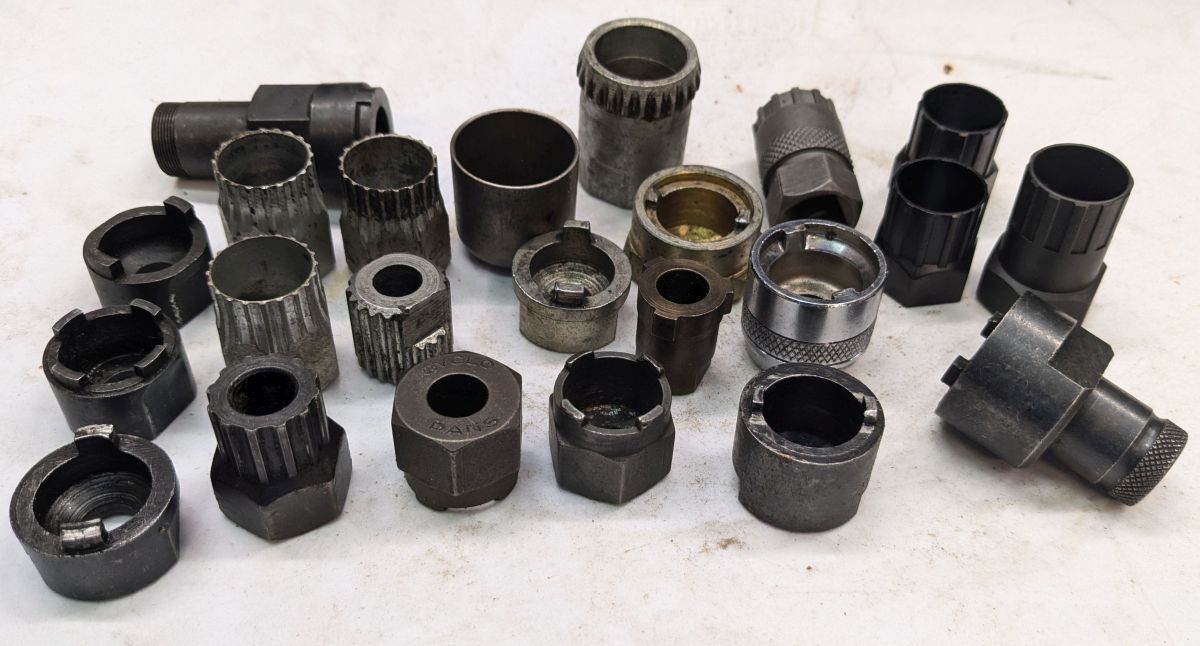
A few unusual ones in there:
A few unusual ones in there:
- front-center, there are two Cyclo-Pans 4-prongers
- Front-right, who made that goofy thing with the skewer nut bult in? It spins but it's held captive. What a waste of steel, I mean you have the actual skewer nut in your hand from taking it off, so when would you want this? It's just a curio, I've probably never used it.
- Next to the chrome Dura-Ace TL-FW10 is the yellow Bicycle Research CT-1 that does the same thing. I like redundancy.
- in front of the CT-1 is a TDC 3-prong, anyone ever work on TDC FWs? At my old job (early '70s) we decided it stood for Totally Degenerate Crap. Not fair, but moderately funny.
- Behind the CT-1 is a Maillard. Funny thing about that one, in addition to the large external spline you see, they also had a smaller internal spline at the other end, which fits an Atom remover up inside it. The only logic for that I can imagine is if you had an Atom remover welded to a large tommy bar, you could use that to drive the big Maillard remover. Or maybe it's to prevent the Maillard "can" from being crushed in the vise?
- To the left of the Maillard is the can that Phil used to ship with their hubs, to prevent you from accidentally extracting the axle/bearings subassembly.
- Upper left is a freehub tool, how'd that sneak in there? Someone wasn't paying attention.

07-21-24 | 06:26 PM
#38

Senior Member

Joined: Apr 2011
Posts: 12,752
Likes: 4,866
In all my time as a shop mechanic, I have never needed anything more than the spline tool and a bench vice to get a Shimano fw off.
Skewers don't do anything for Shimano tools, and I have never seen thread corrosion that was strong enough to resist two hands and a bench vise.
Adding more tools just creates more opportunities for something to go wrong.
Skewers don't do anything for Shimano tools, and I have never seen thread corrosion that was strong enough to resist two hands and a bench vise.
Adding more tools just creates more opportunities for something to go wrong.
07-21-24 | 06:53 PM
#39
Senior Member
Joined: Feb 2020
Posts: 4,035
Likes: 2,356
They were fragile. You had to use them very carefully, and even then, they would still fail. They were the best thing in some situations such as the original small-splined Shimano freewheel, because the only way to use a standard extractor was to remove the axle from the hub, and that was something mechanics wanted to avoid.
Pull the spacer off and there is enough room for the tool.
07-21-24 | 08:24 PM
#40
ambulatory senior
Joined: Dec 2016
Posts: 6,451
Likes: 4,517
From: Peoria Il
Bikes: Austro Daimler modified by Gugie! Raleigh Professional and lots of other bikes.
Do you remember any details like what brand of FW, or brand of remover? Because if it was an Atom FW with the spined interface, Phil sold a remover specifically for that.
The key point is how thin the wall is on the sort-of tubular part. It must be made of strong steel, because despite how thin they are, I've never seen one fail. I use my Phil tool for any Atom (or Regina which used that same spline), regardless of whether the thin-wall is required. That thing is a life-saver.
The key point is how thin the wall is on the sort-of tubular part. It must be made of strong steel, because despite how thin they are, I've never seen one fail. I use my Phil tool for any Atom (or Regina which used that same spline), regardless of whether the thin-wall is required. That thing is a life-saver.


So it's an atom freewheel and the tool was a park tool.
07-21-24 | 08:54 PM
#41

Senior Member

Joined: Aug 2003
Posts: 13,973
Likes: 145
From: Tampa, Florida
You need to a use a very rapid ‘jerk/snap’ kind of motion to break the freewheel loose. Think ‘absolute destruction’ and go at it, anything less isn’t enough.
If we’re playing the tool game I have 2, 4 and 6 prong Suntour. And Suntour cog gauges.
If we’re playing the tool game I have 2, 4 and 6 prong Suntour. And Suntour cog gauges.
07-22-24 | 05:27 AM
#42

Freewheel Medic
Joined: Oct 2005
Posts: 13,569
Likes: 3,314
From: An Island on the Coast of GA!
Bikes: Snazzy* Schwinns, Classy Cannondales & a Super Pro Aero Lotus (* Ed.)
Dang! This has turned into a freewheel tool and removal technique p!$$!ng match!  Who would have ever thought that a "stuck freewheel" could be so much fun?
Who would have ever thought that a "stuck freewheel" could be so much fun?
__________________
Bob
Enjoying the GA coast all year long!
Thanks for visiting my website: www.freewheelspa.com
Bob
Enjoying the GA coast all year long!
Thanks for visiting my website: www.freewheelspa.com
 07-22-24 | 05:33 AM
#43

Edumacator
Joined: Jan 2018
Posts: 9,691
Likes: 5,177
From: Goose Creek, SC
Bikes: More than the people who ride them...oy.
__________________
1987 Crest C'dale, 1987 Basso Gap, 1992 Rossin EL, 1990 Van Tuyl, 1985 Trek 670, 2003 Pinarello Surprise, 1990ish MBK Atlantique, 1987 Peugeot Isoard, 1987 Nishiki Tri-A, 1981 Faggin, 1996 C'dale M500, 1984 Mercian Pro, 1982 AD SuperLeicht, 1985 Massi ?, 1988 Daccordi Griffe , 1989 Fauxsin MTB, 1981 Ciocc Mockba, 1992 Bianchi Giro, 1977 Colnago Super, 1971 Raleigh Internat'l, 1998 Corratec U+D, 1991 Peugeot Slimestone, 1987 Bianchi Volpe, 1995 Trek 750
1987 Crest C'dale, 1987 Basso Gap, 1992 Rossin EL, 1990 Van Tuyl, 1985 Trek 670, 2003 Pinarello Surprise, 1990ish MBK Atlantique, 1987 Peugeot Isoard, 1987 Nishiki Tri-A, 1981 Faggin, 1996 C'dale M500, 1984 Mercian Pro, 1982 AD SuperLeicht, 1985 Massi ?, 1988 Daccordi Griffe , 1989 Fauxsin MTB, 1981 Ciocc Mockba, 1992 Bianchi Giro, 1977 Colnago Super, 1971 Raleigh Internat'l, 1998 Corratec U+D, 1991 Peugeot Slimestone, 1987 Bianchi Volpe, 1995 Trek 750
07-22-24 | 06:14 AM
#44

Senior Member

Joined: Apr 2012
Posts: 21,823
Likes: 5,781
From: Middle Earth (aka IA)
Bikes: A bunch of old bikes and a few new ones
07-22-24 | 06:15 AM
#45
Senior Member
Joined: Apr 2012
Posts: 21,823
Likes: 5,781
From: Middle Earth (aka IA)
Bikes: A bunch of old bikes and a few new ones
ooh, can I play?
A few unusual ones in there:
A few unusual ones in there:
- front-center, there are two Cyclo-Pans 4-prongers
- Front-right, who made that goofy thing with the skewer nut bult in? It spins but it's held captive. What a waste of steel, I mean you have the actual skewer nut in your hand from taking it off, so when would you want this? It's just a curio, I've probably never used it.
- Next to the chrome Dura-Ace TL-FW10 is the yellow Bicycle Research CT-1 that does the same thing. I like redundancy.
- in front of the CT-1 is a TDC 3-prong, anyone ever work on TDC FWs? At my old job (early '70s) we decided it stood for Totally Degenerate Crap. Not fair, but moderately funny.
- Behind the CT-1 is a Maillard. Funny thing about that one, in addition to the large external spline you see, they also had a smaller internal spline at the other end, which fits an Atom remover up inside it. The only logic for that I can imagine is if you had an Atom remover welded to a large tommy bar, you could use that to drive the big Maillard remover. Or maybe it's to prevent the Maillard "can" from being crushed in the vise?
- To the left of the Maillard is the can that Phil used to ship with their hubs, to prevent you from accidentally extracting the axle/bearings subassembly.
- Upper left is a freehub tool, how'd that sneak in there? Someone wasn't paying attention.
Looks like I'm going to need to step up my game and buy a few more freewheel tools to be a full member of the cool kids club . .
07-22-24 | 10:52 AM
#46
aka Tom Reingold
Joined: Jan 2009
Posts: 44,302
Likes: 6,559
From: New York, NY, and High Falls, NY, USA
Bikes: 1962 Rudge Sports, 1971 Raleigh Super Course, 1971 Raleigh Pro Track, 1974 Raleigh International, 1975 Viscount Fixie, 1982 McLean, 1996 Lemond (Ti), 2002 Burley Zydeco tandem
I was incorrect above. That Phil extractor I used was for an Atom freewheel, not a Shimano.
__________________
Tom Reingold, tom@noglider.com
New York City and High Falls, NY
Blogs: The Experienced Cyclist; noglider's ride blog
“When man invented the bicycle he reached the peak of his attainments.” — Elizabeth West, US author
Please email me rather than PM'ing me. Thanks.
Tom Reingold, tom@noglider.com
New York City and High Falls, NY
Blogs: The Experienced Cyclist; noglider's ride blog
“When man invented the bicycle he reached the peak of his attainments.” — Elizabeth West, US author
Please email me rather than PM'ing me. Thanks.
07-22-24 | 01:39 PM
#47
Thread Starter
Senior Member
Joined: Jan 2015
Posts: 1,188
Likes: 725
Woke up in the middle of the night and remembered that I had a old chain link fence post in the Pile Of Crap That Might Be Useful Someday.This am, Retrieved the wheel from outside the garage where it had been marinating in the hot sun with the bit of Liquid Wrench I’d applied days earlier. Found the 1” Wrench rather than the 12” adjustable. Slipped the post over the wrench, and gave a sharp snap, and felt some movement. Second snap and the FW broke free. It had in fact been well lubed, old grease was vey much in evidence
Here’s the tools and results.
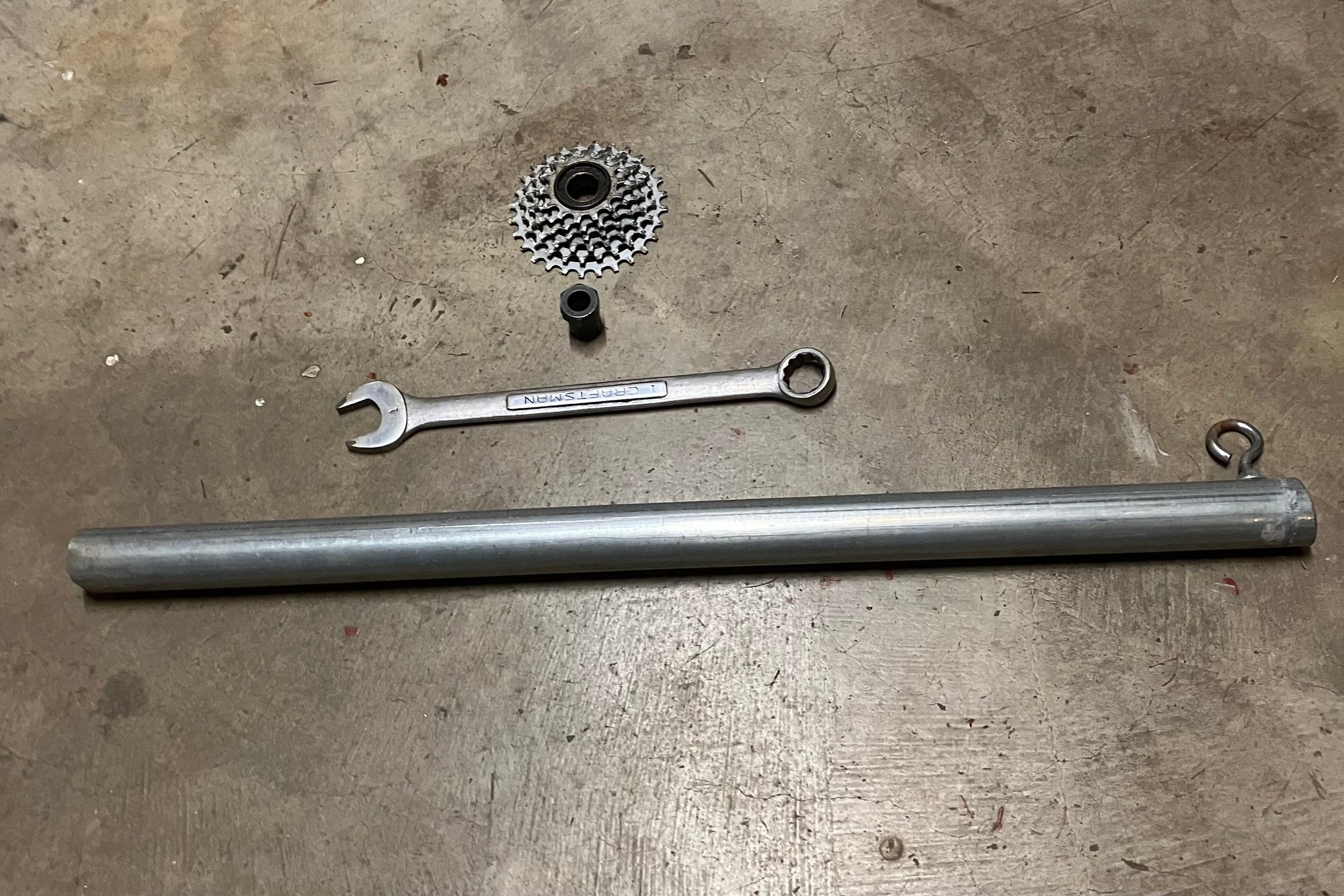
Thanks all for the help.
You may now return to the displays of freewheel tools currently in progress….

 07-22-24 | 01:43 PM
#48
ambulatory senior
Joined: Dec 2016
Posts: 6,451
Likes: 4,517
From: Peoria Il
Bikes: Austro Daimler modified by Gugie! Raleigh Professional and lots of other bikes.
07-22-24 | 01:45 PM
#49
ambulatory senior
Joined: Dec 2016
Posts: 6,451
Likes: 4,517
From: Peoria Il
Bikes: Austro Daimler modified by Gugie! Raleigh Professional and lots of other bikes.
JERK/SNAP FOR THE WIN!
Woke up in the middle of the night and remembered that I had a old chain link fence post in the Pile Of Crap That Might Be Useful Someday.This am, Retrieved the wheel from outside the garage where it had been marinating in the hot sun with the bit of Liquid Wrench I’d applied days earlier. Found the 1” Wrench rather than the 12” adjustable. Slipped the post over the wrench, and gave a sharp snap, and felt some movement. Second snap and the FW broke free. It had in fact been well lubed, old grease was vey much in evidence
Here’s the tools and results.
Thanks all for the help.
You may now return to the displays of freewheel tools currently in progress….
Woke up in the middle of the night and remembered that I had a old chain link fence post in the Pile Of Crap That Might Be Useful Someday.This am, Retrieved the wheel from outside the garage where it had been marinating in the hot sun with the bit of Liquid Wrench I’d applied days earlier. Found the 1” Wrench rather than the 12” adjustable. Slipped the post over the wrench, and gave a sharp snap, and felt some movement. Second snap and the FW broke free. It had in fact been well lubed, old grease was vey much in evidence
Here’s the tools and results.
Thanks all for the help.
You may now return to the displays of freewheel tools currently in progress….
07-22-24 | 06:30 PM
#50
Old fart
Joined: Nov 2004
Posts: 26,402
Likes: 5,333
From: Appleton WI
Bikes: Several, mostly not name brands.
Just a note hear on something I recently did. I put a French freewheel, (English thread) on an early phil wood freewheel hub. Once in place I realized the two smallest cogs were skipping and worn. Let me just say removal was exceedingly difficult. The removal tool would not fit over the phil wood axle. It required complete axle removal with my makeshift tools. Fortunately I seemed to not have ruined anything and it was cool to see how it all went back together but I will never put a French freewheel on it again.
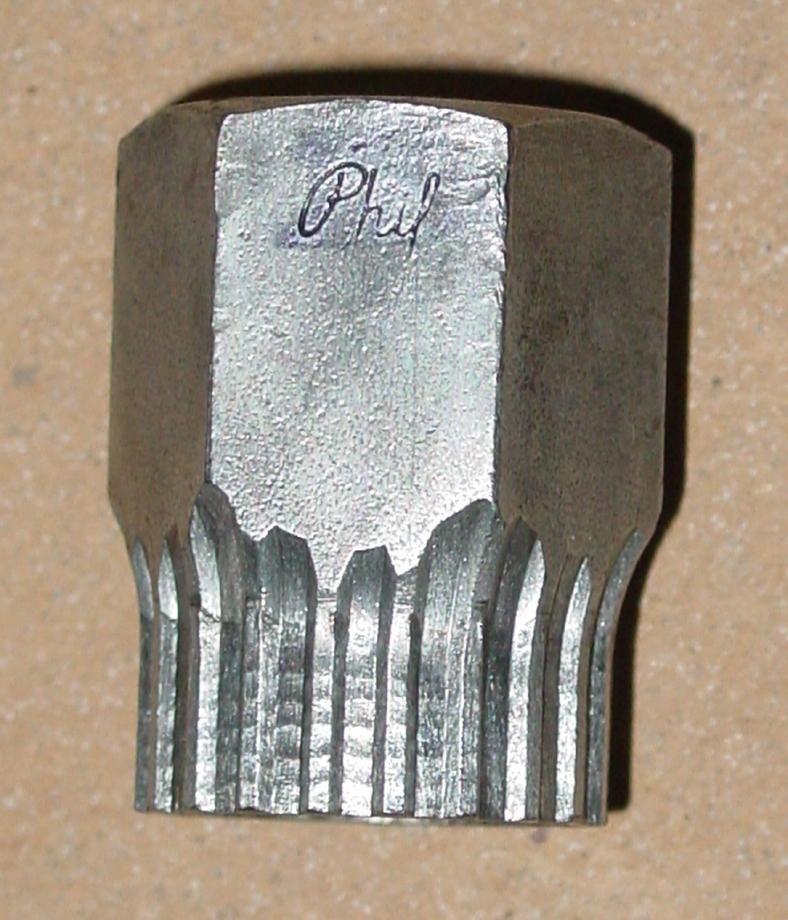
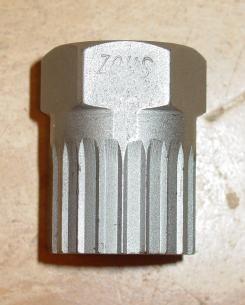
At that time, Campagnolo didn't offer a freewheel, so providing an appropriate tool apparently wasn't felt to be their problem. And when they did eventually offer a freewheel, they went with a proprietary helical two-slot design, arguably the best two-slot remover since removal torque drives the tool further into the helical slots, preventing it from camming out, as is so common with other two-slot freewheels (I still prefer splined freewheels). This is the Bicycle Research version of the Campagnolo freewheel remover:
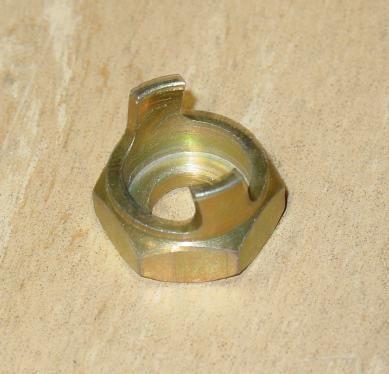
The key point is how thin the wall is on the sort-of tubular part. It must be made of strong steel, because despite how thin they are, I've never seen one fail. I use my Phil tool for any Atom (or Regina which used that same spline), regardless of whether the thin-wall is required. That thing is a life-saver.
