


reusing spokes?!
 03-13-12 | 09:36 PM
#26


actually the plain steel (zinc plated) spokes usually are stronger (more tensile strength) than comparable stainless spokes...but after they have corroded and rusted, that may not apply.
I used to subscribe to the "wit and wisdom" of Jobst Brandt, who tells us that a spoke is a working part of a moving system, and that they are subject to wear and fatigue cycles...etc., etc.
But these days I'm less of a true believer and will re-use good (and good quality) spokes for my own wheels.
So far, so good.
I used to subscribe to the "wit and wisdom" of Jobst Brandt, who tells us that a spoke is a working part of a moving system, and that they are subject to wear and fatigue cycles...etc., etc.
But these days I'm less of a true believer and will re-use good (and good quality) spokes for my own wheels.
So far, so good.
 03-14-12 | 09:12 AM
#27
Senior Member

Joined: Feb 2002
Posts: 1,213
Likes: 89
I'm a working bike mechanic, have been for 35 years, and build good wheels. I won't say that I never reuse spokes, but avoid it on other peoples' wheels--nothing is worse than producing work that fails in the field. Besides, with rim cross-sections and working diameters varying widely, only dumb luck or using an exact duplicate of a previous rim will make it fly.
03-14-12 | 09:45 AM
#28

Senior Member
Joined: Feb 2012
Posts: 350
Likes: 0
From: Gold Canyon, AZ
Bikes: Skunkhumper Team, 05 Poprad
Have I done it? Yes. Would it be my preference? Absolutely not.
There is something quite satisfying about taking a pair of good ****s to the spokes of a tight wheel.
There is something quite satisfying about taking a pair of good ****s to the spokes of a tight wheel.
03-14-12 | 09:52 AM
#29

Senior Member

Joined: Aug 2003
Posts: 13,973
Likes: 145
From: Tampa, Florida
And if you cut the spoke with the most tension first you can hit the wall on the other side of the room....



 03-14-12 | 11:00 AM
#32

Half way there
Joined: May 2011
Posts: 1,109
Likes: 1
From: Durham, NC
Bikes: 69 Hercules, 73 Raleigh Sports, 74 Raliegh Competition, 78 Nishiki Professional, 79 Nishiki International, 83 Colnago Super, 83 Viner Junior
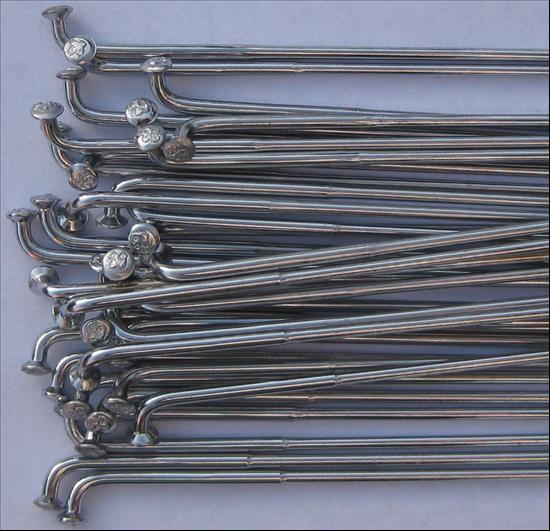
For a wheel I was rebuilding for my own use I would re-use the spokes in the new hub, and do. Keep track of out-bound vs. in-bound spokes and lace them the same way. The elbows will have been bent differently as the wheel was laced and tensioned the first time and you should try to re-create this in the new wheel rather than re-bending elbows randomly to take the opposite orientation. The elbow is where a fatigued spoke will break. Put a tiny dab of nail polish on the spoke heads of the in-bound spokes before you take the wheel apart. For a front wheel I don't think it matters about left vs. right but if you are taking the trouble, you might as well try to respect that too.
-G
03-14-12 | 12:35 PM
#33
Senior Member
Joined: Aug 2003
Posts: 13,973
Likes: 145
From: Tampa, Florida

Thread
Thread Starter
Forum
Replies
Last Post
guy2600
Road Cycling
14
12-17-09 02:02 PM
