


Chrome rant
 03-09-15 | 10:11 PM
#1
Thread Starter
Senior Member
Joined: Nov 2012
Posts: 74
Likes: 1
From: San Pedro CA
Bikes: '39 Bianchi Saetta, '64 Bianchi Specialissima, '64(ish) Cinelli Model B, '72 Raleigh Professional, '72 Schwinn Paramount, '83 Colnago Super, '89 Merckx 7-11, 72 Raleigh International basket case
Chrome rant
When I take parts to have them re-chromed they always come back too shiny and lots of missing detail.
"Triple" plating means nickle first, then copper, which is where the smoothness and shine comes from,and where detail is lost, and then chrome.
From what I can tell of old Campy etc parts that are missing some chrome, those parts did not have the copper intermediate plate. Just nickle and then chrome. Can anyone verify this?
I asked my chrome guy if he could do just nickle and chrome, and he looked at me like I had three heads.
The purpose of restoration is to restore, not make something better than new.
Does anyone know of a chrome guy that understands this, especially as related to vintage lightweight bikes?
Thanks,
"Triple" plating means nickle first, then copper, which is where the smoothness and shine comes from,and where detail is lost, and then chrome.
From what I can tell of old Campy etc parts that are missing some chrome, those parts did not have the copper intermediate plate. Just nickle and then chrome. Can anyone verify this?
I asked my chrome guy if he could do just nickle and chrome, and he looked at me like I had three heads.
The purpose of restoration is to restore, not make something better than new.
Does anyone know of a chrome guy that understands this, especially as related to vintage lightweight bikes?
Thanks,
 03-09-15 | 10:39 PM
#2

"Missing details" is the polishing job not the plating. Most run of the mill plating shops are not going to polish parts like this properly as they are not charging you enough to do it. The shops that do know how to polish parts like this are going to be very expensive. You get what you pay for.
When I need a part chromed I have the shop strip the chrome. Then I polish it myself. Then send it back for plating.
As for "too shiny"? Chrome is shiny. Un-polished nickel is not, but that's more for pre war bikes. Campy stuff shines.
When I need a part chromed I have the shop strip the chrome. Then I polish it myself. Then send it back for plating.
As for "too shiny"? Chrome is shiny. Un-polished nickel is not, but that's more for pre war bikes. Campy stuff shines.
03-09-15 | 11:06 PM
#3

Senior Member
Joined: May 2008
Posts: 9,102
Likes: 6,009
From: Zang's Spur, CO
03-10-15 | 07:20 AM
#4
 03-10-15 | 07:40 AM
#5


I think the chrome shop selected just has a world view that most of his customers want.
Many bike parts when chromed originally were done on the cheap, the copper step skipped, (one reason you need the replate), or the thickness was reduced because of the cost.
I have a very prestigeous bike that the original fork chrome never got a copper layer, it was nickel then chrome, and not much of it! The builder trusted the plater...
As Otis states, getting back the parts after the chrome is stripped and tuning the surface yourself provides much control, and stampings can be rescribed to help not have them get buffed away. The higher the polish to begin with, the less post copper buffing is required, this will give the best chance for the retention of detail. What you don't want is a second layer of copper after the buffed through half of the first pass. Copper is the softest of the layers and is the layer buffed the most to provide a uniform surface.
Many bike parts when chromed originally were done on the cheap, the copper step skipped, (one reason you need the replate), or the thickness was reduced because of the cost.
I have a very prestigeous bike that the original fork chrome never got a copper layer, it was nickel then chrome, and not much of it! The builder trusted the plater...
As Otis states, getting back the parts after the chrome is stripped and tuning the surface yourself provides much control, and stampings can be rescribed to help not have them get buffed away. The higher the polish to begin with, the less post copper buffing is required, this will give the best chance for the retention of detail. What you don't want is a second layer of copper after the buffed through half of the first pass. Copper is the softest of the layers and is the layer buffed the most to provide a uniform surface.
03-10-15 | 07:49 AM
#6

Senior Member
Joined: Aug 2006
Posts: 7,643
Likes: 68
From: Portland OR
Bikes: 61 Bianchi Specialissima 71 Peugeot G50 7? P'geot PX10 74 Raleigh GranSport 75 P'geot UO8 78? Raleigh Team Pro 82 P'geot PSV 86 P'geot PX 91 Bridgestone MB0 92 B'stone XO1 97 Rans VRex 92 Cannondale R1000 94 B'stone MB5 97 Vitus 997
Sorry for the slight hijack, but since you guys are experienced in rechroming . . . what does it cost to get a frame and fork stripped, buffed, and rechromed? (Entirely chromed).
03-10-15 | 08:12 AM
#7

Decrepit Member
Joined: Aug 2005
Posts: 10,488
Likes: 92
From: Santa Rosa, California
Bikes: Waterford 953 RS-22, several Paramounts
As Shimagnolo and Grand Bois have noted, historically copper is first, then nickel, and finally chrome. But as Jim Cunningham explains in the FAQ section of the CyclArt website, new nickel formulations do not require copper to adhere to the steel and give excellent results. In fact, copper adds unnecessary weight and thickness and normally isn't used anymore unless there are recesses and pitting in the steel that need to be filled.
If I were in the market to have a bicycle frame or parts chrome plated, I'd pay the premium and have CyclArt do the work.
Jim documents the plating process here:
What is Hard Chrome Plating?
Do you triple plate (i.e. copper, then nickel, then chrome)?
What is chrome and how is it done?.
If I were in the market to have a bicycle frame or parts chrome plated, I'd pay the premium and have CyclArt do the work.
Jim documents the plating process here:
What is Hard Chrome Plating?
Do you triple plate (i.e. copper, then nickel, then chrome)?
What is chrome and how is it done?.
 03-10-15 | 07:00 PM
#9

Senior Member

Joined: Dec 2012
Posts: 1,653
Likes: 364
From: St. Paul, MN
Bikes: Too many 3-speeds, Jones Plus LWB
As I understand it these days copper is used if you have a lot of pitting. Then it gets repolished, then chrome.
I have a polishing guy here in the Twin Cities that is pretty good. But if you are polishing out pits in rusted stuff you are going to loose detail and no way around it. If you don't, it will look terrible and you will wonder what you spent the money on. I find that its often cheaper to find the part in good shape than to polish something that is too far gone. Another thing is that chrome guys (not polishers) tend to go crazy after a while (my guess is due to the chemicals) so often you get better results if the chrome shop is less than 2 years old, unless they have really good ventilation. I wish this was a joke but that's been my experience.
A lot of chrome done overseas is dodgy to say the least. Italian motorbikes are notorious for this. So far what I have seen of French chrome isn't that great either. The Brits do quite well. The point of this is that if you are trying to restore stuff like this, you stand a really good chance of over-restoring the part.
Just my opinion but I don't like to see stuff look like it belongs in a museum, but its hard to avoid if you use a chromer in the US- they will likely do a way better job than the original.
I have a polishing guy here in the Twin Cities that is pretty good. But if you are polishing out pits in rusted stuff you are going to loose detail and no way around it. If you don't, it will look terrible and you will wonder what you spent the money on. I find that its often cheaper to find the part in good shape than to polish something that is too far gone. Another thing is that chrome guys (not polishers) tend to go crazy after a while (my guess is due to the chemicals) so often you get better results if the chrome shop is less than 2 years old, unless they have really good ventilation. I wish this was a joke but that's been my experience.
A lot of chrome done overseas is dodgy to say the least. Italian motorbikes are notorious for this. So far what I have seen of French chrome isn't that great either. The Brits do quite well. The point of this is that if you are trying to restore stuff like this, you stand a really good chance of over-restoring the part.
Just my opinion but I don't like to see stuff look like it belongs in a museum, but its hard to avoid if you use a chromer in the US- they will likely do a way better job than the original.
03-10-15 | 07:25 PM
#10
"Chrome plating is only practical on steel bicycle parts."
The Campy Record triple crank on my PX10 is chrome plated. It looks pretty much like highly polished aluminum, but there is no re-polishing required. It seems practical to me.
The plating was done in England.
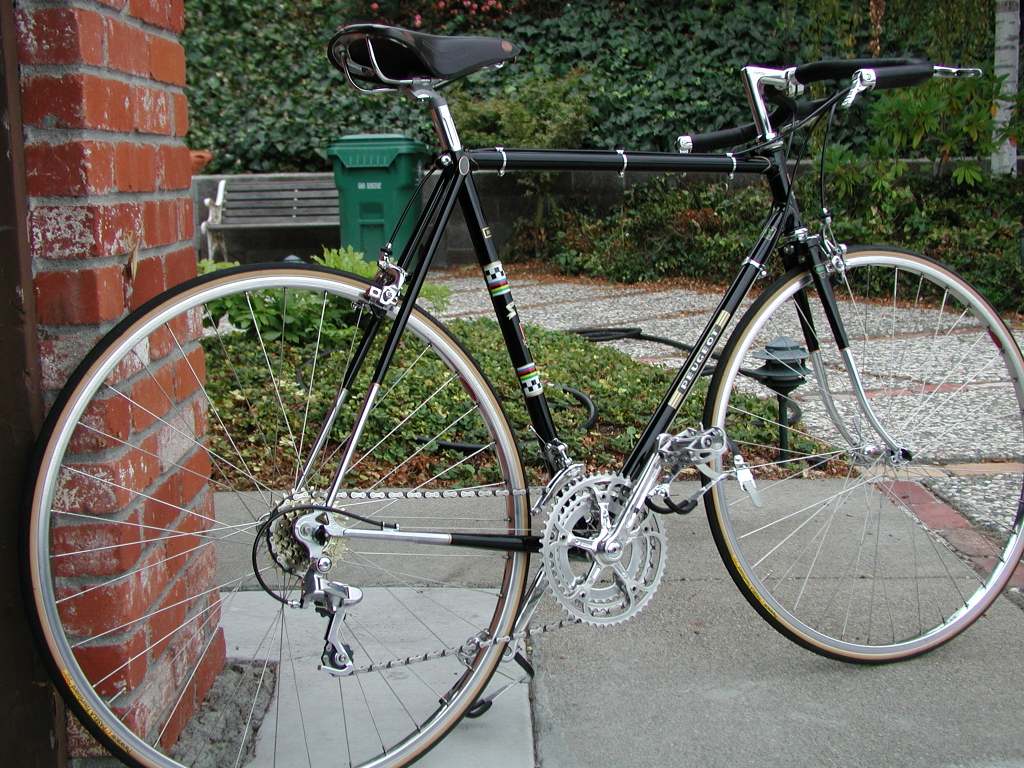
The Campy Record triple crank on my PX10 is chrome plated. It looks pretty much like highly polished aluminum, but there is no re-polishing required. It seems practical to me.
The plating was done in England.
Last edited by Grand Bois; 03-10-15 at 07:28 PM.
 03-10-15 | 10:31 PM
#13
Senior Member
Joined: Nov 2006
Posts: 813
Likes: 0
From: TORONTO , ONT , CA
Bikes: '86 AMBROSI / C RECORD. PINARELLO MONTELLO / FRAME, FORK.
"But if you are polishing out pits in rusted stuff you are going to loose detail and no way around it. If you don't, it will look terrible and you will wonder what you spent the money on."
Salubrious.
"Real platers" never polish-out pits; they fill the pits with braze, for steel, or, usually for pot metal, a propriety rod. These repairs are then buffed-down to be level with the parent metal.
The reason for this, is not to create a wow or a noticeable lack of visual continuity in the shine. Think of an auto that has had a great deal of low calibre body-work and been painted black.
Actually this type of nightmare is most always finished-off with white paint just to hide the body-man's sins.
BTW, the labour is by the hour and as a long-ago restorer friend of mind proclaimed, "And we work slowly."
Regards,
J T
Salubrious.
"Real platers" never polish-out pits; they fill the pits with braze, for steel, or, usually for pot metal, a propriety rod. These repairs are then buffed-down to be level with the parent metal.
The reason for this, is not to create a wow or a noticeable lack of visual continuity in the shine. Think of an auto that has had a great deal of low calibre body-work and been painted black.
Actually this type of nightmare is most always finished-off with white paint just to hide the body-man's sins.
BTW, the labour is by the hour and as a long-ago restorer friend of mind proclaimed, "And we work slowly."
Regards,
J T
03-11-15 | 03:49 AM
#14

Senior Member

Joined: Jul 2004
Posts: 13,358
Likes: 665
From: northern michigan
Bikes: '77 Colnago Super, '76 Fuji The Finest, '88 Cannondale Criterium, '86 Trek 760, '87 Miyata 712
03-11-15 | 08:04 AM
#15
As Shimagnolo and Grand Bois have noted, historically copper is first, then nickel, and finally chrome. But as Jim Cunningham explains in the FAQ section of the CyclArt website, new nickel formulations do not require copper to adhere to the steel and give excellent results. In fact, copper adds unnecessary weight and thickness and normally isn't used anymore unless there are recesses and pitting in the steel that need to be filled.
If I were in the market to have a bicycle frame or parts chrome plated, I'd pay the premium and have CyclArt do the work.
Jim documents the plating process here:
What is Hard Chrome Plating?
Do you triple plate (i.e. copper, then nickel, then chrome)?
What is chrome and how is it done?.
If I were in the market to have a bicycle frame or parts chrome plated, I'd pay the premium and have CyclArt do the work.
Jim documents the plating process here:
What is Hard Chrome Plating?
Do you triple plate (i.e. copper, then nickel, then chrome)?
What is chrome and how is it done?.
03-11-15 | 08:08 AM
#16
"But if you are polishing out pits in rusted stuff you are going to loose detail and no way around it. If you don't, it will look terrible and you will wonder what you spent the money on."
Salubrious.
"Real platers" never polish-out pits; they fill the pits with braze, for steel, or, usually for pot metal, a propriety rod. These repairs are then buffed-down to be level with the parent metal.
The reason for this, is not to create a wow or a noticeable lack of visual continuity in the shine. Think of an auto that has had a great deal of low calibre body-work and been painted black.
Actually this type of nightmare is most always finished-off with white paint just to hide the body-man's sins.
BTW, the labour is by the hour and as a long-ago restorer friend of mind proclaimed, "And we work slowly."
Regards,
J T
Salubrious.
"Real platers" never polish-out pits; they fill the pits with braze, for steel, or, usually for pot metal, a propriety rod. These repairs are then buffed-down to be level with the parent metal.
The reason for this, is not to create a wow or a noticeable lack of visual continuity in the shine. Think of an auto that has had a great deal of low calibre body-work and been painted black.
Actually this type of nightmare is most always finished-off with white paint just to hide the body-man's sins.
BTW, the labour is by the hour and as a long-ago restorer friend of mind proclaimed, "And we work slowly."
Regards,
J T
Referencing what the plater has to offer is worthwhile. I liked Highland Plating before they caught fire, I have not been by after.
03-11-15 | 08:14 AM
#17
Senior Member
Joined: May 2008
Posts: 9,102
Likes: 6,009
From: Zang's Spur, CO
Back in my hometown in Northern IN, there was a small plating plant that did work for Detroit.
Several of my friends worked there, and told me all about it.
Their car keys and the coins in their pockets were always beautifully plated.
Several of my friends worked there, and told me all about it.
Their car keys and the coins in their pockets were always beautifully plated.

Thread
Thread Starter
Forum
Replies
Last Post
Jantaras
Classic and Vintage Bicycles: Whats it Worth? Appraisals.
2
03-21-18 01:10 PM
williamldavis
Classic & Vintage
11
04-20-14 08:40 PM
