


Does my "ultimate commuter" exist?
 07-07-15 | 11:58 AM
#51

Senior Member
Joined: Oct 2007
Posts: 6,977
Likes: 191
From: Washington, DC

The difference between the largest and the smallest gears (range of gears) and the size of the increases between them play a large part in deciding which riding situation the gear system has been tailored to (e.g. high speed racing).
Maybe you meant to say gear ratios?
 07-07-15 | 12:02 PM
#52

aka Tom Reingold


Joined: Jan 2009
Posts: 44,171
Likes: 6,394
From: New York, NY, and High Falls, NY, USA
Bikes: 1962 Rudge Sports, 1971 Raleigh Super Course, 1971 Raleigh Pro Track, 1974 Raleigh International, 1975 Viscount Fixie, 1982 McLean, 1996 Lemond (Ti), 2002 Burley Zydeco tandem
That's right. It depends. Hub brakes also have disadvantages.
__________________
Tom Reingold, tom@noglider.com
New York City and High Falls, NY
Blogs: The Experienced Cyclist; noglider's ride blog
“When man invented the bicycle he reached the peak of his attainments.” — Elizabeth West, US author
Please email me rather than PM'ing me. Thanks.
Tom Reingold, tom@noglider.com
New York City and High Falls, NY
Blogs: The Experienced Cyclist; noglider's ride blog
“When man invented the bicycle he reached the peak of his attainments.” — Elizabeth West, US author
Please email me rather than PM'ing me. Thanks.
07-07-15 | 12:10 PM
#53

Senior Member
Joined: Feb 2014
Posts: 5,331
Likes: 12
From: Kent Wa.
Bikes: 2005 Gazelle Golfo, 1935 Raleigh Sport, 1970 Robin Hood sport, 1974 Schwinn Continental, 1984 Ross MTB/porteur, 2013 Flying Piegon path racer, 2014 Gazelle Toer Populair T8
Here, I'll quote from Rohloff's website:
The difference between the largest and the smallest gears (range of gears) and the size of the increases between them play a large part in deciding which riding situation the gear system has been tailored to (e.g. high speed racing).
Maybe you meant to say gear ratios?
The difference between the largest and the smallest gears (range of gears) and the size of the increases between them play a large part in deciding which riding situation the gear system has been tailored to (e.g. high speed racing).
Maybe you meant to say gear ratios?
07-07-15 | 12:17 PM
#54
Senior Member
Joined: Feb 2014
Posts: 5,331
Likes: 12
From: Kent Wa.
Bikes: 2005 Gazelle Golfo, 1935 Raleigh Sport, 1970 Robin Hood sport, 1974 Schwinn Continental, 1984 Ross MTB/porteur, 2013 Flying Piegon path racer, 2014 Gazelle Toer Populair T8
07-07-15 | 12:23 PM
#55
aka Tom Reingold
Joined: Jan 2009
Posts: 44,171
Likes: 6,394
From: New York, NY, and High Falls, NY, USA
Bikes: 1962 Rudge Sports, 1971 Raleigh Super Course, 1971 Raleigh Pro Track, 1974 Raleigh International, 1975 Viscount Fixie, 1982 McLean, 1996 Lemond (Ti), 2002 Burley Zydeco tandem
All we had were rims brakes for the longest time. Now some claim that they absolutely need disc (or drum) brakes. (OK, drum brakes existed for a while but were not widely used.) I do accept that the presence of something sometimes creates its own need, but the differences between rim brakes and hub brakes isn't as dramatic as some seem to think. I don't ride any hub brakes, and I do just fine. When it's wet out, I allow greater stopping distances. If I believed my brakes were so fantastic that I didn't need to change anything, I'd be delusional, because while the brake might slow my wheel as well when wet as when dry, my tires don't.
I don't have anything against anyone using hub brakes. Really. But if someone were to imply that rim brakes are entirely unsuitable for his purpose, I'd need to see a very special purpose for me to believe him. There are a few, but most of us do just fine with rim brakes. And rims brakes are practically free. I have a bin of them in my barn, too many for me ever to need.
__________________
Tom Reingold, tom@noglider.com
New York City and High Falls, NY
Blogs: The Experienced Cyclist; noglider's ride blog
“When man invented the bicycle he reached the peak of his attainments.” — Elizabeth West, US author
Please email me rather than PM'ing me. Thanks.
Tom Reingold, tom@noglider.com
New York City and High Falls, NY
Blogs: The Experienced Cyclist; noglider's ride blog
“When man invented the bicycle he reached the peak of his attainments.” — Elizabeth West, US author
Please email me rather than PM'ing me. Thanks.
07-07-15 | 12:28 PM
#56


multimodal commuter
Joined: Nov 2006
Posts: 19,810
Likes: 597
From: NJ, NYC, LI
Bikes: 1940s Fothergill, 1959 Allegro Special, 1963? Claud Butler Olympic Sprint, Lambert 'Clubman', 1974 Fuji "the Ace", 1976 Holdsworth 650b conversion rando bike, 1983 Trek 720 tourer, 1984 Counterpoint Opus II, 1993 Basso Gap, 2010 Downtube 8h, and...
My every day commuter is not that different from what he's looking for; shown here with a Shimano nexus 8 hub, dynamo lights front and back, fenders, rack. I recently changed the IGH to an old Sturmey Archer AW, again because it's easier to deal with (I can overhaul it myself); but my commute doesn't involve any real hills. My point is, old steel road bike frames are incredibly versatile and you can do almost anything with them. But one of the things you can't do, without serious frame work, is disk brakes.

__________________
www.rhmsaddles.com.
www.rhmsaddles.com.
07-07-15 | 02:22 PM
#57
Senior Member
Joined: Feb 2014
Posts: 5,331
Likes: 12
From: Kent Wa.
Bikes: 2005 Gazelle Golfo, 1935 Raleigh Sport, 1970 Robin Hood sport, 1974 Schwinn Continental, 1984 Ross MTB/porteur, 2013 Flying Piegon path racer, 2014 Gazelle Toer Populair T8
Its true Shimano roller brakes aren't serviceable, but if greased as required a few times a year they will last many years. I upgraded my gazelles brakes to the top of the line Shimano roller brakes and they didn't cost much more than a couple sets of koolstop brake pads. If I get 5 years out of the roller brakes I'm way ahead of the game as I can go through 4 sets of pads and a rim in one year with the wet environment here in the PNW. The price of this is higher effort at the lever
07-07-15 | 02:34 PM
#58
Thread Starter
Senior Member
Joined: Jun 2013
Posts: 4,094
Likes: 2
From: Bozeman
Bikes: 199? Landshark Roadshark, 198? Mondonico Diamond, 1987 Panasonic DX-5000, 1987 Bianchi Limited, Univega... Chrome..., 1989 Schwinn Woodlands, Motobecane USA Record, Raleigh Tokul 2
Disk/Drums vs. rim brakes: [MENTION=152773]noglider[/MENTION] and [MENTION=73614]rhm[/MENTION]. No, I don't absolutely NEED drum/disk brakes. I commuted just fine last year on an old MTB with rim brakes. I never went fast enough to really require brakes honestly. The majority of what I was riding through had enough rolling resistance that I'd most often just coast to a stop.
But the point is, since I'm attempting to build a commuter, I'd like to have brakes that deal with weather better than rim brakes. Both drum/roller and disks do that. I'm not saying that rim brakes are ineffective in the wet/snow, but they are LESS effective than brakes that are contained (drum/roller) or disks.
Also, as visible in the picture above, snow loves to build up between the rim and rim brakes making them totally ineffective. (I've had that happen quite a bit.) Obviously full length fenders would prevent this somewhat. I did not have full length fenders. In fact, I didn't even have fenders on my winter bike. The snow was never wet enough to require them and I never went fast enough to throw stuff on my back.
So yes, if I have to, I'll use normal rim brakes. They work fine, and changing your habits can make riding safe BUT, today we have better options. If I can incorporate at least ONE disk/drum/roller brake, that'd be great.
But the point is, since I'm attempting to build a commuter, I'd like to have brakes that deal with weather better than rim brakes. Both drum/roller and disks do that. I'm not saying that rim brakes are ineffective in the wet/snow, but they are LESS effective than brakes that are contained (drum/roller) or disks.
Also, as visible in the picture above, snow loves to build up between the rim and rim brakes making them totally ineffective. (I've had that happen quite a bit.) Obviously full length fenders would prevent this somewhat. I did not have full length fenders. In fact, I didn't even have fenders on my winter bike. The snow was never wet enough to require them and I never went fast enough to throw stuff on my back.
So yes, if I have to, I'll use normal rim brakes. They work fine, and changing your habits can make riding safe BUT, today we have better options. If I can incorporate at least ONE disk/drum/roller brake, that'd be great.
07-07-15 | 02:37 PM
#59
aka Tom Reingold
Joined: Jan 2009
Posts: 44,171
Likes: 6,394
From: New York, NY, and High Falls, NY, USA
Bikes: 1962 Rudge Sports, 1971 Raleigh Super Course, 1971 Raleigh Pro Track, 1974 Raleigh International, 1975 Viscount Fixie, 1982 McLean, 1996 Lemond (Ti), 2002 Burley Zydeco tandem
It would make an interesting experiment. Disc brakes are getting great reviews, but as [MENTION=73614]rhm[/MENTION] says, the frame has to be ready to accept them. They don't weigh much more than rim brakes.
One possible compromise is using a drum brake in front and a rim brake in the rear. The rear brake isn't that important anyway, and you save a little weight that way. Sturmey Archer makes a front hub that has both a dynamo and a drum brake.
One possible compromise is using a drum brake in front and a rim brake in the rear. The rear brake isn't that important anyway, and you save a little weight that way. Sturmey Archer makes a front hub that has both a dynamo and a drum brake.
__________________
Tom Reingold, tom@noglider.com
New York City and High Falls, NY
Blogs: The Experienced Cyclist; noglider's ride blog
“When man invented the bicycle he reached the peak of his attainments.” — Elizabeth West, US author
Please email me rather than PM'ing me. Thanks.
Tom Reingold, tom@noglider.com
New York City and High Falls, NY
Blogs: The Experienced Cyclist; noglider's ride blog
“When man invented the bicycle he reached the peak of his attainments.” — Elizabeth West, US author
Please email me rather than PM'ing me. Thanks.
07-07-15 | 02:47 PM
#60

Senior Member
Joined: Dec 2014
Posts: 2,751
Likes: 19
From: Seattlish
Bikes: SWorks Stumpy, Haibike Xduro RX, Crave SS
I am building up what I hope to be the perfect commuter for me. I am guessing a lot of folks who have posted do not have Seattle like hills. Only 9 miles each way, but about 1500 feet of elevation gain. So, I want lighter, more gears, and disc (very steep hills and rain have me loving disc brakes) brakes. So, each ultimate commuter might vary by region.
07-07-15 | 02:54 PM
#61
Senior Member
Joined: Feb 2014
Posts: 5,331
Likes: 12
From: Kent Wa.
Bikes: 2005 Gazelle Golfo, 1935 Raleigh Sport, 1970 Robin Hood sport, 1974 Schwinn Continental, 1984 Ross MTB/porteur, 2013 Flying Piegon path racer, 2014 Gazelle Toer Populair T8
I am building up what I hope to be the perfect commuter for me. I am guessing a lot of folks who have posted do not have Seattle like hills. Only 9 miles each way, but about 1500 feet of elevation gain. So, I want lighter, more gears, and disc (very steep hills and rain have me loving disc brakes) brakes. So, each ultimate commuter might vary by region.
07-07-15 | 03:06 PM
#62
Senior Member
Joined: Dec 2014
Posts: 2,751
Likes: 19
From: Seattlish
Bikes: SWorks Stumpy, Haibike Xduro RX, Crave SS
07-07-15 | 03:09 PM
#63
Thread Starter
Senior Member
Joined: Jun 2013
Posts: 4,094
Likes: 2
From: Bozeman
Bikes: 199? Landshark Roadshark, 198? Mondonico Diamond, 1987 Panasonic DX-5000, 1987 Bianchi Limited, Univega... Chrome..., 1989 Schwinn Woodlands, Motobecane USA Record, Raleigh Tokul 2
For 3 season riding I'd agree with you. But for winter I most often use the rear brake over the front. I don't want to wash out my front wheel. I often ride through a parking lot that has next to no drainage so when the snow melts then freezes overnight, you have perfectly clear, ice skate-able black ice. Studded tires help, but rear braking is a good suggestion (and one that sheldon makes.) Thanks for the suggestion for the dynamo and brake!
07-07-15 | 03:10 PM
#64
aka Tom Reingold
Joined: Jan 2009
Posts: 44,171
Likes: 6,394
From: New York, NY, and High Falls, NY, USA
Bikes: 1962 Rudge Sports, 1971 Raleigh Super Course, 1971 Raleigh Pro Track, 1974 Raleigh International, 1975 Viscount Fixie, 1982 McLean, 1996 Lemond (Ti), 2002 Burley Zydeco tandem
Good point about the rear brake. I am only beginning to learn to ride off road. I am starting to build the habit of using my rear brake first. On hard, dry surfaces, I only use my front brake, and that's no good in some conditions.
__________________
Tom Reingold, tom@noglider.com
New York City and High Falls, NY
Blogs: The Experienced Cyclist; noglider's ride blog
“When man invented the bicycle he reached the peak of his attainments.” — Elizabeth West, US author
Please email me rather than PM'ing me. Thanks.
Tom Reingold, tom@noglider.com
New York City and High Falls, NY
Blogs: The Experienced Cyclist; noglider's ride blog
“When man invented the bicycle he reached the peak of his attainments.” — Elizabeth West, US author
Please email me rather than PM'ing me. Thanks.
07-07-15 | 03:45 PM
#65
Senior Member
Joined: Feb 2014
Posts: 5,331
Likes: 12
From: Kent Wa.
Bikes: 2005 Gazelle Golfo, 1935 Raleigh Sport, 1970 Robin Hood sport, 1974 Schwinn Continental, 1984 Ross MTB/porteur, 2013 Flying Piegon path racer, 2014 Gazelle Toer Populair T8
Sounds like you get to take advantage of the interurban trail. I use about a mile of the Soos creek trail, but the rest is on the road.
07-07-15 | 03:59 PM
#66

Senior Member
Joined: May 2015
Posts: 1,218
Likes: 1
From: Washington DC Metro Area
Bikes: Breezer Uptown 8, Jamis Renegade Expert
Looking forward to seeing how you like the shifting and performance of the Nexus hub bike that you try.
I like being able to shift while at a complete stop. Sheldon Brown though (see article posted earlier) recommends not applying pressure to pedals while shifting, to minimize, which in practice is hard to do when climbing.
I'd love to eventually get a 2nd commuter bike for fun fair-weather use and use the Breezer for bad weather duty, or commute with it if the forecast calls for 10% chance or more of rain. Something like a Space Horse, Tamland, etc. So I'd be going kind of in the opposite direction of the OP.
I like being able to shift while at a complete stop. Sheldon Brown though (see article posted earlier) recommends not applying pressure to pedals while shifting, to minimize, which in practice is hard to do when climbing.
I'd love to eventually get a 2nd commuter bike for fun fair-weather use and use the Breezer for bad weather duty, or commute with it if the forecast calls for 10% chance or more of rain. Something like a Space Horse, Tamland, etc. So I'd be going kind of in the opposite direction of the OP.
07-07-15 | 04:08 PM
#67

Senior Member
Joined: Jun 2007
Posts: 8,101
Likes: 17
From: Minneapolis
carrado: I had a somewhat similar list of things I wanted in a commuter but with a more specialized purpose: winter
This is what it turned out like:
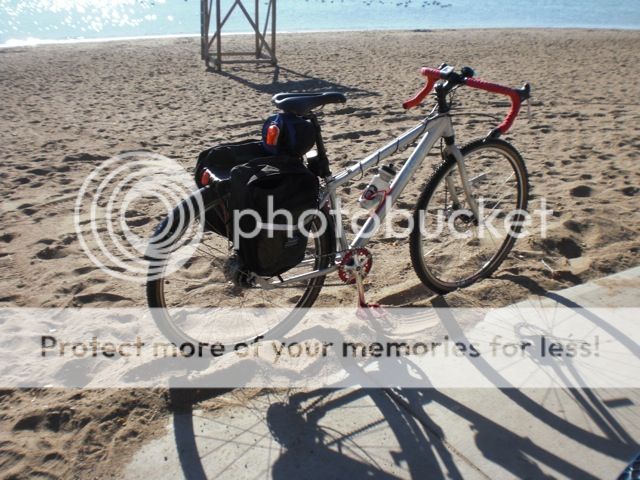
The frame is a Mongoose Sabrosa and it was meant to be set up in a few different configurations. It could be single speed, derailleur based, or IGH based:

I wanted a winter bike which meant it needed clearance for some bigger studded tires so I ended up with a beefier frame than you might be looking for. This came in well under $1,000 but I built it up from parts (some of which I had lying around). The frame was $25 from Nashbar's frame sale.
I don't have a recent picture but there have been some changes. The fork I had on there originally was something I picked up for $15 and was aluminum with a limited travel head shock. It had the dimensions I was looking for so I grabbed it. I eventually replaced it with a carbon fork similar to the bike in the second pick. Although you can't see it well in this picture, the original IGH was a Nexus 8 speed "Redband" and I had a roller brake on the rear. The front brake is a BB7 (disc).
The shifter is a bar end from Jtek and I highly recommend it if you are going to use a Nexus or Alfine with drop bars.
Anyway I have real world experience with roller brakes, Nexus/Alfine Hubs, and disc brakes.
Roller Brake Pros: Super easy adjustment, quiet, works in all conditions, low low maintenance
Roller Brake Cons: Not the quickest stopping brakes on the planet, heavy, experienced drag from grease in extreme cold
Disc Brake Pros: Relatively light, work in all conditions, can remove wheel without disconnecting anything, stop fast
Disc Brake Cons: Squeal like banshees if something gets on the rotors or pads, tight clearances between pad and rotor means rubbing if something is out of whack
The Nexus 8 speed Premium or "Red Band" and the Alfine 8 are virtually the same except that one works with roller brakes and one with discs. First off I will say that I'm very pleased with it. It shifts smoothly and it's super quiet (something I like), even while coasting. The range is adequate for my needs. People use these things on off-road bikes because they aren't as susceptible to getting gummed up or broken as derailleurs are. I like it because it's not affected by ice, snow, or grit. Grit and ice used to do a number on my derailleurs in the winter.
IGH Performance: This is truly hard for me to gauge. I would not choose to use it on a fast group ride or in any kind of road competition. It's not that I feel there is a huge loss of efficiency but spacing is not as close as I'd like, - especially between 5th and 6th gears. At the same time I don't feel it slows me down much at all on a summer commute. In winter you get some drag in cold weather. I switched from grease to ATF (transmission fluid) and that has helped.
IGH Weight: Somewhere in this thread someone said they replaced their derailleurs with a 7 speed Nexus and couldn't really tell the difference. Maybe the 7 speed is a lot lighter or the original derailleurs and cassette were on the heavy side but in my experience the Nexus/Alfine is quite hefty. Maybe on an otherwise heavy bike it wouldn't be noticeable but on this bike there is a substantial rear weight bias due to the hub. It's kind of annoying when you pick up the bike. How much does it affect performance? Well, their are all sorts of arguments about weight and performance that I won't go into, but if weight is a big concern, you might be bothered by the Alfine (or any IGH with more than 2 or 3 gears).
One last note about brakes. If you want a brake you can set up and then not have to worry about at all for a long long time, a roller brake is a very good choice. If you care about weight and you want the best stopping power in all conditions, then discs are a very good choice.
This is what it turned out like:
The frame is a Mongoose Sabrosa and it was meant to be set up in a few different configurations. It could be single speed, derailleur based, or IGH based:
I wanted a winter bike which meant it needed clearance for some bigger studded tires so I ended up with a beefier frame than you might be looking for. This came in well under $1,000 but I built it up from parts (some of which I had lying around). The frame was $25 from Nashbar's frame sale.
I don't have a recent picture but there have been some changes. The fork I had on there originally was something I picked up for $15 and was aluminum with a limited travel head shock. It had the dimensions I was looking for so I grabbed it. I eventually replaced it with a carbon fork similar to the bike in the second pick. Although you can't see it well in this picture, the original IGH was a Nexus 8 speed "Redband" and I had a roller brake on the rear. The front brake is a BB7 (disc).
The shifter is a bar end from Jtek and I highly recommend it if you are going to use a Nexus or Alfine with drop bars.
Anyway I have real world experience with roller brakes, Nexus/Alfine Hubs, and disc brakes.
Roller Brake Pros: Super easy adjustment, quiet, works in all conditions, low low maintenance
Roller Brake Cons: Not the quickest stopping brakes on the planet, heavy, experienced drag from grease in extreme cold
Disc Brake Pros: Relatively light, work in all conditions, can remove wheel without disconnecting anything, stop fast
Disc Brake Cons: Squeal like banshees if something gets on the rotors or pads, tight clearances between pad and rotor means rubbing if something is out of whack
The Nexus 8 speed Premium or "Red Band" and the Alfine 8 are virtually the same except that one works with roller brakes and one with discs. First off I will say that I'm very pleased with it. It shifts smoothly and it's super quiet (something I like), even while coasting. The range is adequate for my needs. People use these things on off-road bikes because they aren't as susceptible to getting gummed up or broken as derailleurs are. I like it because it's not affected by ice, snow, or grit. Grit and ice used to do a number on my derailleurs in the winter.
IGH Performance: This is truly hard for me to gauge. I would not choose to use it on a fast group ride or in any kind of road competition. It's not that I feel there is a huge loss of efficiency but spacing is not as close as I'd like, - especially between 5th and 6th gears. At the same time I don't feel it slows me down much at all on a summer commute. In winter you get some drag in cold weather. I switched from grease to ATF (transmission fluid) and that has helped.
IGH Weight: Somewhere in this thread someone said they replaced their derailleurs with a 7 speed Nexus and couldn't really tell the difference. Maybe the 7 speed is a lot lighter or the original derailleurs and cassette were on the heavy side but in my experience the Nexus/Alfine is quite hefty. Maybe on an otherwise heavy bike it wouldn't be noticeable but on this bike there is a substantial rear weight bias due to the hub. It's kind of annoying when you pick up the bike. How much does it affect performance? Well, their are all sorts of arguments about weight and performance that I won't go into, but if weight is a big concern, you might be bothered by the Alfine (or any IGH with more than 2 or 3 gears).
One last note about brakes. If you want a brake you can set up and then not have to worry about at all for a long long time, a roller brake is a very good choice. If you care about weight and you want the best stopping power in all conditions, then discs are a very good choice.
Last edited by tjspiel; 07-07-15 at 05:44 PM.
07-07-15 | 04:42 PM
#68
Senior Member
Joined: Feb 2014
Posts: 5,331
Likes: 12
From: Kent Wa.
Bikes: 2005 Gazelle Golfo, 1935 Raleigh Sport, 1970 Robin Hood sport, 1974 Schwinn Continental, 1984 Ross MTB/porteur, 2013 Flying Piegon path racer, 2014 Gazelle Toer Populair T8
My Gazelle has a standard nexus 8, and my Robin Hood has a red band nexus 8, the only noticeable difference is the red band shifts better under load.
I replaced the derailleurs with a 7 speed Shimano on a steel Ross Mt Whitney. The hub is heavier than the freewheel hub, but I also removed 2 derailleurs, 2 chairings, 5 sprockets, a shifter, cable, and about 20 chain links, so overall the gain in weight is about equal to a bottle of water, and I'm not sensitive enough that feel that.
I replaced the derailleurs with a 7 speed Shimano on a steel Ross Mt Whitney. The hub is heavier than the freewheel hub, but I also removed 2 derailleurs, 2 chairings, 5 sprockets, a shifter, cable, and about 20 chain links, so overall the gain in weight is about equal to a bottle of water, and I'm not sensitive enough that feel that.
07-07-15 | 04:50 PM
#69

Senior Member


Joined: Sep 2014
Posts: 3,902
Likes: 680
If so, maybe 3 speeds might be enough. Granted, I'm not a super fast or athletic rider, but I've been quite satisfied with 3 speeds for my commutes.
Of course the pro's and con's are easy to guess, because the numbers don't lie. With less than a 2:1 overall gear range, you have to give something up, either ease of cranking up tall hills, or having useful power going downhill.
And, much as I love gear hubs, I have to agree with @noglider that it's hard to make sense of IGH's from cost or weight standpoint. Adding one more gear to a cluster involves a simple piece of flat metal. Adding one more gear to an IGH is a whole new design. And it seems like modern derailer systems have gotten pretty darn reliable, even those of modest price.
Of course the pro's and con's are easy to guess, because the numbers don't lie. With less than a 2:1 overall gear range, you have to give something up, either ease of cranking up tall hills, or having useful power going downhill.
And, much as I love gear hubs, I have to agree with @noglider that it's hard to make sense of IGH's from cost or weight standpoint. Adding one more gear to a cluster involves a simple piece of flat metal. Adding one more gear to an IGH is a whole new design. And it seems like modern derailer systems have gotten pretty darn reliable, even those of modest price.
Last edited by Gresp15C; 07-07-15 at 04:53 PM.
07-07-15 | 04:54 PM
#70
Senior Member
Joined: Dec 2014
Posts: 2,751
Likes: 19
From: Seattlish
Bikes: SWorks Stumpy, Haibike Xduro RX, Crave SS
07-07-15 | 05:04 PM
#71
Senior Member
Joined: Feb 2014
Posts: 5,331
Likes: 12
From: Kent Wa.
Bikes: 2005 Gazelle Golfo, 1935 Raleigh Sport, 1970 Robin Hood sport, 1974 Schwinn Continental, 1984 Ross MTB/porteur, 2013 Flying Piegon path racer, 2014 Gazelle Toer Populair T8
07-07-15 | 05:21 PM
#72
Senior Member
Joined: Jun 2007
Posts: 8,101
Likes: 17
From: Minneapolis
My Gazelle has a standard nexus 8, and my Robin Hood has a red band nexus 8, the only noticeable difference is the red band shifts better under load.
I replaced the derailleurs with a 7 speed Shimano on a steel Ross Mt Whitney. The hub is heavier than the freewheel hub, but I also removed 2 derailleurs, 2 chairings, 5 sprockets, a shifter, cable, and about 20 chain links, so overall the gain in weight is about equal to a bottle of water, and I'm not sensitive enough that feel that.
I replaced the derailleurs with a 7 speed Shimano on a steel Ross Mt Whitney. The hub is heavier than the freewheel hub, but I also removed 2 derailleurs, 2 chairings, 5 sprockets, a shifter, cable, and about 20 chain links, so overall the gain in weight is about equal to a bottle of water, and I'm not sensitive enough that feel that.
As far as drivetrain weight difference goes my first conversion came out to about a pound heavier with the IGH. I was starting with relatively light components though and that makes a difference. It would seem like you're getting rid of so much stuff that it would compensate for the beefier hub but it depends. For example, I had campy brifters which were replaced with tektro brake levers and a Jtek shifter. Getting rid of the extra shifter didn't save much if anything in my case because the Campys were pretty light.
Last edited by tjspiel; 07-07-15 at 08:27 PM.
07-07-15 | 05:27 PM
#73
Senior Member
Joined: Jun 2007
Posts: 8,101
Likes: 17
From: Minneapolis
If so, maybe 3 speeds might be enough. Granted, I'm not a super fast or athletic rider, but I've been quite satisfied with 3 speeds for my commutes.
Of course the pro's and con's are easy to guess, because the numbers don't lie. With less than a 2:1 overall gear range, you have to give something up, either ease of cranking up tall hills, or having useful power going downhill.
And, much as I love gear hubs, I have to agree with @noglider that it's hard to make sense of IGH's from cost or weight standpoint. Adding one more gear to a cluster involves a simple piece of flat metal. Adding one more gear to an IGH is a whole new design. And it seems like modern derailer systems have gotten pretty darn reliable, even those of modest price.
Of course the pro's and con's are easy to guess, because the numbers don't lie. With less than a 2:1 overall gear range, you have to give something up, either ease of cranking up tall hills, or having useful power going downhill.
And, much as I love gear hubs, I have to agree with @noglider that it's hard to make sense of IGH's from cost or weight standpoint. Adding one more gear to a cluster involves a simple piece of flat metal. Adding one more gear to an IGH is a whole new design. And it seems like modern derailer systems have gotten pretty darn reliable, even those of modest price.
Last edited by tjspiel; 07-07-15 at 05:46 PM.
07-07-15 | 06:03 PM
#74
Senior Member
Joined: Feb 2014
Posts: 5,331
Likes: 12
From: Kent Wa.
Bikes: 2005 Gazelle Golfo, 1935 Raleigh Sport, 1970 Robin Hood sport, 1974 Schwinn Continental, 1984 Ross MTB/porteur, 2013 Flying Piegon path racer, 2014 Gazelle Toer Populair T8
It depends on the model and year of red band vs standard Nexus. When I was looking at them the red band had 3 roller clutches compared to the standard Nexus which had 1. The standard Nexus hub used pawls and they'd click when coasting just like a cassette hub. The Alfines and Red Bands don't. They coast silently.
07-07-15 | 06:30 PM
#75
Senior Member
Joined: Jun 2007
Posts: 8,101
Likes: 17
From: Minneapolis
There's a doc that explains the differences but it may be dated. It also claims the Red band is more efficient in every gear except 5th. Not sure if it's a difference that anyone would notice. I seem to remember something about Alfines and Redbands being rated for offroad use. Not that it matters in this case anyway.
https://poehali.net/attach/Differences_Between_Hubs.pdf