


Building new wheels - spoke count
 02-16-13 | 08:30 PM
#1

Thread Starter
Senior Member
Joined: Jan 2008
Posts: 1,415
Likes: 0
From: San Diego, CA
Bikes: 2010 Litespeed Icon, 1987 Nishiki Olympic 12
Building new wheels - spoke count
Hey guys,
I'm finally getting ready to order everything for my Litespeed (long story) and now am faced with a big decision. What count spokes to do.
I was thinking 32h 3x rear, 28h 2x front, but think I may be overbuilding them for my 165ish (and dropping) pounds. Would 28h 3x rear, 24h 2x front be enough for me? I'm looking for pretty bomb-proof wheels (hence the 32/28), but think that 28/24 would hold okay. My current bike has cheap wheels that are 28 3x/24 radial and have held up with only minor issues over the last 6 years (but only about 7 or 8 thousand miles). I'm hoping to have these wheels for a long time and I don't really race.
What say ye, 41? Especially wheel builders.
And since it's going to be asked, looking at A23 rims with ST Swiss 240s hubs.
I'm finally getting ready to order everything for my Litespeed (long story) and now am faced with a big decision. What count spokes to do.
I was thinking 32h 3x rear, 28h 2x front, but think I may be overbuilding them for my 165ish (and dropping) pounds. Would 28h 3x rear, 24h 2x front be enough for me? I'm looking for pretty bomb-proof wheels (hence the 32/28), but think that 28/24 would hold okay. My current bike has cheap wheels that are 28 3x/24 radial and have held up with only minor issues over the last 6 years (but only about 7 or 8 thousand miles). I'm hoping to have these wheels for a long time and I don't really race.
What say ye, 41? Especially wheel builders.
And since it's going to be asked, looking at A23 rims with ST Swiss 240s hubs.
 02-16-13 | 08:41 PM
#2

Administrator

Joined: Feb 2005
Posts: 13,655
Likes: 2,706
From: Delaware shore
Bikes: Cervelo C5, Guru Photon, Waterford, Specialized CX
Well built wheels don't require anywhere near that spoke count for your weight. That's what I weigh and I use 16 front and 20 rear for all purpose riding.
02-16-13 | 08:51 PM
#3
Senior Member
Joined: Dec 2009
Posts: 4,700
Likes: 5
At your weight? Nah, you don't need 24/28.
But what's the purpose of the wheels? Do you race? Do you ride long distances solo? Is there any look you want to achieve with these wheels? Those kind of questions need to be answered to determine what spoke count would be best for YOU.
One thing to consider, especially if this is your first wheel build: a broken spoke on a 28- or 32-spoke wheel will not result in a wheel anywhere near out of true as a broken spoke on a 16- or 20-spoke wheel. Break a single spoke on a 16-spoke wheel and it may wind up unrideable no matter what you can do with a spoke wrench. But a single broken spoke on a 32-spoke wheel might not even need any work with a spoke wrench at all to be true enough to ride home on.
Why is this even more important if this is your first wheel build? Because your first build is probably a lot more likely to suffer from a broken spoke or two.
But what's the purpose of the wheels? Do you race? Do you ride long distances solo? Is there any look you want to achieve with these wheels? Those kind of questions need to be answered to determine what spoke count would be best for YOU.
One thing to consider, especially if this is your first wheel build: a broken spoke on a 28- or 32-spoke wheel will not result in a wheel anywhere near out of true as a broken spoke on a 16- or 20-spoke wheel. Break a single spoke on a 16-spoke wheel and it may wind up unrideable no matter what you can do with a spoke wrench. But a single broken spoke on a 32-spoke wheel might not even need any work with a spoke wrench at all to be true enough to ride home on.
Why is this even more important if this is your first wheel build? Because your first build is probably a lot more likely to suffer from a broken spoke or two.
02-16-13 | 09:01 PM
#4
Thread Starter
Senior Member
Joined: Jan 2008
Posts: 1,415
Likes: 0
From: San Diego, CA
Bikes: 2010 Litespeed Icon, 1987 Nishiki Olympic 12
I mostly do solo rides, no races.
I'm upping my mileage quite a bit this year from the last few years. I'm at almost 500 for the year (which is about what I did last year) because of time constraints of working 3 or 4 jobs. But I'm aiming at doing a few solo centuries this out in the country and we don't really have the nicest roads here. Especially out in east county.
As for looks, I don't need the sexiest wheels out there. I'd much rather have reliable wheels that look pretty good.
And I'm going to have a helping hand in building them. The owner of the shop I used to work at will help me out. I'm getting everything for wholesale since I used to work there, and the biggest issue seems to be with what the distributor has available. I want to avoid anything that needs special (non-J-bend) spokes for ease of repair.
I'm upping my mileage quite a bit this year from the last few years. I'm at almost 500 for the year (which is about what I did last year) because of time constraints of working 3 or 4 jobs. But I'm aiming at doing a few solo centuries this out in the country and we don't really have the nicest roads here. Especially out in east county.
As for looks, I don't need the sexiest wheels out there. I'd much rather have reliable wheels that look pretty good.
And I'm going to have a helping hand in building them. The owner of the shop I used to work at will help me out. I'm getting everything for wholesale since I used to work there, and the biggest issue seems to be with what the distributor has available. I want to avoid anything that needs special (non-J-bend) spokes for ease of repair.
02-16-13 | 09:21 PM
#5
Thread Starter
Senior Member
Joined: Jan 2008
Posts: 1,415
Likes: 0
From: San Diego, CA
Bikes: 2010 Litespeed Icon, 1987 Nishiki Olympic 12
It seems that if I stick with DT Swiss, I can do 32/28 or 28/28. The distributor doesn't have any lower drillings that 28 in the 240 (non-straight pull).
If I go with American Classics hubs, I can go lower spokes. What are your thoughts on AC hubs? Specifically the Micro 58 front and 205 rear hubs?
If I go with American Classics hubs, I can go lower spokes. What are your thoughts on AC hubs? Specifically the Micro 58 front and 205 rear hubs?
 02-16-13 | 09:28 PM
#7


So it is


Joined: Sep 2008
Posts: 22,878
Likes: 6,382
From: Westminster, CO
Bikes: Luzerne, 684, Boreas, Wheelhouse, Alize©®, Bayamo, Cayo
I'm a big fan of that combination of American Classic hubs. I have well over 10,000 miles on them, with one bearing replacement on the front and rear, strictly as maintenance.
02-16-13 | 09:44 PM
#8

Senior Member
Joined: May 2007
Posts: 6,169
Likes: 1
From: Santa Cruz Mountains
24/28 is probably ok for you on those rims. But rider weight is not the only factor when it comes to stress on wheels. The roads you ride, how well you float or hop the bike over potholes or similar obstacles, and how you climb also make a difference. If like me you do a lot of climbing out of the saddle and rock the bike when you stand you'll be harder on rear wheels. I'm in the mid 140s and build my training wheels 28h rear, because I break a lot of rear spokes. I break way fewer now that I am building my own wheels.
I am not a fan of the AC205 rear hub flange spacing. To make the tension less uneven they move the NDS flange in. That works but it makes the wheel less stiff laterally. On the AC350 wheels I have I can bounce the rear rim off the brake pads at will when I stand, and it's built 32h. The AC rear hub preload adjustment goes out of adjustment periodically and it's a bit tricky to adjust correctly.
I don't like DTs flange spacing either, except their problem is a narrow DS flange spacing. That's so they can accept a Campy freehub without too many mods. But it makes the tension difference too great. So the NDS spokes are too lose, and they break.
I recommend the White Ind hubs. They have decent flange spacing on both sides. They have excellent bearings and the preload is easily adjusted IF you read the manual.
If you want cheaper hubs, the BHS hubs are pretty good, especially considering the price. The DS flange spacing is narrow so I often build them with the DS spokes laced 1x heads in to increase the bracing angle. That may not work if you're running cassettes with a small last cog and Sram as the cage sticks out a little farther than Shimanos.
I am not a fan of the AC205 rear hub flange spacing. To make the tension less uneven they move the NDS flange in. That works but it makes the wheel less stiff laterally. On the AC350 wheels I have I can bounce the rear rim off the brake pads at will when I stand, and it's built 32h. The AC rear hub preload adjustment goes out of adjustment periodically and it's a bit tricky to adjust correctly.
I don't like DTs flange spacing either, except their problem is a narrow DS flange spacing. That's so they can accept a Campy freehub without too many mods. But it makes the tension difference too great. So the NDS spokes are too lose, and they break.
I recommend the White Ind hubs. They have decent flange spacing on both sides. They have excellent bearings and the preload is easily adjusted IF you read the manual.
If you want cheaper hubs, the BHS hubs are pretty good, especially considering the price. The DS flange spacing is narrow so I often build them with the DS spokes laced 1x heads in to increase the bracing angle. That may not work if you're running cassettes with a small last cog and Sram as the cage sticks out a little farther than Shimanos.
02-16-13 | 09:51 PM
#9
Thread Starter
Senior Member
Joined: Jan 2008
Posts: 1,415
Likes: 0
From: San Diego, CA
Bikes: 2010 Litespeed Icon, 1987 Nishiki Olympic 12
With the AC hubs, the lowest I can go is 28/24 still, but I think that might be better than 32/28. Especially if I can keep these 10lbs that I've lost so far off and lose even more.
02-16-13 | 10:23 PM
#10
Senior Member
Joined: Dec 2010
Posts: 6,682
Likes: 4
From: Above ground, Walnut Creek, Ca
Bikes: 8 ss bikes, 1 5-speed touring bike
i agree, with those a23 rims 24/28 should be more than enough. rims are much, much stiffer than they used to be. i'm riding 28/28 kinlin 200's and am 150 and i know i could have gone 24/28 or even 20/24, but i wanted to use a vintage set of hubs and the smallest hole count i could find was 28.
02-17-13 | 06:21 AM
#11
Senior Member
Joined: Sep 2009
Posts: 2,072
Likes: 236
Bikes: Habanero Titanium Team Nuevo
I build wheels for myself and you are looking for reliable. I would go with 32 rear and a radial 24 in the front. Some Novatec hubs and DT swiss 440s are what I am thinking of building now. The 440 comes in an offset rear and the new model is welded. Go with basic DT DB spokes and you can have a reliable set that can take it and not worry. I use this count and I am 176. Spokes do not weight much and they will keep the wheel working even with more. Do not buy into the 16 20 business as you mentioned you ride solo and do not race.
02-17-13 | 12:32 PM
#13
Senior Member
Joined: Dec 2009
Posts: 4,700
Likes: 5
24/28 is probably ok for you on those rims. But rider weight is not the only factor when it comes to stress on wheels. The roads you ride, how well you float or hop the bike over potholes or similar obstacles, and how you climb also make a difference. If like me you do a lot of climbing out of the saddle and rock the bike when you stand you'll be harder on rear wheels. I'm in the mid 140s and build my training wheels 28h rear, because I break a lot of rear spokes. I break way fewer now that I am building my own wheels.
I am not a fan of the AC205 rear hub flange spacing. To make the tension less uneven they move the NDS flange in. That works but it makes the wheel less stiff laterally. On the AC350 wheels I have I can bounce the rear rim off the brake pads at will when I stand, and it's built 32h. The AC rear hub preload adjustment goes out of adjustment periodically and it's a bit tricky to adjust correctly.
I don't like DTs flange spacing either, except their problem is a narrow DS flange spacing. That's so they can accept a Campy freehub without too many mods. But it makes the tension difference too great. So the NDS spokes are too lose, and they break.
I recommend the White Ind hubs. They have decent flange spacing on both sides. They have excellent bearings and the preload is easily adjusted IF you read the manual.
If you want cheaper hubs, the BHS hubs are pretty good, especially considering the price. The DS flange spacing is narrow so I often build them with the DS spokes laced 1x heads in to increase the bracing angle. That may not work if you're running cassettes with a small last cog and Sram as the cage sticks out a little farther than Shimanos.
I am not a fan of the AC205 rear hub flange spacing. To make the tension less uneven they move the NDS flange in. That works but it makes the wheel less stiff laterally. On the AC350 wheels I have I can bounce the rear rim off the brake pads at will when I stand, and it's built 32h. The AC rear hub preload adjustment goes out of adjustment periodically and it's a bit tricky to adjust correctly.
I don't like DTs flange spacing either, except their problem is a narrow DS flange spacing. That's so they can accept a Campy freehub without too many mods. But it makes the tension difference too great. So the NDS spokes are too lose, and they break.
I recommend the White Ind hubs. They have decent flange spacing on both sides. They have excellent bearings and the preload is easily adjusted IF you read the manual.
If you want cheaper hubs, the BHS hubs are pretty good, especially considering the price. The DS flange spacing is narrow so I often build them with the DS spokes laced 1x heads in to increase the bracing angle. That may not work if you're running cassettes with a small last cog and Sram as the cage sticks out a little farther than Shimanos.
02-17-13 | 03:06 PM
#14
Senior Member
Joined: May 2007
Posts: 6,169
Likes: 1
From: Santa Cruz Mountains
Yes, that is true.
AC has steel inserts on their aluminium freehub body which is also a good solution.
The BHS freehub body is aluminium but they do something to make it hard. Unlike my Powertap freehub which has some serious gouges even with AC cassette clips, the BHS freehubs have virtually no marks at all.
AC has steel inserts on their aluminium freehub body which is also a good solution.
The BHS freehub body is aluminium but they do something to make it hard. Unlike my Powertap freehub which has some serious gouges even with AC cassette clips, the BHS freehubs have virtually no marks at all.
02-18-13 | 11:08 AM
#16

Making a kilometer blurry
Joined: May 2006
Posts: 26,170
Likes: 93
From: Austin (near TX)
Bikes: rkwaki's porn collection
The value of a spoke is greatly under stated, and the cost is over stated. Nothing wrong with 24/28. Won't weigh much more, won't be much less aerodynamic. Will be much more bombproof though. While 20/24 would be "sufficient," you stated "bombproof" as a requirement. At your weight, 24/28 is the bottom end of what will be bombproof, assuming you wish to ride these wheels until the braking surfaces wear out, and never have to take a spoke wrench to them.
The build quality has a lot to do with this as well though. Make sure tension is even and adequate, and the wheel is properly stress relieved.
Since I saw it up there, don't do a 28/28. Wasted spokes up front.
The build quality has a lot to do with this as well though. Make sure tension is even and adequate, and the wheel is properly stress relieved.
Since I saw it up there, don't do a 28/28. Wasted spokes up front.
02-18-13 | 11:30 AM
#17

Senior Member
Joined: Jun 2011
Posts: 1,248
Likes: 3
From: Frederick, MD
Bikes: Cannondale, Trek
TOTAL noob to wheel building issues here, and I have a question that might also help answer the OP's original question:
There are factors that would suggest a higher spoke count, and there are factors that would suggest a lower count, and the trick is to find the balance that matches your needs. (Okay - that's a blinding flash of the obvious )
)
The question is:
I.e. - we're trying to get the balance between - what factors.?
There are factors that would suggest a higher spoke count, and there are factors that would suggest a lower count, and the trick is to find the balance that matches your needs. (Okay - that's a blinding flash of the obvious
)The question is:
- What factors would argue in favor of a higher spoke count? (Stronger wheel, I suppose - but what else?
- And conversely, what factors would argue in favor of a lower count? (I'm guessing lighter and aero, and maybe cool looks? What else?)
I.e. - we're trying to get the balance between - what factors.?
Last edited by DGlenday; 02-18-13 at 03:44 PM.
02-18-13 | 12:39 PM
#18
Senior Member
Joined: May 2007
Posts: 6,169
Likes: 1
From: Santa Cruz Mountains
Fewer spokes are lighter (by about 4.5-5.5g/spoke depending on the spokes used) and more aero by a small amount.
Rim stiffness, number and diameter of spokes and hub geometry all play into a wheels lateral stiffness. If you use stiffer rims you can get by with fewer spokes and still have enough lateral stiffness. But stiffer rims are usually heavier as well, because rim stiffness is largely determined by the rim's cross section. So that's a tradeoff too.
What an individual can get by with depends on their riding condition, weight, riding style. Rider weight is not the only factor.
Rim stiffness, number and diameter of spokes and hub geometry all play into a wheels lateral stiffness. If you use stiffer rims you can get by with fewer spokes and still have enough lateral stiffness. But stiffer rims are usually heavier as well, because rim stiffness is largely determined by the rim's cross section. So that's a tradeoff too.
What an individual can get by with depends on their riding condition, weight, riding style. Rider weight is not the only factor.
02-18-13 | 12:53 PM
#19
Making a kilometer blurry
Joined: May 2006
Posts: 26,170
Likes: 93
From: Austin (near TX)
Bikes: rkwaki's porn collection
One consideration as well is that 24/24 would be a sound way to eliminate 4 spokes without much loss in durability. Lace the rear wheel up triplet with a 32h hub and a 24h rim. Then do 16 spokes drive side and 8 spoke non-drive side. This will double the tension on the non-drive rear spokes and increase their durability. Since the drive side flange is offset, this is a reasonable way to build a rear wheel. Fulcrum/Campy have it goin' on.
02-18-13 | 01:07 PM
#20
Senior Member
Joined: Jun 2007
Posts: 6,411
Likes: 13
From: Haunchyville
If you are looking for strong but reasonably light I would consider loosing 4 more spokes from the front instead of the back (meaning 32r/24f or 28r/20f). In the front, all spokes are doing the same 'work' so 20-24 should be good. But most spoke failures occur in the rear where each side of the wheel has a different job and are at different tensions and the rear is supporting more weight than the front.
02-18-13 | 03:32 PM
#21
Thread Starter
Senior Member
Joined: Jan 2008
Posts: 1,415
Likes: 0
From: San Diego, CA
Bikes: 2010 Litespeed Icon, 1987 Nishiki Olympic 12
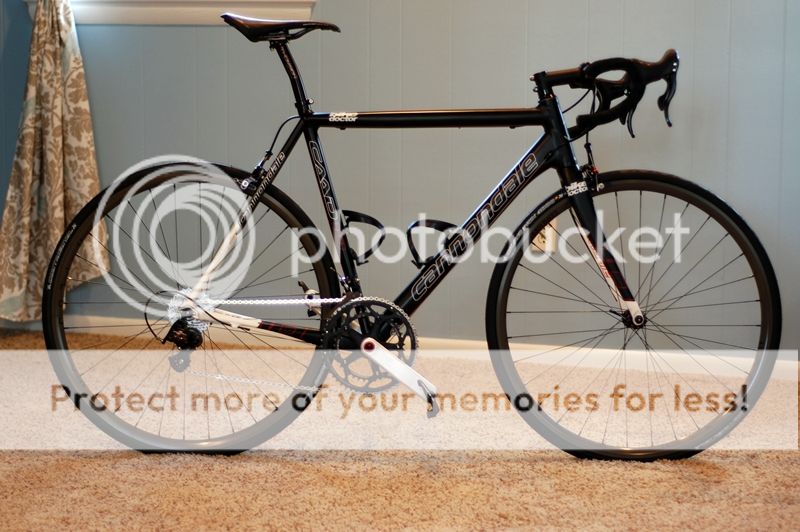 02-18-13 | 03:44 PM
#22
Senior Member
Joined: Jun 2011
Posts: 1,248
Likes: 3
From: Frederick, MD
Bikes: Cannondale, Trek
Fewer spokes are lighter (by about 4.5-5.5g/spoke depending on the spokes used) and more aero by a small amount.
Rim stiffness, number and diameter of spokes and hub geometry all play into a wheels lateral stiffness. If you use stiffer rims you can get by with fewer spokes and still have enough lateral stiffness. But stiffer rims are usually heavier as well, because rim stiffness is largely determined by the rim's cross section. So that's a tradeoff too.
What an individual can get by with depends on their riding condition, weight, riding style. Rider weight is not the only factor.
Rim stiffness, number and diameter of spokes and hub geometry all play into a wheels lateral stiffness. If you use stiffer rims you can get by with fewer spokes and still have enough lateral stiffness. But stiffer rims are usually heavier as well, because rim stiffness is largely determined by the rim's cross section. So that's a tradeoff too.
What an individual can get by with depends on their riding condition, weight, riding style. Rider weight is not the only factor.
02-18-13 | 03:48 PM
#23


Senior Member
Joined: May 2002
Posts: 10,123
Likes: 4
From: Near Portland, OR
Bikes: Three road bikes. Two track bikes.
If I'm riding for training, I ride 3cross 32 front and rear. This way I don't have to think at all about it. That said, 32/28 will work fine for you and at 165lbs you'll be hard pressed to hurt it.
__________________
Cat 2 Track, Cat 3 Road.
"If you’re new enough [to racing] that you would ask such question, then i would hazard a guess that if you just made up a workout that sounded hard to do, and did it, you’d probably get faster." --the tiniest sprinter
Cat 2 Track, Cat 3 Road.
"If you’re new enough [to racing] that you would ask such question, then i would hazard a guess that if you just made up a workout that sounded hard to do, and did it, you’d probably get faster." --the tiniest sprinter
02-18-13 | 05:42 PM
#24
Thread Starter
Senior Member
Joined: Jan 2008
Posts: 1,415
Likes: 0
From: San Diego, CA
Bikes: 2010 Litespeed Icon, 1987 Nishiki Olympic 12
Went with WI T11 hubs in black, 28/32. It was a lot cheaper than the DT hubs and I like the idea of the Ti freehub body. All that's left to do is order the rims and wait for everything to come in!

