


Truth about clipless pedals.
 07-03-13 | 02:06 PM
#101

Goofy Goober
Joined: Nov 2012
Posts: 330
Likes: 1
Let's think this through. Would it have been a nice day if he flipped, but came loose from his bike? 
No, flipping your bike means you're going to have a very bad day whether you're attached to it or not.
The thing we should learn from your story isn't that clipless pedals are bad or dangerous, it's that you shouldn't run your bike into things.
No, flipping your bike means you're going to have a very bad day whether you're attached to it or not.
The thing we should learn from your story isn't that clipless pedals are bad or dangerous, it's that you shouldn't run your bike into things.
 07-03-13 | 02:17 PM
#102


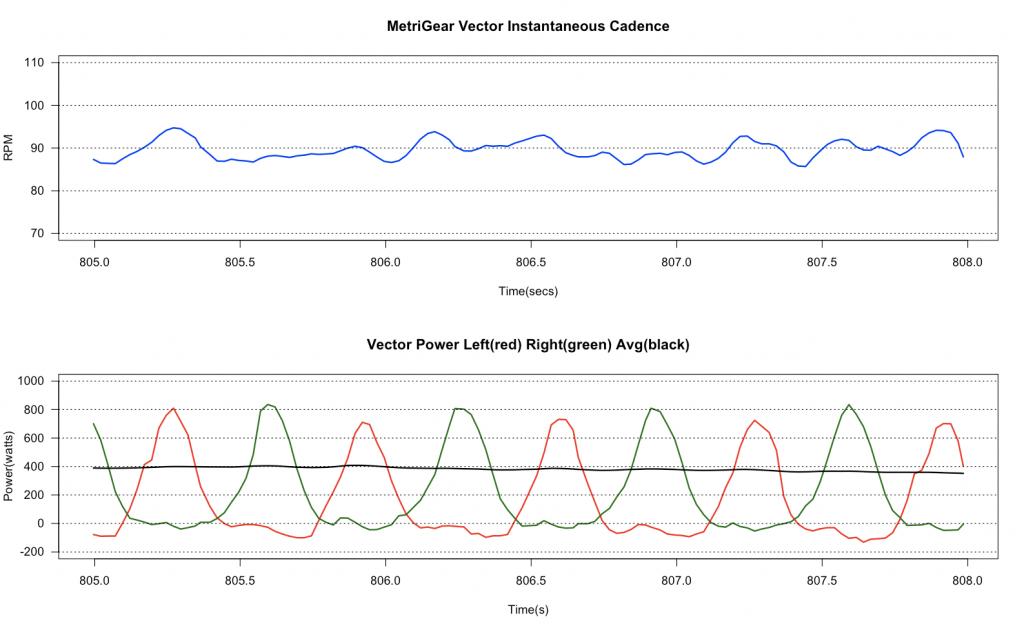
The claim that "clipless means less fatigue" is a new one to me, and (again) I haven't seen an iota of evidence to back it up.
Is there a graph showing power output on platforms?
I find when I am on platforms that I never fully unload the upstroke pedal, and my feet start hurting a lot quicker.
07-03-13 | 02:20 PM
#103

I'm doing it wrong.

Joined: Jun 2009
Posts: 4,875
Likes: 2,814
Bikes: Rivendell Appaloosa, Rivendell Frank Jones Sr., Trek Fuel EX9, Kona Jake the Snake CR, Niner Sir9
FWIW, when I am riding hard instead of just riding around with the wife I would rather be wearing clipless pedals, especially up and down hills.
07-03-13 | 03:16 PM
#104

Descends like a rock
Joined: Oct 2010
Posts: 4,034
Likes: 16
From: Fort Worth, TX
Bikes: Scott Foil, Surly Pacer
I doubt it has been studied because its probably generally accepted as fact that foot retention is a valuable benefit to cyclists trying to go fast for long periods of time. Just like the study linked earlier, the studies aren't trying to evaluate clipless vs platforms, they are looking at how to optimize pedal strokes with the assumption that any pro or serious cyclist will be using clipless pedals because the benefits over platforms are obvious. Like I said before, when I started using clipless pedals and shoes, I had new muscles in my butt and back of the legs start getting sore. They were being engaged differently. Using different muscle groups or being able to focus on using different muscle groups over a long ride will definitely help you go longer.
07-03-13 | 03:30 PM
#105

Prefers Cicero

Joined: Jul 2005
Posts: 12,860
Likes: 146
From: Toronto
Bikes: 1984 Trek 520; 2007 Bike Friday NWT; misc others
Let's break this down, engineering style.
Unless you've got one of those funny (and pretty damn cool, imo) elliptical crank sets, your crank and drive train in general are radially symmetrical. So really, they don't care which 'direction' you're pulling/pushing, just that energy is going from you to it. (In reality, since it's a polar [radial] system, you are only really pushing in one direction the whole time, you're just using different muscle groups to accomplish it. So, if consider using the exact same amount of energy on platform vs clipless, you just get to spread that energy payment over different muscle groups, which helps to keep you from exhausting yourself too quickly.
Also, it should help you maintain a more consistent power output. Like I said, the crank doesn't really care which "direction" you push, but you're not using the same radial system as it. So when using platform, you can only push down, which only lets you use one quarter(ish) of the crank rotation per arm, or about half the rotation in total. Pulling/pushing in other directions uses - again, assuming the same amount of energy - the same energy spread more consistently over the crank.
As for clipping/unclipping, I still have the occasional trouble unclipping really quickly, but it's a necessary evil IMO.
Unless you've got one of those funny (and pretty damn cool, imo) elliptical crank sets, your crank and drive train in general are radially symmetrical. So really, they don't care which 'direction' you're pulling/pushing, just that energy is going from you to it. (In reality, since it's a polar [radial] system, you are only really pushing in one direction the whole time, you're just using different muscle groups to accomplish it. So, if consider using the exact same amount of energy on platform vs clipless, you just get to spread that energy payment over different muscle groups, which helps to keep you from exhausting yourself too quickly.
Also, it should help you maintain a more consistent power output. Like I said, the crank doesn't really care which "direction" you push, but you're not using the same radial system as it. So when using platform, you can only push down, which only lets you use one quarter(ish) of the crank rotation per arm, or about half the rotation in total. Pulling/pushing in other directions uses - again, assuming the same amount of energy - the same energy spread more consistently over the crank.
As for clipping/unclipping, I still have the occasional trouble unclipping really quickly, but it's a necessary evil IMO.
07-03-13 | 03:49 PM
#106
Prefers Cicero
Joined: Jul 2005
Posts: 12,860
Likes: 146
From: Toronto
Bikes: 1984 Trek 520; 2007 Bike Friday NWT; misc others
07-03-13 | 03:55 PM
#107
Prefers Cicero
Joined: Jul 2005
Posts: 12,860
Likes: 146
From: Toronto
Bikes: 1984 Trek 520; 2007 Bike Friday NWT; misc others
You can make the change in pedals "one day" but you have to do the test over a longer period of time. If you switch from clipless to flat pedals you need to relearn how to pedal in circles, because when you're clipped to the pedal you can get a bit lazy and let the cleat drag your foot around. Tha's why your foot floats off the pedal at the top of the stroke when you first go back to flat pedals - you've forgotten how to move your foot in a circle.
07-03-13 | 04:00 PM
#108

You Know!? For Kids!


Joined: Apr 2005
Posts: 6,166
Likes: 29
From: Just NW of Richardson Bike Mart
Bikes: '05 Trek 1200 / '90 Trek 8000 / '? Falcon Europa
__________________
Are you a registered member? Why not? Click here to register. It's free and only takes 27 seconds! Help out the forums, abide by our community guidelines.
Are you a registered member? Why not? Click here to register. It's free and only takes 27 seconds! Help out the forums, abide by our community guidelines.
07-03-13 | 04:06 PM
#109
Prefers Cicero
Joined: Jul 2005
Posts: 12,860
Likes: 146
From: Toronto
Bikes: 1984 Trek 520; 2007 Bike Friday NWT; misc others
Last edited by cooker; 07-03-13 at 04:10 PM.
07-03-13 | 04:36 PM
#110

Senior Member

Joined: Sep 2012
Posts: 779
Likes: 131
From: Back-of-beyond, Kootenays, BC
Bikes: Specialized Roubaix Expert Road and Specialized Stump Jumper FS Mountain; De Vinci Caribou touring, Intense Tracer T275c, Cramerotti, Specialized Allez, Condor, Marinoni, Kona Rove DL
The only way you're getting me out of my clipless road pedals is if you pry them off my cold dead feet!
07-03-13 | 04:41 PM
#111
Senior Member
Joined: Jun 2003
Posts: 16,767
Likes: 85
I think the most graphic demonstration of how effective clipless pedals are was Lance Armstrong pulling out of his and whacking his nuts on the top tube after the infamous handbag incident on the TdF.
How anyone can argue about the effectiveness of clipless pedals after that, I don't know.
How anyone can argue about the effectiveness of clipless pedals after that, I don't know.
07-03-13 | 04:51 PM
#112
Senior Member
Joined: Oct 2012
Posts: 212
Likes: 0

 07-03-13 | 06:45 PM
#114

The space coyote lied.


Joined: Sep 2008
Posts: 48,724
Likes: 10,983
From: dusk 'til dawn.
Bikes: everywhere
I think the most graphic demonstration of how effective clipless pedals are was Lance Armstrong pulling out of his and whacking his nuts on the top tube after the infamous handbag incident on the TdF.
How anyone can argue about the effectiveness of clipless pedals after that, I don't know.
How anyone can argue about the effectiveness of clipless pedals after that, I don't know.
Man, he wasn't wearing a helmet or a cup. Safety first, Lance!
07-03-13 | 08:09 PM
#118


Super Moderator
Joined: Jul 2004
Posts: 21,980
Likes: 1,155
From: Ffld Cnty Connecticut
Bikes: Old Steelies I made, Old Cannondales
__________________
Bikes: Old steel race bikes, old Cannondale race bikes, less old Cannondale race bike, crappy old mtn bike.
FYI: https://www.bikeforums.net/forum-sugg...ad-please.html
Bikes: Old steel race bikes, old Cannondale race bikes, less old Cannondale race bike, crappy old mtn bike.
FYI: https://www.bikeforums.net/forum-sugg...ad-please.html
07-03-13 | 08:12 PM
#119

serious cyclist
Joined: Apr 2009
Posts: 21,147
Likes: 3,687
From: Austin
Bikes: S1, R2, P2
What I know is that it's startling to wander down to campus and hear all the kids on their platform pedals sounding Zippppp Zippppp Zipppppp Zippppppp... in individual strokes instead of the steady whirrrr of roadies.
07-03-13 | 08:14 PM
#120

Senior Member
Joined: Jan 2010
Posts: 39,726
Likes: 9,738
From: TC, MN
Bikes: R3 Disc, Haanjo
At the very least, I know (from PM data) that I can rest my quads and concentrate on other parts of the stroke without a dropoff in power in and around my FTP. I really couldn't give two ****s if some anonymous guy on the internet thinks differently.
07-03-13 | 08:30 PM
#121

Climbing: Ropes or Wheels
Joined: Jul 2013
Posts: 384
Likes: 1
From: Unied States, Maine
Bikes: 2012 Scott Foil 30, Homebrew Windsor Fens Build, 2015 Fuji Touring, 1980 Univega
You have some assumptions in there that might be unsupported. You can't assume that spreading the work among different muscles groups improves efficiency, because those muscles may differ in their mechanical and chemical efficiency . So you might end up underusing your most efficient muscles, and overusing some inefficient ones. You also can't assume that steady power output is more efficient than pulsatile output concentrated on the downstroke. In fact pro cyclists exert much more effort on the downstroke than the upstroke and it seems to work for them.
One muscle's proficiency dosen't have anything to do with the others. Joule for joule, the power comes from direction, not timing. If you can spread say 40 watts over two strokes, even if it's 30-10, then you can optimize (minimize) the wear on said strokes.
Yeah, everyone has a better push down than anything else (thus the elliptical cranksets), but that's no reason not to use everything else too. if you push down with 40 watts but you can also pull with 15, why not take the 55? (totally making these number up, as I'm sure you noticed) it's [almost] the same energy transfer, but more power.
07-03-13 | 09:12 PM
#122
Prefers Cicero
Joined: Jul 2005
Posts: 12,860
Likes: 146
From: Toronto
Bikes: 1984 Trek 520; 2007 Bike Friday NWT; misc others
My assumptions are not unsupported. I say that in confidence, not in aggression. I may be newer to bikes, but I am incredibly well based in thermodynamics.
One muscle's proficiency dosen't have anything to do with the others. Joule for joule, the power comes from direction, not timing. If you can spread say 40 watts over two strokes, even if it's 30-10, then you can optimize (minimize) the wear on said strokes.
Yeah, everyone has a better push down than anything else (thus the elliptical cranksets), but that's no reason not to use everything else too. if you push down with 40 watts but you can also pull with 15, why not take the 55? (totally making these number up, as I'm sure you noticed) it's [almost] the same energy transfer, but more power.
One muscle's proficiency dosen't have anything to do with the others. Joule for joule, the power comes from direction, not timing. If you can spread say 40 watts over two strokes, even if it's 30-10, then you can optimize (minimize) the wear on said strokes.
Yeah, everyone has a better push down than anything else (thus the elliptical cranksets), but that's no reason not to use everything else too. if you push down with 40 watts but you can also pull with 15, why not take the 55? (totally making these number up, as I'm sure you noticed) it's [almost] the same energy transfer, but more power.
Last edited by cooker; 07-03-13 at 09:27 PM.
07-03-13 | 09:52 PM
#123
I may be newer to bikes, but I am incredibly well based in thermodynamics.
Would you care to calculate how much force is required to lift your leg? Or do you imagine that lifting 10% of your body's mass requires no energy whatsoever?
if you push down with 40 watts but you can also pull with 15, why not take the 55?
2) Because your leg was not designed to exert significant forces when lifting.
3) Because, presumably due to the above factors, pulling up actually reduces your total efficiency.
07-03-13 | 10:00 PM
#124
Another source, by the way, is Andy Pruitt, one of the top cycling sports docs, who heads up the Boulder Center for Sports Medicine, does fittings for numerous pro teams:
"Because of advancing technology and the development of new ways to observe and measure biomechanics in action, we know a great deal about the pedal stroke. And one of the things we know is that even the best pedaling stylists don’t produce power when they pull up on the backstroke. The most they can hope for is to unweight the rear foot so it adds less drag to the power output of the foot that is pushing downward. But it’s not possible even to get the back foot out of the way entirely."
https://velonews.competitor.com/2010/...yclists_137556
With all due respect, I'm gonna go with the top sports doc, who has been working regularly with top pros in numerous disciplines (including road, mountain & track) and has been using pedal-based power meters for over a decade.
07-03-13 | 11:12 PM
#125

Senior Member
Joined: Aug 2011
Posts: 22,676
Likes: 2,642
From: CID
Bikes: 1991 Bianchi Eros, 1964 Armstrong, 1988 Diamondback Ascent, 1988 Bianchi Premio, 1987 Bianchi Sport SX, 1980s Raleigh mixte (hers), All-City Space Horse (hers)