


Snow and very cold conditions
 08-30-23 | 06:02 PM
#1

Thread Starter
Junior Member
Joined: Dec 2020
Posts: 122
Likes: 23
Snow and very cold conditions
I'm coming to the end of my long tour, with one major remaining obstacle ahead of me: a mountain crossing with variable weather conditions, including snow and very low temperatures. I have attached a picture of the current forecast for the areas I will be passing through at 3-4000m altitude. (Temps in celsius). I was not really equipped for these conditions up until now so I have have added or will add some equipment: waterproof gloves, glove liners, sleeping bag liner (though I hope to avoid camping it might be necessary), extra sleeping pad, waterproofs, balaclava, thermos, etc. Whether the road will be open or not remains to be seen. Assuming it is, my other concern is the bike: tyre grip and brake effectiveness. It's the first situation where I regret not having disk brakes, partly because it means I can't use the neat trick of using cable ties to give my tyres extra grip (unless I disconnect the brakes...).
Anyone with experience of cycling in these conditions and can comment on what's possible and what's not? Any tips or tricks for improving tyre grip and keeping v-brakes working? I have about 5-7 days before I hit the worst of it.
Cheers
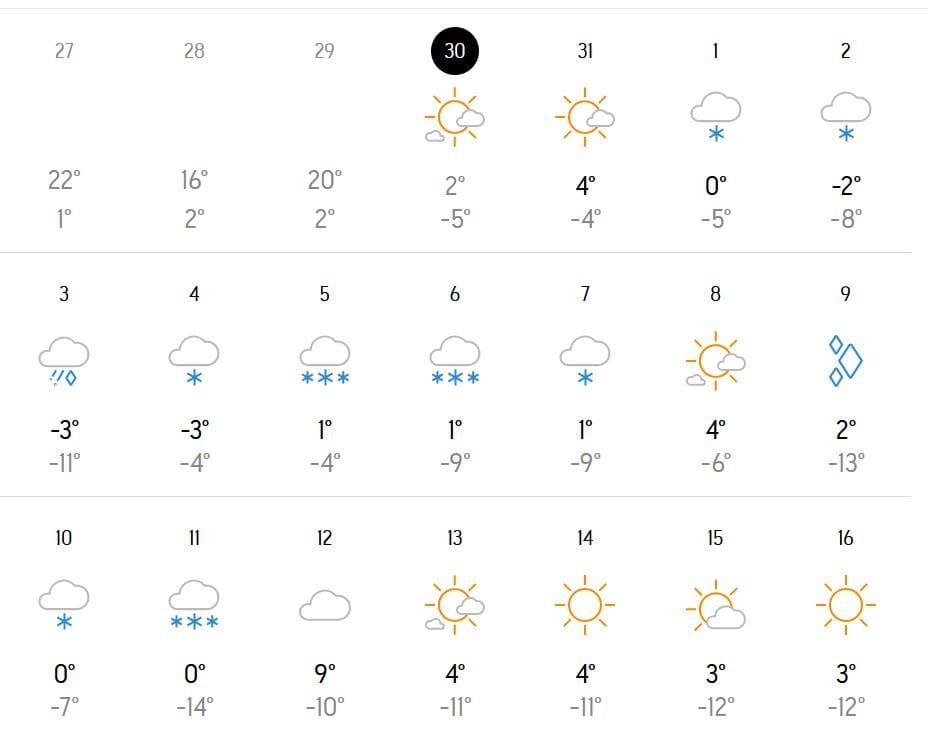
Anyone with experience of cycling in these conditions and can comment on what's possible and what's not? Any tips or tricks for improving tyre grip and keeping v-brakes working? I have about 5-7 days before I hit the worst of it.
Cheers
 08-30-23 | 07:03 PM
#2
Senior Member


Joined: Jul 2007
Posts: 8,631
Likes: 3,543
From: South shore, L.I., NY
Bikes: Trek Emonda SL7, Cannondale Topstone, Miyata City Liner, Specialized Chisel, Specialized Epic Evo
Umm…. Wait a few days till it warms up ?. Really curious as to your location. That’s very cold for late August.
08-31-23 | 03:39 AM
#3
Senior Member
Joined: Apr 2013
Posts: 1,173
Likes: 115
Bikes: Surly Disk Trucker, 2014 w/Brooks Flyer Special saddle, Tubus racks - Duo front/Logo Evo rear, 2019 Dahon Mariner D8, Both bikes share Ortlieb Packer Plus series panniers, Garmin Edge 1000
A couple thoughts -
1. The coldest I will ride is about 20deg F, or -6 to -7 C. Your lows are dipping below that mark. Depending on how you do it - that might not be too bad to tough it out for a few days, especially if you can hang on until it warms up as the mornings progress. Layers will be your friend and a wind breaker outer layer is a must.
2. As to tire grip - in light snow I wouldn't be that concerned. What I would be concerned with is icing on the road surface. That can happen with no snow. Your zip tie trick won't do as much for ice. As you state - with rim brakes you aren't going to get away with zip ties, anyway. You need your brakes.
My vote would be studded tires. That may not be an easy/quick option if you have to order them in. If you go this route - do your research. There are some common studded tires that aren't very good quality - where the studs damage the tires quickly (studs poking through and ripping the tires after a relatively short amount of miles). I don't recall which ones they are, however when I was searching for studded tires last season I ran in to that.
Here is a link to the studded tires I got. They are unavailable from this vendor, but they may give you a lead to follow. I am not sure how they will stack up compared to some of the others I heard of that have bad reviews. I havent used them enough yet to give much insight. I had them on for a few days last fall then switched back to the regular tires. I didn't ride much through the winter and it was mild here so I didn't really need them. They are here when I do though.
https://www.thebikeshop.com/product/...0x38-24564.htm
One more note on riding in the cold - I much prefer mitts over gloves. I get circulation issues in my hands when I ride and having individual fingers with gloves causes me issues pretty quick when its cold. Having mitts keeps my fingers all together in the same zone. When it gets below about 40-45deg F (about 4-6 C) I use hand warmer packets in the mitts. Though, they get too hot and my hands sweat so I take them off and rotate with mitts/without. The switching around is a pain in the rear, but if my hands get too cold and quit working thats a bigger issue. Its a trade off.
1. The coldest I will ride is about 20deg F, or -6 to -7 C. Your lows are dipping below that mark. Depending on how you do it - that might not be too bad to tough it out for a few days, especially if you can hang on until it warms up as the mornings progress. Layers will be your friend and a wind breaker outer layer is a must.
2. As to tire grip - in light snow I wouldn't be that concerned. What I would be concerned with is icing on the road surface. That can happen with no snow. Your zip tie trick won't do as much for ice. As you state - with rim brakes you aren't going to get away with zip ties, anyway. You need your brakes.
My vote would be studded tires. That may not be an easy/quick option if you have to order them in. If you go this route - do your research. There are some common studded tires that aren't very good quality - where the studs damage the tires quickly (studs poking through and ripping the tires after a relatively short amount of miles). I don't recall which ones they are, however when I was searching for studded tires last season I ran in to that.
Here is a link to the studded tires I got. They are unavailable from this vendor, but they may give you a lead to follow. I am not sure how they will stack up compared to some of the others I heard of that have bad reviews. I havent used them enough yet to give much insight. I had them on for a few days last fall then switched back to the regular tires. I didn't ride much through the winter and it was mild here so I didn't really need them. They are here when I do though.
https://www.thebikeshop.com/product/...0x38-24564.htm
One more note on riding in the cold - I much prefer mitts over gloves. I get circulation issues in my hands when I ride and having individual fingers with gloves causes me issues pretty quick when its cold. Having mitts keeps my fingers all together in the same zone. When it gets below about 40-45deg F (about 4-6 C) I use hand warmer packets in the mitts. Though, they get too hot and my hands sweat so I take them off and rotate with mitts/without. The switching around is a pain in the rear, but if my hands get too cold and quit working thats a bigger issue. Its a trade off.
08-31-23 | 03:50 AM
#4
Senior Member
Joined: Apr 2021
Posts: 4,081
Likes: 2,104
He is in the Andes going from Equador to Peru
I'd try to organize a taxi over the snowy climb or climb in the snow until you had to walk and walk down until below snowline, assuming you had superb foul weather gear, tent, and sufficient sleeping bag. Or, wait it out. Descending snow covered roads at 14,000 feet or higher isn't something I would do
I'd try to organize a taxi over the snowy climb or climb in the snow until you had to walk and walk down until below snowline, assuming you had superb foul weather gear, tent, and sufficient sleeping bag. Or, wait it out. Descending snow covered roads at 14,000 feet or higher isn't something I would do
08-31-23 | 04:12 AM
#5

Senior Member

Joined: Feb 2004
Posts: 3,815
Likes: 434
From: Thailand..........currently Nakhon Ricefield, moving to the beach soon.
Bikes: inferior steel....alas....noodly aluminium assploded
sometimes you just gotta admit it's not possible, or too much trouble, or miserable to ride every last bit.
there must be local buses crossing that mountain.
stow your bike on top and enjoy the journey.

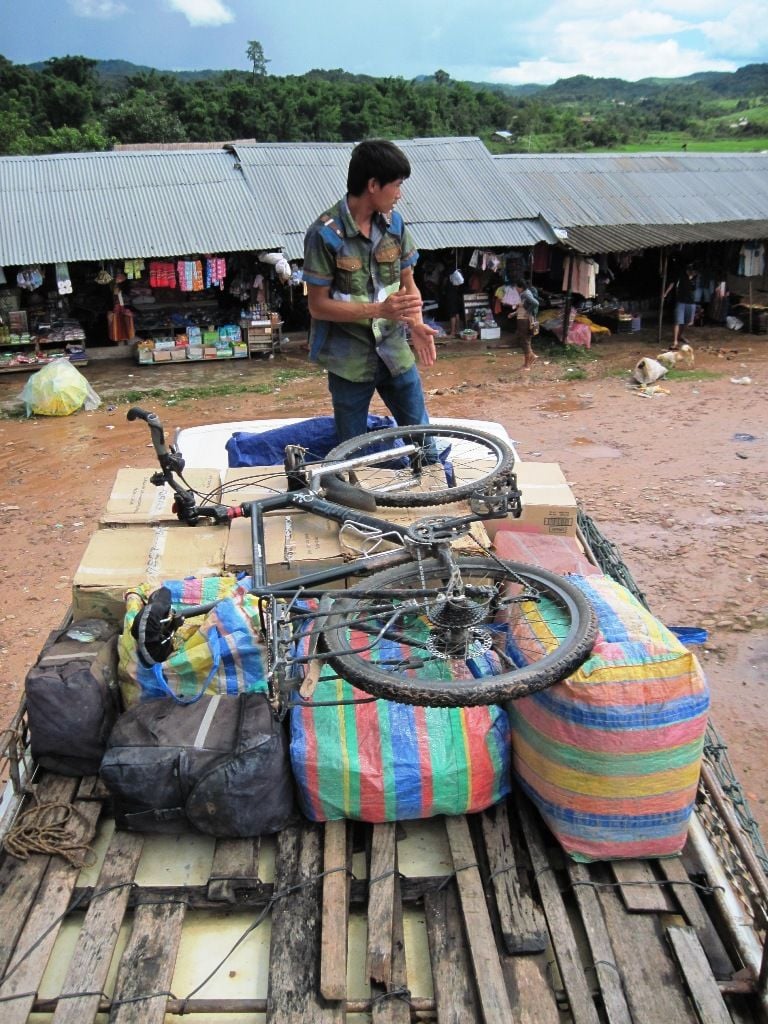
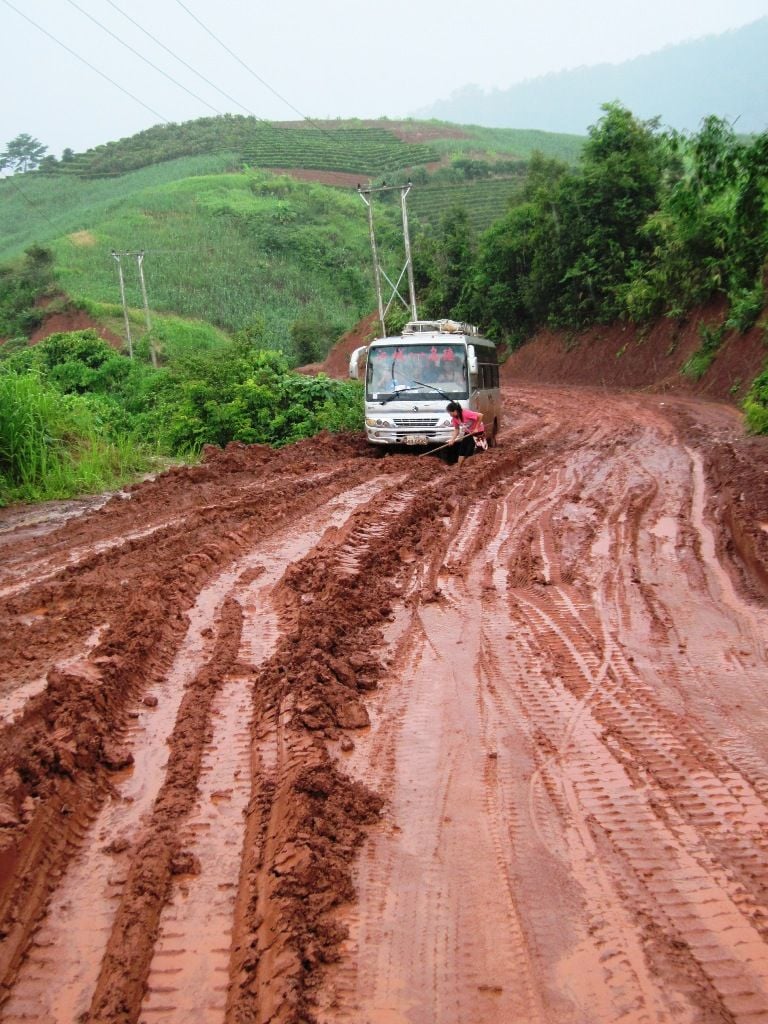
there must be local buses crossing that mountain.
stow your bike on top and enjoy the journey.

 08-31-23 | 05:35 AM
#6
bicycle tourist
Joined: Dec 2007
Posts: 2,640
Likes: 471
From: Austin, Texas, USA
Bikes: Trek 520, Lightfoot Ranger, Trek 4500
Altiplano? Northern Peru?
When I traveled South America, I encountered significantly colder temperatures climbing from Arequipa to the Altiplano and then across Bolivia. Not quite as cold as coldest you list but still -10C overnight and below freezing starting in the mornings. I stayed low along the coast until southern Peru. A few things I learned for me:
1. Overnight is coldest. I ended up with a second lightweight sleeping bag that I put over my normal sleeping bag (rated for -5C). I needed to make sure to camp where I could block a cold wind. I found inside shelter one of the coldest nights. When camping below freezing I kept a water bottle in my outer sleeping bag to keep from freezing.
2. Riding during the day. Waited until the sun was a little higher and it warmed. With my gear I noticed a cutoff around -4C where I had difficulty keeping hands/feet warm enough with my gloves so minimized time riding colder than this.
3. Moisture. In general where I went was a very dry area but I'd first understand if those ice/snow in forecast is actual precipitation. If so I'd time things to cross coldest passes with sun and not ice/cold. More because of temperatures or risk of getting wet/cold than traction. As far as slipping on surfaces particularly with ice; simple light snow and climbing one can ride. Ice itself I would avoid riding unless you have studded tires (which might be tough to come by).
4. Limits. I would have thresholds of cold where I'd avoid camping and different thresholds I'd avoid riding. In those cases, if necessary I'd either take a different route or time things to avoid worst days or use transport such as a bus to skip past.
When I traveled South America, I encountered significantly colder temperatures climbing from Arequipa to the Altiplano and then across Bolivia. Not quite as cold as coldest you list but still -10C overnight and below freezing starting in the mornings. I stayed low along the coast until southern Peru. A few things I learned for me:
1. Overnight is coldest. I ended up with a second lightweight sleeping bag that I put over my normal sleeping bag (rated for -5C). I needed to make sure to camp where I could block a cold wind. I found inside shelter one of the coldest nights. When camping below freezing I kept a water bottle in my outer sleeping bag to keep from freezing.
2. Riding during the day. Waited until the sun was a little higher and it warmed. With my gear I noticed a cutoff around -4C where I had difficulty keeping hands/feet warm enough with my gloves so minimized time riding colder than this.
3. Moisture. In general where I went was a very dry area but I'd first understand if those ice/snow in forecast is actual precipitation. If so I'd time things to cross coldest passes with sun and not ice/cold. More because of temperatures or risk of getting wet/cold than traction. As far as slipping on surfaces particularly with ice; simple light snow and climbing one can ride. Ice itself I would avoid riding unless you have studded tires (which might be tough to come by).
4. Limits. I would have thresholds of cold where I'd avoid camping and different thresholds I'd avoid riding. In those cases, if necessary I'd either take a different route or time things to avoid worst days or use transport such as a bus to skip past.
08-31-23 | 06:23 AM
#7
Hooked on Touring

Joined: Mar 2004
Posts: 3,030
Likes: 359
From: Wyoming
I moved out to Wyoming from North Carolina in December 1990.
It was 40 below a week after I got there.
Ridden a lot in the cold and snow. Continue to ride year round.
1. Best advice - wait until it warms up.
Not only are slushy road difficult to ride, they are nasty and get you soaked.
2. Traction - I use a wide 2.25 tire with serious tread. Figure you have that already.
3. Ski liner gloves, fleece ear band, frequently changed socks.
(I've tried grocery bags inside my shoes and my feet just sweat.
fancier methods to keep feet dry usually also result in sweaty feet.)
Be safe. And have a good end to your trip!
It was 40 below a week after I got there.
Ridden a lot in the cold and snow. Continue to ride year round.
1. Best advice - wait until it warms up.
Not only are slushy road difficult to ride, they are nasty and get you soaked.
2. Traction - I use a wide 2.25 tire with serious tread. Figure you have that already.
3. Ski liner gloves, fleece ear band, frequently changed socks.
(I've tried grocery bags inside my shoes and my feet just sweat.
fancier methods to keep feet dry usually also result in sweaty feet.)
Be safe. And have a good end to your trip!
08-31-23 | 05:37 PM
#8
Thread Starter
Junior Member
Joined: Dec 2020
Posts: 122
Likes: 23
I'm generally cautious about letting people know where I'm going to be before I've been there - perhaps unnecessary but it seems a sensible habit. In this area the weather should be a bit better at this time of year, and a month ago it was fine. But two storm fronts have blown in and so it's not great now. In fact at the moment the pass is officially closed with 3m of snow, so there is a good chance the decision will be taken out of my hands anyway.
He is in the Andes going from Equador to Peru
I'd try to organize a taxi over the snowy climb or climb in the snow until you had to walk and walk down until below snowline, assuming you had superb foul weather gear, tent, and sufficient sleeping bag. Or, wait it out. Descending snow covered roads at 14,000 feet or higher isn't something I would do
I'd try to organize a taxi over the snowy climb or climb in the snow until you had to walk and walk down until below snowline, assuming you had superb foul weather gear, tent, and sufficient sleeping bag. Or, wait it out. Descending snow covered roads at 14,000 feet or higher isn't something I would do
Yeah, I agree that the descent is even more of a concern than the ascent. As things stand the pass is closed so not even buses are being allowed through. But hypothetically it's possible that a change in weather and snow clearing by the authorities could open it up again.
08-31-23 | 05:46 PM
#9
Thread Starter
Junior Member
Joined: Dec 2020
Posts: 122
Likes: 23
Altiplano? Northern Peru?
When I traveled South America, I encountered significantly colder temperatures climbing from Arequipa to the Altiplano and then across Bolivia. Not quite as cold as coldest you list but still -10C overnight and below freezing starting in the mornings. I stayed low along the coast until southern Peru. A few things I learned for me:
1. Overnight is coldest. I ended up with a second lightweight sleeping bag that I put over my normal sleeping bag (rated for -5C). I needed to make sure to camp where I could block a cold wind. I found inside shelter one of the coldest nights. When camping below freezing I kept a water bottle in my outer sleeping bag to keep from freezing.
2. Riding during the day. Waited until the sun was a little higher and it warmed. With my gear I noticed a cutoff around -4C where I had difficulty keeping hands/feet warm enough with my gloves so minimized time riding colder than this.
3. Moisture. In general where I went was a very dry area but I'd first understand if those ice/snow in forecast is actual precipitation. If so I'd time things to cross coldest passes with sun and not ice/cold. More because of temperatures or risk of getting wet/cold than traction. As far as slipping on surfaces particularly with ice; simple light snow and climbing one can ride. Ice itself I would avoid riding unless you have studded tires (which might be tough to come by).
4. Limits. I would have thresholds of cold where I'd avoid camping and different thresholds I'd avoid riding. In those cases, if necessary I'd either take a different route or time things to avoid worst days or use transport such as a bus to skip past.
When I traveled South America, I encountered significantly colder temperatures climbing from Arequipa to the Altiplano and then across Bolivia. Not quite as cold as coldest you list but still -10C overnight and below freezing starting in the mornings. I stayed low along the coast until southern Peru. A few things I learned for me:
1. Overnight is coldest. I ended up with a second lightweight sleeping bag that I put over my normal sleeping bag (rated for -5C). I needed to make sure to camp where I could block a cold wind. I found inside shelter one of the coldest nights. When camping below freezing I kept a water bottle in my outer sleeping bag to keep from freezing.
2. Riding during the day. Waited until the sun was a little higher and it warmed. With my gear I noticed a cutoff around -4C where I had difficulty keeping hands/feet warm enough with my gloves so minimized time riding colder than this.
3. Moisture. In general where I went was a very dry area but I'd first understand if those ice/snow in forecast is actual precipitation. If so I'd time things to cross coldest passes with sun and not ice/cold. More because of temperatures or risk of getting wet/cold than traction. As far as slipping on surfaces particularly with ice; simple light snow and climbing one can ride. Ice itself I would avoid riding unless you have studded tires (which might be tough to come by).
4. Limits. I would have thresholds of cold where I'd avoid camping and different thresholds I'd avoid riding. In those cases, if necessary I'd either take a different route or time things to avoid worst days or use transport such as a bus to skip past.
I do tend to feel the cold more than some, but I also build up heat when cycling/exercising more than most - it's a difficult balance to strike.
Unfortunately I am on a tight schedule otherwise I would happily sit in the foothills for a week and wait for more definitively better weather.
I moved out to Wyoming from North Carolina in December 1990.
It was 40 below a week after I got there.
Ridden a lot in the cold and snow. Continue to ride year round.
1. Best advice - wait until it warms up.
Not only are slushy road difficult to ride, they are nasty and get you soaked.
2. Traction - I use a wide 2.25 tire with serious tread. Figure you have that already.
3. Ski liner gloves, fleece ear band, frequently changed socks.
(I've tried grocery bags inside my shoes and my feet just sweat.
fancier methods to keep feet dry usually also result in sweaty feet.)
Be safe. And have a good end to your trip!
It was 40 below a week after I got there.
Ridden a lot in the cold and snow. Continue to ride year round.
1. Best advice - wait until it warms up.
Not only are slushy road difficult to ride, they are nasty and get you soaked.
2. Traction - I use a wide 2.25 tire with serious tread. Figure you have that already.
3. Ski liner gloves, fleece ear band, frequently changed socks.
(I've tried grocery bags inside my shoes and my feet just sweat.
fancier methods to keep feet dry usually also result in sweaty feet.)
Be safe. And have a good end to your trip!
I currently have 2.1" with touring tread, so I guess that's fairly close to your setup.
Thanks! I like the idea of a challenge at the end, but don't want to do anything stupid...
Not a bad philosophy. I probably would have done the same through that mud. But I can be stubborn and once pushed my bike through about 15km of river sand when I could have taken a bus... Also it will feel like a slightly dud ending to the tour. Point taken though.
08-31-23 | 05:55 PM
#10
Thread Starter
Junior Member
Joined: Dec 2020
Posts: 122
Likes: 23
A couple thoughts -
1. The coldest I will ride is about 20deg F, or -6 to -7 C. Your lows are dipping below that mark. Depending on how you do it - that might not be too bad to tough it out for a few days, especially if you can hang on until it warms up as the mornings progress. Layers will be your friend and a wind breaker outer layer is a must.
2. As to tire grip - in light snow I wouldn't be that concerned. What I would be concerned with is icing on the road surface. That can happen with no snow. Your zip tie trick won't do as much for ice. As you state - with rim brakes you aren't going to get away with zip ties, anyway. You need your brakes.
My vote would be studded tires. That may not be an easy/quick option if you have to order them in. If you go this route - do your research. There are some common studded tires that aren't very good quality - where the studs damage the tires quickly (studs poking through and ripping the tires after a relatively short amount of miles). I don't recall which ones they are, however when I was searching for studded tires last season I ran in to that.
Here is a link to the studded tires I got. They are unavailable from this vendor, but they may give you a lead to follow. I am not sure how they will stack up compared to some of the others I heard of that have bad reviews. I havent used them enough yet to give much insight. I had them on for a few days last fall then switched back to the regular tires. I didn't ride much through the winter and it was mild here so I didn't really need them. They are here when I do though.
https://www.thebikeshop.com/product/...0x38-24564.htm
One more note on riding in the cold - I much prefer mitts over gloves. I get circulation issues in my hands when I ride and having individual fingers with gloves causes me issues pretty quick when its cold. Having mitts keeps my fingers all together in the same zone. When it gets below about 40-45deg F (about 4-6 C) I use hand warmer packets in the mitts. Though, they get too hot and my hands sweat so I take them off and rotate with mitts/without. The switching around is a pain in the rear, but if my hands get too cold and quit working thats a bigger issue. Its a trade off.
1. The coldest I will ride is about 20deg F, or -6 to -7 C. Your lows are dipping below that mark. Depending on how you do it - that might not be too bad to tough it out for a few days, especially if you can hang on until it warms up as the mornings progress. Layers will be your friend and a wind breaker outer layer is a must.
2. As to tire grip - in light snow I wouldn't be that concerned. What I would be concerned with is icing on the road surface. That can happen with no snow. Your zip tie trick won't do as much for ice. As you state - with rim brakes you aren't going to get away with zip ties, anyway. You need your brakes.
My vote would be studded tires. That may not be an easy/quick option if you have to order them in. If you go this route - do your research. There are some common studded tires that aren't very good quality - where the studs damage the tires quickly (studs poking through and ripping the tires after a relatively short amount of miles). I don't recall which ones they are, however when I was searching for studded tires last season I ran in to that.
Here is a link to the studded tires I got. They are unavailable from this vendor, but they may give you a lead to follow. I am not sure how they will stack up compared to some of the others I heard of that have bad reviews. I havent used them enough yet to give much insight. I had them on for a few days last fall then switched back to the regular tires. I didn't ride much through the winter and it was mild here so I didn't really need them. They are here when I do though.
https://www.thebikeshop.com/product/...0x38-24564.htm
One more note on riding in the cold - I much prefer mitts over gloves. I get circulation issues in my hands when I ride and having individual fingers with gloves causes me issues pretty quick when its cold. Having mitts keeps my fingers all together in the same zone. When it gets below about 40-45deg F (about 4-6 C) I use hand warmer packets in the mitts. Though, they get too hot and my hands sweat so I take them off and rotate with mitts/without. The switching around is a pain in the rear, but if my hands get too cold and quit working thats a bigger issue. Its a trade off.
Useful point re ice that [MENTION=108802]mev[/MENTION] also made.
Definitely don't have time to order in studded tyres. There might be an outlet here that sells them but depending on the price I guess I may not be that committed...Would not want to discard my fairly new Schwalbes so that would be a fair amount of extra weight and volume.
I thought about the mitts vs gloves issue. I might have the same problem but I decided that mitts wouldn't give me enough control on the levers.
Thanks
08-31-23 | 06:26 PM
#11

Palmer
Joined: Mar 2007
Posts: 9,169
Likes: 2,275
From: Parts Unknown
Bikes: Mike Melton custom, Alex Moulton AM, Dahon Curl
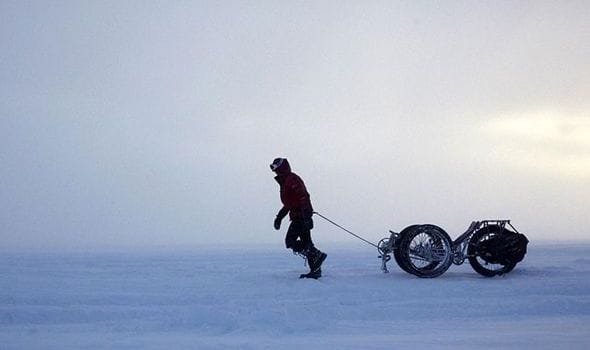
Anyone with experience of cycling in these conditions and can comment on what's possible and what's not?
Maria Leijerstam rode to the South Pole.
 08-31-23 | 07:58 PM
#12

Full Member
Joined: Jul 2023
Posts: 456
Likes: 272
From: Montréal
Bikes: Hardrock touring bike
I've been cycling later and later in the year and one thing that happens to me is that my hands often go numb, which isn't normally a problem and I just reanimate them every once in a while, but in the cold I don't feel that my hands are freezing. It is super painful while they thaw out (warm up).
So it might not be that your hands are fine, it might be that they're asleep and frozen.
So it might not be that your hands are fine, it might be that they're asleep and frozen.
08-31-23 | 10:24 PM
#13
bicycle tourist
Joined: Dec 2007
Posts: 2,640
Likes: 471
From: Austin, Texas, USA
Bikes: Trek 520, Lightfoot Ranger, Trek 4500
1. Mitts were the best choice when temperatures were below -7C or so (~20F). I sometimes put light gloves under the mitts in case I needed to fiddle with something. Otherwise on flat terrain shifting/braking worked well enough for me with mitts.
2. Gloves were fine down to 0C (32F) and perhaps slightly lower.
3. Lobster mitts are a compromise. Works just a little colder to the 0C to -7C range compared with gloves. Also a little more movement to have pairs of fingers combined w/o all four together.
I had lobster mitts with me in Peru/Bolivia in cycling the cold. I could start out at -5C and particularly if the sun was out and it was warming up then my wool hat, lobster mitts were enough to keep head/hands warm enough. Feet were still ok but double socks also helped otherwise it was a race between hands/feet which go cold first or if it warmed enough to be ok.
On my colder CO commutes (e.g
below -10C) of it was full mitts, full hat/balaclava, warm boots and I could go considerably colder in 30 minutes it took me to bicycle to work. Lowest I remember cycling to work was -10F (-23C) and that worked fine but it was also only 30 minutes
09-01-23 | 06:12 AM
#14

Rider. Wanderer. Creator.
Joined: May 2007
Posts: 3,004
Likes: 4,303
From: New Jersey
Bikes: Bike Friday All-Packa, Zizzo Liberte, Ozark Trail G.1 Explorer
Delivery riders in New York use these on their bikes in the winter:
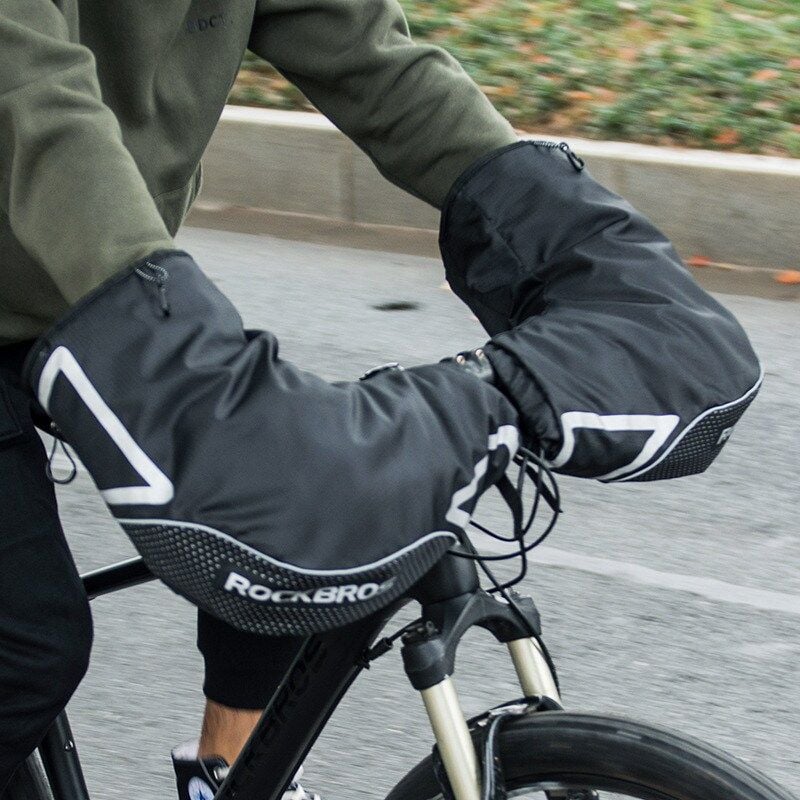
I wonder if something similar could be made with pieces from a local hardware store and fabric shop?
Best of luck. Let us know if you are documenting your trip on social media or elsewhere.
I wonder if something similar could be made with pieces from a local hardware store and fabric shop?
Best of luck. Let us know if you are documenting your trip on social media or elsewhere.
09-01-23 | 06:39 AM
#15
Senior Member

Joined: Feb 2012
Posts: 3,039
Likes: 1,068
From: Golden, CO and Tucson, AZ
Bikes: 2012 Specialized Elite Disc, 1983 Trek 520
Several times each year I day-trip at altitudes exceeding 4000 meters and I don't take it lightly. Air resistance is greatly reduced, so brakes do extra duty and the acceleration is surprising. It's hard to avoid snow flurries, but I wouldn't ride in muddy or icy road conditions. In short, I would not attempt that crossing. But I'm older now and have a different viewpoint.
A relatively minor annoyance compared to rims icing up is the rear cassette icing up, leaving you with only one gear. Choose that gear wisely.
Use the "Bagtex" trick on your feet for cycling in snow--bread bags or similar over your insulation and inside your shoes. For daytime temps just below freezing, good gloves should be fine, with plenty of breaks to warm your hands in pockets or on your torso.
Keeping water bottles and wet clothing from freezing while camping is another issue. I keep clothing under my sleeping mat, and water bottles under my knees, outside the sleeping bag. Shoes may need to be kept with the water bottles, too, and you might want a bag for them. Putting wet clothing back on in the morning is probably the most difficult thing in harsh weather camping.
A relatively minor annoyance compared to rims icing up is the rear cassette icing up, leaving you with only one gear. Choose that gear wisely.
Use the "Bagtex" trick on your feet for cycling in snow--bread bags or similar over your insulation and inside your shoes. For daytime temps just below freezing, good gloves should be fine, with plenty of breaks to warm your hands in pockets or on your torso.
Keeping water bottles and wet clothing from freezing while camping is another issue. I keep clothing under my sleeping mat, and water bottles under my knees, outside the sleeping bag. Shoes may need to be kept with the water bottles, too, and you might want a bag for them. Putting wet clothing back on in the morning is probably the most difficult thing in harsh weather camping.
Last edited by andrewclaus; 09-01-23 at 06:46 AM.
11-12-23 | 01:01 PM
#16
Thread Starter
Junior Member
Joined: Dec 2020
Posts: 122
Likes: 23
A belated update
In case anyone wonders what happened.
I didn't make it through the pass because it stayed closed for a week, so I cycled up pretty close to it and then turned back (after spending a couple of days enjoying the snow). Stunning scenery though.
I was trying to cross from Argentina to Chile via Paso Internacional Los Libertadores. Ended up cycling to Los Penitentes, then cycling back to Mendoza and flying across to Santiago.
Managed to avoid camping, there were enough reasonably-priced accommodation options on the route, but did get a sleeping bag liner and extra sleeping mat.
Had some nasty headwinds and fairly cold conditions but the actual road was always pretty clear (until the closed bit). I was very glad that I had bought waterproof warm gloves and glove liners. Did use my balaclava as well one some days but it got damp pretty easily from snow flurries so wasn't that helpful. Was also glad for my waterproof Shimano boots though without gaiters I would have had difficulty keeping water out of them if the snow or rain had been heavy. Also bought a thermos and appreciated the option of a hot/warm drink on the road.
I didn't make it through the pass because it stayed closed for a week, so I cycled up pretty close to it and then turned back (after spending a couple of days enjoying the snow). Stunning scenery though.
I was trying to cross from Argentina to Chile via Paso Internacional Los Libertadores. Ended up cycling to Los Penitentes, then cycling back to Mendoza and flying across to Santiago.
Managed to avoid camping, there were enough reasonably-priced accommodation options on the route, but did get a sleeping bag liner and extra sleeping mat.
Had some nasty headwinds and fairly cold conditions but the actual road was always pretty clear (until the closed bit). I was very glad that I had bought waterproof warm gloves and glove liners. Did use my balaclava as well one some days but it got damp pretty easily from snow flurries so wasn't that helpful. Was also glad for my waterproof Shimano boots though without gaiters I would have had difficulty keeping water out of them if the snow or rain had been heavy. Also bought a thermos and appreciated the option of a hot/warm drink on the road.
11-13-23 | 03:07 PM
#18
Thread Starter
Junior Member
Joined: Dec 2020
Posts: 122
Likes: 23
Absolutely. My total trip was about 10 months and that week was easily one of the highlights. And the road being closed was actually a blessing of sorts because there was hardly any traffic, when normally that road apparently carries hundreds of trucks a day.
 11-15-23 | 01:20 PM
#20

Punk Rock Lives
Joined: Feb 2002
Posts: 3,424
Likes: 96
From: Throughout the west in a van, on my bike, and in the forest
Bikes: Long Haul Trucker with BRIFTERS!
I am indeed impressed with all the photos you folks have posted of your icy/muddy/difficult roads! I have ridden at high altitudes before (Agua Negra in south america, about 15,400 feet, as well as northern pakistan but I have never had a prolonged ride in cold conditions like some of you have!
That being said...the most dangerous cycling condition is wind driven wet snow. When it is simply snowing, your outside gear should be cold enough for the flakes to just bounce off of you, no harm no foul. But if the flakes are wet, they will stick, and when they melt they will absorb a lot of heat because of the "phase change." Specifically the latent heat of fusion is 80 calories per gram...which adds up in a snowstorm. Brr!
I had a survival discussion one time with a USMC SERE guy, who trained navy seals. I had to stop in order to whiz while I was making a tough climb in wet snowy conditions, and I must have whizzed out half a quart of urine at 98.6 degrees. That is a LOT of heat! Plus the heat i lost stopping my climb and exposing my lavaliere to the cold conditions! The fellow mentioned that is a major problem for soldiers in bitter cold conditions, since they must stay hydrated AND keep their body functions functional, as well. I wish all of you a very nice hot bowl of chicken soup!
That being said...the most dangerous cycling condition is wind driven wet snow. When it is simply snowing, your outside gear should be cold enough for the flakes to just bounce off of you, no harm no foul. But if the flakes are wet, they will stick, and when they melt they will absorb a lot of heat because of the "phase change." Specifically the latent heat of fusion is 80 calories per gram...which adds up in a snowstorm. Brr!
I had a survival discussion one time with a USMC SERE guy, who trained navy seals. I had to stop in order to whiz while I was making a tough climb in wet snowy conditions, and I must have whizzed out half a quart of urine at 98.6 degrees. That is a LOT of heat! Plus the heat i lost stopping my climb and exposing my lavaliere to the cold conditions! The fellow mentioned that is a major problem for soldiers in bitter cold conditions, since they must stay hydrated AND keep their body functions functional, as well. I wish all of you a very nice hot bowl of chicken soup!
