


Are touring bikes really hybrids?


 09-28-11 | 10:02 PM
#2

Senior Member
Joined: Aug 2011
Posts: 437
Likes: 3
From: Chicago, IL
Bikes: Surly Steamroller FG, Trek 800 SS MTB, Omega Tandem Sport
This is a good point. I got a hybrid last year for commuting. In hindsight I think that I really wanted a touring bike for the slight differences of drops and other speed associated features. In reality a touring bike is a hybrid because it blends the speed of a road bike with the durability of city or MTB.... If only I knew then.
09-29-11 | 04:45 AM
#4


Membership Not Required
Joined: Jan 2005
Posts: 16,853
Likes: 18
From: On the road-USA
Bikes: Giant Excursion, Raleigh Sports, Raleigh R.S.W. Compact, Motobecane? and about 20 more! OMG
Depends on the hybrid, some are have better geometry than others. FWIW I use a 1980's rigid frame MTB for most of my touring, my other tour bike is a Euro spec city bike with drop bars. My original tour bike was a 1975 Bob Jackson World Tour, it had several specific features that made it more suitable for touring.
Aaron


Aaron
__________________
Webshots is bailing out, if you find any of my posts with corrupt picture files and want to see them corrected please let me know. :(
ISO: A late 1980's Giant Iguana MTB frameset (or complete bike) 23" Red with yellow graphics.
"Cycling should be a way of life, not a hobby.
RIDE, YOU FOOL, RIDE!"_Nicodemus
"Steel: nearly a thousand years of metallurgical development
Aluminum: barely a hundred
Which one would you rather have under your butt at 30mph?"_krazygluon
Webshots is bailing out, if you find any of my posts with corrupt picture files and want to see them corrected please let me know. :(
ISO: A late 1980's Giant Iguana MTB frameset (or complete bike) 23" Red with yellow graphics.
"Cycling should be a way of life, not a hobby.
RIDE, YOU FOOL, RIDE!"_Nicodemus
"Steel: nearly a thousand years of metallurgical development
Aluminum: barely a hundred
Which one would you rather have under your butt at 30mph?"_krazygluon
09-29-11 | 05:39 AM
#6
Yes, they are; or, more accurately, hybrids are really touring bikes. During the brief period in the late '80s when mountain bikes represented about 95% of the U.S. adult bike market (although it didn't seem brief at the time if, as was the case in the shop where I worked, you had a bunch of road bikes in stock), touring bikes were a small percentage of the remaining 5%.
Manufacturers made a few changes to touring and sport touring bikes (throwing on flat bars, ATB brake and shifter levers, and slightly larger and knobbier tires, mostly) and discovered that they could move some of their stagnant inventory. Presto: hybrids.
I don't understand why some people revere touring bikes and abhor hybrids; they're essentially the same bike.
Manufacturers made a few changes to touring and sport touring bikes (throwing on flat bars, ATB brake and shifter levers, and slightly larger and knobbier tires, mostly) and discovered that they could move some of their stagnant inventory. Presto: hybrids.
I don't understand why some people revere touring bikes and abhor hybrids; they're essentially the same bike.
09-29-11 | 06:14 AM
#7
Senior Member


Joined: Sep 2007
Posts: 15,263
Likes: 1,763
From: Far beyond the pale horizon.
The differences between bicycle types is small and they blend together. They sit on a spectrum.
It's sort-of like this.
racing -> performance road -> [ "sport touring" -> cyclocross -> randonee ] -> touring -> hybrid -> mountain bikes.
The order of [ "sport touring" -> cyclocross -> randonee ] might not always be as listed.
It's important to realize that the labels (eg, "hybrid") don't have precise meanings and what they refer to can change over time.
There are some hybrids that are closer to a touring bike and others that are closer to mountain bikes. Hybrids often come (now) with suspension forks, which are not really needed for road use. Hybrids are also often set-up for more casual riders (for example, they often have wide seats and have very upright postures).
It's sort-of like this.
racing -> performance road -> [ "sport touring" -> cyclocross -> randonee ] -> touring -> hybrid -> mountain bikes.
The order of [ "sport touring" -> cyclocross -> randonee ] might not always be as listed.
It's important to realize that the labels (eg, "hybrid") don't have precise meanings and what they refer to can change over time.
There are some hybrids that are closer to a touring bike and others that are closer to mountain bikes. Hybrids often come (now) with suspension forks, which are not really needed for road use. Hybrids are also often set-up for more casual riders (for example, they often have wide seats and have very upright postures).
Last edited by njkayaker; 09-29-11 at 06:17 AM.
09-29-11 | 06:16 AM
#8
Senior Member
Joined: Oct 2008
Posts: 595
Likes: 0
From: West Philly, PA
From what I always understood hybrids are sort of the middle ground between road and mountain bikes, with a mix of speed and comfort in mind, whereas proper touring bikes are built with carrying heavy loads up big hills in mind. I'm not a frame expert so I don't know what difference that makes besides long chainstays and low bottom brackets, but that's what I always thought.
09-29-11 | 06:54 AM
#9

Joined: Jul 2007
Posts: 3,423
Likes: 55
From: Chapin, SC
Bikes: all steel stable: surly world troller, paris sport fixed, fuji ss
To me the term "hybrid bicycle" is too vague. Hybrids seem to have some combination road and mountain elements with a more upright riding position. Other than that they vary a lot in my opinion.
Touring bicycles also have a combination of road and mountain elements. They too vary a good bit based on the type of touring that is intended.
You could put flatbars on a touring bike and call it a hybrid. The opposite (i.e. hybrid to touring) would not necessarily be true.
Touring bicycles also have a combination of road and mountain elements. They too vary a good bit based on the type of touring that is intended.
You could put flatbars on a touring bike and call it a hybrid. The opposite (i.e. hybrid to touring) would not necessarily be true.
09-29-11 | 07:23 AM
#10
Senior Member
Joined: Jun 2010
Posts: 7,579
Likes: 6
From: Pearland, Texas
Bikes: Cannondale, Trek, Raleigh, Santana
hybridbkrdt, Bottom line is that any bike can be a touring bike. As far as to what the touring frame has evolved into? Looks to me the heaviest influence was the rigid mountain bike. Hybrids also seem to have followed this path.
There was a thread where somebody was building a Cannondale hybrid frameset into a tourer. Except for a uni crown seat stay arrangement and I think a lack of mid fork carrier mounts, it was identical to my Cannondale touring bike of roughly the same era.
Brad
There was a thread where somebody was building a Cannondale hybrid frameset into a tourer. Except for a uni crown seat stay arrangement and I think a lack of mid fork carrier mounts, it was identical to my Cannondale touring bike of roughly the same era.
Brad
09-29-11 | 08:05 AM
#11

Mad bike riding scientist


Joined: Nov 2004
Posts: 29,155
Likes: 6,211
From: Denver, CO
Bikes: Some silver ones, a red one, a black and orange one, and a few titanium ones
Yes, they are; or, more accurately, hybrids are really touring bikes. During the brief period in the late '80s when mountain bikes represented about 95% of the U.S. adult bike market (although it didn't seem brief at the time if, as was the case in the shop where I worked, you had a bunch of road bikes in stock), touring bikes were a small percentage of the remaining 5%.
Manufacturers made a few changes to touring and sport touring bikes (throwing on flat bars, ATB brake and shifter levers, and slightly larger and knobbier tires, mostly) and discovered that they could move some of their stagnant inventory. Presto: hybrids.
I don't understand why some people revere touring bikes and abhor hybrids; they're essentially the same bike.
Manufacturers made a few changes to touring and sport touring bikes (throwing on flat bars, ATB brake and shifter levers, and slightly larger and knobbier tires, mostly) and discovered that they could move some of their stagnant inventory. Presto: hybrids.
I don't understand why some people revere touring bikes and abhor hybrids; they're essentially the same bike.
The differences between bicycle types is small and they blend together. They sit on a spectrum.
It's sort-of like this.
racing -> performance road -> [ "sport touring" -> cyclocross -> randonee ] -> touring -> hybrid -> mountain bikes.
The order of [ "sport touring" -> cyclocross -> randonee ] might not always be as listed.
It's important to realize that the labels (eg, "hybrid") don't have precise meanings and what they refer to can change over time.
There are some hybrids that are closer to a touring bike and others that are closer to mountain bikes. Hybrids often come (now) with suspension forks, which are not really needed for road use. Hybrids are also often set-up for more casual riders (for example, they often have wide seats and have very upright postures).
It's sort-of like this.
racing -> performance road -> [ "sport touring" -> cyclocross -> randonee ] -> touring -> hybrid -> mountain bikes.
The order of [ "sport touring" -> cyclocross -> randonee ] might not always be as listed.
It's important to realize that the labels (eg, "hybrid") don't have precise meanings and what they refer to can change over time.
There are some hybrids that are closer to a touring bike and others that are closer to mountain bikes. Hybrids often come (now) with suspension forks, which are not really needed for road use. Hybrids are also often set-up for more casual riders (for example, they often have wide seats and have very upright postures).
"Hybrids" can be thought of as an early attempt at a "29er" that just never really caught on with the mountain bike crowd. Cyclocross bikes diverged from touring bikes because some crazy Belgians were bored and drunk and it was winter

It's not really a case of one class or type of bike lead to another but that the purposes of the bikes changed with time and the class of bikes followed those changes. The bicycling world really is a wonderful example of all the mechanisms of evolution and natural selection.

So endth the lesson

__________________
Stuart Black
Dreamin' of Bemidji Down the Mississippi (in part)
Plan Epsilon Around Lake Michigan in the era of Covid
Gold Fever Three days of dirt in Colorado
Pokin' around the Poconos A cold ride around Lake Erie
Dinosaurs in Colorado A mountain bike guide to the Purgatory Canyon dinosaur trackway
Solo Without Pie. The search for pie in the Midwest.
Picking the Scablands. Washington and Oregon, 2005. Pie and spiders on the Columbia River!
Stuart Black
Dreamin' of Bemidji Down the Mississippi (in part)
Plan Epsilon Around Lake Michigan in the era of Covid
Gold Fever Three days of dirt in Colorado
Pokin' around the Poconos A cold ride around Lake Erie
Dinosaurs in Colorado A mountain bike guide to the Purgatory Canyon dinosaur trackway
Solo Without Pie. The search for pie in the Midwest.
Picking the Scablands. Washington and Oregon, 2005. Pie and spiders on the Columbia River!
09-29-11 | 08:11 AM
#12
Senior Member

Joined: Aug 2010
Posts: 12,728
Likes: 2,106
From: Madison, WI
Bikes: 1961 Ideor, 1966 Perfekt 3 Speed AB Hub, 1994 Bridgestone MB-6, 2006 Airnimal Joey, 2009 Thorn Sherpa, 2013 Thorn Nomad MkII, 2015 VO Pass Hunter, 2017 Lynskey Backroad, 2017 Raleigh Gran Prix, 1980s Bianchi Mixte on a trainer. Others are now gone.
I think suspension forks are becoming more common on hybrids but you don't see much suspension on touring bikes and I doubt if you ever will.
09-29-11 | 08:28 AM
#13
Banned.
Joined: May 2010
Posts: 8,651
Likes: 3
From: Uncertain
Having said all that, I agree with cycommute. Hybrids are not "essentially the same" as touring bikes, any more than they are "essentially the same" as mountain bikes. They have overlapping characteristics, just as road/touring/CX bikes do, but there's a big difference between riding my tourer loaded and riding a hybrid with a similar burden.
What does seem to me to be true is that my tourer will do everything that a non-suspension hybrid will do, and do it just as well. The reverse is not the case, however. Which may explain why I have never felt the need to add a hybrid to my stable of bikes.
09-29-11 | 09:24 AM
#14

Senior Member
Joined: Jan 2008
Posts: 2,709
Likes: 22
From: Raleigh, NC
Bikes: Downtube 8H, Surly Troll
Language is confusing. There's the Hybrid style of bike and the Touring style of bike, and then there's a bike that may be a hybrid of two styles and a bike that may be used for touring regardless of the style of bike.
But Hybrid as a style seems like a fairly recent development. Touring as a style goes back a little further, so the real question is, "Are hybrids really touring bikes?" The answer is still "no," but that's the question. ;-)
The bike before my LHT was a Hybrid, and they couldn't be more different. I used to think Hybrid was a cross between a Mountain and a Road bike, but there is very little of a Road bike features in a Hybrid. Really it seems more like a hybrid between a Mountain bike and a City bike.
Likewise a Touring bike has little in common with a Mountain bike. It takes wider tires, and puts you more upright than a Road Bike, but these are also features that are also standard in a City bike. And I'm pretty sure what we think of today as a City bike has been around longer than Mountain Bikes, regardless of whether or not it was called a City Bike.
It seems to me, but I'm no historian and could easily be corrected, that the City bike is the most direct descendant of the original Safety bike. All the other styles are simply modifying the parts of the City bike that don't mesh with the intended function. Mountain bikes and road bikes may be at the extreme ends, Hybrids may be closer to City Bikes than Mountain bikes, and Touring bikes may be closer than Road bikes, but I don't think that makes Touring bikes Hybrids. When you get a Hybrid, you expect some Mountain characteristics, and when you get a Touring bike, you expect some Road characteristics, so in a sense they may both be "hybrids," but I think only one is a "Hybrid". But, of course, there aren't set standards for any of the characteristics, so really defining a bike comes down to how many of it's features belong predominantly to the ideal of one particular style. Hybrids tend to have a very aggressive, upright position, wide, sometimes nobby tires, short frames with a down-sloping top tube, and sometimes a front suspension, all of which I consider to be Mountain Bike traits and few of which tend to be touring bike traits, but there will always be bikes that blur the lines. Especially since the lines are not that clear to begin with.
But Hybrid as a style seems like a fairly recent development. Touring as a style goes back a little further, so the real question is, "Are hybrids really touring bikes?" The answer is still "no," but that's the question. ;-)
The bike before my LHT was a Hybrid, and they couldn't be more different. I used to think Hybrid was a cross between a Mountain and a Road bike, but there is very little of a Road bike features in a Hybrid. Really it seems more like a hybrid between a Mountain bike and a City bike.
Likewise a Touring bike has little in common with a Mountain bike. It takes wider tires, and puts you more upright than a Road Bike, but these are also features that are also standard in a City bike. And I'm pretty sure what we think of today as a City bike has been around longer than Mountain Bikes, regardless of whether or not it was called a City Bike.
It seems to me, but I'm no historian and could easily be corrected, that the City bike is the most direct descendant of the original Safety bike. All the other styles are simply modifying the parts of the City bike that don't mesh with the intended function. Mountain bikes and road bikes may be at the extreme ends, Hybrids may be closer to City Bikes than Mountain bikes, and Touring bikes may be closer than Road bikes, but I don't think that makes Touring bikes Hybrids. When you get a Hybrid, you expect some Mountain characteristics, and when you get a Touring bike, you expect some Road characteristics, so in a sense they may both be "hybrids," but I think only one is a "Hybrid". But, of course, there aren't set standards for any of the characteristics, so really defining a bike comes down to how many of it's features belong predominantly to the ideal of one particular style. Hybrids tend to have a very aggressive, upright position, wide, sometimes nobby tires, short frames with a down-sloping top tube, and sometimes a front suspension, all of which I consider to be Mountain Bike traits and few of which tend to be touring bike traits, but there will always be bikes that blur the lines. Especially since the lines are not that clear to begin with.
09-29-11 | 09:59 AM
#15
Banned
Joined: Jun 2010
Posts: 43,586
Likes: 1,380
From: NW,Oregon Coast
Bikes: 8
Bike = a frame, fork , and wheels and components attached to it ..
you are talking about just changing a few bits, and adopting a marketing name
used to differentiate one product segment from the other..
But if it makes you feel innovative, so be it..
you are talking about just changing a few bits, and adopting a marketing name
used to differentiate one product segment from the other..
But if it makes you feel innovative,
so be it..
09-29-11 | 02:05 PM
#16
Membership Not Required
Joined: Jan 2005
Posts: 16,853
Likes: 18
From: On the road-USA
Bikes: Giant Excursion, Raleigh Sports, Raleigh R.S.W. Compact, Motobecane? and about 20 more! OMG
Suspension forks...and seat posts are grossly overused as a sales tactic.
I have had several bikes were the first thing to go was the suspension seat post, quickly followed by the suspension forks. They have there place for say a downhill rider, I see no point on them for a bike used on an MUP.
Aaron
I have had several bikes were the first thing to go was the suspension seat post, quickly followed by the suspension forks. They have there place for say a downhill rider, I see no point on them for a bike used on an MUP.
Aaron
__________________
Webshots is bailing out, if you find any of my posts with corrupt picture files and want to see them corrected please let me know. :(
ISO: A late 1980's Giant Iguana MTB frameset (or complete bike) 23" Red with yellow graphics.
"Cycling should be a way of life, not a hobby.
RIDE, YOU FOOL, RIDE!"_Nicodemus
"Steel: nearly a thousand years of metallurgical development
Aluminum: barely a hundred
Which one would you rather have under your butt at 30mph?"_krazygluon
Webshots is bailing out, if you find any of my posts with corrupt picture files and want to see them corrected please let me know. :(
ISO: A late 1980's Giant Iguana MTB frameset (or complete bike) 23" Red with yellow graphics.
"Cycling should be a way of life, not a hobby.
RIDE, YOU FOOL, RIDE!"_Nicodemus
"Steel: nearly a thousand years of metallurgical development
Aluminum: barely a hundred
Which one would you rather have under your butt at 30mph?"_krazygluon
09-29-11 | 02:53 PM
#18

Heretic
Joined: Jun 2010
Posts: 2,246
Likes: 563
From: Dublin, Ireland
Bikes: Specialized Sirrus, Giant OCR3, Giant CRS3
In Europe there is little difference between a hybrid and a trekking bike. Probably only the addition of a rear rack. Trekking is a form of touring popular amoung those who don't possess a stiff upper lip.
09-29-11 | 03:30 PM
#19
Mad bike riding scientist
Joined: Nov 2004
Posts: 29,155
Likes: 6,211
From: Denver, CO
Bikes: Some silver ones, a red one, a black and orange one, and a few titanium ones
This bike fits your limited definition nicely
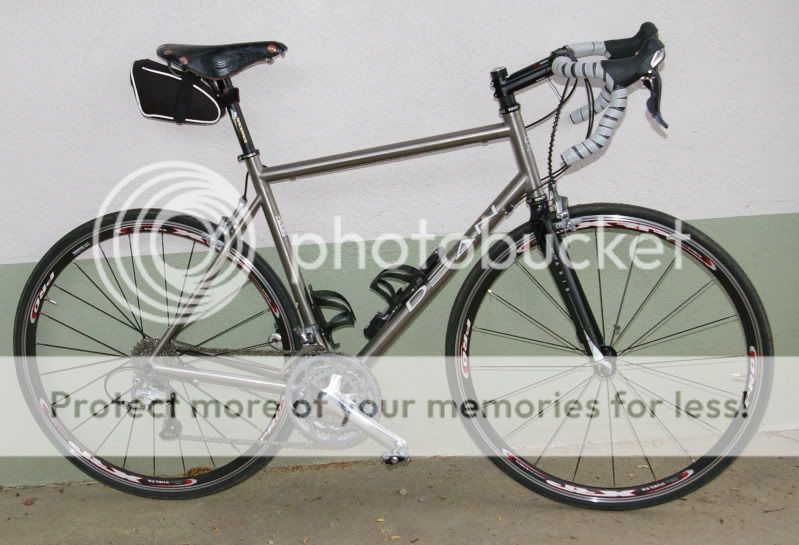
but it can't do what this bike can
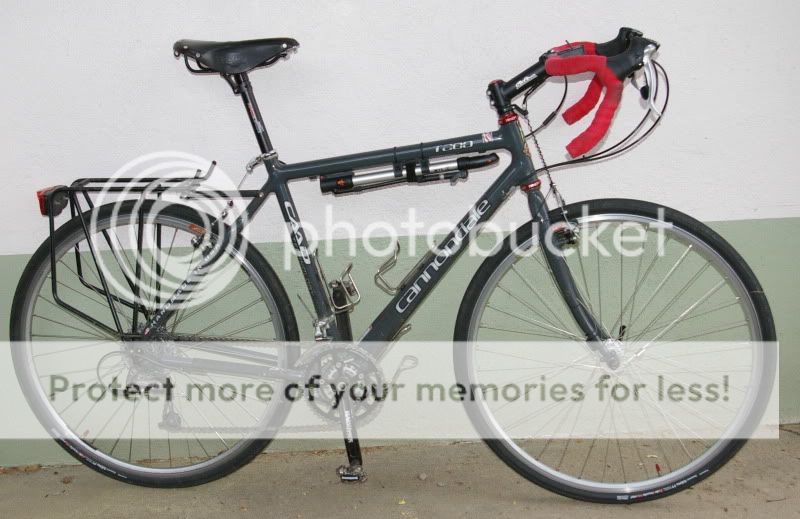
Nor can those do what these bikes can
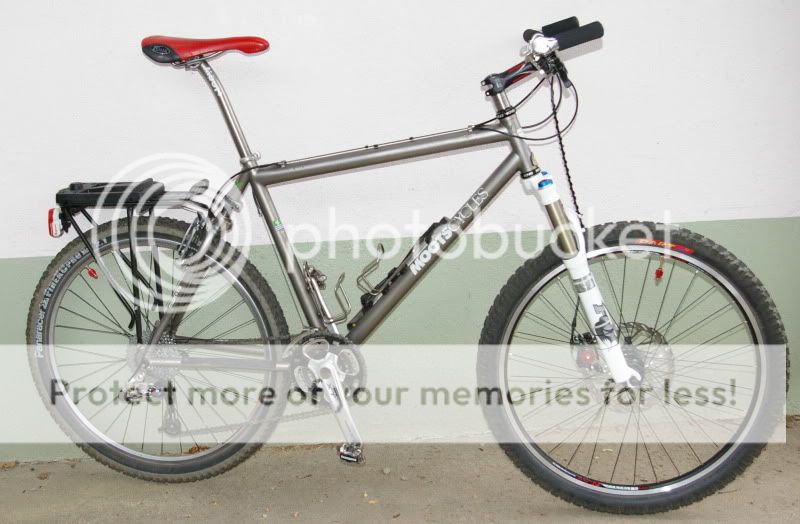
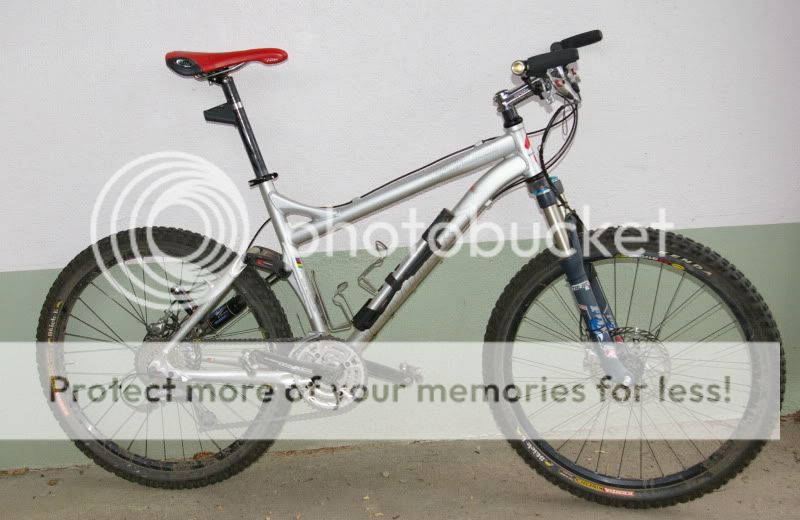
I suppose that you could do all the same things on the Dean that you can do on the Cannondale or the Moots or the Specialized but the question you have to ask is would you want to? It wouldn't be pretty and it could even be hazardous.
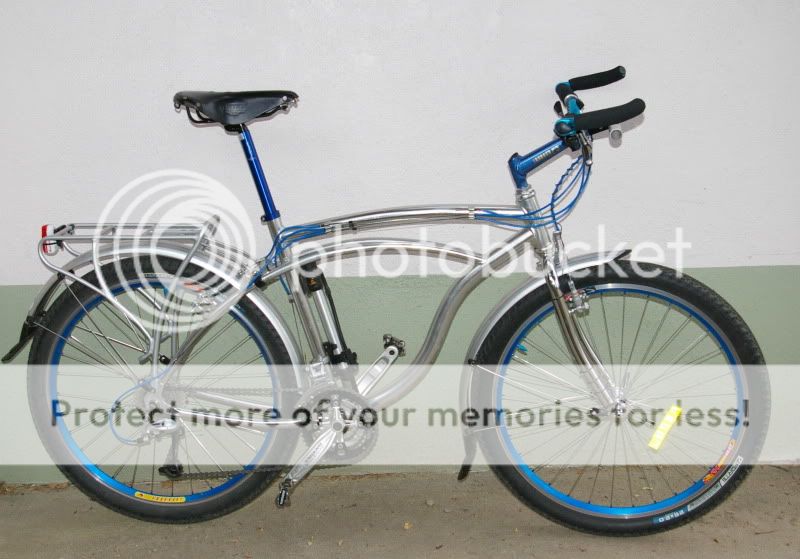
And this bike defies categorization
__________________
Stuart Black
Dreamin' of Bemidji Down the Mississippi (in part)
Plan Epsilon Around Lake Michigan in the era of Covid
Gold Fever Three days of dirt in Colorado
Pokin' around the Poconos A cold ride around Lake Erie
Dinosaurs in Colorado A mountain bike guide to the Purgatory Canyon dinosaur trackway
Solo Without Pie. The search for pie in the Midwest.
Picking the Scablands. Washington and Oregon, 2005. Pie and spiders on the Columbia River!
Stuart Black
Dreamin' of Bemidji Down the Mississippi (in part)
Plan Epsilon Around Lake Michigan in the era of Covid
Gold Fever Three days of dirt in Colorado
Pokin' around the Poconos A cold ride around Lake Erie
Dinosaurs in Colorado A mountain bike guide to the Purgatory Canyon dinosaur trackway
Solo Without Pie. The search for pie in the Midwest.
Picking the Scablands. Washington and Oregon, 2005. Pie and spiders on the Columbia River!
09-29-11 | 04:29 PM
#20

Bicycle Repair Man !!!
Joined: Sep 2007
Posts: 27,266
Likes: 152
From: YEG
Bikes: See my sig...
Depending on the needs of the rider, you can tour on almost any bike and must remind folks that Fred Birchell rode around the world on a single speed and did not just stick to the roads that were flat and other pioneering riders have done the same on upright 3 speed roadsters.
A bicycle can be defined by it's intended use and designed accordingly or a bicycle can be defined by how it is ultimately used... for discussion sake I will define things according to what a bicycle was originally designed for.
Hybrids are designed to be all rounders although they are becoming more specialized.
A specialized touring bicycle has features that set it apart from a road bicycle or anything else... the build will be stronger, the chainstays will be much longer to give better clearance for bags, the trail will be such so that the bike handles well with a front load, and there should be at least 3 bottle braze ons / attachment points to carry water and fuel (although some only have 2). It will have better fender clearance to allow for wider tyres to be used. It will probably sit a little lower at the bottom bracket as this lowers the centre of gravity and allows the rider to get more foot to the ground to support what can be a very heavy bicycle.
The type of bars one uses are independent of the rest of the bike and will be selected on user preferences, trekking bars are becoming more and more popular for those who do not like riding in the drops.
The earliest cross bikes were re-purposed touring bicycles and early mountain bikes adopted the gearing and derailers that were used on touring bikes since the wide range gearing was practical when it came to riding off road.
There are also tandems, folders, and recumbents that are specifically designed for touring and the thing about a touring bike is that they generally take well to being used as a daily commuter or utility bicycle. Portland is full of surly LHT's that will never go on tour but see daily use as commuting bicycles which is good as commuting is about as hard a use you can subject a bicycle to.
The hybrid category is so broad and diverse that saying a hybrid is a touring bike is automatically false although some hybrids do adapt well to being touring bicycles although the most serious of tourers will probably get a bicycle that was purpose built.
My 1999 Trek 7500 served me very well as a touring bicycle... and it's new owner is using it for commuting and plans to tour on it as well.

My primary touring bike is a 1987 Kuwahara Cascade which was originally sold as a mountain / atb but in later years (when sloping tubes became the norm on mtbs) was sold as an expedition bike. Many choose to tour on 26 inch wheels instead of 700c road wheels as they have some advantages when the road might not be a road.

And THIS... is a touring bicycle.

Arvon World Tour - custom
I have also built a separable touring bike on 20 inch wheels and it took me 5000 km last year and has seen more modifications... it has 4 bottle mounts and some new custom racks are in the works. It is a very capable long distance hauler which is what a touring bike needs to be able to do.
Some do credit card tours where they ride light and stay in hostels and hotels... this is like a supported road ride more than a tour.
We build touring bicycles like the Arvon pictured above... it also has a custom front rack that was not installed when it was photographed. It is one of two built... number one was built to circumnavigate the planet on an unsupported tour.
A bicycle can be defined by it's intended use and designed accordingly or a bicycle can be defined by how it is ultimately used... for discussion sake I will define things according to what a bicycle was originally designed for.
Hybrids are designed to be all rounders although they are becoming more specialized.
A specialized touring bicycle has features that set it apart from a road bicycle or anything else... the build will be stronger, the chainstays will be much longer to give better clearance for bags, the trail will be such so that the bike handles well with a front load, and there should be at least 3 bottle braze ons / attachment points to carry water and fuel (although some only have 2). It will have better fender clearance to allow for wider tyres to be used. It will probably sit a little lower at the bottom bracket as this lowers the centre of gravity and allows the rider to get more foot to the ground to support what can be a very heavy bicycle.
The type of bars one uses are independent of the rest of the bike and will be selected on user preferences, trekking bars are becoming more and more popular for those who do not like riding in the drops.
The earliest cross bikes were re-purposed touring bicycles and early mountain bikes adopted the gearing and derailers that were used on touring bikes since the wide range gearing was practical when it came to riding off road.
There are also tandems, folders, and recumbents that are specifically designed for touring and the thing about a touring bike is that they generally take well to being used as a daily commuter or utility bicycle. Portland is full of surly LHT's that will never go on tour but see daily use as commuting bicycles which is good as commuting is about as hard a use you can subject a bicycle to.
The hybrid category is so broad and diverse that saying a hybrid is a touring bike is automatically false although some hybrids do adapt well to being touring bicycles although the most serious of tourers will probably get a bicycle that was purpose built.
My 1999 Trek 7500 served me very well as a touring bicycle... and it's new owner is using it for commuting and plans to tour on it as well.
My primary touring bike is a 1987 Kuwahara Cascade which was originally sold as a mountain / atb but in later years (when sloping tubes became the norm on mtbs) was sold as an expedition bike. Many choose to tour on 26 inch wheels instead of 700c road wheels as they have some advantages when the road might not be a road.
And THIS... is a touring bicycle.
Arvon World Tour - custom
I have also built a separable touring bike on 20 inch wheels and it took me 5000 km last year and has seen more modifications... it has 4 bottle mounts and some new custom racks are in the works. It is a very capable long distance hauler which is what a touring bike needs to be able to do.
Some do credit card tours where they ride light and stay in hostels and hotels... this is like a supported road ride more than a tour.
We build touring bicycles like the Arvon pictured above... it also has a custom front rack that was not installed when it was photographed. It is one of two built... number one was built to circumnavigate the planet on an unsupported tour.
09-29-11 | 08:08 PM
#21

Senior Member
Joined: Aug 2005
Posts: 757
Likes: 0
The problem with the word "hybrid" is that the majority of bikes sold under that name eventually morphed into what are sometimes called "comfort" bikes. These are bikes that are cheap, heavy, have high flat bars, medium width tires, fat saddles, and often have short travel front suspension and/or suspension seatposts. Here's just one example: https://www.specialized.com/us/en/bc/...name=Multi+Use
True hybrids are rare and it's kind of a silly category anyway since there's no reason that you couldn't take a hardtail mountain bike on pavement or a cyclocross bike offroad. Is my Surly Troll a hybrid since it has a rigid fork and I only ride it on pavement? If I put a suspension fork and knobbies on it, is it a mountain bike? I've seen them built up with drop bars... does that make it a road bike? What about the Salsa Fargo? What the heck category is it supposed to be? Touring? Mountain? Hybrid? Monstercross? Labels can be useful sometimes, but they can also get in the way.
True hybrids are rare and it's kind of a silly category anyway since there's no reason that you couldn't take a hardtail mountain bike on pavement or a cyclocross bike offroad. Is my Surly Troll a hybrid since it has a rigid fork and I only ride it on pavement? If I put a suspension fork and knobbies on it, is it a mountain bike? I've seen them built up with drop bars... does that make it a road bike? What about the Salsa Fargo? What the heck category is it supposed to be? Touring? Mountain? Hybrid? Monstercross? Labels can be useful sometimes, but they can also get in the way.
09-30-11 | 06:18 AM
#22
Banned.
Joined: May 2010
Posts: 8,651
Likes: 3
From: Uncertain
Quite a bike. I imagine you can get a lot more gear on the back than you might want to haul around. How does it handle loaded?
09-30-11 | 08:23 AM
#23
Bicycle Repair Man !!!
Joined: Sep 2007
Posts: 27,266
Likes: 152
From: YEG
Bikes: See my sig...
It handles wonderfully loaded... this is what is was made to do and yes, it will carry more weight than you need but with the long wheelbase distributes that load exceptionally well.
09-30-11 | 09:55 AM
#24
Banned.
Joined: May 2010
Posts: 8,651
Likes: 3
From: Uncertain
I believe you. One more question, if I may. Given that it will carry so much gear on the back, but you have also made provision for a front rack, do I assume correctly that you'd still split the load front/rear for optimum handling? Just curious, because my Thorn Nomad, which has a pretty long wheelbase (not as long as this one, obviously) and can take a very big load at the rear, still seems to me to handle best if, for loads above say 35lbs, I split it 80/20, or 70/30, rear/front.
09-30-11 | 10:34 AM
#25
Bicycle Repair Man !!!
Joined: Sep 2007
Posts: 27,266
Likes: 152
From: YEG
Bikes: See my sig...
I believe you. One more question, if I may. Given that it will carry so much gear on the back, but you have also made provision for a front rack, do I assume correctly that you'd still split the load front/rear for optimum handling? Just curious, because my Thorn Nomad, which has a pretty long wheelbase (not as long as this one, obviously) and can take a very big load at the rear, still seems to me to handle best if, for loads above say 35lbs, I split it 80/20, or 70/30, rear/front.
I don't like having a ton of weight in the front and with the Arvon you can get away with having everything on the back as it will take two sets of panniers and then you keep a lighter front end and increase your aerodynamics.
I have set it up with six panniers... it is an expedition worthy bike so there may be situations where you will need extra capacity for things like water should you be looking at riding days with little to no stops / support. It has five bottle mounts and could accommodate even more if one desired this... without a front rack the double eyelets allow for two more cages to be mounted on the fork.
As you ride a Thorn you can appreciate that a longer wheelbase helps center the rider and by un-weighting the rear wheel it is easier to spin up loaded or unloaded... when you ride the Arvon WT unloaded you will forget it is a touring bike and it is the longest bike Arvon has ever produced... most tend to run a little shorter than 60 inches wheelbase.
I built up my separable using a Raleigh 20 H frame as my base and extended the rear stays and tightened up the front end to reduce the trail which makes for a very quick and sure handling bike... it has served as a test platform for my own ideas on small wheeled tourers and we are currently working on a ground up build of another separable.