


Share your photography tips
 04-27-15 | 09:11 AM
#1

Thread Starter
Aspiring curmudgeon


Joined: Aug 2014
Posts: 2,486
Likes: 26
From: Saint Louis
Bikes: Guerciotti, Serotta, Gaulzetti
Share your photography tips
Some of us take much nicer photographs of our bicycles and components than others (looking at you, @leegf). What are your secrets? Give tips on equipment, technique, et cetera.
__________________
"Party on comrades" -- Lenin, probably
"Party on comrades" -- Lenin, probably
 04-27-15 | 09:38 AM
#2


multimodal commuter
Joined: Nov 2006
Posts: 19,810
Likes: 597
From: NJ, NYC, LI
Bikes: 1940s Fothergill, 1959 Allegro Special, 1963? Claud Butler Olympic Sprint, Lambert 'Clubman', 1974 Fuji "the Ace", 1976 Holdsworth 650b conversion rando bike, 1983 Trek 720 tourer, 1984 Counterpoint Opus II, 1993 Basso Gap, 2010 Downtube 8h, and...
Good camera, clean lens, natural light, plain background.
__________________
www.rhmsaddles.com.
www.rhmsaddles.com.
04-27-15 | 10:29 AM
#3
Senior Member

Joined: Aug 2004
Posts: 121
Likes: 1
From: Central Kentucky
I use a Sony digital point and shoot on a tripod and in addition to the the natural light I use a 4x6 ft. piece of foam insulation board from a hardware store that is silver/chrome on one side and white on the other. The board it place in front of the tripod and use to reflect more light on the bike. Always on a bright overcast or sunny day with NO direct sunlight hitting the bike.

 04-27-15 | 10:43 AM
#5

Senior Member
Joined: Mar 2014
Posts: 1,593
Likes: 8
From: NYC
[MENTION=383514]icepick_trotsky[/MENTION], thanks for calling me out, that's very nice of you. I think the first misconception that I'd like to clear up is the importance of equipment. Modest equipment (e.g., inexpensive entry-level DSLR camera body), even used and a few generations old will do quite nicely. (We reached the point of diminishing returns with megapixels a long time ago, and unless you are somebody who blows up prints to poster size - which doesn't describe 99% of people - they simply don't matter.) Even a camera phone will do- I am constantly amazed at what people with an eye for good photography can do with an iPhone or other smartphone. But going back to the DSLR recommendation, I would pair that with a reasonably fast 35mm f2.0 prime (fixed focal length) lens, or a fast 50mm lens (f1.4 or 1.7/1.8, whatever your budget will allow) if you have a camera with a full-size sensor. Use your feet to zoom in and out of the frame, and learn to live with (and make the most out of) those limitations; it will make you a better photographer. After that, it's all about shooting constantly, reviewing your work constantly, and above all, studying others' photos constantly and seeing what it is about them that you like, then attempting to replicate those effects in your own work. Much of it is trial and error. Flickr (www.flickr.com) is a fabulous resource and neverending stream of inspiration, and above any other photo site, that is the one that I would recommend to anyone with even a casual interest in photography.
And the most important tip? Good light! Shoot during the golden hour if possible; you are bound to get results that will be much more pleasing to the eye than those same shots taken at other times of the day.
And the most important tip? Good light! Shoot during the golden hour if possible; you are bound to get results that will be much more pleasing to the eye than those same shots taken at other times of the day.
 04-27-15 | 10:45 AM
#7

Senior Member
Joined: Nov 2011
Posts: 7,955
Likes: 705
From: Port Angeles, WA
Bikes: A green one, "Ragleigh," or something.
For detail shots, get a ways back and zoom in tight. Sometimes it takes a while for autofocus to hit the spot, but if your light is good the results are worth the effort.
Obviously, a real camera with an optical zoom works better here than a phone camera with a virtual zoom.
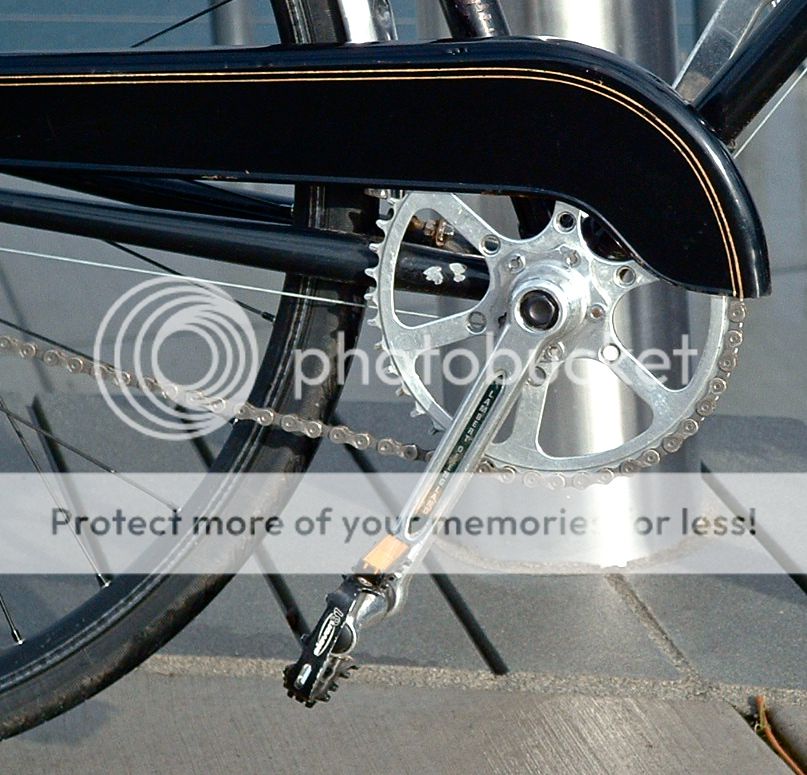
For the record, most of my best shots on this forum were done with a Fuji Finepix 2800, an old 2MP camera that can on the big auction site for less than $30. The one above is a decent example of good light + back off + tight zoom. Except the somewhat cluttered background, it s a good detail shot.
Most of my more mediocre shots are done with my phone.
Obviously, a real camera with an optical zoom works better here than a phone camera with a virtual zoom.

For the record, most of my best shots on this forum were done with a Fuji Finepix 2800, an old 2MP camera that can on the big auction site for less than $30. The one above is a decent example of good light + back off + tight zoom. Except the somewhat cluttered background, it s a good detail shot.
Most of my more mediocre shots are done with my phone.
__________________
● 1971 Grandis SL ● 1972 Lambert Grand Prix frankenbike ● 1972 Raleigh Super Course fixie ● 1973 Nishiki Semi-Pro ● 1979 Motobecane Grand Jubile ●1980 Apollo "Legnano" ● 1984 Peugeot Vagabond ● 1985 Shogun Prairie Breaker ● 1986 Merckx Super Corsa ● 1987 Schwinn Tempo ● 1988 Schwinn Voyageur ● 1989 Bottechia Team ADR replica ● 1990 Cannondale ST600 ● 1993 Technium RT600 ● 1996 Kona Lava Dome ●
● 1971 Grandis SL ● 1972 Lambert Grand Prix frankenbike ● 1972 Raleigh Super Course fixie ● 1973 Nishiki Semi-Pro ● 1979 Motobecane Grand Jubile ●1980 Apollo "Legnano" ● 1984 Peugeot Vagabond ● 1985 Shogun Prairie Breaker ● 1986 Merckx Super Corsa ● 1987 Schwinn Tempo ● 1988 Schwinn Voyageur ● 1989 Bottechia Team ADR replica ● 1990 Cannondale ST600 ● 1993 Technium RT600 ● 1996 Kona Lava Dome ●
Last edited by Lascauxcaveman; 04-27-15 at 11:14 AM.
 04-27-15 | 10:58 AM
#9

Senior Member

Joined: May 2008
Posts: 10,106
Likes: 2,762
From: Fredericksburg, Va
Bikes: ? Proteous, '65 Frejus TDF, '73 Bottecchia Giro d'Italia, '83 Colnago Superissimo, '84 Trek 610, '84 Trek 760, '88 Pinarello Veneto, '88 De Rosa Pro, '89 Pinarello Montello, 'Litespeed Catalyst'94 Burley Duet, 97 Specialized RockHopper, 2010 Langster
IMHO, next to lighting is composition. But don't forget knowing your equipment and its capabilities and limitations. They will vary all over the map. Depth of field control will make a huge impact but if your lens is too slow, it won't be there. I use a point and shoot that does great near macro shots, not by moving back and zooming in but by going wide and close. Took me awhile to realize what was going on. Short depth of field is near impossible for mine. Still learning how to use it.
The cool part about digital is you can assess the picture right away and do it again.
The cool part about digital is you can assess the picture right away and do it again.
__________________
Bikes don't stand alone. They are two tired.
Bikes don't stand alone. They are two tired.

 04-27-15 | 12:32 PM
#11

The Improbable Bulk
Joined: Jul 2005
Posts: 8,379
Likes: 7
From: Wilkes-Barre, PA
Bikes: Many
As far as my input to the thread. If it is within a person's budget, and nice pictures are wanted, an inexpensive DSLR with a decent lens is a good investment. I use a Sony Alpha 200, and it is a little dated, and I pretty much only use it as a very nice point and shoot (almost always on automatic), but it produces much better results than my true point and shoot... so if I happen to stumble on a nice shot, I have a better chance of it turning out well.
The comments on lighting above are key, as I am learning over time.
I would just urge everyone to be creative, and remember that the photos are digital, so you can take as many as you want and delete the ones that don't turn out well.
__________________
Slow Ride Cyclists of NEPA
People do not seem to realize that their opinion of the world is also a confession of character.
- Ralph Waldo Emerson
Slow Ride Cyclists of NEPA
People do not seem to realize that their opinion of the world is also a confession of character.
- Ralph Waldo Emerson

 04-27-15 | 01:44 PM
#13

Senior Member
Joined: Jun 2012
Posts: 558
Likes: 49
From: Prior Lake
Bikes: 1989 Tommasini Super Prestige, 1985 Chris Kvale, 1977 Colnago Super, 1992 Serotta Colorado, 1984 Schwinn Cimarron
Definitely will be following along with this. Thanks to those who have always contributed.
If I'm taking shots near or at home, using a BBQ skewer to stand the bike up is simple and effective. They aren't immediately noticeable in pictures and are easily removed from the photo if needed.
If I'm taking shots near or at home, using a BBQ skewer to stand the bike up is simple and effective. They aren't immediately noticeable in pictures and are easily removed from the photo if needed.
04-27-15 | 02:15 PM
#14
Senior Member
Joined: Jul 2014
Posts: 1,795
Likes: 251
From: ATX
Thanks for the mention, Squid! Very nice that you like my photos.
I will echo what has been said already, that lighting and composition are two of the biggest factors. Contrary to popular belief, direct sunlight is never the best choice, unless it's early or late in the day. Any other time and it's just too harsh and unflattering.
Gear is another factor, but as mentioned, does not have to be the latest and greatest. I am a working professional and my gear is going on 7 or 8 years old now. Still makes great images! Camera body does not matter as much as the glass. Doesn't even have to be top of the line glass. Just fast glass, and by fast I mean something with a large aperture: f/2.8 or better. This will allow you to control the depth of field and aid in directing the viewer's eyes as you want to. Another good way to direct the eyes is to use leading lines that either lead the viewer into or out of the image.
Lastly I will mention that part of the complete image happens in post processing. I cannot state how important it is to use great software. Adobe's Lightroom is so affordable for what you get in return. It's fairly simple to use and the results will blow you away. One of the most useful tools within Lightroom(and Photoshop) is dodging and burning. Remember that in the film days? A little bit of dodging and burning goes a long way and can really make a normal image that much better.
Just to show you, here is the original version of the image from above. Would not be the same without a little dodging and burning.

I'm happy to answer any questions for anyone.
I will echo what has been said already, that lighting and composition are two of the biggest factors. Contrary to popular belief, direct sunlight is never the best choice, unless it's early or late in the day. Any other time and it's just too harsh and unflattering.
Gear is another factor, but as mentioned, does not have to be the latest and greatest. I am a working professional and my gear is going on 7 or 8 years old now. Still makes great images! Camera body does not matter as much as the glass. Doesn't even have to be top of the line glass. Just fast glass, and by fast I mean something with a large aperture: f/2.8 or better. This will allow you to control the depth of field and aid in directing the viewer's eyes as you want to. Another good way to direct the eyes is to use leading lines that either lead the viewer into or out of the image.
Lastly I will mention that part of the complete image happens in post processing. I cannot state how important it is to use great software. Adobe's Lightroom is so affordable for what you get in return. It's fairly simple to use and the results will blow you away. One of the most useful tools within Lightroom(and Photoshop) is dodging and burning. Remember that in the film days? A little bit of dodging and burning goes a long way and can really make a normal image that much better.
Just to show you, here is the original version of the image from above. Would not be the same without a little dodging and burning.
I'm happy to answer any questions for anyone.
04-27-15 | 02:42 PM
#16

LET'S ROLL
Joined: Nov 2009
Posts: 4,789
Likes: 59
From: NEW YORK, NY - USA
Bikes: 2014 BMC Gran Fondo, 2013 Brompton S6L-X
Natural light(sunrise/sunset), composition/angle, decent equipment.
Photo taken around sunset with my Samsung Galaxy S4 Zoom smartphone:
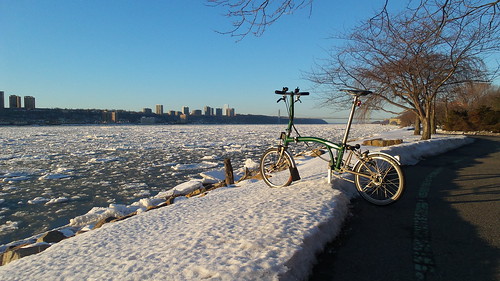 2015 FEB, NYC by 1nterceptor, on Flickr
Photo taken around sunset with my Samsung Galaxy S4 Zoom smartphone:
2015 FEB, NYC by 1nterceptor, on Flickr
__________________
One day: www.youtube.com/watch?v=20X43026ukY&list=UUHyRS8bRu6zPoymgKaIoDLA&index=1
One day: www.youtube.com/watch?v=20X43026ukY&list=UUHyRS8bRu6zPoymgKaIoDLA&index=1
04-27-15 | 03:46 PM
#18

Senior Member
Joined: Apr 2005
Posts: 16,748
Likes: 138
From: Wherever
Only thing I will add is this; lots of folks don't realize their cameras have a hard time zeroing in the autofocus on something as narrow as a bike frame tube, thus the focus falls on the background instead of the bike. Wide shots of the whole bike in front of a garage door are usually no problem. As long as what's behind the bike is quite close to the frame. Otherwise you get a nice, sharp pic of the background and the bike is slightly out. Happens in close-ups and detail shots mostly.
I will say, at the slight risk of offending Franswa, which is not my intention, but as an old film shooter, I don't care much for manipulated photos. I hate to say it but I like the original photo better than the doctored one shown above, which I immediately noticed had been "adjusted". I'm just old fashioned, I guess. It's a fine picture.
I will say, at the slight risk of offending Franswa, which is not my intention, but as an old film shooter, I don't care much for manipulated photos. I hate to say it but I like the original photo better than the doctored one shown above, which I immediately noticed had been "adjusted". I'm just old fashioned, I guess. It's a fine picture.
Last edited by rootboy; 04-27-15 at 03:50 PM.
04-27-15 | 04:09 PM
#19
Senior Member
Joined: Mar 2014
Posts: 1,593
Likes: 8
From: NYC
I will say, at the slight risk of offending Franswa, which is not my intention, but as an old film shooter, I don't care much for manipulated photos. I hate to say it but I like the original photo better than the doctored one shown above, which I immediately noticed had been "adjusted". I'm just old fashioned, I guess. It's a fine picture.
That said, I, too, agree that I actually prefer the original to the retouched file, which to my eye looks hypersaturated. Of course, a lot of that comes down to personal preference
 04-27-15 | 04:46 PM
#21
Banned.
Joined: May 2011
Posts: 4,816
Likes: 29
From: on the beach
Bikes: '73 falcon sr, '76 grand record, '84 davidson
this. let's remember, photography is about light and composition. most of the best bike photos i've seen are taken in great light with good equipment. when light is low, great equipment can make up for it by turning up the iso. nikon and canon slr cameras are great at this. my olympus is not, so i either must use a tripod or find enough light.
outdoor shots of bikes look better to most of us -- natural light in the bike's natural element. this is often done on a sunny day in the shade. bright sun on the subject merely washes it out. like good music, a good photo uses dynamics ... of light.
these are shared way too often here. i realize it's convenient. but if the bike is operational and worthwhile to share, why not ride it to a nice stone wall or park? the only thing worse than a driveway photo of your bike in direct sunlight is a non-drive side photo.
full bike pics should have (1) the front wheel perfectly straight, (2) the chain on the big ring and a small rear cog, (3) the pedals either parallel to the ground or seat tube, and (4) valve stems pointed to either 12:00 or 6:00.
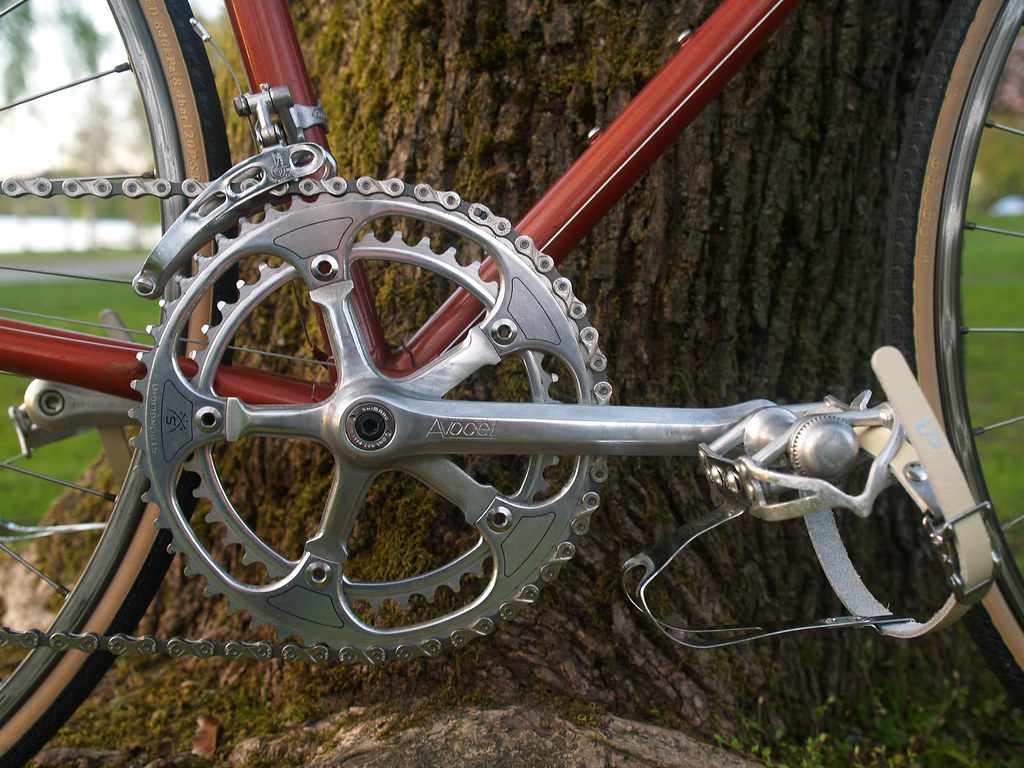
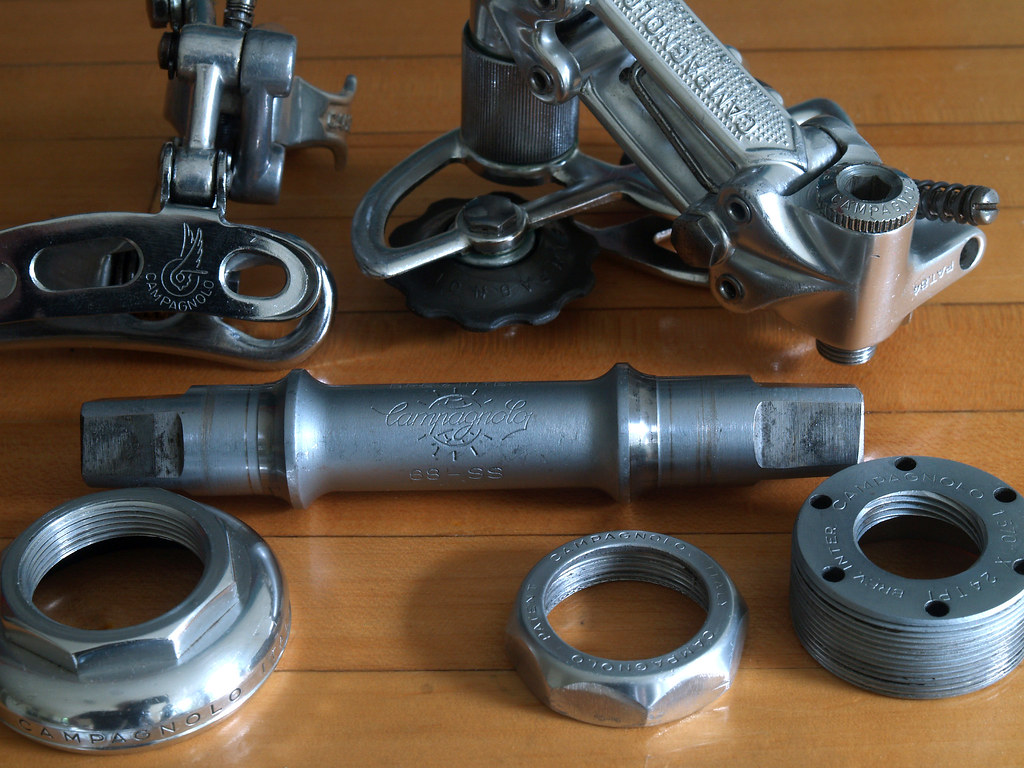
outdoor shots of bikes look better to most of us -- natural light in the bike's natural element. this is often done on a sunny day in the shade. bright sun on the subject merely washes it out. like good music, a good photo uses dynamics ... of light.
these are shared way too often here. i realize it's convenient. but if the bike is operational and worthwhile to share, why not ride it to a nice stone wall or park? the only thing worse than a driveway photo of your bike in direct sunlight is a non-drive side photo.
full bike pics should have (1) the front wheel perfectly straight, (2) the chain on the big ring and a small rear cog, (3) the pedals either parallel to the ground or seat tube, and (4) valve stems pointed to either 12:00 or 6:00.
Last edited by eschlwc; 04-27-15 at 04:55 PM.
04-27-15 | 07:54 PM
#22

Senior Member
Joined: Nov 2005
Posts: 4,074
Likes: 2,173
From: NW Ohio
Bikes: 1984 Miyata 310, 1986 Schwinn Sierra, 1987 Ross Mt. Hood, 1988 Schwinn LeTour, 1988 Trek 400T, 1981 Fuji S12-1977 Univega Grand Rally, S LTD, 1973 Sears Free Spirit 531, 197? FW Evans
Opening the aperture to give a shallow depth of field helps blur the background and make the subject stand out. This is especially useful if the background is cluttered and you don't have the option to move to a better location.
A tripod will make almost every picture sharper by eliminating camera shake.
If your camera has manual focus, use it to put the focus where you want it, instead of the camera's auto focus picking a point behind the bike.
Almost any camera can take good pictures if the user knows its capabilities and limitations and uses them to the best advantage.
A tripod will make almost every picture sharper by eliminating camera shake.
If your camera has manual focus, use it to put the focus where you want it, instead of the camera's auto focus picking a point behind the bike.
Almost any camera can take good pictures if the user knows its capabilities and limitations and uses them to the best advantage.
04-27-15 | 08:35 PM
#23
Senior Member
Joined: Jan 2007
Posts: 92
Likes: 1
Greetings.
Some very good tips posted. For what it's worth Photoshop is the industry standard, but most of it the average person won't use. Photoshop Elements (if it still exists) has pretty much all of what anybody would use. Most free editors are useful and free. Elements used to be ~$100 bucks and even old versions likely do more than you need.
IMO the best of the open source ones (=free) are:
1) GIMP GIMP - The GNU Image Manipulation Program Kind a goofy to learn, but it works. When you get the hang of it, it's pretty much as good as Photoshop.
2) Rawtherapee RawTherapee Blog Better than Photoshop RAW editor in many ways. Will do JPEGS etc. as well as RAW. Have used it for years and have tried virtually every one out there. Non destructive years before photoshop was.
For cameras and photo tips:
Ken Rockwell KenRockwell.com: Photography, Cameras and Taking Better Pictures Really a weird guy, but the most comprehensive reviewer of "Stuff" out there. Takes a lot of heat from the community, but there is more advice there than anyone can ask for. You kinda have to dig through his site. His principles of how to take photos are founded on basics and you can use them with confidence. Don't need to like him or his style; good stuff there.
Hope this helps
r
Some very good tips posted. For what it's worth Photoshop is the industry standard, but most of it the average person won't use. Photoshop Elements (if it still exists) has pretty much all of what anybody would use. Most free editors are useful and free. Elements used to be ~$100 bucks and even old versions likely do more than you need.
IMO the best of the open source ones (=free) are:
1) GIMP GIMP - The GNU Image Manipulation Program Kind a goofy to learn, but it works. When you get the hang of it, it's pretty much as good as Photoshop.
2) Rawtherapee RawTherapee Blog Better than Photoshop RAW editor in many ways. Will do JPEGS etc. as well as RAW. Have used it for years and have tried virtually every one out there. Non destructive years before photoshop was.
For cameras and photo tips:
Ken Rockwell KenRockwell.com: Photography, Cameras and Taking Better Pictures Really a weird guy, but the most comprehensive reviewer of "Stuff" out there. Takes a lot of heat from the community, but there is more advice there than anyone can ask for. You kinda have to dig through his site. His principles of how to take photos are founded on basics and you can use them with confidence. Don't need to like him or his style; good stuff there.
Hope this helps
r
04-27-15 | 08:36 PM
#24

Senior Member
Joined: Oct 2012
Posts: 2,726
Likes: 1,702
From: Berkeley CA
Bikes: 1981 Ron Cooper, 1974 Cinelli Speciale Corsa, 1975 Alex Singer, 2000 Gary Fisher Sugar 1, 1986 Miyata 710, 1982 Raleigh "International", 1985 Trek 720
…or at a minimum, lean against something solid and concentrate on holding the camera still (or get an app for your smartphone that only takes the shot when the phone is still). I'd say that 80% of terrible photos I see are because the person didn't try to stabilize their camera before taking the shot.
04-27-15 | 09:43 PM
#25

Senior Member
Joined: Mar 2014
Posts: 1,538
Likes: 13
From: Hopkinton, MA
Bikes: 1938 Raleigh Record Ace (2), 1938 Schwinn Paramount, 1961 Torpado, 1964? Frejus, 1980 Raleigh 753 Team Pro, Moulton, other stuff...
Look at lots of pictures - see what you like. Take lots, and lots, and still lots more pictures. Doesn't cost a penny. Fill the frame with what's important - too many photos have too much extraneous stuff. Remember the rule of 1/3s - the object of interest should be on a 1/3 of the frame (side to side or up and down).
I 'supervised' a lot of bike photography - lighting, use of white cards as mentioned, depth-of-field are all important contributors. I just have one goes-with-me lens, 18-200 zoom. It has some limitations, but I have more.
I'm another who prefers what comes out of the camera. The exception I'd make would be for the telephone pole, car, etc that really detracts from the photo, and that one can't 'get around'.
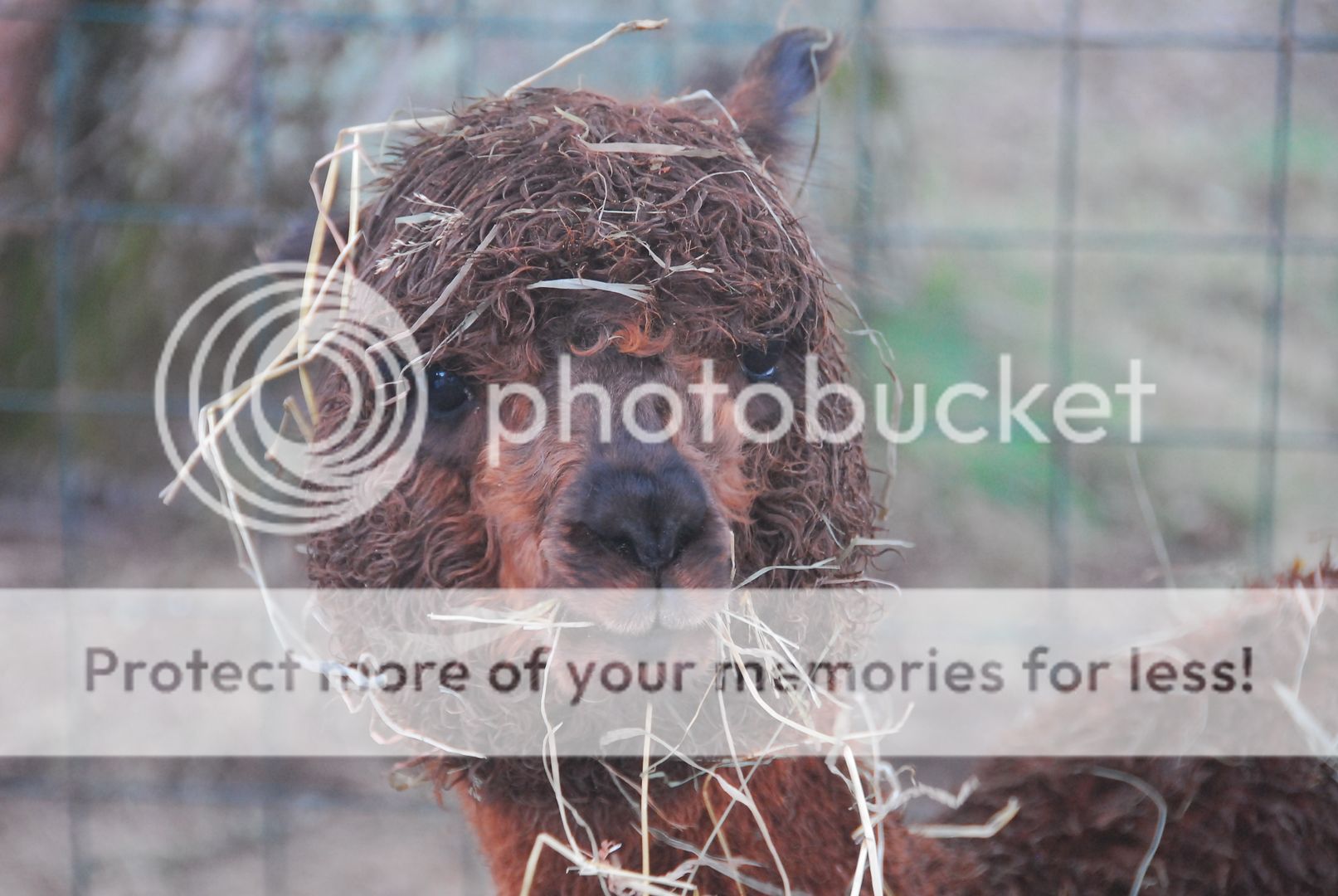
His nose is about on the 1/3 line, and his right eye, too (left eye about mid photo, the 'dead zone'). Tight depth of field helps to blur out the fence.
I 'supervised' a lot of bike photography - lighting, use of white cards as mentioned, depth-of-field are all important contributors. I just have one goes-with-me lens, 18-200 zoom. It has some limitations, but I have more.
I'm another who prefers what comes out of the camera. The exception I'd make would be for the telephone pole, car, etc that really detracts from the photo, and that one can't 'get around'.

His nose is about on the 1/3 line, and his right eye, too (left eye about mid photo, the 'dead zone'). Tight depth of field helps to blur out the fence.