


Planing?
 11-22-24 | 09:02 PM
#326

Senior Member


Joined: Apr 2011
Posts: 12,791
Likes: 4,891
The prostetics ARE (optimized) springs, and they orient up and forward in the direction of motion unlike the imaginary springs hidden in bikes being discussed here.
https://youtu.be/AcUpVsEAsds?si=BeNwAcG57IkrD0Z-
https://youtu.be/AcUpVsEAsds?si=BeNwAcG57IkrD0Z-
 11-22-24 | 09:07 PM
#327

Thread Starter
ignominious poltroon
Joined: Jan 2022
Posts: 6,027
Likes: 5,378
You cannot prove anything in science. (There is no law of induction that enables you to prove anything from a finite number of observations.) You can only refute, by demonstrating a counter-example. It isn't a bias. It is the only way forward.
It isn't my idea, either. cf: https://en.wikipedia.org/wiki/Karl_P...m_of_induction
It isn't my idea, either. cf: https://en.wikipedia.org/wiki/Karl_P...m_of_induction
11-22-24 | 09:25 PM
#328
Senior Member
Joined: Apr 2011
Posts: 12,791
Likes: 4,891
You cannot prove anything in science. (There is no law of induction that enables you to prove anything from a finite number of observations.) You can only refute, by demonstrating a counter-example. It isn't a bias. It is the only way forward.
It isn't my idea, either. cf: https://en.wikipedia.org/wiki/Karl_P...m_of_induction
It isn't my idea, either. cf: https://en.wikipedia.org/wiki/Karl_P...m_of_induction
11-22-24 | 09:26 PM
#329
Senior Member


Joined: Sep 2017
Posts: 10,391
Likes: 14,936
You have got this precisely backwards.The whole point of scientific testing is to TRY to disprove a hypothesis.
__________________
11-22-24 | 09:28 PM
#330
Senior Member
Joined: May 2021
Posts: 3,187
Likes: 2,392
From: San Francisco
Bikes: addict, aethos, creo, vanmoof, sirrus, public ...
i've been pondering this on and off all day, as well as discussing it with people with actual degrees in engineering, patents on mechanisms made of steel, carbon, plastic, etc.
i would hope we can all agree that a bicycle frame can in no way create energy. it can certainly absorb it (turning to to heat, or noise) and like a spring, store it in some capacity that i'd argue is quite small, even with a period of the input forces on the order of 100hz. all else being equal, (bold for a reason) it does not compute that this behavior would make a cyclist go meaningfully faster. it might feel better, it might feel worse, you might not be able to tell at all.
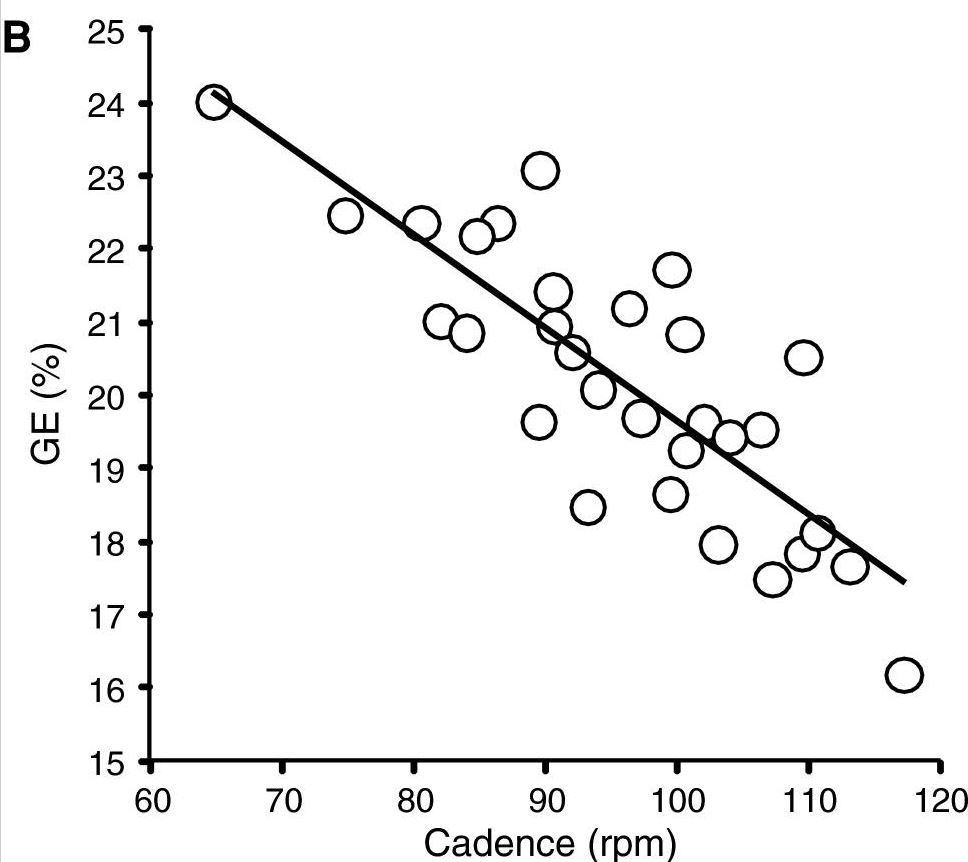
however...maybe all else is not equal. we know from a zillion studies (one graph reproduced here from Leirdal and Ettema) that the general efficiency of the human body in cycling is only in the ballpark of 20%. of course a huge amount of the 80% goes into pushing your blood through your body, moving your lungs and neck and head and powering your brain and all that, but what if the ability to transmit forces into the bike other than directly into the chain during the power stroke increased the efficiency by a point or two? relative to the actual locomotive power, going from 20 to 22 percent would be like 10 percent more power, and even if we say half of it is wasted in the "efficiency" of the spring system, it's significant. would it show up on a power meter? not sure, it would depend how precisely the algorithms of the strain gauges in power meters are tuned to the typical "cycle" of cycling. i'm reminded of the weird power meter results dcrainmaker got from one meter, and the maker (maybe 4iiii) responded that something about his pedaling dynamics were confusing their algorithm, which makes me believe it's working to discern the forces which are traditionally perceived as useful, not "any" force put into the system.
i should add that i don't believe this is true in any meaningful magnitude, but it's at least getting at the potential source of all this "extra" energy. it is the only potential source, and i simply cannot believe the notion that force which could go directly into the chain through a 95%+ efficient "drivetrain" would be more efficiently used compressing a couple steel tubes. maybe this is what Kontact was trying to get at with the biopace rings. for some people, they may be more efficient at converting human energy into forward motion.
i would hope we can all agree that a bicycle frame can in no way create energy. it can certainly absorb it (turning to to heat, or noise) and like a spring, store it in some capacity that i'd argue is quite small, even with a period of the input forces on the order of 100hz. all else being equal, (bold for a reason) it does not compute that this behavior would make a cyclist go meaningfully faster. it might feel better, it might feel worse, you might not be able to tell at all.
however...maybe all else is not equal. we know from a zillion studies (one graph reproduced here from Leirdal and Ettema) that the general efficiency of the human body in cycling is only in the ballpark of 20%. of course a huge amount of the 80% goes into pushing your blood through your body, moving your lungs and neck and head and powering your brain and all that, but what if the ability to transmit forces into the bike other than directly into the chain during the power stroke increased the efficiency by a point or two? relative to the actual locomotive power, going from 20 to 22 percent would be like 10 percent more power, and even if we say half of it is wasted in the "efficiency" of the spring system, it's significant. would it show up on a power meter? not sure, it would depend how precisely the algorithms of the strain gauges in power meters are tuned to the typical "cycle" of cycling. i'm reminded of the weird power meter results dcrainmaker got from one meter, and the maker (maybe 4iiii) responded that something about his pedaling dynamics were confusing their algorithm, which makes me believe it's working to discern the forces which are traditionally perceived as useful, not "any" force put into the system.
i should add that i don't believe this is true in any meaningful magnitude, but it's at least getting at the potential source of all this "extra" energy. it is the only potential source, and i simply cannot believe the notion that force which could go directly into the chain through a 95%+ efficient "drivetrain" would be more efficiently used compressing a couple steel tubes. maybe this is what Kontact was trying to get at with the biopace rings. for some people, they may be more efficient at converting human energy into forward motion.
11-22-24 | 09:42 PM
#331
Senior Member
Joined: Apr 2011
Posts: 12,791
Likes: 4,891
Scientific testing is neutral. It performs experiments to document pertinent results. Sometimes those results support the theory, sometimes they disprove it, and sometimes they do neither.
11-22-24 | 09:50 PM
#332
Senior Member
Joined: Sep 2017
Posts: 10,391
Likes: 14,936
Your example involving the particle would have been formulated along these lines.
11-22-24 | 10:05 PM
#333
Thread Starter
ignominious poltroon
Joined: Jan 2022
Posts: 6,027
Likes: 5,378
11-22-24 | 10:06 PM
#334
Senior Member
Joined: Apr 2011
Posts: 12,791
Likes: 4,891
i've been pondering this on and off all day, as well as discussing it with people with actual degrees in engineering, patents on mechanisms made of steel, carbon, plastic, etc.
i would hope we can all agree that a bicycle frame can in no way create energy. it can certainly absorb it (turning to to heat, or noise) and like a spring, store it in some capacity that i'd argue is quite small, even with a period of the input forces on the order of 100hz. all else being equal, (bold for a reason) it does not compute that this behavior would make a cyclist go meaningfully faster. it might feel better, it might feel worse, you might not be able to tell at all.
however...maybe all else is not equal. we know from a zillion studies (one graph reproduced here from Leirdal and Ettema) that the general efficiency of the human body in cycling is only in the ballpark of 20%. of course a huge amount of the 80% goes into pushing your blood through your body, moving your lungs and neck and head and powering your brain and all that, but what if the ability to transmit forces into the bike other than directly into the chain during the power stroke increased the efficiency by a point or two? relative to the actual locomotive power, going from 20 to 22 percent would be like 10 percent more power, and even if we say half of it is wasted in the "efficiency" of the spring system, it's significant. would it show up on a power meter? not sure, it would depend how precisely the algorithms of the strain gauges in power meters are tuned to the typical "cycle" of cycling. i'm reminded of the weird power meter results dcrainmaker got from one meter, and the maker (maybe 4iiii) responded that something about his pedaling dynamics were confusing their algorithm, which makes me believe it's working to discern the forces which are traditionally perceived as useful, not "any" force put into the system.
i should add that i don't believe this is true in any meaningful magnitude, but it's at least getting at the potential source of all this "extra" energy. it is the only potential source, and i simply cannot believe the notion that force which could go directly into the chain through a 95%+ efficient "drivetrain" would be more efficiently used compressing a couple steel tubes. maybe this is what Kontact was trying to get at with the biopace rings. for some people, they may be more efficient at converting human energy into forward motion.
i would hope we can all agree that a bicycle frame can in no way create energy. it can certainly absorb it (turning to to heat, or noise) and like a spring, store it in some capacity that i'd argue is quite small, even with a period of the input forces on the order of 100hz. all else being equal, (bold for a reason) it does not compute that this behavior would make a cyclist go meaningfully faster. it might feel better, it might feel worse, you might not be able to tell at all.
however...maybe all else is not equal. we know from a zillion studies (one graph reproduced here from Leirdal and Ettema) that the general efficiency of the human body in cycling is only in the ballpark of 20%. of course a huge amount of the 80% goes into pushing your blood through your body, moving your lungs and neck and head and powering your brain and all that, but what if the ability to transmit forces into the bike other than directly into the chain during the power stroke increased the efficiency by a point or two? relative to the actual locomotive power, going from 20 to 22 percent would be like 10 percent more power, and even if we say half of it is wasted in the "efficiency" of the spring system, it's significant. would it show up on a power meter? not sure, it would depend how precisely the algorithms of the strain gauges in power meters are tuned to the typical "cycle" of cycling. i'm reminded of the weird power meter results dcrainmaker got from one meter, and the maker (maybe 4iiii) responded that something about his pedaling dynamics were confusing their algorithm, which makes me believe it's working to discern the forces which are traditionally perceived as useful, not "any" force put into the system.
i should add that i don't believe this is true in any meaningful magnitude, but it's at least getting at the potential source of all this "extra" energy. it is the only potential source, and i simply cannot believe the notion that force which could go directly into the chain through a 95%+ efficient "drivetrain" would be more efficiently used compressing a couple steel tubes. maybe this is what Kontact was trying to get at with the biopace rings. for some people, they may be more efficient at converting human energy into forward motion.
I have had the experience of using a lot of different kinds of sprung sporting gear and have a titanium bike that feels like it leaps up hills while not feeling stiff at all. I think a lot of adamant critics just have no basis in their experience to even begin to imagine how things like this feel and function. So they dismiss it out of hand.
11-22-24 | 10:21 PM
#335
Senior Member
Joined: Apr 2011
Posts: 12,791
Likes: 4,891
A scientific hypothesis must be formulated in a manner that makes it falsifiable. The researcher’s job is to try to disprove it… And if the researcher is unsuccessful, the hypothesis is tentatively accepted. And then other researchers will try to disprove it. Rinse and repeat.
Your example involving the particle would have been formulated along these lines.
Your example involving the particle would have been formulated along these lines.
But planing isn't a hypothesis - it is an observation. It might have a little amateur experimentation attached to it, but the fact that it isn't a solid hypothesis to appropriately test doesn't invalidate the observation or the confirmation of those observations.
11-22-24 | 10:27 PM
#336
Senior Member
Joined: Sep 2017
Posts: 10,391
Likes: 14,936
I think what is happening is that the anti-planing crowd have decided that Heine's conjecture rises to the level of hypothesis - so they can then bash it.
But planing isn't a hypothesis - it is an observation. It might have a little amateur experimentation attached to it, but the fact that it isn't a solid hypothesis to appropriately test doesn't invalidate the observation or the confirmation of those observations.
But planing isn't a hypothesis - it is an observation. It might have a little amateur experimentation attached to it, but the fact that it isn't a solid hypothesis to appropriately test doesn't invalidate the observation or the confirmation of those observations.
__________________
11-22-24 | 10:47 PM
#337
Senior Member
Joined: May 2021
Posts: 3,187
Likes: 2,392
From: San Francisco
Bikes: addict, aethos, creo, vanmoof, sirrus, public ...
Maybe I'm just repeating myself, but no one is suggesting extra energy, just the ability to express it more ergonomically. Polaris Obark's reference to a the difference between a long bow and a compound bow is a very good one: Moving where forces are applied allows the same archer to go from a 60 pound draw weight to over 100 pound draw weight with the resulting difference in arrow velocity. It wouldn't be taken seriously for a moment among archers that you should be able to produce compound bow results with a traditional bow, Yet they express energy the same way, are drawn the same way and fire the same arrows.
I have had the experience of using a lot of different kinds of sprung sporting gear and have a titanium bike that feels like it leaps up hills while not feeling stiff at all. I think a lot of adamant critics just have no basis in their experience to even begin to imagine how things like this feel and function. So they dismiss it out of hand.
I have had the experience of using a lot of different kinds of sprung sporting gear and have a titanium bike that feels like it leaps up hills while not feeling stiff at all. I think a lot of adamant critics just have no basis in their experience to even begin to imagine how things like this feel and function. So they dismiss it out of hand.
__________________
11-22-24 | 11:05 PM
#338
Thread Starter
ignominious poltroon
Joined: Jan 2022
Posts: 6,027
Likes: 5,378
Planing is a proposal and potential explanation for how a bicycle works, in terms of flexing. In that sense, it is very much a hypothesis, and in my opinion, is interesting and warrants further investigation, which hardly makes me anti-planing. To further formulate it into a testable hypothesis, one has to be able to state under what conditions those tests would falsify the hypothesis.
That doesn't discredit the idea. It in fact does the opposite.

Last edited by Polaris OBark; 11-22-24 at 11:10 PM.
11-22-24 | 11:22 PM
#339
Senior Member
Joined: Apr 2011
Posts: 12,791
Likes: 4,891
the mechanical advantage given by the compound bow allows the user to impart more power to the system. the way it does so is fairly obvious, and the bow is expressly designed to store that energy. not a great analogy when in the bicycle, the system expressly designed to impart mechanical advantage is the crank, chainring, and cogs, not the frame.
11-22-24 | 11:23 PM
#340

Disco Infiltrator

Joined: May 2013
Posts: 15,350
Likes: 3,551
From: Folsom CA
Bikes: Stormchaser, Paramount, Tilt, Samba tandem
And he does tend to cherry-pick the results he likes. On the separate topic of suspension, he published roll-down tests done on rumble strips. One was a heavy duty fork from a hybrid. One was a handmade fork from impossibly sourced tinfoil-thick blades. One of the forks was a really terrible old 1990's Rockshox, their first attempt at a road fork. At the time of his test it was like twenty years old. And it did equally well to the very skinniest bouncy fork blades he preferred. He never wrote another word about it. When he talks about his magic tires there's never any serious talk about damping.
You absolutely can feel frame flex. It makes a "good" tandem like a Burley or Trek feel like crap for an American-sized team, which is why Cannondale tandems were so great. The two bikes I've ever had head shake were a Super Sport and a Paramount, both commuting with a good load in a rear-rack-top bag. But the Paramount does feel better than the Super Sport did. It does! It has to be the definitely-flexier 531 vs straight chromoly. What else could it be? On the other hand a super stiff 90s aluminum bike might not feel comfortable but you sure can feel the raw power transfer. Raw is a good word for it. But is it really that stiff? It's made of not very much aluminum at all, and somehow it feels better than putting a skinny tire in a contemporary aluminum mountain bike, which is surely much stiffer. So - is preference for a feeling providing emotional motivation? Is it Heine's preference in this instance? If so, is that what we should really be chasing?
__________________
Genesis 49:16-17
"Well, well!" said Holmes, impatiently. "A good cyclist does not need a high road. The moor is intersected with paths and the moon is at the full."
Genesis 49:16-17
"Well, well!" said Holmes, impatiently. "A good cyclist does not need a high road. The moor is intersected with paths and the moon is at the full."
Last edited by Darth Lefty; 11-22-24 at 11:31 PM.
11-23-24 | 12:08 AM
#341
Senior Member
Joined: Apr 2011
Posts: 12,791
Likes: 4,891
This is where the whole idea is spoiled at the point of origin, though. H. says, "On a bike with optimized frame flex characteristics, the rider can put out more power with less fatigue." But nothing has been optimized. He bought one bike frame that was more flexy than the one next to it. It was supposed to be a double blind study, but two of the riders could tell "with 100% accuracy" which bike was which. In the other post he reports one of the riders in one of the five repeats of one of the tests made 12% more power on the flexy bike. This is the one result he repeats over and over.
And he does tend to cherry-pick the results he likes. On the separate topic of suspension, he published roll-down tests done on rumble strips. One was a heavy duty fork from a hybrid. One was a handmade fork from impossibly sourced tinfoil-thick blades. One of the forks was a really terrible old 1990's Rockshox, their first attempt at a road fork. At the time of his test it was like twenty years old. And it did equally well to the very skinniest bouncy fork blades he preferred. He never wrote another word about it. When he talks about his magic tires there's never any serious talk about damping.
You absolutely can feel frame flex. It makes a "good" tandem like a Burley or Trek feel like crap for an American-sized team, which is why Cannondale tandems were so great. The two bikes I've ever had head shake were a Super Sport and a Paramount, both commuting with a good load in a rear-rack-top bag. But the Paramount does feel better than the Super Sport did. It does! It has to be the 531 vs straight chromoly. What else could it be? On the other hand a super stiff 90s aluminum bike might not feel comfortable but you sure can feel the raw power transfer. Raw is a good word for it. But is it really that stiff? It's made of not very much aluminum at all, and somehow it feels better than putting a skinny tire in a contemporary aluminum mountain bike, which is surely much stiffer. So - is preference for a feeling providing emotional motivation? Is it Heine's preference in this instance? If so, is that what we should really be chasing?
And he does tend to cherry-pick the results he likes. On the separate topic of suspension, he published roll-down tests done on rumble strips. One was a heavy duty fork from a hybrid. One was a handmade fork from impossibly sourced tinfoil-thick blades. One of the forks was a really terrible old 1990's Rockshox, their first attempt at a road fork. At the time of his test it was like twenty years old. And it did equally well to the very skinniest bouncy fork blades he preferred. He never wrote another word about it. When he talks about his magic tires there's never any serious talk about damping.
You absolutely can feel frame flex. It makes a "good" tandem like a Burley or Trek feel like crap for an American-sized team, which is why Cannondale tandems were so great. The two bikes I've ever had head shake were a Super Sport and a Paramount, both commuting with a good load in a rear-rack-top bag. But the Paramount does feel better than the Super Sport did. It does! It has to be the 531 vs straight chromoly. What else could it be? On the other hand a super stiff 90s aluminum bike might not feel comfortable but you sure can feel the raw power transfer. Raw is a good word for it. But is it really that stiff? It's made of not very much aluminum at all, and somehow it feels better than putting a skinny tire in a contemporary aluminum mountain bike, which is surely much stiffer. So - is preference for a feeling providing emotional motivation? Is it Heine's preference in this instance? If so, is that what we should really be chasing?
On frame flex, this isn't a more is better situation. More than a few builders and riders have commented how one classic tubeset like SL is maybe a tad stiff, Prestige too soft and Champion 1 just right (for instance). None of those is radically flexy or stiff, but people still develop preferences for what they feel is ideal - and can tell the difference.
Having had an '87 Cannondale and the radically redesigned '89 3.0 Cannondale - the '87 was too stiff in a bad way. The '89 had as much BB stiffness or more, but the backend wasn't nearly as harsh. Both would lose traction if I stood on them too hard - which is another kind of too stiff. I would ride the '89 again.
I've also owned six 1990s titanium road bikes. They have varying design philosophies, but nothing too radical. I can tell which one I'm riding by feel alone, and one does something that is oddly magical. But all of them are fun to ride.
So none of the discussion is really about bikes that are total failures. Just whether some combinations of flex produce a better result for some people.
11-23-24 | 06:35 AM
#342
Banned.
Joined: Jul 2006
Posts: 4,287
Likes: 838
I don't know why you are so attached to the frequency question. At this point the main argument is whether this happens at all, with at least half the "academics" on this thread knowingly opining that it is impossible.
Seems to me that it is much more important to demonstrate the underlying mechanisms to everyone's satisfaction before you begin worrying about how often you can make those elements add up to an overall performance effect.
It just seems like a bad faith move to use the lack of a promised statistical result as reason to dismiss what is, at this point, simply a theory based on the experience and documentary evidence collected by one guy. If you want to have something to say about the matter, do the work of testing the idea. Not the hypothesis - the idea. And don't do it because it is important for you to disprove something. That kind of bias isn't science.
Seems to me that it is much more important to demonstrate the underlying mechanisms to everyone's satisfaction before you begin worrying about how often you can make those elements add up to an overall performance effect.
It just seems like a bad faith move to use the lack of a promised statistical result as reason to dismiss what is, at this point, simply a theory based on the experience and documentary evidence collected by one guy. If you want to have something to say about the matter, do the work of testing the idea. Not the hypothesis - the idea. And don't do it because it is important for you to disprove something. That kind of bias isn't science.
11-23-24 | 07:30 AM
#343
Senior Member
Joined: Aug 2009
Posts: 3,175
Likes: 1,697
Can yall "pro planing" guys feel the flex in the shaft of the shovel? and does it help or hinder with the digging?...
 11-23-24 | 08:51 AM
#345
Senior Member
Joined: Aug 2011
Posts: 1,246
Likes: 292
after a few got through their schpeel, the fellow next to me said "artists love to talk about themselves."
well, this thread may not be populated by artists, but is certainly is a blivit in twelve volumes.


 11-23-24 | 09:55 AM
#347
Senior Member
Joined: Aug 2011
Posts: 1,246
Likes: 292
just wait; compact & gumbo be next