


Planing?
 11-20-24 | 06:55 PM
#151

Klaatu..Verata..Necktie?


Joined: May 2007
Posts: 23,886
Likes: 17,292
From: SF Bay Area
Bikes: Litespeed Ultimate, Ultegra; Canyon Endurace, 105; Battaglin MAX, Chorus; Bianchi 928 Veloce; Ritchey Road Logic, Dura Ace; Cannondale R500 RX100; Schwinn Circuit, Sante; Lotus Supreme, Dura Ace
In my example, the chainstays are essentially twisting into a helix by the alternating pedal strokes - clockwise, counterclockwise. That makes the chainstays shorter. So when the twist is taken out the chainstays elongate increasing the distance from the top of the cassette to the top of chainwheel. The rider is loading the chainwheel and the tire has traction on the road, so the only place the elongation can go is by pulling on the cassette cog and forcing the rest of the bike forward.
This doesn't do anything significantly different than an oval chainring in that it lowers the effective gearing at peak load and increases the effective gearing by adding to the amount of chain pulled by the chainwheel at low load. And that is a very simplified example of how a flexible bike stores and releases energy. Which is not "planing", but a contribution to the whole system (I would think). My Merlin does this in a fairly obvious way (to me) when climbing out of the saddle. I do not know if that means I experience planing per se, but I don't see why not.
This doesn't do anything significantly different than an oval chainring in that it lowers the effective gearing at peak load and increases the effective gearing by adding to the amount of chain pulled by the chainwheel at low load. And that is a very simplified example of how a flexible bike stores and releases energy. Which is not "planing", but a contribution to the whole system (I would think). My Merlin does this in a fairly obvious way (to me) when climbing out of the saddle. I do not know if that means I experience planing per se, but I don't see why not.
I think it makes more sense that the frame untwisting returns the force through the BB and pedal to the food of the rider, but I sincerely doubt your average rider would notice anything, because the degree of twisting is pretty small unless you're standing on the pedals.
__________________
"Don't take life so serious-it ain't nohow permanent."
"Everybody's gotta be somewhere." - Eccles
"Don't take life so serious-it ain't nohow permanent."
"Everybody's gotta be somewhere." - Eccles
 11-20-24 | 07:15 PM
#152
Senior Member
Joined: Oct 2010
Posts: 8,841
Likes: 2,859
Unless I missed it, we haven't talked about those wide, low pressure tires compressing/decompressing with every pedal stroke. Very noticeable when climbing, at least for my 200ish lb body. Are we losing energy there, or getting some type of planing from the tires?
 11-20-24 | 07:50 PM
#153
Perceptual Dullard
Joined: Sep 2009
Posts: 2,923
Likes: 1,761
In my example, the chainstays are essentially twisting into a helix by the alternating pedal strokes - clockwise, counterclockwise. That makes the chainstays shorter. So when the twist is taken out the chainstays elongate increasing the distance from the top of the cassette to the top of chainwheel. The rider is loading the chainwheel and the tire has traction on the road, so the only place the elongation can go is by pulling on the cassette cog and forcing the rest of the bike forward.
11-20-24 | 07:57 PM
#154

Senior Member

Joined: Apr 2011
Posts: 12,780
Likes: 4,885
The problem with arguing that is that the "winding up" would be pulling the rest of the bike backward.
I think it makes more sense that the frame untwisting returns the force through the BB and pedal to the food of the rider, but I sincerely doubt your average rider would notice anything, because the degree of twisting is pretty small unless you're standing on the pedals.
I think it makes more sense that the frame untwisting returns the force through the BB and pedal to the food of the rider, but I sincerely doubt your average rider would notice anything, because the degree of twisting is pretty small unless you're standing on the pedals.
11-20-24 | 08:16 PM
#155
Senior Member
Joined: Apr 2011
Posts: 12,780
Likes: 4,885
Trakhak was saying that the only way for energy stored in the frame to come back to drive the bike forward was through the crank, but you're saying that there's an independent path through the chainstays. So if we took the chain (and/or cranks/BB) off a bike, mounted it in a trainer, then pressed sideways on the BB shell, first on the right side and then on the left, will the rear wheel rotate forward? Or do you need the chain and chainring?
Take the motion of the chain and bike out of the picture and you could look at the system as a lever arm that pivots at the hub axle, with one end of the lever bolted to a pivot on the pavement, the other end of that lever at the top of the cassette. The chain is a connecting rod running from the top of the cassette to lever the height of the chainwheel. The pivot of the chainwheel lever arm and the hub axle are connected by a compression spring (the stays). Press the crank lever and the compression spring at the stay compresses so the crank moves back. Relax the pressure on the crank and spring decompresses, pushing the crank pivot forward due to the way the chain rigidly connects them.
If anyone thinks this sort of thing is hard to picture, learn how a helicopter rotorhead works. It has a much more complicated 3D version of this kind of push and pull.
11-20-24 | 08:19 PM
#156
Senior Member
Joined: Apr 2011
Posts: 12,780
Likes: 4,885
Since Jan is the one that popularized such tires, I think it is safe to say they could be a factor. But I don't think the whole planing thing is about the slow RPM torque-y motion of climbing, but what happens at 90 RPM.
11-20-24 | 08:19 PM
#157
Banned.
Joined: Jul 2006
Posts: 4,287
Likes: 838
This is from the now-removed comments on the earlier with the 12% planing experiment.
More info on the critique that he could tell the bikes apart. Alex Wetmore was rider #3 and has confirmed elsewhere he couldn't tell any of the bikes apart:
Sort of loses the plot here and makes some word salad, while contradicting himself from earlier (?):
Jan Heine, Editor, Bicycle Quarterly November 24, 2014 at 9:22 am #That research was done by Gary Houchin-Miller. He did a finite element analysis of a bicycle frame, and looked at the three flex patterns that occur. He found that when relaxed, each flex returned the energy to the drivetrain by pulling the chain forward. His research was published in Bicycle Quarterly Vol. 4, No. 4, as well as on his (now-defunct) web site.
Jan Heine, Editor, Bicycle Quarterly November 24, 2014 at 7:25 pm #
You can feel the flexibility of the frame you are riding
Interestingly, the frames all felt the same – only their performance was different. If it the flexibility of a frame was easy to feel, then our third rider would have had no trouble identifying the bikes. Yet he was unable to identify the different frames, even though he thought he felt differences.
we know what your opinion is
At the time of the test, we didn’t have a clear opinion. Both testers just had received custom frames with stiffer frames, so 1) we were used to stiffer frames and 2) we had some investment in the performance of stiffer frames.
If our “opinions” have changed based on the results of the test, then that is to be expected. Otherwise, we’d be pretty stubborn!
You can feel the flexibility of the frame you are riding
Interestingly, the frames all felt the same – only their performance was different. If it the flexibility of a frame was easy to feel, then our third rider would have had no trouble identifying the bikes. Yet he was unable to identify the different frames, even though he thought he felt differences.
we know what your opinion is
At the time of the test, we didn’t have a clear opinion. Both testers just had received custom frames with stiffer frames, so 1) we were used to stiffer frames and 2) we had some investment in the performance of stiffer frames.
If our “opinions” have changed based on the results of the test, then that is to be expected. Otherwise, we’d be pretty stubborn!
Jan Heine, Editor, Bicycle Quarterly November 28, 2014 at 7:22 am #
Just like you, I have published extensively in peer-reviewed journals in my previous career as a geologist. BQ contributor Mark Vande Kamp still works as a scientist designing exactly these kinds of studies. He frequently publishes in peer-reviewed journals.
Many people assume that Bicycle Quarterly‘s articles are not peer-reviewed. This is incorrect: All our important test articles are peer-reviewed. This is unique among cycling publications. The double-blind test was reviewed by Jim Papadopoulos and Hank Folsom. Jim is probably the most scientific of bicycle researchers, having published in Science and other prestigious journals. Hank has more experience with frame tubing than almost anybody.
You concern about the study cohort is an interesting one. You misunderstand the hypothesis. If our hypothesis was that “planing” was a factor that influenced bicycle performance for average riders, then our study would have been flawed. However, that was not our hypothesis.
Our hypothesis was that the sensations of accessibility of a bike’s performance that Bicycle Quarterly‘s testers feel on the road are real and intrinsic to the frame. Basically, we wanted to know how reliable our observations were. We found that they held up in a double-blind test. We could reliably detect very small differences in frame tubing.
Of course, you cannot conclude from this that “planing” works for everybody. In fact, we included a third rider in the tests, who thought he could detect differences, but whose observations were random. So we already know that for relatively small differences in frame tubing, there are some experienced riders who don’t feel the difference. We thought about expanding the study with more subjects, but concluded that it would not tell us anything new.
The number of study subjects would have to be large to get statistically significant results. We’d need 100+ study subjects, and all we’d show is that some people experience a difference in performance and feel on these bikes and others don’t. It might be interesting to compare more dissimilar frames – say a Surly Long-Haul Trucker with a superlight frame (with the weight equalized), but I am afraid that running tests with hundreds of subjects is beyond our budget. And in the end, the readers still would be left wondering whether they belong to the group for whom “planing” matters or to the group for whom it doesn’t.
In summary, we showed that “planing” exists, not how prevalent it is.
Just like you, I have published extensively in peer-reviewed journals in my previous career as a geologist. BQ contributor Mark Vande Kamp still works as a scientist designing exactly these kinds of studies. He frequently publishes in peer-reviewed journals.
Many people assume that Bicycle Quarterly‘s articles are not peer-reviewed. This is incorrect: All our important test articles are peer-reviewed. This is unique among cycling publications. The double-blind test was reviewed by Jim Papadopoulos and Hank Folsom. Jim is probably the most scientific of bicycle researchers, having published in Science and other prestigious journals. Hank has more experience with frame tubing than almost anybody.
You concern about the study cohort is an interesting one. You misunderstand the hypothesis. If our hypothesis was that “planing” was a factor that influenced bicycle performance for average riders, then our study would have been flawed. However, that was not our hypothesis.
Our hypothesis was that the sensations of accessibility of a bike’s performance that Bicycle Quarterly‘s testers feel on the road are real and intrinsic to the frame. Basically, we wanted to know how reliable our observations were. We found that they held up in a double-blind test. We could reliably detect very small differences in frame tubing.
Of course, you cannot conclude from this that “planing” works for everybody. In fact, we included a third rider in the tests, who thought he could detect differences, but whose observations were random. So we already know that for relatively small differences in frame tubing, there are some experienced riders who don’t feel the difference. We thought about expanding the study with more subjects, but concluded that it would not tell us anything new.
The number of study subjects would have to be large to get statistically significant results. We’d need 100+ study subjects, and all we’d show is that some people experience a difference in performance and feel on these bikes and others don’t. It might be interesting to compare more dissimilar frames – say a Surly Long-Haul Trucker with a superlight frame (with the weight equalized), but I am afraid that running tests with hundreds of subjects is beyond our budget. And in the end, the readers still would be left wondering whether they belong to the group for whom “planing” matters or to the group for whom it doesn’t.
In summary, we showed that “planing” exists, not how prevalent it is.
11-20-24 | 08:26 PM
#158

Thread Starter
ignominious poltroon
Joined: Jan 2022
Posts: 6,027
Likes: 5,378
 11-20-24 | 08:36 PM
#159
Thread Starter
ignominious poltroon
Joined: Jan 2022
Posts: 6,027
Likes: 5,378
Some of these nonexistent comments are priceless:

11-20-24 | 09:00 PM
#160

Rider. Wanderer. Creator.
Joined: May 2007
Posts: 3,003
Likes: 4,301
From: New Jersey
Bikes: Bike Friday All-Packa, Zizzo Liberte, Ozark Trail G.1 Explorer
Has anyone repeated the planing test and reproduced the results?
__________________
Rider. Wanderer. Creator.
JohnMFlores.com | YouTube: JohnMFlores
Insta: JohnMichaelFlores | Substack: https://followingwyman.substack.com/
Rider. Wanderer. Creator.
JohnMFlores.com | YouTube: JohnMFlores
Insta: JohnMichaelFlores | Substack: https://followingwyman.substack.com/
11-20-24 | 09:01 PM
#161
Senior Member
Joined: Apr 2011
Posts: 12,780
Likes: 4,885
The ergonomic advantage of a sprung drivetrain could probably be best illustrated by something like a ball thrower:
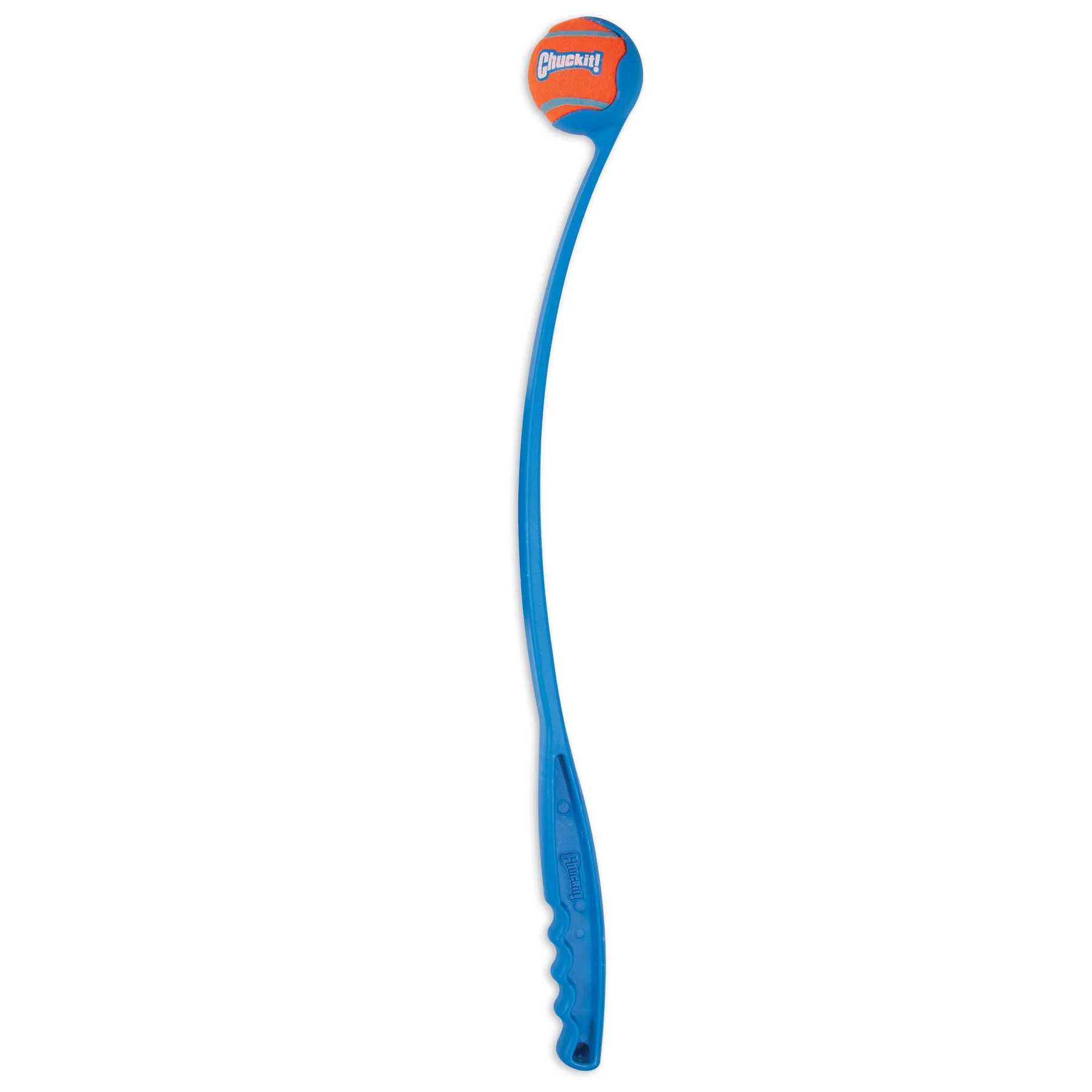
Why is this device, with a flexible bow arm, more efficient than a simple rigid shaft? Because as you start the throwing motion, the shaft bends back to allow your arm to accelerate more than it would be if it had to carry the full load of the ball's momentum. As the throwing motion reaches the limit of the arm's range, the bent shaft unflexes, giving the ball a last bit of velocity greater than what the arm could do at that point. The net effect is that spring arm flex produces higher ball velocity than a stiff arm would.
The idea would be that on stiff bikes there are places in the pedal motion where torque briefly exceeds what legs can efficiently produce, so some of the effort is lost pushing on something that won't yield properly (like on a rigid ball thrower). And that isn't a radical concept, since all of us I'm sure agree that oval chainrings work. But instead of varying the gearing like a fixed Biopace ring, the frame compresses and releases as a perfect mirror of the high and low outputs of the rider. Given that the frame compresses rather than resists at peak load, the rider can more efficiently make power than a perfectly rigid system, like the flexible thrower. Since the frame flex is a reaction to pedaling input, it is even more ergonomic than an oval chainring because it does not dictate the timing of the load change.
Why is this device, with a flexible bow arm, more efficient than a simple rigid shaft? Because as you start the throwing motion, the shaft bends back to allow your arm to accelerate more than it would be if it had to carry the full load of the ball's momentum. As the throwing motion reaches the limit of the arm's range, the bent shaft unflexes, giving the ball a last bit of velocity greater than what the arm could do at that point. The net effect is that spring arm flex produces higher ball velocity than a stiff arm would.
The idea would be that on stiff bikes there are places in the pedal motion where torque briefly exceeds what legs can efficiently produce, so some of the effort is lost pushing on something that won't yield properly (like on a rigid ball thrower). And that isn't a radical concept, since all of us I'm sure agree that oval chainrings work. But instead of varying the gearing like a fixed Biopace ring, the frame compresses and releases as a perfect mirror of the high and low outputs of the rider. Given that the frame compresses rather than resists at peak load, the rider can more efficiently make power than a perfectly rigid system, like the flexible thrower. Since the frame flex is a reaction to pedaling input, it is even more ergonomic than an oval chainring because it does not dictate the timing of the load change.
Last edited by Kontact; 11-20-24 at 09:30 PM.
11-20-24 | 09:21 PM
#163
Thread Starter
ignominious poltroon
Joined: Jan 2022
Posts: 6,027
Likes: 5,378
11-20-24 | 09:22 PM
#164
Thread Starter
ignominious poltroon
Joined: Jan 2022
Posts: 6,027
Likes: 5,378
11-20-24 | 09:40 PM
#165
Senior Member
Joined: Jul 2009
Posts: 8,296
Likes: 11,380
Bikes: Colnago, Van Dessel, Factor, Cervelo, Ritchey
The ergonomic advantage of a sprung drivetrain could probably be best illustrated by something like a ball thrower:
Why is this device, with a flexible bow arm, more efficient than a simple rigid shaft? Because as you start the throwing motion, the shaft bends back to allow your arm to accelerate more than it would be if it had to carry the full load of the ball's momentum. As the throwing motion reaches the limit of the arm's range, the bent shaft unflexes, giving the ball a last bit of velocity greater than what the arm could do at that point. The net effect is that spring arm flex produces higher ball velocity than a stiff arm would.
The idea would be that on stiff bikes there are places in the pedal motion where torque briefly exceeds what legs can efficiently produce, so some of the effort is lost pushing on something that won't yield properly (like on a rigid ball thrower). And that isn't a radical concept, since all of us I'm sure agree that oval chainrings work. But instead of varying the gearing like a fixed Biopace ring, the frame compresses and releases as a perfect mirror of the high and low outputs of the rider. Given that the frame compresses rather than resists at peak load, the rider can more efficiently make power than a perfectly rigid system, like the flexible thrower. Since the frame flex is a reaction to pedaling input, it is even more ergonomic than an oval chainring because it does not dictate the timing of the load change.
Why is this device, with a flexible bow arm, more efficient than a simple rigid shaft? Because as you start the throwing motion, the shaft bends back to allow your arm to accelerate more than it would be if it had to carry the full load of the ball's momentum. As the throwing motion reaches the limit of the arm's range, the bent shaft unflexes, giving the ball a last bit of velocity greater than what the arm could do at that point. The net effect is that spring arm flex produces higher ball velocity than a stiff arm would.
The idea would be that on stiff bikes there are places in the pedal motion where torque briefly exceeds what legs can efficiently produce, so some of the effort is lost pushing on something that won't yield properly (like on a rigid ball thrower). And that isn't a radical concept, since all of us I'm sure agree that oval chainrings work. But instead of varying the gearing like a fixed Biopace ring, the frame compresses and releases as a perfect mirror of the high and low outputs of the rider. Given that the frame compresses rather than resists at peak load, the rider can more efficiently make power than a perfectly rigid system, like the flexible thrower. Since the frame flex is a reaction to pedaling input, it is even more ergonomic than an oval chainring because it does not dictate the timing of the load change.
2) Even though a chuck-it is a simple device, you botched the analysis. It works by effectively increasing the length of your arm. Period.
11-20-24 | 09:50 PM
#166
Senior Member
Joined: Apr 2011
Posts: 12,780
Likes: 4,885
1. I used a simple device to illustrate something about a more complicated one for people that would have trouble with basic ideas, like 2.
11-20-24 | 09:58 PM
#167
Senior Member

Joined: May 2021
Posts: 3,179
Likes: 2,384
From: San Francisco
Bikes: addict, aethos, creo, vanmoof, sirrus, public ...
it's quite believable that past a certain amount of power the frame will flex on each downstroke. getting the energy used to flex the frame back would be nice, but not as nice as it not happening in the first place. if the argument is that somehow the frame flexing forces the rider to do MORE work which then gets converted to forward motion, well, that's really irrelevant because now you're asking more of the cardiovascular system, and again, it has to be more efficient to just turn the cranks faster/harder.
what i could easily believe is that IF a frame is noodly, there are good and bad types of noodly, in which some return the energy badly and others return it goodly. i'm 6'2 and can pretty easily put down 1000w for a very short duration or 500w for a longer one, and my very light bike doesn't seem particularly noodly. it's very, very hard to imagine that even 5% of those 1000w are going into flexing the few ounces of carbon fiber in the area in question.
11-20-24 | 09:58 PM
#168
Senior Member
Joined: Jul 2009
Posts: 8,296
Likes: 11,380
Bikes: Colnago, Van Dessel, Factor, Cervelo, Ritchey
11-20-24 | 10:44 PM
#169
Senior Member
Joined: Apr 2011
Posts: 12,780
Likes: 4,885
but the chuck-it works, in part, by capturing energy from a longer duration than the forward part of the throw. momentum from the backwards part of the arm movement flexes the arm back, and then the spring action of the arm wanting to return to it's unflexed position is added to the forward momentum when you move your arm forward. tape the ball in and keep going back and forth, and the springiness of the thing is no longer helping you. in fact, the ball is actually moving slightly LESS than it would be with a rigid arm because the energy storage and return of flexing the thing is surely not 100% efficient. similarly, cycling is a constant activity, so it's not like for every "throw/ride" you're adding another 20 or 30% of stored up kinetic energy. when would such energy be input into the frame? and if there was a "inputting energy into the frame" cycle, would it not be more efficient to simply transfer that energy through the chain, into the rear wheel, and turn the wheel?
it's quite believable that past a certain amount of power the frame will flex on each downstroke. getting the energy used to flex the frame back would be nice, but not as nice as it not happening in the first place. if the argument is that somehow the frame flexing forces the rider to do MORE work which then gets converted to forward motion, well, that's really irrelevant because now you're asking more of the cardiovascular system, and again, it has to be more efficient to just turn the cranks faster/harder.
what i could easily believe is that IF a frame is noodly, there are good and bad types of noodly, in which some return the energy badly and others return it goodly. i'm 6'2 and can pretty easily put down 1000w for a very short duration or 500w for a longer one, and my very light bike doesn't seem particularly noodly. it's very, very hard to imagine that even 5% of those 1000w are going into flexing the few ounces of carbon fiber in the area in question.
it's quite believable that past a certain amount of power the frame will flex on each downstroke. getting the energy used to flex the frame back would be nice, but not as nice as it not happening in the first place. if the argument is that somehow the frame flexing forces the rider to do MORE work which then gets converted to forward motion, well, that's really irrelevant because now you're asking more of the cardiovascular system, and again, it has to be more efficient to just turn the cranks faster/harder.
what i could easily believe is that IF a frame is noodly, there are good and bad types of noodly, in which some return the energy badly and others return it goodly. i'm 6'2 and can pretty easily put down 1000w for a very short duration or 500w for a longer one, and my very light bike doesn't seem particularly noodly. it's very, very hard to imagine that even 5% of those 1000w are going into flexing the few ounces of carbon fiber in the area in question.
11-20-24 | 10:50 PM
#170
Senior Member
Joined: Apr 2011
Posts: 12,780
Likes: 4,885
Your analogies with simple devices are irrelevant, because those simple devices don't behave the same as a bicycle frame. If analogies were all that were required, I'd make the (equally bad) argument that tennis racquets prove that a stiffer frame is better. (Because a stiff racquet gives you more power than a flexible racquet, and is therefore more efficient.)
Speaking of ball sports, which kind of bat hits balls further - metal or wood? What is it about using a more efficient spring material helps out? Oh, no! Too simple. (But bikes are simple.)
Using simple devices to illustrate how elements of more complex ones work is pretty much the definition of education.
11-20-24 | 10:57 PM
#171
Senior Member
Joined: Jul 2009
Posts: 8,296
Likes: 11,380
Bikes: Colnago, Van Dessel, Factor, Cervelo, Ritchey
A physics or engineering education teaches you when it's appropriate to use a simple model, and when you need to use a more complex model. Your repeated attempts to explain planing using analogies to simple devices suggests you haven't received this type of education.
11-20-24 | 11:07 PM
#172
Senior Member
Joined: May 2021
Posts: 3,179
Likes: 2,384
From: San Francisco
Bikes: addict, aethos, creo, vanmoof, sirrus, public ...
so you're saying that it is "better" energy delivery for the cyclist to flex the frame, and then have that energy returned in the form of forward motion (somehow), than to turn the pedals/crank/chain/wheel?
11-20-24 | 11:07 PM
#173
Senior Member
Joined: Apr 2011
Posts: 12,780
Likes: 4,885
A physics or engineering education teaches you when it's appropriate to use a simple model, and when you need to use a more complex model. Your repeated attempts to explain planing using analogies to simple devices suggests you haven't received this type of education.
11-20-24 | 11:09 PM
#174
Senior Member
Joined: Apr 2011
Posts: 12,780
Likes: 4,885
Those aren't mutually exclusive. Did you catch the part about oval chainrings?
11-20-24 | 11:17 PM
#175
Senior Member
Joined: Jul 2009
Posts: 8,296
Likes: 11,380
Bikes: Colnago, Van Dessel, Factor, Cervelo, Ritchey