


Workout analysis and help with Winter training program, please...
 09-22-14 | 07:15 PM
#1
Thread Starter
Full Member
Joined: Aug 2014
Posts: 375
Likes: 5
From: WI
Bikes: Salsa Beargrease Carbon, Sette Razzo Carbon 29er
Workout analysis and help with Winter training program, please...
Hey all,
I'm wondering if someone might be so kind as to offer advice/suggestions on a workout regime for the coming Winter months, based around some performance data that I recorded today.
First off some important background -
52 yr old male
Weight 188
Height 6' 4"
I measured my at rest HR today and it seemed surprisingly low at 45-48 BPM. Not sure if this is good or bad.
I've been a couch potato for too many years to admit to, but I've been cycling steadily since May this year and have dropped a lot of fat (90+). My fitness level has slowly improved as the weight has gone down and the training distance has gone up.
I've ridden a couple longer distance rides (100m) and though I'm by no means in super shape, I do feel pretty good for my age.
The problem is this - in a few weeks it's going to be getting cold and ugly here in NE Wisconsin and my time on the bike is going to drop sharply.
I'm concerned about losing the ground I've gained, gaining weight and hitting Spring out of shape. (or maybe even sliding back to my old habits, God forbid).
So I'm looking at how to keep 'on the boil' over the Winter. I don't need to lose any more weight or improve fitness, I just want to maintain where I'm at until Spring 2015.
I'm realistic and doubt that I'll be doing any distance riding in the snow, so what I'm considering is a Fat Tire bike and hitting a trail in the local State Park, maybe 5 days/week.
So today I bought a heart rate monitor, strapped it on and took to the trail to see what gives.
I blasted around at a reasonable pace for 45m and rode 11m at 14.5 mph. I didn't hit max pace at any point. I rode a Century on Saturday and I'm still a bit weary from it, so I was probably at 85% of what I'm comfortable with as a flat-out pace.
Realistically, in January in Wisconsin, 1 hour on the trail is the most I'm going to manage before I freeze up.
I'm wondering what people think as far as how much benefit I can get from a workout of this duration and is it enough to keep me in fair shape?
My stats from the ride are here Rode 11.00 mi on 9/22/14 on 09/22/2014 | CYCLING Training Log Entry | MapMyRide
I'm wondering about the heart rate zones at the bottom of the page and if I should be trying to spend more time in Z5, and if so, how much more?
The Park trail is what it is - the topography of the trail determines the interval durations etc.
Does that look like a good workout for keeping myself topped up, or is there something I should be doing differently?
I plan on a gym membership and doing some core training over the Winter, so I may supplement the Park ride with some static riding - though I hate those things with a passion.
Any help would be greatly appreciated.
Thanks in advance.
Bruised
I'm wondering if someone might be so kind as to offer advice/suggestions on a workout regime for the coming Winter months, based around some performance data that I recorded today.
First off some important background -
52 yr old male
Weight 188
Height 6' 4"
I measured my at rest HR today and it seemed surprisingly low at 45-48 BPM. Not sure if this is good or bad.
I've been a couch potato for too many years to admit to, but I've been cycling steadily since May this year and have dropped a lot of fat (90+). My fitness level has slowly improved as the weight has gone down and the training distance has gone up.
I've ridden a couple longer distance rides (100m) and though I'm by no means in super shape, I do feel pretty good for my age.
The problem is this - in a few weeks it's going to be getting cold and ugly here in NE Wisconsin and my time on the bike is going to drop sharply.
I'm concerned about losing the ground I've gained, gaining weight and hitting Spring out of shape. (or maybe even sliding back to my old habits, God forbid).
So I'm looking at how to keep 'on the boil' over the Winter. I don't need to lose any more weight or improve fitness, I just want to maintain where I'm at until Spring 2015.
I'm realistic and doubt that I'll be doing any distance riding in the snow, so what I'm considering is a Fat Tire bike and hitting a trail in the local State Park, maybe 5 days/week.
So today I bought a heart rate monitor, strapped it on and took to the trail to see what gives.
I blasted around at a reasonable pace for 45m and rode 11m at 14.5 mph. I didn't hit max pace at any point. I rode a Century on Saturday and I'm still a bit weary from it, so I was probably at 85% of what I'm comfortable with as a flat-out pace.
Realistically, in January in Wisconsin, 1 hour on the trail is the most I'm going to manage before I freeze up.
I'm wondering what people think as far as how much benefit I can get from a workout of this duration and is it enough to keep me in fair shape?
My stats from the ride are here Rode 11.00 mi on 9/22/14 on 09/22/2014 | CYCLING Training Log Entry | MapMyRide
I'm wondering about the heart rate zones at the bottom of the page and if I should be trying to spend more time in Z5, and if so, how much more?
The Park trail is what it is - the topography of the trail determines the interval durations etc.
Does that look like a good workout for keeping myself topped up, or is there something I should be doing differently?
I plan on a gym membership and doing some core training over the Winter, so I may supplement the Park ride with some static riding - though I hate those things with a passion.
Any help would be greatly appreciated.
Thanks in advance.
Bruised
 09-22-14 | 07:42 PM
#2

Senior Member
Joined: May 2013
Posts: 1,602
Likes: 0
From: Texas
Bikes: Ridley Noah fast, Colnago CLX,Giant Propel Advanced, Pinnerello Gogma 65.1, Specialized S-works Venge, CAADX,Cervelo S3
Hey all,
I'm wondering if someone might be so kind as to offer advice/suggestions on a workout regime for the coming Winter months, based around some performance data that I recorded today.
First off some important background -
52 yr old male
Weight 188
Height 6' 4"
I measured my at rest HR today and it seemed surprisingly low at 45-48 BPM. Not sure if this is good or bad.
I've been a couch potato for too many years to admit to, but I've been cycling steadily since May this year and have dropped a lot of fat (90+). My fitness level has slowly improved as the weight has gone down and the training distance has gone up.
I've ridden a couple longer distance rides (100m) and though I'm by no means in super shape, I do feel pretty good for my age.
The problem is this - in a few weeks it's going to be getting cold and ugly here in NE Wisconsin and my time on the bike is going to drop sharply.
I'm concerned about losing the ground I've gained, gaining weight and hitting Spring out of shape. (or maybe even sliding back to my old habits, God forbid).
So I'm looking at how to keep 'on the boil' over the Winter. I don't need to lose any more weight or improve fitness, I just want to maintain where I'm at until Spring 2015.
I'm realistic and doubt that I'll be doing any distance riding in the snow, so what I'm considering is a Fat Tire bike and hitting a trail in the local State Park, maybe 5 days/week.
So today I bought a heart rate monitor, strapped it on and took to the trail to see what gives.
I blasted around at a reasonable pace for 45m and rode 11m at 14.5 mph. I didn't hit max pace at any point. I rode a Century on Saturday and I'm still a bit weary from it, so I was probably at 85% of what I'm comfortable with as a flat-out pace.
Realistically, in January in Wisconsin, 1 hour on the trail is the most I'm going to manage before I freeze up.
I'm wondering what people think as far as how much benefit I can get from a workout of this duration and is it enough to keep me in fair shape?
My stats from the ride are here Rode 11.00 mi on 9/22/14 on 09/22/2014 | CYCLING Training Log Entry | MapMyRide
I'm wondering about the heart rate zones at the bottom of the page and if I should be trying to spend more time in Z5, and if so, how much more?
The Park trail is what it is - the topography of the trail determines the interval durations etc.
Does that look like a good workout for keeping myself topped up, or is there something I should be doing differently?
I plan on a gym membership and doing some core training over the Winter, so I may supplement the Park ride with some static riding - though I hate those things with a passion.
Any help would be greatly appreciated.
Thanks in advance.
Bruised
I'm wondering if someone might be so kind as to offer advice/suggestions on a workout regime for the coming Winter months, based around some performance data that I recorded today.
First off some important background -
52 yr old male
Weight 188
Height 6' 4"
I measured my at rest HR today and it seemed surprisingly low at 45-48 BPM. Not sure if this is good or bad.
I've been a couch potato for too many years to admit to, but I've been cycling steadily since May this year and have dropped a lot of fat (90+). My fitness level has slowly improved as the weight has gone down and the training distance has gone up.
I've ridden a couple longer distance rides (100m) and though I'm by no means in super shape, I do feel pretty good for my age.
The problem is this - in a few weeks it's going to be getting cold and ugly here in NE Wisconsin and my time on the bike is going to drop sharply.
I'm concerned about losing the ground I've gained, gaining weight and hitting Spring out of shape. (or maybe even sliding back to my old habits, God forbid).
So I'm looking at how to keep 'on the boil' over the Winter. I don't need to lose any more weight or improve fitness, I just want to maintain where I'm at until Spring 2015.
I'm realistic and doubt that I'll be doing any distance riding in the snow, so what I'm considering is a Fat Tire bike and hitting a trail in the local State Park, maybe 5 days/week.
So today I bought a heart rate monitor, strapped it on and took to the trail to see what gives.
I blasted around at a reasonable pace for 45m and rode 11m at 14.5 mph. I didn't hit max pace at any point. I rode a Century on Saturday and I'm still a bit weary from it, so I was probably at 85% of what I'm comfortable with as a flat-out pace.
Realistically, in January in Wisconsin, 1 hour on the trail is the most I'm going to manage before I freeze up.
I'm wondering what people think as far as how much benefit I can get from a workout of this duration and is it enough to keep me in fair shape?
My stats from the ride are here Rode 11.00 mi on 9/22/14 on 09/22/2014 | CYCLING Training Log Entry | MapMyRide
I'm wondering about the heart rate zones at the bottom of the page and if I should be trying to spend more time in Z5, and if so, how much more?
The Park trail is what it is - the topography of the trail determines the interval durations etc.
Does that look like a good workout for keeping myself topped up, or is there something I should be doing differently?
I plan on a gym membership and doing some core training over the Winter, so I may supplement the Park ride with some static riding - though I hate those things with a passion.
Any help would be greatly appreciated.
Thanks in advance.
Bruised
09-22-14 | 10:45 PM
#3
Banned.
Joined: May 2010
Posts: 8,651
Likes: 3
From: Uncertain
OK. First of all, I think the fat bike to enable you to ride in the snow in the winter is an excellent idea. Ideally you'd want to do more that five hours a week in winter - winter is the time for building your base - but it's a great deal better than nothing. If you could supplement it with a bit of time on a static bike in a gym, or even some cross-training like running or using a rowing machine, so much the better. If not, well five hours a week is still very useful.
As far as HR zones are concerned the first thing to say is that the zones indicated on mapmyride won't mean much. They are based on a theoretical maximum of 172 (220 minus your age) which is very unlikely to be your personal maximum, it's just a stab at a population average. You can test for maximum HR, but it is hard and not especially useful. Much more useful is to test for your lactate threshold HR (LTHR) which is, broadly, the highest HR you can sustain for about an hour. To test for LTHR the static bike in the gym is really useful. Warm up thoroughly, then start the HR monitor and go as hard as you can manage for twenty minutes. The average HR for that 20 minutes will be a good approximation of your LTHR.
Then work outyour HR zones like this.
Zone 1: recovery pace, 65%-80% LTHR
Zone 2: endurance pace, 81%-88% LTHR
Zone 3: tempo, 89%-93%
Zone 4: sub-threshold, 94%-99%
Zone 5: supra-threshold, 100% LTHR and up to whatever your true maximum is. The maximum figure doesn't matter, people vary enormously and it isn't an indicator of fitness.
Later you can break zone 5 into sub-zones, but don't worry about that at present.
The classic way of training is to spend the winter months at lowish intensities building strength and aerobic fitness, then build on that base by including more intensity in the early months of the year, aiming to peak whenever in the riding season you want to be at your fittest. As I understand it you don't intend to race, so you needn't be overly specific about this, but the basic principle remains sound: the base you maintain in winter is what you'll build on in the spring.
That means spending most of your time during the winter at a relatively easy pace. Most of your time should be spent in HR zone 2. You get the biggest aerobic bang for your buck in the upper part of this zone, so on your one-hour rides this would be an excellent pace to sustain in the initial part of your winter training. After a couple of months I'd be building in some tempo hours, but to start with, mid- to high Zone 2 is ideal. Don't worry about zones 4 and 5 at this stage, you'll find that once you have your base you'll adapt surprisingly fast when you start adding some intensity in January and February.
As you'll see, for this sort of training the HR monitor is as important for helping you keep your HR down as it is for charting intense efforts. People tend to default to a zone 3 sort of pace just because they feel they ought to be working harder. The coaches say that the most common fault of amateurs is that they make the easy rides too hard, and the hard rides too easy. Keep the easy rides reasonably easy - there are lots of studies that show that top class endurance athletes spend about 80% of their training time at lowish intensities, well below race pace: more during the off-season, with less volume and more intensity as they build up to competition.
One further note on LTHR. Unlike your maximum HR, which doesn't change with training, LTHR is trainable, it will creep up as you get fitter. So it is worth repeating the LTHR test every three months or so and adjusting your HR zones accordingly. In that way you can be sure that the intensity with which you train is appropriate to your developing level of fitness.
Finally, with regard to your question about resting HR, it too varies dramatically between individuals. However, those doing endurance sports do tend to have low resting HRs. Mine seems to bottom out at about 43. I'm not in top shape at the moment and it seems to be hovering around 48, so there's nothing abnormal or unusual about your figures.
Hope this helps.
As far as HR zones are concerned the first thing to say is that the zones indicated on mapmyride won't mean much. They are based on a theoretical maximum of 172 (220 minus your age) which is very unlikely to be your personal maximum, it's just a stab at a population average. You can test for maximum HR, but it is hard and not especially useful. Much more useful is to test for your lactate threshold HR (LTHR) which is, broadly, the highest HR you can sustain for about an hour. To test for LTHR the static bike in the gym is really useful. Warm up thoroughly, then start the HR monitor and go as hard as you can manage for twenty minutes. The average HR for that 20 minutes will be a good approximation of your LTHR.
Then work outyour HR zones like this.
Zone 1: recovery pace, 65%-80% LTHR
Zone 2: endurance pace, 81%-88% LTHR
Zone 3: tempo, 89%-93%
Zone 4: sub-threshold, 94%-99%
Zone 5: supra-threshold, 100% LTHR and up to whatever your true maximum is. The maximum figure doesn't matter, people vary enormously and it isn't an indicator of fitness.
Later you can break zone 5 into sub-zones, but don't worry about that at present.
The classic way of training is to spend the winter months at lowish intensities building strength and aerobic fitness, then build on that base by including more intensity in the early months of the year, aiming to peak whenever in the riding season you want to be at your fittest. As I understand it you don't intend to race, so you needn't be overly specific about this, but the basic principle remains sound: the base you maintain in winter is what you'll build on in the spring.
That means spending most of your time during the winter at a relatively easy pace. Most of your time should be spent in HR zone 2. You get the biggest aerobic bang for your buck in the upper part of this zone, so on your one-hour rides this would be an excellent pace to sustain in the initial part of your winter training. After a couple of months I'd be building in some tempo hours, but to start with, mid- to high Zone 2 is ideal. Don't worry about zones 4 and 5 at this stage, you'll find that once you have your base you'll adapt surprisingly fast when you start adding some intensity in January and February.
As you'll see, for this sort of training the HR monitor is as important for helping you keep your HR down as it is for charting intense efforts. People tend to default to a zone 3 sort of pace just because they feel they ought to be working harder. The coaches say that the most common fault of amateurs is that they make the easy rides too hard, and the hard rides too easy. Keep the easy rides reasonably easy - there are lots of studies that show that top class endurance athletes spend about 80% of their training time at lowish intensities, well below race pace: more during the off-season, with less volume and more intensity as they build up to competition.
One further note on LTHR. Unlike your maximum HR, which doesn't change with training, LTHR is trainable, it will creep up as you get fitter. So it is worth repeating the LTHR test every three months or so and adjusting your HR zones accordingly. In that way you can be sure that the intensity with which you train is appropriate to your developing level of fitness.
Finally, with regard to your question about resting HR, it too varies dramatically between individuals. However, those doing endurance sports do tend to have low resting HRs. Mine seems to bottom out at about 43. I'm not in top shape at the moment and it seems to be hovering around 48, so there's nothing abnormal or unusual about your figures.
Hope this helps.
09-22-14 | 10:50 PM
#4
Senior Member
Joined: Sep 2013
Posts: 614
Likes: 1
OP in your situation I'd probably do a couple of 2x20 or 5x5 workouts every week. You can get them done in an hour or so and they should maintain if not improve your FTP if done right. I would however suggest you gear up to ride longer in the cold, there is no substitute for long Z2 rides in the off season.
Also get the book The Time Crunched Cyclist for some ideas on his to get stronger on minimal training hours, just be careful as training with too much intensity all the time will burn you out.
09-22-14 | 10:57 PM
#5
Banned.
Joined: May 2010
Posts: 8,651
Likes: 3
From: Uncertain
An hour at a time isn't enough to build base like that.
OP in your situation I'd probably do a couple of 2x20 or 5x5 workouts every week. You can get them done in an hour or so and they should maintain if not improve your FTP if done right. I would however suggest you gear up to ride longer in the cold, there is no substitute for long Z2 rides in the off season.
OP in your situation I'd probably do a couple of 2x20 or 5x5 workouts every week. You can get them done in an hour or so and they should maintain if not improve your FTP if done right. I would however suggest you gear up to ride longer in the cold, there is no substitute for long Z2 rides in the off season.
Also get the book The Time Crunched Cyclist for some ideas on his to get stronger on minimal training hours, just be careful as training with too much intensity all the time will burn you out.
09-22-14 | 11:00 PM
#6
Senior Member
Joined: Sep 2013
Posts: 614
Likes: 1
I agree, except that during the winter I'd even more strongly prefer longer rather than more intense if he can possibly make the time.
I definitely wouldn't recommend Carmichael's book at this stage, if he follows the time-crunched regime the poor guy will be exhausted just as the snow is about to melt! I used that program one year as a quick fix when I had been off the bike for a while. I got fast, fast: but it burned me out pretty quick.
I definitely wouldn't recommend Carmichael's book at this stage, if he follows the time-crunched regime the poor guy will be exhausted just as the snow is about to melt! I used that program one year as a quick fix when I had been off the bike for a while. I got fast, fast: but it burned me out pretty quick.
09-24-14 | 07:13 AM
#7
Thread Starter
Full Member
Joined: Aug 2014
Posts: 375
Likes: 5
From: WI
Bikes: Salsa Beargrease Carbon, Sette Razzo Carbon 29er
OK. First of all, I think the fat bike to enable you to ride in the snow in the winter is an excellent idea. Ideally you'd want to do more that five hours a week in winter - winter is the time for building your base - but it's a great deal better than nothing. If you could supplement it with a bit of time on a static bike in a gym, or even some cross-training like running or using a rowing machine, so much the better. If not, well five hours a week is still very useful.
As far as HR zones are concerned the first thing to say is that the zones indicated on mapmyride won't mean much. They are based on a theoretical maximum of 172 (220 minus your age) which is very unlikely to be your personal maximum, it's just a stab at a population average. You can test for maximum HR, but it is hard and not especially useful. Much more useful is to test for your lactate threshold HR (LTHR) which is, broadly, the highest HR you can sustain for about an hour. To test for LTHR the static bike in the gym is really useful. Warm up thoroughly, then start the HR monitor and go as hard as you can manage for twenty minutes. The average HR for that 20 minutes will be a good approximation of your LTHR.
Then work outyour HR zones like this.
Zone 1: recovery pace, 65%-80% LTHR
Zone 2: endurance pace, 81%-88% LTHR
Zone 3: tempo, 89%-93%
Zone 4: sub-threshold, 94%-99%
Zone 5: supra-threshold, 100% LTHR and up to whatever your true maximum is. The maximum figure doesn't matter, people vary enormously and it isn't an indicator of fitness.
Later you can break zone 5 into sub-zones, but don't worry about that at present.
The classic way of training is to spend the winter months at lowish intensities building strength and aerobic fitness, then build on that base by including more intensity in the early months of the year, aiming to peak whenever in the riding season you want to be at your fittest. As I understand it you don't intend to race, so you needn't be overly specific about this, but the basic principle remains sound: the base you maintain in winter is what you'll build on in the spring.
That means spending most of your time during the winter at a relatively easy pace. Most of your time should be spent in HR zone 2. You get the biggest aerobic bang for your buck in the upper part of this zone, so on your one-hour rides this would be an excellent pace to sustain in the initial part of your winter training. After a couple of months I'd be building in some tempo hours, but to start with, mid- to high Zone 2 is ideal. Don't worry about zones 4 and 5 at this stage, you'll find that once you have your base you'll adapt surprisingly fast when you start adding some intensity in January and February.
As you'll see, for this sort of training the HR monitor is as important for helping you keep your HR down as it is for charting intense efforts. People tend to default to a zone 3 sort of pace just because they feel they ought to be working harder. The coaches say that the most common fault of amateurs is that they make the easy rides too hard, and the hard rides too easy. Keep the easy rides reasonably easy - there are lots of studies that show that top class endurance athletes spend about 80% of their training time at lowish intensities, well below race pace: more during the off-season, with less volume and more intensity as they build up to competition.
One further note on LTHR. Unlike your maximum HR, which doesn't change with training, LTHR is trainable, it will creep up as you get fitter. So it is worth repeating the LTHR test every three months or so and adjusting your HR zones accordingly. In that way you can be sure that the intensity with which you train is appropriate to your developing level of fitness.
Finally, with regard to your question about resting HR, it too varies dramatically between individuals. However, those doing endurance sports do tend to have low resting HRs. Mine seems to bottom out at about 43. I'm not in top shape at the moment and it seems to be hovering around 48, so there's nothing abnormal or unusual about your figures.
Hope this helps.
As far as HR zones are concerned the first thing to say is that the zones indicated on mapmyride won't mean much. They are based on a theoretical maximum of 172 (220 minus your age) which is very unlikely to be your personal maximum, it's just a stab at a population average. You can test for maximum HR, but it is hard and not especially useful. Much more useful is to test for your lactate threshold HR (LTHR) which is, broadly, the highest HR you can sustain for about an hour. To test for LTHR the static bike in the gym is really useful. Warm up thoroughly, then start the HR monitor and go as hard as you can manage for twenty minutes. The average HR for that 20 minutes will be a good approximation of your LTHR.
Then work outyour HR zones like this.
Zone 1: recovery pace, 65%-80% LTHR
Zone 2: endurance pace, 81%-88% LTHR
Zone 3: tempo, 89%-93%
Zone 4: sub-threshold, 94%-99%
Zone 5: supra-threshold, 100% LTHR and up to whatever your true maximum is. The maximum figure doesn't matter, people vary enormously and it isn't an indicator of fitness.
Later you can break zone 5 into sub-zones, but don't worry about that at present.
The classic way of training is to spend the winter months at lowish intensities building strength and aerobic fitness, then build on that base by including more intensity in the early months of the year, aiming to peak whenever in the riding season you want to be at your fittest. As I understand it you don't intend to race, so you needn't be overly specific about this, but the basic principle remains sound: the base you maintain in winter is what you'll build on in the spring.
That means spending most of your time during the winter at a relatively easy pace. Most of your time should be spent in HR zone 2. You get the biggest aerobic bang for your buck in the upper part of this zone, so on your one-hour rides this would be an excellent pace to sustain in the initial part of your winter training. After a couple of months I'd be building in some tempo hours, but to start with, mid- to high Zone 2 is ideal. Don't worry about zones 4 and 5 at this stage, you'll find that once you have your base you'll adapt surprisingly fast when you start adding some intensity in January and February.
As you'll see, for this sort of training the HR monitor is as important for helping you keep your HR down as it is for charting intense efforts. People tend to default to a zone 3 sort of pace just because they feel they ought to be working harder. The coaches say that the most common fault of amateurs is that they make the easy rides too hard, and the hard rides too easy. Keep the easy rides reasonably easy - there are lots of studies that show that top class endurance athletes spend about 80% of their training time at lowish intensities, well below race pace: more during the off-season, with less volume and more intensity as they build up to competition.
One further note on LTHR. Unlike your maximum HR, which doesn't change with training, LTHR is trainable, it will creep up as you get fitter. So it is worth repeating the LTHR test every three months or so and adjusting your HR zones accordingly. In that way you can be sure that the intensity with which you train is appropriate to your developing level of fitness.
Finally, with regard to your question about resting HR, it too varies dramatically between individuals. However, those doing endurance sports do tend to have low resting HRs. Mine seems to bottom out at about 43. I'm not in top shape at the moment and it seems to be hovering around 48, so there's nothing abnormal or unusual about your figures.
Hope this helps.

That means spending most of your time during the winter at a relatively easy pace. Most of your time should be spent in HR zone 2. You get the biggest aerobic bang for your buck in the upper part of this zone - I wouldn't have approached it this way at all as it seems a little counter-intuitive. But the way you've presented it makes complete sense. It also fits the conditions better than trying to work flat out in Z5 in zero degree weather, which is tough to do even for short spells.
Much more useful is to test for your lactate threshold HR (LTHR) which is, broadly, the highest HR you can sustain for about an hour. - I've come across this term a few times now on BF so I'll need to Google it and expand on my understanding - again, thanks.
The coaches say that the most common fault of amateurs is that they make the easy rides too hard, and the hard rides too easy. So now this is all just falling into place
A more effective workout from a less intense effort - this fits the Winter riding scenario perfectly, for me at least.Again, many thanks for going out of your way to help a novice.
Cheers
Bruised
09-24-14 | 07:25 AM
#8
Thread Starter
Full Member
Joined: Aug 2014
Posts: 375
Likes: 5
From: WI
Bikes: Salsa Beargrease Carbon, Sette Razzo Carbon 29er
An hour at a time isn't enough to build base like that.
OP in your situation I'd probably do a couple of 2x20 or 5x5 workouts every week. You can get them done in an hour or so and they should maintain if not improve your FTP if done right. I would however suggest you gear up to ride longer in the cold, there is no substitute for long Z2 rides in the off season.
Also get the book The Time Crunched Cyclist for some ideas on his to get stronger on minimal training hours, just be careful as training with too much intensity all the time will burn you out.
OP in your situation I'd probably do a couple of 2x20 or 5x5 workouts every week. You can get them done in an hour or so and they should maintain if not improve your FTP if done right. I would however suggest you gear up to ride longer in the cold, there is no substitute for long Z2 rides in the off season.
Also get the book The Time Crunched Cyclist for some ideas on his to get stronger on minimal training hours, just be careful as training with too much intensity all the time will burn you out.
I would however suggest you gear up to ride longer in the cold - I'm certainly keeping an open mind about this. I moved to the USA around 17 yrs ago from the UK, with its more moderate climate and less brutal temp changes, and to be honest, for one reason or another I've never really taken to the Winters here in WI
So this will be my first attempt to incorporate some outdoor activity through the colder months. I'm hedging my bets and trying to stay realistic about time/distance/effort in sub-zero temps. But like I said, I'm trying to keep an open mind. It would certainly fit better if I could accomplish my training goals in a 45min to 1 hour timeframe, 5 days per week. But maybe I can stretch that some. We'll see.
Thanks for your help and input!
09-24-14 | 08:14 AM
#9

Senior Member
Joined: Nov 2008
Posts: 802
Likes: 0
From: Lake Claire, GA
Bikes: 2008 Giant TCR Advanced
a couple of 2x20 or 5x5 workouts every week - these are 2 intervals for 20 mins, or 5 interval for 5 minutes. These are good options if you only have an hour per day and only want to use your bike.
However I'd recommend that you use the offseason to address what ever is lacking in your cycling or other aspect of your fitness life. Use the 4-5 hours you have to address whatever you need to be in better health and be strong when you get to cycling again next spring.
Just a few things to consider.
1) improve on bike fitness - Z2 for 1-3 hrs. (while watching BPL or the Packers) Actually watching a match is a good way to kill the time. I do this often if the weather is not cooperating or if Chelsea is playing early
2) strength training to build core strength (powerlifting) 3 times per week for 30-45 minutes (Mon, Wed, Fri)
3) running, hiking, cross-country skiing, swimming to build endurance. ( as crosstraining every other week)
4) increase flexibility with yoga and stretches.
5) improve your diet.
This time between end of summer and January is when I typically gain 10-15 pounds because I slow down on the cycling and watch more football and drink more beer. The holiday time totally does me in with snacks and goodies and January has me suffering on the bike. I'm picking up a powerlifting program to address the lack of core strength that cycling put me after spending a lot of time on the bike this year. However my weekends will still be focused on base winter rides 2-4 hrs in duration.
However I'd recommend that you use the offseason to address what ever is lacking in your cycling or other aspect of your fitness life. Use the 4-5 hours you have to address whatever you need to be in better health and be strong when you get to cycling again next spring.
Just a few things to consider.
1) improve on bike fitness - Z2 for 1-3 hrs. (while watching BPL or the Packers) Actually watching a match is a good way to kill the time. I do this often if the weather is not cooperating or if Chelsea is playing early
2) strength training to build core strength (powerlifting) 3 times per week for 30-45 minutes (Mon, Wed, Fri)
3) running, hiking, cross-country skiing, swimming to build endurance. ( as crosstraining every other week)
4) increase flexibility with yoga and stretches.
5) improve your diet.
This time between end of summer and January is when I typically gain 10-15 pounds because I slow down on the cycling and watch more football and drink more beer. The holiday time totally does me in with snacks and goodies and January has me suffering on the bike. I'm picking up a powerlifting program to address the lack of core strength that cycling put me after spending a lot of time on the bike this year. However my weekends will still be focused on base winter rides 2-4 hrs in duration.
09-24-14 | 08:20 AM
#10
Senior Member

Joined: Jul 2003
Posts: 8,546
Likes: 5
From: Boulder, CO
COngratulations on our weight loss - impressive!
I just skimmed the rest of the resopnses, but I would steer you in a different direction.
Base miles in winter in a true cold and snowy climate, for someone who isn't fully committed to gearing up for long cold rides, is unrealistic. A different approach would be to maximize the effectiveness of indoor training.
Get a trainer to put your bike on, and a subscription to TrainerRoad. Before you buy the trainer, look at the list on TrainerRoad's web site, and pick one that is compatible with their program. TrainerRoad is a web based program that turns your trainer, plus computer, plus a small cheap ANT+ stick into an indoor training studio. The subscription is $10/month comes with a whole menu of training plans. You ride your trainer indoors in front of your TV. You can watch Netflix or Hulu while you train, or use videos like The Sufferfest that link with TrainerRoad. It's a way to make your indoor training less boring and more organized.
I just skimmed the rest of the resopnses, but I would steer you in a different direction.
Base miles in winter in a true cold and snowy climate, for someone who isn't fully committed to gearing up for long cold rides, is unrealistic. A different approach would be to maximize the effectiveness of indoor training.
Get a trainer to put your bike on, and a subscription to TrainerRoad. Before you buy the trainer, look at the list on TrainerRoad's web site, and pick one that is compatible with their program. TrainerRoad is a web based program that turns your trainer, plus computer, plus a small cheap ANT+ stick into an indoor training studio. The subscription is $10/month comes with a whole menu of training plans. You ride your trainer indoors in front of your TV. You can watch Netflix or Hulu while you train, or use videos like The Sufferfest that link with TrainerRoad. It's a way to make your indoor training less boring and more organized.
09-24-14 | 08:38 AM
#11
Thread Starter
Full Member
Joined: Aug 2014
Posts: 375
Likes: 5
From: WI
Bikes: Salsa Beargrease Carbon, Sette Razzo Carbon 29er
a couple of 2x20 or 5x5 workouts every week - these are 2 intervals for 20 mins, or 5 interval for 5 minutes. These are good options if you only have an hour per day and only want to use your bike.
However I'd recommend that you use the offseason to address what ever is lacking in your cycling or other aspect of your fitness life. Use the 4-5 hours you have to address whatever you need to be in better health and be strong when you get to cycling again next spring.
Just a few things to consider.
1) improve on bike fitness - Z2 for 1-3 hrs. (while watching BPL or the Packers) Actually watching a match is a good way to kill the time. I do this often if the weather is not cooperating or if Chelsea is playing early
2) strength training to build core strength (powerlifting) 3 times per week for 30-45 minutes (Mon, Wed, Fri)
3) running, hiking, cross-country skiing, swimming to build endurance. ( as crosstraining every other week)
4) increase flexibility with yoga and stretches.
5) improve your diet.
This time between end of summer and January is when I typically gain 10-15 pounds because I slow down on the cycling and watch more football and drink more beer. The holiday time totally does me in with snacks and goodies and January has me suffering on the bike. I'm picking up a powerlifting program to address the lack of core strength that cycling put me after spending a lot of time on the bike this year. However my weekends will still be focused on base winter rides 2-4 hrs in duration.
However I'd recommend that you use the offseason to address what ever is lacking in your cycling or other aspect of your fitness life. Use the 4-5 hours you have to address whatever you need to be in better health and be strong when you get to cycling again next spring.
Just a few things to consider.
1) improve on bike fitness - Z2 for 1-3 hrs. (while watching BPL or the Packers) Actually watching a match is a good way to kill the time. I do this often if the weather is not cooperating or if Chelsea is playing early
2) strength training to build core strength (powerlifting) 3 times per week for 30-45 minutes (Mon, Wed, Fri)
3) running, hiking, cross-country skiing, swimming to build endurance. ( as crosstraining every other week)
4) increase flexibility with yoga and stretches.
5) improve your diet.
This time between end of summer and January is when I typically gain 10-15 pounds because I slow down on the cycling and watch more football and drink more beer. The holiday time totally does me in with snacks and goodies and January has me suffering on the bike. I'm picking up a powerlifting program to address the lack of core strength that cycling put me after spending a lot of time on the bike this year. However my weekends will still be focused on base winter rides 2-4 hrs in duration.
But I also don't want to lose my cardio and leg muscle gains. I'd like to do some touring next year and I really want to hit the ground running(biking) in the Spring so I can maximize on the relatively short riding season.
But I take on board your suggestions about getting a more diverse workout, it's a good point. Though it's hard to watch my team (Man United) this season, so I may have to find another distraction to kill the time
09-24-14 | 08:41 AM
#12
Thread Starter
Full Member
Joined: Aug 2014
Posts: 375
Likes: 5
From: WI
Bikes: Salsa Beargrease Carbon, Sette Razzo Carbon 29er
COngratulations on our weight loss - impressive!
I just skimmed the rest of the resopnses, but I would steer you in a different direction.
Base miles in winter in a true cold and snowy climate, for someone who isn't fully committed to gearing up for long cold rides, is unrealistic. A different approach would be to maximize the effectiveness of indoor training.
Get a trainer to put your bike on, and a subscription to TrainerRoad. Before you buy the trainer, look at the list on TrainerRoad's web site, and pick one that is compatible with their program. TrainerRoad is a web based program that turns your trainer, plus computer, plus a small cheap ANT+ stick into an indoor training studio. The subscription is $10/month comes with a whole menu of training plans. You ride your trainer indoors in front of your TV. You can watch Netflix or Hulu while you train, or use videos like The Sufferfest that link with TrainerRoad. It's a way to make your indoor training less boring and more organized.
I just skimmed the rest of the resopnses, but I would steer you in a different direction.
Base miles in winter in a true cold and snowy climate, for someone who isn't fully committed to gearing up for long cold rides, is unrealistic. A different approach would be to maximize the effectiveness of indoor training.
Get a trainer to put your bike on, and a subscription to TrainerRoad. Before you buy the trainer, look at the list on TrainerRoad's web site, and pick one that is compatible with their program. TrainerRoad is a web based program that turns your trainer, plus computer, plus a small cheap ANT+ stick into an indoor training studio. The subscription is $10/month comes with a whole menu of training plans. You ride your trainer indoors in front of your TV. You can watch Netflix or Hulu while you train, or use videos like The Sufferfest that link with TrainerRoad. It's a way to make your indoor training less boring and more organized.
Base miles in winter in a true cold and snowy climate, for someone who isn't fully committed to gearing up for long cold rides, is unrealistic. - This is my thought exactly. But I'm going to give it my best shot. Certainly if I commit to the expense of a Fat Bike, that's going to be an incentive to get out and use it (my wife will see to that!)
I do have one of those trainers things that straps onto the back wheel, but I hate it. It needs a bigger flywheel as the pedaling motion is too jerky. I may have to look into other options and I appreciate your TrainerRoad suggestion which I will check out.
Thanks again, everyone.
09-24-14 | 09:51 AM
#13
Banned.
Joined: May 2010
Posts: 8,651
Likes: 3
From: Uncertain
So this will be my first attempt to incorporate some outdoor activity through the colder months. I'm hedging my bets and trying to stay realistic about time/distance/effort in sub-zero temps. But like I said, I'm trying to keep an open mind. It would certainly fit better if I could accomplish my training goals in a 45min to 1 hour timeframe, 5 days per week. But maybe I can stretch that some. We'll see.
09-24-14 | 10:28 AM
#14
Thread Starter
Full Member
Joined: Aug 2014
Posts: 375
Likes: 5
From: WI
Bikes: Salsa Beargrease Carbon, Sette Razzo Carbon 29er
As a fellow Brit I am pretty clueless about Wisconsin winters. I know the fat bike will make it practicable (and a lot of fun) to ride in snow, but I'm unfamilar with the physiological impact of riding for extended periods in such cold temperatures. I assume, however, that it's more sustainable at lowish intensities than high ones. If that's right, and you can afford to ride 5-6 hours per week, I'd suggest a couple of two hour rides and one or two shorter ones, rather than five or six one-hour rides. That'll be a bit better in terms of base-building. But do what you can. The fact that something isn't ideal doesn't mean it isn't useful.
The one time I tried XC Skiing was on a 35 below day (with the wind chill factor). Any moisture on your face (lips and nose) freezes and becomes sore. Your lips crack. Your gums ache so bad from the cold that it quickly becomes hard to bear. (not unbearable, but hard
).When you do anything at higher intensity, then move to a lower intensity, you very quickly become cold. Winter clothing helps, but there's no way for the clothing to regulate your body temp and keep it satisfactory for both high and low intensity efforts . You're either too warm, whereupon you sweat and become very cold when slowing down, or you're too cold to begin with and can never warm up.
Of course this is mostly due to my not having been born and raised into these conditions. Locals tell me to man-up and stop being a feline
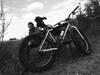
I maintain that the key is to not end up looking like this -


